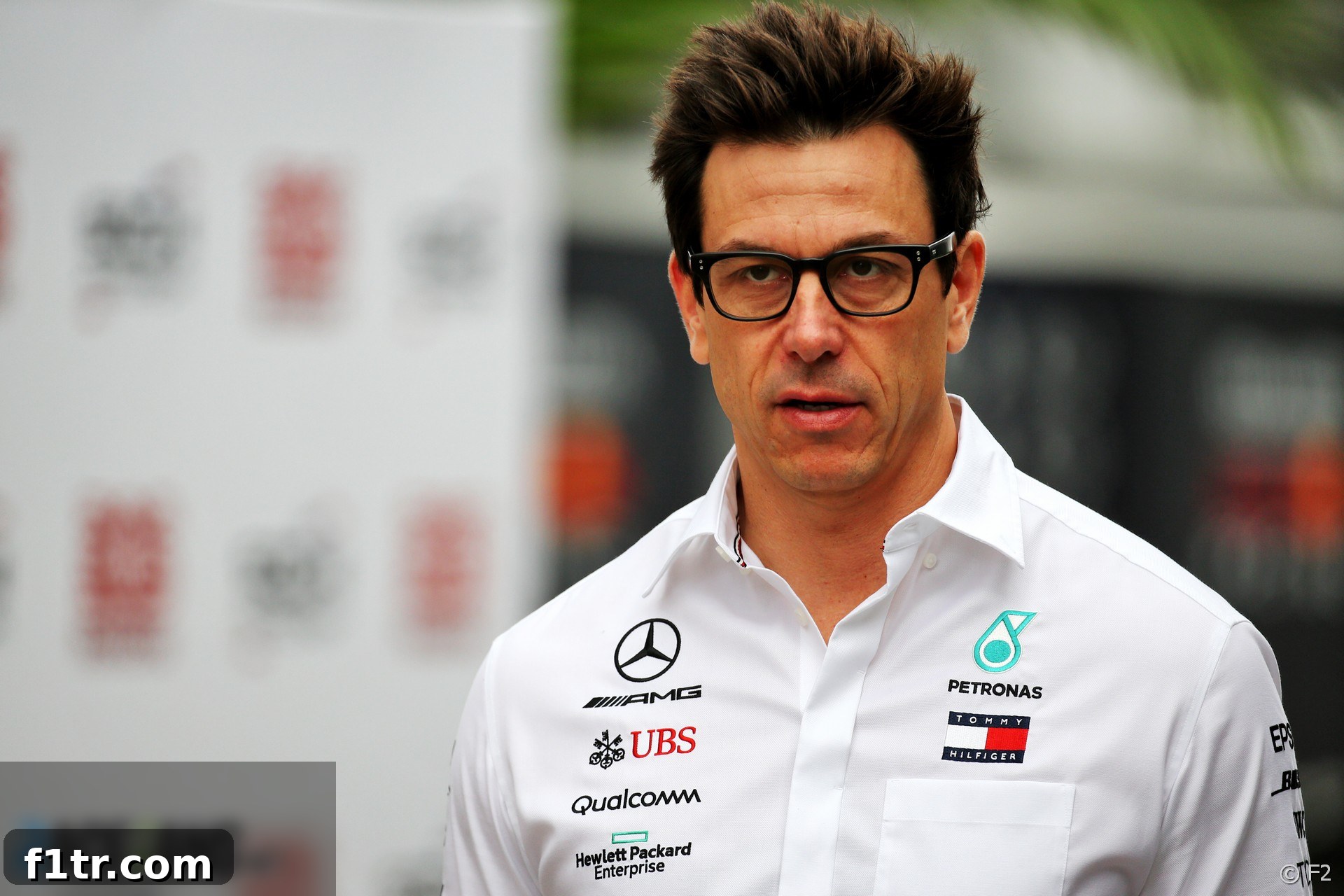
The world of Formula 1 is perpetually in motion, a relentless pursuit of speed, innovation, and strategic advantage. As the dust settled on another thrilling championship, the focus quickly shifted to the horizon, particularly the 2020 F1 season and the seismic shift anticipated with the radical new regulations for 2021. For a team like Mercedes-AMG Petronas F1, fresh off an unprecedented six consecutive double championships, the challenge isn’t merely to win, but to sustain that dominance amidst an ever-changing landscape. Mercedes team principal Toto Wolff encapsulates this daunting task, describing the upcoming 2020 season as “tricky” in light of the impending overhaul.
This period presents a unique conundrum for every team on the grid, but especially for those at the very pinnacle of the sport. How do you allocate resources, manpower, and strategic focus between optimizing for immediate success in the current regulatory cycle and laying the groundwork for a dramatically different future? The balancing act requires not just engineering prowess but also profound leadership and an unwavering team spirit. Mercedes’ journey into 2020 and beyond is a fascinating case study in managing hyper-success and anticipating systemic change, a testament to the complex dynamics that define modern Formula 1.
The Challenge of Sustained Excellence: Toto Wolff’s Perspective
Mercedes’ unprecedented run of six consecutive constructors’ and drivers’ championships has cemented their place in Formula 1 history. Yet, as Toto Wolff candidly admits, maintaining this extraordinary level of performance and motivation is a continuous battle. When questioned about inspiring his team to push boundaries even further, Wolff offered a telling insight into the mind of a leader at the forefront of motorsport innovation.
Next year is the tricky one: 2021 is the easy objective.
This statement, seemingly paradoxical, reveals the depth of strategic thinking required. The “tricky” nature of 2020 stems from the need to defend their titles under existing regulations while simultaneously diverting significant resources and brainpower towards the completely revised technical directives set to arrive in 2021. This often means running parallel development programmes, a task that strains even the most well-resourced teams. It’s a delicate tightrope walk where any misstep can have profound consequences for both the short and long term.
Conversely, 2021 is described as the “easy objective” not because the challenge will be less demanding – quite the opposite – but because it offers a clear, fresh slate and a renewed sense of purpose. A major regulation change ignites a collective hunger within the engineering departments, a chance to innovate and outsmart rivals from a clean sheet. It acts as a powerful motivator, a reset button that can re-energize even the most decorated teams.
Wolff attributes Mercedes’ enduring success significantly to the strong, cohesive bond within the team. “At the moment, there is just such a strong, bond within the team that is a good place to work at for me, personally, I take great contentment, from the relationships within the team that has been a very, very strong part of our success.” This emphasis on internal harmony, open communication, and shared purpose is crucial in high-pressure, competitive environments. It fosters a culture where individuals feel valued, supported, and collectively driven towards common goals, minimizing internal friction and maximizing collaborative output.
Looking ahead, Wolff articulated clear objectives for the forthcoming season: “I am really, personally, looking forward to the 2020 season to try to be the best us, come up with the best power unit, come up with the best chassis, have the drivers in the right space and contribute to Formula 1’s success overall.” This holistic approach underscores Mercedes’ commitment not only to their own performance but also to the broader spectacle and health of Formula 1. It signifies a continuous drive for incremental improvement across all facets – from the raw power of the engine to the aerodynamic efficiency of the chassis, and crucially, the mental and physical preparedness of their championship-winning drivers. For Mercedes, maintaining the equilibrium between immediate performance and future preparation while nurturing a winning culture is the ultimate test of their formidable capabilities.
Quotes: Dieter Rencken
The Digital Pulse of Formula 1: Engaging with Fans on Social Media
In the modern era, Formula 1 drivers and teams leverage social media not just as a promotional tool, but as a vital channel for direct fan engagement and brand building. These platforms offer an unfiltered glimpse into the lives of motorsport’s elite, fostering a stronger connection between athletes and their global fanbase. From behind-the-scenes glimpses to personal reflections, social media has transformed how the F1 community interacts.
Une soirée très spéciale 🙏☺️
A very special evening 🙏☺️
Merci @RenaultF1Team @Groupe_Renault 🔥 #IMBACK #EO31 @F1 pic.twitter.com/uI61Zey2xY— Esteban Ocon (@OconEsteban) December 14, 2019
Esteban Ocon’s tweet, expressing his gratitude to the Renault F1 Team after a “very special evening,” perfectly illustrates this dynamic. Such posts not only keep fans updated on driver activities but also allow them to share in the excitement and personal journeys of their heroes. Hashtags like #IMBACK and #EO31 become rallying cries for supporters, creating a sense of collective identity and anticipation for the upcoming season.
Beyond individual driver posts, teams use social media to announce partnerships, reveal new liveries, and share tactical insights, making the sport more accessible and interactive than ever before. This direct line of communication helps bridge the gap between the high-stakes world of F1 and the passionate fans who follow every twist and turn. As the digital landscape continues to evolve, social media remains a cornerstone of Formula 1’s strategy to engage its audience and expand its global reach.
- For a comprehensive list of official F1 accounts and more to enhance your social media experience, explore the F1 Twitter Directory.
From the Paddock and Beyond: Key Stories in Motorsport
The world of motorsport is a rich tapestry of interwoven narratives, extending far beyond the immediate confines of the Formula 1 paddock. From exhilarating endurance races to crucial regulatory debates and driver reflections, here’s a roundup of significant stories making headlines across the racing spectrum.
Endurance Thrills: Eight Hours of Bahrain 2019 Highlights (FIA WEC via YouTube)
The FIA World Endurance Championship consistently delivers some of the most compelling racing action, and the 2019 Eight Hours of Bahrain was no exception. This challenging endurance race, held under the desert stars, tested the limits of both man and machine. The highlights capture the strategic intricacies, the relentless pace, and the dramatic moments that define WEC competition. From intense multi-class battles to the sheer spectacle of prototypes and GT cars vying for supremacy, Bahrain showcased the very best of global endurance motorsport, demonstrating why it holds a revered place alongside Formula 1 in the racing calendar.
Nico Hulkenberg’s F1 Chapter: A Reflective Farewell (F1)
Nico Hulkenberg, a driver celebrated for his speed and consistency, found himself at a crossroads in his Formula 1 career. As he prepared to bid “farewell for now” to the F1 grid, his reflections offered a poignant insight into the mental fortitude required of a top-tier athlete. “For weeks, I was thinking about it, digesting it. It was hard for me to accept how that race finished, with that incident. But at one point you have to wake up and be realistic – it’s gone and you have to move on. You have to find a way through.” This quote captures the essence of a sportsman coming to terms with an unexpected turn, emphasizing resilience and the ability to pivot. Hulkenberg’s journey, marked by near-misses and strong performances, remains a testament to his talent and the unforgiving nature of F1’s competitive landscape. His story resonates with many who navigate professional challenges, highlighting the importance of acceptance and forward momentum.
The Future of Le Mans: Hypercar Budgets Under Scrutiny (Sportscar365)
The introduction of the new Le Mans Hypercar (LMH) class for the FIA World Endurance Championship was envisioned as a cost-effective pathway for manufacturers to compete for overall victory at iconic races like the 24 Hours of Le Mans. However, concerns about escalating budgets have quickly surfaced. McLaren Racing CEO Zak Brown, a keen observer of motorsport economics, told reporters that he expects Toyota Gazoo Racing to spend “north of 40 million (Euros)” in the new class. This figure significantly surpasses the initial cost targets set by the FIA and ACO, the governing bodies. Brown’s comments underscore a critical challenge facing top-tier motorsport categories: how to attract new manufacturers and ensure long-term sustainability by keeping costs in check. If LMH budgets spiral, it could deter potential entrants and undermine the very foundation of the class’s promise, highlighting the constant tension between performance innovation and financial pragmatism in elite racing.
Ferrari’s Strategic Preparations: Embracing 18-inch F1 Tyres (Autosport)
As Formula 1 meticulously plans for its future, the significant change to 18-inch wheels and low-profile tyres for the 2021 season stands as one of the most visible transformations. This shift necessitates extensive development and testing by Pirelli, F1’s sole tyre supplier, in collaboration with the teams. Ferrari, ever at the forefront of technical development, announced its plans to test a mule car equipped with these larger wheels just over a week before the official 2020 pre-season testing was due to commence. This proactive approach by Ferrari is indicative of the rigorous preparation required to adapt to fundamental technical alterations. Early testing provides invaluable data for tyre compounds, suspension geometry, and aerodynamic interaction, giving teams a head start in understanding and optimizing for the new specifications. Such tests are critical for mitigating risks and ensuring competitive performance once the new era of F1 tyres officially begins.
Athletes and Media: Lewis Hamilton’s Approach to Narrative Control (The Guardian, via BBC)
The relationship between elite athletes, traditional media, and the burgeoning power of social media has become increasingly complex. Sports personalities, particularly those with the global stature of Lewis Hamilton, are adeptly using digital platforms to control their narratives and communicate directly with their vast fan bases. As highlighted in a Guardian piece, “Social media is the tool that they, their agents and managers have used skilfully to take control of their own stories by talking directly to their supporters.” This shift signifies a powerful evolution from reliance on conventional journalistic interpretation to direct engagement. Hamilton’s past decisions to withdraw from press conferences and his outspoken critiques of “disrespectful coverage” exemplify this desire for autonomy. By cultivating a strong presence on platforms like Instagram and Twitter, athletes can bypass traditional gatekeepers, shaping public perception on their terms and fostering a more intimate connection with their followers. This trend is reshaping sports media, placing more power in the hands of the personalities themselves.
We always endeavour to credit original sources and appreciate contributions from our community. If you have a tip for a link to feature in the next RaceFans round-up, please send it in via the contact form.
Fan Debates: Deconstructing Driver Performance at Red Bull
Evaluating driver performance in Formula 1 is rarely a straightforward task, particularly when a driver is paired with a talent as exceptional as Max Verstappen at Red Bull Racing. The dynamic between teammates, the development curve of the car, and the sheer intensity of the environment can heavily influence perceptions. A compelling fan comment sheds light on the nuanced discussion surrounding Pierre Gasly and Alexander Albon’s tenures with the team:
I don’t really like Pierre, but to his defence if his teammate was, for example, Vettel or Bottas you would have seen his season a lot better and maybe blamed the car for the pace. But Verstappen was so superb up to the summer break that he really carried the team and made the car look better than it was. And to Gasly’s despair, made him look really really bad.
If you look at Albon’s races, he was only marginally better than Gasly, but the car was more developed by half-season and easier to drive, plus Verstappen didn’t have the such a strong second half of the season.
@Gechichan
This insight from @Gechichan highlights several critical factors. Firstly, the “Verstappen effect” – a driver of Max’s caliber can often mask a car’s deficiencies and elevate its perceived performance, inadvertently making a teammate appear less competent. Secondly, the comment intelligently points out the variable of car development. F1 cars are constantly evolving, and a driver joining mid-season or experiencing a significant performance bump in the car’s update cycle might benefit from an easier-to-drive package. This can make direct comparisons between drivers at different points in the season, or indeed, between two drivers who occupied the same seat, incredibly challenging.
The fan’s perspective encourages a deeper analysis beyond raw results, prompting consideration of external factors and the true context of performance within the Red Bull Racing ecosystem. It’s a reminder that judging a driver’s worth requires accounting for the exceptional benchmarks set by their teammates and the technical evolution of their machinery.
Community Hub: Engaging with the F1 Forum
- As the anticipation for the new Formula 1 season builds, the RaceFans forum becomes a vibrant hub for discussion and planning. Are you making your way to the first race of next season, the exhilarating Australian Grand Prix in Melbourne? Join the passionate debate and connect with fellow enthusiasts here to share your excitement, tips, and predictions for the season opener!
Celebrating Milestones: Happy Birthday to Our Community Members!
A vital part of the RaceFans community is the personal connection we share. We love to celebrate the milestones of our dedicated readers and contributors. A very Happy Birthday goes out to Max Jacobson, Steph90, John White, and Reiter! Your passion for Formula 1 makes this community truly special.
If you’d like to receive a birthday shout-out on RaceFans, don’t hesitate to let us know your birth date via our contact form, or by adding your details to our dedicated list here. We look forward to celebrating with you!
Echoes from the Past: F1 History Revisited
- Delving into the annals of Formula 1 history provides fascinating insights into the sport’s evolution and the stories that shaped it. Exactly ten years ago today, on December 15th, an exciting announcement sent ripples through the F1 community: new F1 team Virgin Racing confirmed its takeover of Manor Grand Prix and, crucially, announced Lucas di Grassi as one of their drivers for the 2010 season.
This event marked the formal entry of Virgin Racing into the highly competitive world of Formula 1, adding a new name to the grid and igniting hopes for fresh competition. The appointment of Lucas di Grassi, a talented Brazilian driver with a strong junior category pedigree, further fueled the excitement. The entry of new teams always brings a unique blend of optimism and challenge, and Virgin Racing’s debut was eagerly watched as part of a wave of new entrants promising a shake-up in the sport’s landscape. These historical moments underscore the perpetual cycle of change and ambition that defines Formula 1.