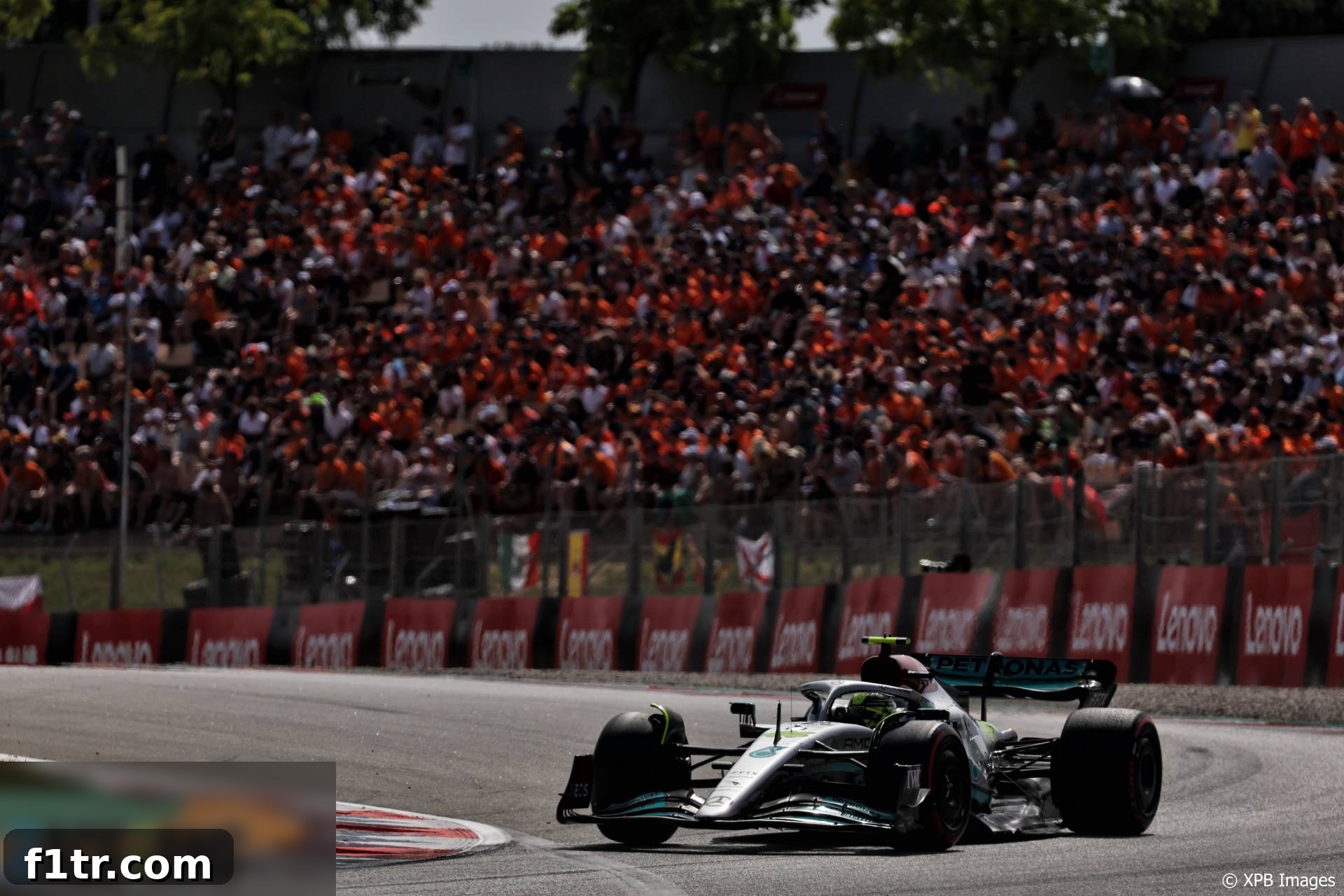
Lewis Hamilton’s Unforgettable Spanish GP Comeback: From Retirement Doubts to Resilient Fifth
The 2022 Spanish Grand Prix at the iconic Circuit de Barcelona-Catalunya proved to be one of the most compelling and dramatic races of the season, showcasing the unparalleled grit of seven-time world champion Lewis Hamilton. Entering the weekend with Mercedes facing a challenging start to the season due to the new technical regulations and the infamous ‘porpoising’ issues plaguing their W13 car, hopes were high for a turnaround. Yet, the race for Hamilton began with immediate disaster, leading to an extraordinary suggestion to his team: retire the car. What unfolded next was a masterclass in determination, resilience, and strategic teamwork, culminating in a spectacular drive from the very back of the grid to secure a remarkable fifth-place finish, defying all initial expectations.
The Catastrophic First Lap: A Race on the Brink
The Grand Prix had barely commenced when misfortune struck Lewis Hamilton. On the very first lap, a racing incident involving Kevin Magnussen’s Haas at Turn Four resulted in a debilitating puncture for Hamilton’s Mercedes. This forced an immediate, unscheduled pit stop, plunging him to the absolute last position on the track, a significant thirty seconds adrift of the penultimate car and the main pack. For a driver who had already contended with unprecedented challenges and frustrating results in the early stages of the 2022 season, this early setback felt like a crushing blow that threatened to prematurely end his competitive involvement in the weekend.
Hamilton later candidly described the immediate sense of despair and the daunting scale of the challenge. “I was 30 seconds, at one stage, behind last. Having seen where I was, if you think back to Jeddah where I started 15th and I struggled to get into the top 10, I was thinking it was going to be impossible to get back into the points positions.” His previous experience at the Saudi Arabian Grand Prix, where a challenging recovery from a mid-grid start yielded only a tenth-place finish, strongly influenced his pessimistic outlook. The prospect of an entire race spent battling at the rear, consuming valuable engine mileage for minimal, if any, reward, seemed strategically unsound and emotionally draining.
A Call for Retirement: Hamilton’s Strategic Dilemma
In a moment of profound strategic consideration and perhaps understandable frustration, Lewis Hamilton made the extraordinary suggestion to his Mercedes team: retire his car from the race. His rationale was rooted in pragmatism and a long-term view of the championship. From his vantage point at the back, with such a significant time deficit and without the crucial intervention of a Safety Car to bunch up the field, continuing the race appeared to offer little upside. The potential wear and tear on his power unit, coupled with the risk of needing additional engine components later in the season and thus incurring a grid penalty, seemed to outweigh the slim chances of scoring meaningful points.
Elaborating on his thought process, Hamilton explained, “I was 30 seconds behind so I’m like, if I’m going to use the whole engine to drive around in last or out of the top 15, and at some point we might have to take a penalty or something like that… I don’t know if reliability is an issue, we’ve already seen today at the end there was something. But I was like, we might as well just save the engine so we live to fight another day.” This candid admission offered a rare glimpse into a champion’s mind, revealing a deep concern for the long-term health of his machinery and the strategic implications for the championship battle, even at such an early stage in the season. It highlighted the immense pressure and the complex calculations drivers and teams constantly perform.
Mercedes’ Unwavering Faith: “No, You’re On for Eighth”
Despite Lewis Hamilton’s logical and strategic suggestion, the Mercedes F1 pit wall held a different perspective. Leveraging their sophisticated data analysis and deep understanding of the W13’s potential pace, even under compromised conditions, they maintained an unwavering belief in their driver and the car’s capacity for a strong recovery. Their response to Hamilton’s query was immediate and unequivocal: “No, you’re on for eighth.”
This calculated optimism from the team was a pivotal moment. It not only demonstrated their profound confidence in Lewis Hamilton’s unparalleled ability to navigate traffic and manage his tires masterfully but also their conviction that the car possessed underlying performance, despite the challenging start to the season. The team’s engineers, armed with real-time data and predictive models, saw a clear path to points that Hamilton, immersed in the heat of the battle and from the depths of the pack, could not yet fully perceive. Hamilton himself admitted his initial skepticism, stating, “I couldn’t understand it at the beginning and I thought that they were being super-optimistic. But I was like okay, I’ll give it everything and see where I come out.” This unwavering trust, ultimately, became the crucial catalyst for one of his most memorable comeback drives.
The Remarkable Resurgence: Climbing Through the Field
With his team’s resolute mandate to continue, Lewis Hamilton unleashed a performance that bordered on the sensational. Driving with renewed purpose and a clear objective, he embarked on a relentless charge through the field. Lap after lap, he meticulously picked off car after car, showcasing impeccable race craft, precise overtaking maneuvers, and superb tire management. The absence of a Safety Car throughout the entire race made his incredible ascent even more commendable; every position gained was a direct result of his raw pace, strategic pit stops, and sheer driving skill, rather than fortuitous circumstances that could have bunched up the field.
Lewis Hamilton’s Mercedes W13, which had been a source of much frustration due to its ‘porpoising’ issues in previous races, appeared to be operating more effectively in Barcelona. This allowed him to tap into its underlying potential and deliver consistently fast lap times, often among the quickest on track. His determination to push the limits, combined with careful management of his tires, saw him carve through the midfield with remarkable ease. This section of the race became a thrilling spectacle of one driver defying all expectations, meticulously climbing his way back into contention from what initially seemed like an impossible position.
Late Race Drama: Water Leak and the Fight for Fifth
Just as Lewis Hamilton’s incredible comeback looked set to culminate in an even higher finish, potentially challenging his teammate George Russell for a podium spot, unforeseen technical issues struck again. Towards the latter stages of the race, Hamilton reported a water leak, an unexpected mechanical hiccup that forced him to reduce his pace significantly to manage the car. This issue allowed Carlos Sainz Jnr of Ferrari to make a successful overtake, pushing Hamilton back from fourth to fifth position. While undoubtedly frustrating to lose a place so late in the race due to a reliability concern, the fact that he was still in a robust points-scoring position, let alone fighting for a top-five slot, was a profound testament to his earlier heroics.
Reflecting on the final laps, Hamilton expressed a mix of satisfaction with the overall result and a tinge of disappointment regarding the late setback: “It turns out it was higher than eighth. It was just a little bit unfortunate at the end with the engine but I’m just glad we finished.” The water leak served as a stark reminder of the delicate balance of modern Formula 1 machinery and the constant threat of reliability issues. Despite this late-race drama, Hamilton successfully nursed his wounded car to the checkered flag, securing a vital fifth place for Mercedes and definitively proving the team’s initial optimism was well-founded.
A Testament to Resilience: “Never Give Up”
Lewis Hamilton’s drive at the 2022 Spanish Grand Prix will undoubtedly be etched into the annals of his illustrious career as a classic example of his unwavering resilience and fighting spirit. His initial doubt, born out of frustration and strategic thinking, was ultimately overshadowed by his team’s profound conviction and his own superhuman effort to recover. This sequence of events encapsulates the spirit of a true champion. Post-race, he succinctly summarized the profound lesson of the day, a message that resonated deeply across the paddock: “But I’m glad we didn’t [retire] and it just shows that you never stop and never give up and that’s what I did.”
This performance was far more than just a points finish for Mercedes F1; it was a powerful morale boost and a clear statement of intent from Hamilton himself. It showcased that even when facing seemingly insurmountable odds, the potent combination of exceptional driver talent, astute team strategy, and sheer indomitable will can yield extraordinary results. The decision to press on, against the driver’s own initial instinct, validated the data-driven approach of the Mercedes strategists and reinforced a fundamental F1 adage: the race is never truly over until the checkered flag waves.
Implications for Mercedes’ Season
The Spanish Grand Prix marked a significant psychological and technical turning point for Mercedes F1 in the challenging 2022 season. While the W13 still had its inherent challenges, the race demonstrated improved understanding and performance, particularly in managing the notorious ‘porpoising’ phenomenon. Lewis Hamilton’s ability to extract such blistering pace and recover positions from such a dire starting point indicated that the car, when operating in its optimal window, still possessed competitive potential. The positive outcome, despite the early incident and late-race reliability scare, injected a much-needed shot of confidence into the team, fueling their determination to close the gap to their formidable rivals, Ferrari and Red Bull, in the Constructors’ Championship.
This race was a profound testament not just to Hamilton’s individual brilliance but to the collective spirit and enduring resolve of the entire Mercedes team. Their unwavering belief in their driver and their continuous pursuit of performance, even when facing significant adversity, underpinned this remarkable recovery. It laid a crucial foundation for the ongoing development of the W13 and served as a potent reminder that sustained success in Formula 1 is often as much about perseverance, strategic foresight, and effective teamwork as it is about raw speed and cutting-edge engineering.
Conclusion: A Race of Unyielding Spirit
The 2022 Spanish Grand Prix will forever be remembered in Formula 1 history for Lewis Hamilton’s incredible journey from despair to determination. His initial suggestion to retire, born out of a strategic assessment and momentary frustration, was ultimately overshadowed by a drive of unyielding spirit and pure racing talent. This race served as a powerful reminder of why Hamilton is universally considered one of the greatest drivers of all time, showcasing his extraordinary ability to overcome adversity, inspire his team, and deliver unforgettable performances under immense pressure.
It was a day that encapsulated the very essence of Formula 1: unpredictable drama, calculated strategic gambles, and the relentless pursuit of excellence against all odds. For Hamilton and Mercedes, it was a moment of profound validation, a powerful demonstration that even on the toughest days, the unwavering will to never give up can transform a potential disaster into a triumphant display of resilience and sporting greatness.
More from the 2022 Spanish Grand Prix
- Q&A: Kubica ‘shocked’ by ‘completely different’ Alfa Romeo in Spain
- How heat and traffic trouble left F1 fans fuming after the Spanish Grand Prix
- Mercedes not yet certain their porpoising problem has “disappeared”
- Sticking to budget cap “pretty much impossible” due to rising costs – McLaren
- Ricciardo hoping to find an explanation for Spanish GP pace deficit to Norris
Browse all 2022 Spanish Grand Prix articles