FIA Confronts Destabilization Claims Amidst Spate of F1 Controversies
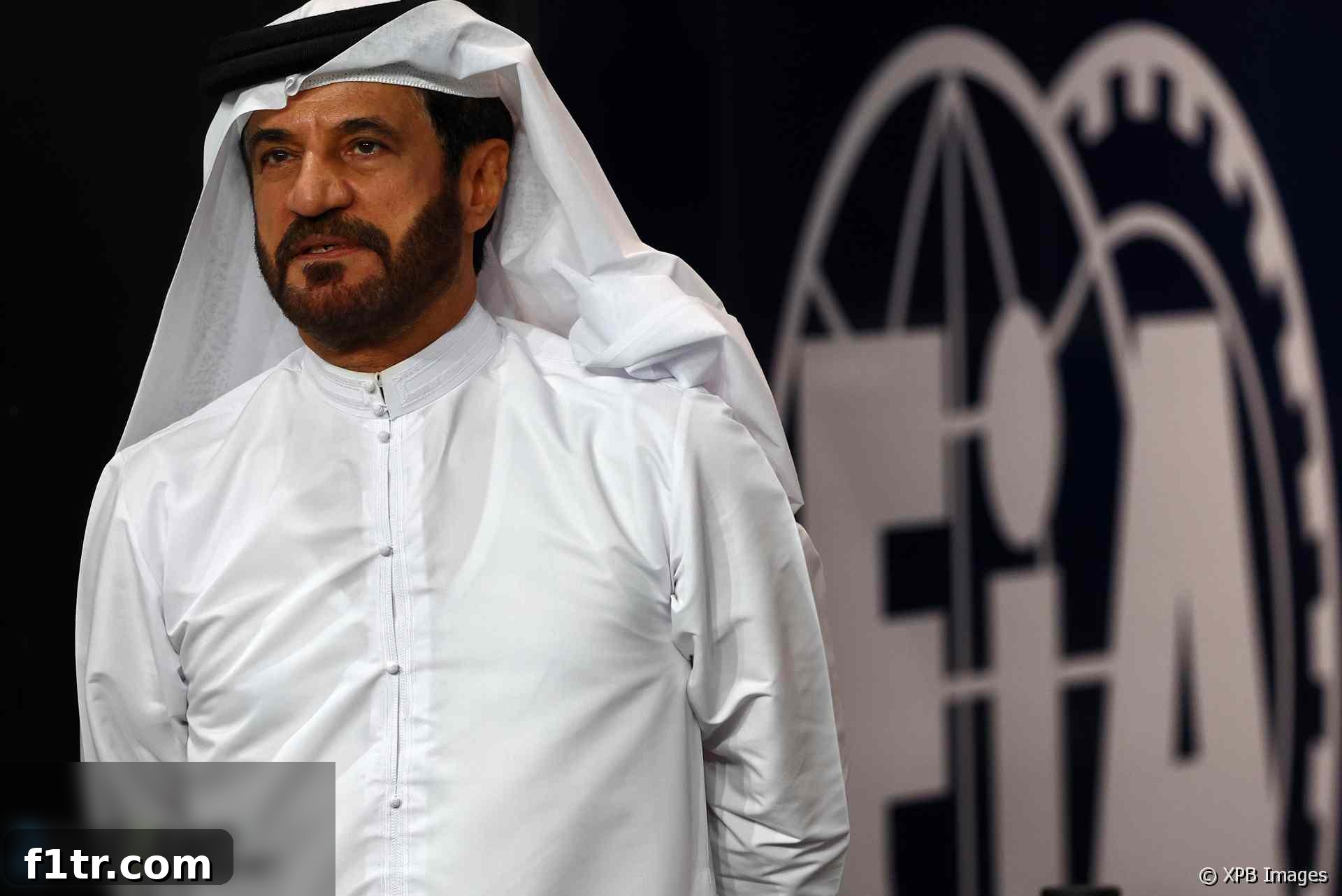
The governing body of motorsport, the FIA, finds itself at the epicenter of a storm, with its president, Mohammed Ben Sulayem, publicly declaring that he is the target of “malicious” attacks. These allegations come at a time when Formula 1, the pinnacle of motorsport overseen by the FIA, is grappling with an unprecedented series of ethical and governance challenges. Ben Sulayem’s claims, articulated in a letter to FIA members, paint a picture of an organization under siege, contending with deliberate efforts to destabilize its leadership and undermine its foundational integrity. The timing of these pronouncements, coinciding with several high-profile disputes, has intensified calls from within the sport for greater transparency and accountability.
In his candid communication, excerpts of which were brought to light by the Associated Press, Ben Sulayem expressed his conviction that recent events have “unfolded with one clear objective: to target the very heart of our leadership and undermine the foundation of our federation.” This assertion suggests a coordinated campaign rather than isolated incidents, highlighting a deep-seated tension within the intricate world of Formula 1 governance. The president further lamented that the FIA has “fallen victim to malicious leaks of confidential and sensitive information, tarnishing our reputation and causing concern among our members.” Such leaks, whether perceived as genuine or fabricated, undoubtedly complicate the FIA’s efforts to maintain control over its narrative and uphold its authority in the global motorsport arena.
Presidential Integrity Under Scrutiny: The Ethics Committee Verdict
The backdrop to Ben Sulayem’s allegations is a period of intense scrutiny over his personal conduct and the FIA’s internal processes. Just days prior to his letter, the FIA Ethics Committee concluded an investigation into two serious allegations against the president. These included claims that he attempted to interfere with a penalty issued to Aston Martin driver Fernando Alonso at the Saudi Arabian Grand Prix in the preceding season. The second accusation revolved around alleged attempts to influence the certification process for the newly constructed Las Vegas Strip Circuit, a pivotal addition to the F1 calendar.
After a thorough review, the Ethics Committee cleared Ben Sulayem of both counts of wrongdoing. The decision was presented as a vindication of the president and the integrity of the FIA’s internal investigatory mechanisms. However, the timing of the clearance, coming amidst a whirlwind of other controversies, meant that the resolution of these specific allegations did little to quell the broader unease. Instead, it merely served as a prelude to further challenges that would test the federation’s resolve and its commitment to an impartial and transparent governance structure.
The Echo of Controversy: Susie Wolff’s Lawsuit Against the FIA
Remarkably, within mere hours of the FIA Ethics Committee’s decision regarding Ben Sulayem being made public, a fresh wave of controversy broke. Susie Wolff, CEO of the F1 Academy and wife of Mercedes team principal Toto Wolff, announced her intention to pursue legal action against the FIA. Her lawsuit stems from the federation’s handling of allegations made against her and her husband in late 2023. These allegations, widely reported at the time, concerned a potential conflict of interest arising from their respective roles within the sport and the FIA. While the FIA quickly closed its investigation into the matter, citing no breach of rules, the initial inquiry and its perceived implications deeply affected the Wolffs.
Susie Wolff’s decision to take legal action underscores a profound lack of confidence in the FIA’s procedures and its capacity to manage sensitive information and protect individuals involved in motorsport. Her complaint against the federation is not just a personal grievance; it represents a significant challenge to the FIA’s authority and its ethical framework. The incident ignited discussions about internal communications, data protection, and the broader treatment of prominent figures within Formula 1, especially concerning issues of fairness and due process. This legal challenge promises to keep the FIA’s governance under a harsh spotlight, demanding detailed explanations for its actions and decisions.
The Christian Horner Saga: A Persistent Cloud Over Red Bull and F1
Adding to the confluence of challenges facing the FIA are persistent claims related to Christian Horner, the long-standing team principal of Red Bull Racing. Allegations of inappropriate behavior against Horner prompted an internal investigation by Red Bull’s parent company, which ultimately cleared him. However, the saga has been far from concluded, with an appeal against that decision now looming, ensuring the issue remains front and center in the F1 discourse. More critically, there have been claims that the FIA itself was made aware of these allegations on multiple occasions, well before they became public knowledge and before Red Bull launched its own investigation.
These assertions raise profound questions about the FIA’s role as the sport’s regulator. If the governing body possessed prior knowledge of such serious allegations against a prominent team principal, its subsequent actions, or lack thereof, would be subject to intense scrutiny. The implication is that the FIA might have missed opportunities to intervene, or at least to ensure that the appropriate protocols were followed from an earlier stage. The ongoing nature of the Horner situation, coupled with the questions about the FIA’s awareness and response, further fuels the perception that the sport’s governance structures are struggling to keep pace with the demands for modern accountability and ethical oversight.
A Divided Front: Calls for Unwavering Transparency vs. Trust in Process
Amidst this backdrop of controversy, the motorsport community is openly debating the necessity of greater transparency. While Mohammed Ben Sulayem, in his letter, affirmed his commitment to fostering “an environment of transparency, accountability and unwavering integrity within the FIA,” many Formula 1 team principals believe the federation has fallen short of this ideal, particularly in its handling of recent issues.
McLaren Racing CEO Zak Brown articulated this sentiment forcefully during a recent FIA press conference. “All the items that have come to light here in recent times are very serious situations,” Brown stated, emphasizing the need for a modern approach to governance. “We’re living in 2024, not 1984, which means total transparency.” His analogy underscores a demand for open communication and verifiable processes, departing from any perception of opaque decision-making. Brown stressed that while the three main situations (Ben Sulayem’s allegations, Susie Wolff’s lawsuit, and the Horner case) are distinct, they are all profoundly serious and necessitate truly independent and transparent investigations. He lamented that three races into the F1 calendar, the focus remains on these controversies rather than the racing itself, attributing this distraction to “unanswered questions” and a lack of sufficient transparency. For Brown, ensuring that “everyone has an equal opportunity to speak up” is paramount to restoring confidence.
Conversely, Peter Bayer, the current team principal for RB and a former FIA secretary general for sport and F1 executive director, offered a more measured perspective. Bayer, whose tenure at the FIA spanned from 2017 to 2021, stressed the importance of maintaining “confidence into the organisation.” He drew parallels with stewards’ decisions, acknowledging that while stakeholders might not always agree with outcomes, the process itself must be trusted. Bayer highlighted the FIA’s independent Ethics Committee, led by Francois Bellanger, as a crucial body whose independent findings should be respected. “As the President himself was concerned, they were the ones who had to ultimately deal with the matter,” Bayer noted, reinforcing the committee’s autonomy and authority.
Bayer also introduced an important distinction regarding the FIA’s remit. As the regulator and legislator of motorsport, the FIA has specific boundaries to its responsibilities. Some questions stakeholders might want answered, he argued, might fall outside the federation’s direct purview or ability to disclose. However, he stressed that certain core issues, such as a president potentially interfering with a stewards’ decision, are unequivocally within the FIA’s remit and require clear, trustworthy answers. “That is very, very important for us to have confidence and to trust them,” Bayer affirmed, concluding with a vote of confidence in the FIA’s ability to handle these critical matters responsibly.
Navigating a Complex Future for Formula 1 Governance
The confluence of Mohammed Ben Sulayem’s claims of malicious attacks, the swift succession of the Ethics Committee’s clearance, Susie Wolff’s legal challenge, and the ongoing questions surrounding the Christian Horner allegations presents the FIA and Formula 1 with a pivotal moment. The current atmosphere of mistrust and calls for radical transparency from key stakeholders like Zak Brown underscore a growing demand for modernization in governance practices. While figures like Peter Bayer emphasize the importance of trusting established processes and the independence of internal bodies, the sheer volume and nature of the controversies suggest that the status quo may no longer be sufficient.
The challenge for the FIA is to not only resolve these immediate issues but also to proactively build a framework that is perceived as undeniably fair, transparent, and accountable. The long-term health and credibility of Formula 1, both as a global sport and a major commercial entity, depend on its ability to navigate these turbulent waters successfully, restoring faith in its leadership and its commitment to the highest ethical standards. How the federation responds to these challenges in the coming months will undoubtedly shape the future trajectory of motorsport governance and set a precedent for how integrity and transparency are upheld at the highest levels of international sport.
Related Articles & Updates on F1 Governance
- Understanding the FIA Ethics Committee and Its Mandate
- The Push for Greater Transparency in Formula 1 Governance
- Analysis: Susie Wolff’s Legal Action and Its Impact on FIA
- Updates on the Christian Horner Investigation and Appeals Process
- Mohammed Ben Sulayem’s Leadership: Navigating Internal and External Pressures
Browse all F1 Governance Controversy articles