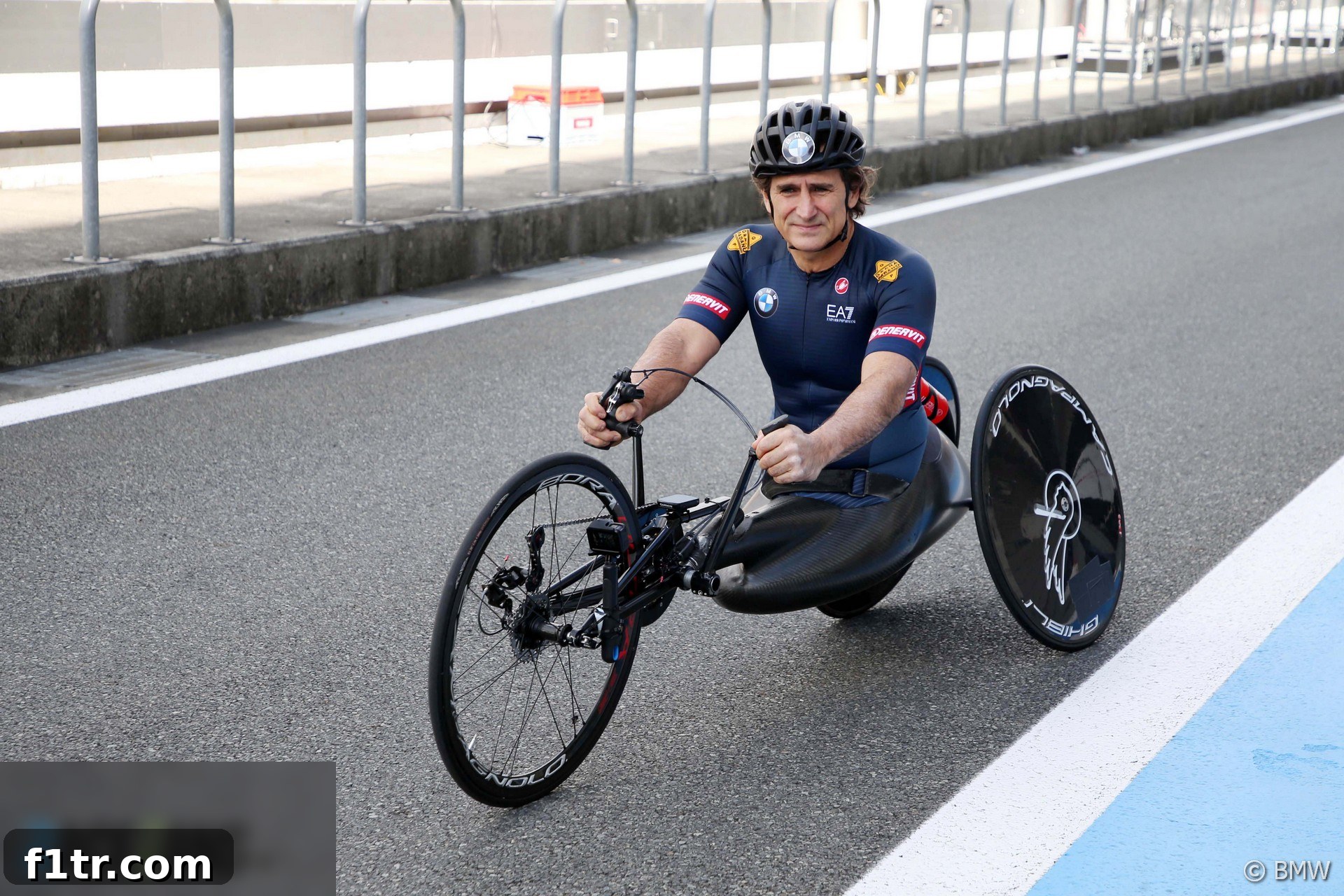
Alex Zanardi Hospitalized After Handbike Crash: A Legend’s Unyielding Spirit and Remarkable Journey
In a deeply concerning development for the motorsport and adaptive sports communities, legendary former Formula 1 driver and two-time CART IndyCar champion Alex Zanardi has been hospitalized following a severe crash during a handbike race. The incident, which occurred on a public road near the picturesque Tuscan town of Pienza, Italy, has sent shockwaves across the globe, bringing into sharp focus the extraordinary life and indomitable spirit of one of sport’s most inspirational figures.
The Latest Incident: A Shocking Development
Details emerging from Italy indicate that Zanardi, a 53-year-old athlete revered for his incredible resilience, was participating in a relay handbike event, part of the “Obiettivo Tricolore” initiative, when the accident took place. The event saw Paralympic athletes and others with disabilities travel across Italy, promoting inclusivity and sporting achievement. During his segment on a descending stretch of road, Zanardi’s handbike reportedly collided with a heavy vehicle, believed to be a truck. The Associated Press confirmed the collision and reported that Zanardi was immediately attended to by emergency services at the scene before being airlifted by air ambulance to the Santa Maria alle Scotte hospital in Siena.
Initial reports from medical staff described his condition as “very serious” with significant head injuries, necessitating immediate neurosurgery. The world watches with bated breath, sending immense support and well wishes to a man who has consistently defied the odds and inspired millions through his unwavering determination.
A Star on Four Wheels: From Formula 1 Aspirations to IndyCar Dominance
Before his remarkable second career in handcycling, Alex Zanardi carved out a formidable reputation in the cutthroat world of international motorsport. His journey began in karting, progressing through various junior categories before reaching the pinnacle of single-seater racing: Formula 1. He made his F1 debut in 1991, driving for Jordan, and subsequently had stints with Tyrrell and Lotus in the early 1990s. While he displayed flashes of raw talent and impressive car control, consistent success in F1 proved elusive during this initial phase, often due to uncompetitive machinery.
The turning point in Zanardi’s conventional racing career came with his move to North American open-wheel racing, specifically the CART IndyCar Series, in 1996. It was here, driving for Chip Ganassi Racing, that his true potential as a superstar driver blossomed. Zanardi quickly became a fan favorite, renowned for his aggressive yet clean driving style, his infectious charisma, and his iconic “doughnuts” celebration after victories.
His 1997 and 1998 seasons are etched into motorsport history. Dominating the highly competitive CART championship, Zanardi clinched back-to-back titles, showcasing a blend of speed, tactical brilliance, and an unmatched passion for racing. His battles with rivals, his fearless overtaking maneuvers, and his ability to push the limits of his Reynard-Honda chassis made him a legend in the series. These two years firmly established him as one of the sport’s greatest talents and a captivating personality.
Following his tremendous success in CART, Zanardi made a highly anticipated return to Formula 1 in 1999 with the prestigious Williams team. However, this comeback proved to be a challenging one. The car’s performance issues, coupled with Zanardi’s difficulty adapting to the narrower, grooved tires introduced that year, meant he struggled to replicate his earlier success. Despite his best efforts, the season was difficult, and he ultimately left the team at the end of the year, concluding his F1 chapter.
The Defining Moment: Lausitzring 2001 and the Road to Recovery
Zanardi returned to CART in 2001, eager to rekindle his passion for American open-wheel racing. However, his season was cut tragically short by a catastrophic accident at the EuroSpeedway Lausitz in Germany on September 15, 2001. During the American Memorial 500 race, after a late pit stop, Zanardi spun his car on rejoining the track and was broadsided by another competitor at high speed. The impact was devastating, severing the front of his car and causing life-threatening injuries.
The immediate aftermath was dire. Zanardi lost both of his legs in the crash, and doctors battled for hours to save his life. He underwent multiple surgeries and received over a dozen units of blood, coming perilously close to death. Miraculously, he survived, attributing his survival to the swift action of the medical team and his own immense will to live. The path to recovery was long and arduous, marked by intensive physical rehabilitation and the monumental challenge of adapting to life as a double amputee. Yet, true to his character, Zanardi faced this new reality with an astonishing degree of optimism, courage, and an unyielding spirit that refused to be defined by his disability. He famously stated, “I have lost my legs, but not my smile,” a sentiment that would define the next chapter of his life.
A New Chapter: Paralympic Glory and Handcycling Prowess
In the wake of his life-altering accident, Alex Zanardi embarked on a new, equally inspiring athletic journey: handcycling. This adaptive sport, where athletes propel themselves using their arms on a recumbent bicycle, became his new competitive arena. It was a testament to his ingrained competitive spirit and desire to push boundaries, regardless of the physical challenges.
Zanardi quickly adapted to handcycling, applying the same dedication, meticulous preparation, and fierce determination that had characterized his motorsport career. He trained rigorously, constantly seeking to improve his technique and physical conditioning. His natural athletic talent, combined with his incredible mental strength, saw him rise rapidly through the ranks of the sport. He became a prominent figure in international handcycling, competing in various classes and championships.
His achievements in handcycling reached their zenith at the Paralympic Games, where he transcended his previous sporting fame to become a global icon of adaptive sports. At the London 2012 Paralympic Games, Zanardi delivered an emotional and triumphant performance, securing two gold medals in the men’s road time trial H4 and the men’s road race H4. He also added a silver medal in the mixed team relay H1-4. These victories, coming 11 years after his horrific accident, were widely celebrated as one of the most heartwarming stories of the Games, showcasing an incredible narrative of comeback and resilience.
Not content with his London triumphs, Zanardi continued his dominance at the Rio 2016 Paralympic Games. There, he further solidified his legendary status by winning two more gold medals in the men’s road time trial H5 and the mixed team relay H2-5, along with a silver in the men’s road race H5. His extraordinary haul of four gold and two silver Paralympic medals cemented his place as one of the most successful and inspiring Paralympic athletes of all time. Through his handcycling achievements, Zanardi not only reached the pinnacle of a new sport but also served as a powerful ambassador for people with disabilities, demonstrating that limitations are often self-imposed and that the human spirit can overcome even the most daunting adversities.
The Persistent Racer: Back on Four Wheels
Even with his monumental success in handcycling, Alex Zanardi’s lifelong passion for motorsport never waned. His desire to compete on four wheels, despite his amputations, led him to explore specially modified racing cars. This endeavor further showcased his innovative spirit and engineering curiosity, as well as his unwavering love for speed and competition.
Zanardi returned to conventional motorsport, competing in various touring car championships, including the World Touring Car Championship (WTCC) and GT racing events. His race cars, typically BMWs, were ingeniously adapted to accommodate his physical needs. Controls such as accelerator, brake, and gear shifters were all integrated into a sophisticated hand-control system. This required immense skill and adaptation, proving that his driving prowess was not diminished, only reframed.
He achieved impressive results against able-bodied competitors, often battling for podium finishes and even securing victories. His participation in events like the DTM (Deutsche Tourenwagen Masters) in a modified BMW M4 and endurance races demonstrated that he remained a formidable force on the track. His presence in these series not only inspired fans but also pushed the boundaries of adaptive technology in motorsport.
Just prior to his recent handbike crash, Zanardi had announced exciting plans to participate in the Italian GT Championship’s season finale at Monza in November. He intended to share a modified BMW M6 GT3 with Stefano Comandini and Marius Zug, highlighting his continuous and unwavering commitment to competitive motorsport. This announcement underscored his lifelong dedication to racing and his perpetual quest for new challenges, regardless of the discipline or the obstacles.
Alex Zanardi’s Enduring Legacy: More Than Just a Champion
Alex Zanardi’s story transcends the realm of sports; it is a profound testament to the power of human spirit, resilience, and optimism. He is not merely a motorsport champion or a Paralympic hero; he is a global icon who embodies perseverance in the face of unimaginable adversity. His philosophy of life, characterized by a relentless focus on the positive, a refusal to lament what is lost, and an eagerness to embrace new possibilities, has resonated with millions worldwide.
He has become a sought-after motivational speaker, sharing his incredible journey and inspiring countless individuals to find strength in their own challenges. His ability to transform a catastrophic event into a catalyst for even greater achievements serves as a powerful reminder that limitations are often perceptions, and that determination can unlock extraordinary potential. Zanardi’s engaging personality, warm smile, and profound wisdom have made him a beloved figure across different cultures and communities.
His impact extends beyond individual inspiration; he has significantly raised awareness for adaptive sports and challenged preconceptions about disability. Alex Zanardi represents the pinnacle of human endeavor, demonstrating that true victory lies not just in winning races or medals, but in how one chooses to live, adapt, and inspire others through life’s most difficult moments.
As the world awaits news of his recovery, the thoughts and prayers of countless fans, fellow athletes, and admirers are with Alex Zanardi and his family. His life has been a relentless pursuit of excellence, an unwavering display of courage, and an enduring source of inspiration. He remains a beacon of hope and a living legend whose incredible journey continues to teach us about the limitless potential of the human spirit.
Related Motorsport Articles
- Grosjean to make F1 test return tomorrow for first time since Bahrain horror crash
- Pictures: Wrecked chassis from Grosjean’s Bahrain fireball crash to go on display
- Bottas vs Rosberg: Hamilton’s Mercedes team mates compared after 78 races each
- F1 revenues fell by $877 million in Covid-struck 2020 season
- Hamilton and Mercedes finally announce new deal for 2021 season
Browse all 2020 F1 season articles