Fernando Alonso’s Return: A Vital Glimpse into Alpine’s Future Amidst Barcelona Test
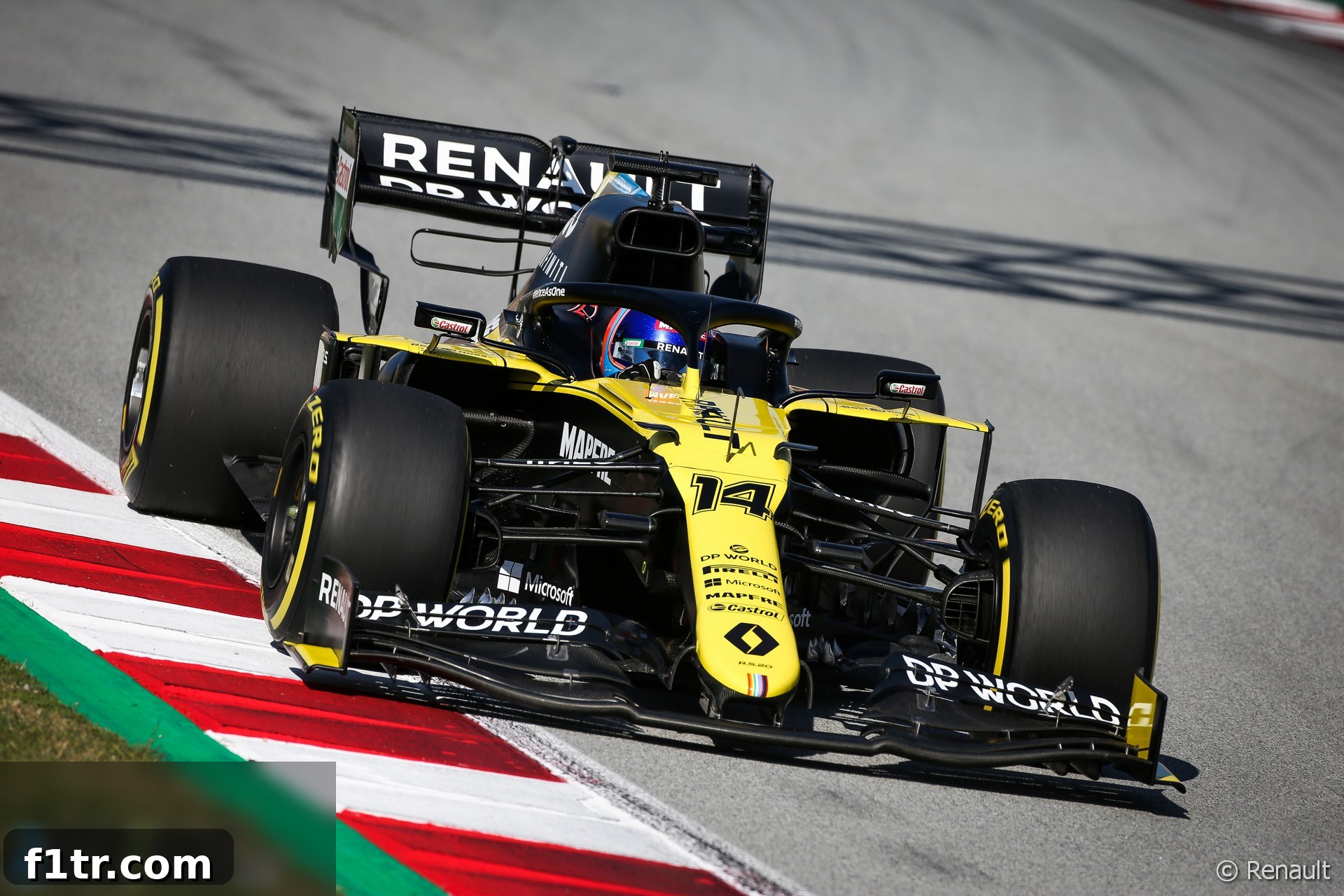
The highly anticipated return of two-time Formula 1 world champion Fernando Alonso took a significant step forward recently when he got behind the wheel of Renault’s 2020 Formula 1 car, the RS20. This brief but crucial run at the iconic Circuit de Catalunya provided the team with invaluable insights, as confirmed by his future teammate, Esteban Ocon. While the session was officially a filming day, limiting Alonso to just 100 kilometres of running and mandating the use of demonstration tyres, the implications for Alpine’s 2021 campaign are profound.
Alonso’s presence on track, even for a restricted distance, generated considerable excitement and speculation among fans and pundits alike. It marked a tangible step in his journey back to the pinnacle of motorsport after a two-year hiatus. The sight of the Spanish veteran in the cockpit once more was not just symbolic; it was a practical exercise designed to reacquaint him with the demanding environment of modern F1 machinery and to integrate him further into the team’s operational rhythm ahead of what promises to be an exhilarating 2021 season.
The Significance of Alonso’s Limited Test Run
Despite the constraints imposed by it being a filming day, Esteban Ocon highlighted the tangible benefits reaped from Alonso’s test. “It gave us some little extra information,” Ocon remarked, underscoring the value of even a brief outing with a driver of Alonso’s calibre. This “extra information” isn’t merely about lap times, which are largely irrelevant on demonstration tyres and limited mileage. Instead, it encompasses a wealth of qualitative feedback concerning the car’s ergonomics, steering feel, brake response, and the overall balance and behaviour of the chassis.
For a driver like Alonso, with decades of top-tier racing experience, even a few laps can yield critical data points. His highly refined senses and intimate understanding of Formula 1 cars allow him to detect nuances that newer drivers might miss. This initial interaction with the RS20 served as a crucial data point for the team, helping to validate simulator work and theoretical models against real-world sensations experienced by one of the sport’s most demanding and analytical drivers. Such feedback is particularly vital as the team prepares for a new era under the Alpine banner.
The limitations of a filming day, specifically the 100-kilometre cap and the use of hard, non-competitive demonstration tyres, mean that direct performance comparisons were impossible. However, the objective was never to set blistering lap times. Rather, it was about ensuring Alonso’s comfort in the cockpit, familiarizing him with the team’s current operational procedures, and gathering his initial impressions on the car’s fundamental characteristics. This groundwork is essential for a smooth transition when he fully returns to competitive action in 2021.
Harmonized Feedback: A Clear Path Forward for Alpine
One of the most encouraging aspects revealed by Ocon was the alignment of feedback from all three drivers involved in Renault’s recent development efforts: Alonso, Ocon, and Daniel Ricciardo. Alonso has been diligently working in Renault’s advanced simulator, and his comments from both the sim and the Barcelona test have consistently tallied with the observations provided by Ocon and Ricciardo. “Of course having three drivers giving feedback is a clear confirmation for the team,” Ocon stated.
This convergence of opinion from multiple experienced drivers is a powerful indicator for any Formula 1 team. As Ocon further explained, “Having two is already a good thing. But when you have three, there’s no question, you have to go [in] that direction.” This collective agreement on the car’s strengths, weaknesses, and desired development path provides the engineering team with an unambiguous mandate. It minimizes the risk of chasing disparate development routes based on conflicting driver preferences, thereby streamlining the design and upgrade process.
The synergy between Alonso’s insights, honed over two world championships and nearly two decades in F1, and the perspectives of current drivers Ocon and Ricciardo, offers a robust framework for vehicle development. It suggests that the team has a clear understanding of its current package and a unified vision for its future evolution. This kind of consistent feedback loop is invaluable for optimizing car performance, especially heading into a season with significant regulatory stability before the major overhaul in 2022.
Esteban Ocon: Learning from a Legend
Esteban Ocon openly expressed his eagerness to learn from his highly decorated new teammate. The opportunity to work alongside a driver of Fernando Alonso’s stature is a unique privilege for any F1 driver, and Ocon is keen to maximize this experience. “We had meetings last week where he was present. He tested the car in Barcelona. So he’s getting there, he’s having more and more preparation,” Ocon elaborated, indicating the ongoing integration of Alonso into the team structure.
Ocon understands that sharing a garage with Alonso offers more than just collaborative feedback. It’s an unparalleled chance for personal growth and development. “And for sure having a guy like Fernando who has a lot of experience, it’s going to be very interesting to see what he brings to the team. Of course I can always learn from from legends like that,” he acknowledged. This mentorship aspect is crucial; Alonso’s vast experience extends beyond pure speed. He brings an exceptional understanding of race strategy, tyre management, mental fortitude under pressure, and the intricate art of team leadership and communication.
For Ocon, observing Alonso’s approach to race weekends, his meticulous attention to detail in setup discussions, his race craft, and his ability to extract every ounce of performance from the car will be an invaluable education. Such exposure to a multiple world champion can elevate a driver’s own game significantly, pushing them to new levels of performance and consistency. The dynamic between the seasoned veteran and the hungry young talent promises to be a fascinating narrative within the Alpine garage.
Fernando Alonso’s Comeback: A Boost for Alpine and F1
Fernando Alonso’s decision to return to Formula 1 with Renault, soon to be rebranded as Alpine, is a significant boost not only for the team but for the sport as a whole. His star power, combined with his unwavering competitive spirit and legendary race craft, injects a fresh wave of excitement into the grid. Alonso is not just returning to make up the numbers; he is coming back with the clear objective of adding to his impressive legacy and helping Alpine challenge at the sharp end of the grid.
The rebranding of Renault to Alpine signifies a renewed ambition and a strategic pivot for the manufacturer. Bringing in a driver of Alonso’s calibre underscores this ambition. His experience in developing championship-winning cars, his ability to motivate a team, and his relentless pursuit of performance will be instrumental in Alpine’s quest to climb up the constructors’ standings. Alonso isn’t merely a driver; he is a team builder, a motivator, and a highly analytical mind capable of guiding technical development.
His preparation has been comprehensive, extending beyond simulator sessions and limited track runs. Alonso has maintained an intense physical training regimen, demonstrating his commitment to being at peak performance for his return. His involvement in team meetings, his interactions with engineers, and his early engagement with the car all point towards a fully committed and integrated return. This dedication signals his belief in the Alpine project and his determination to succeed.
Alpine’s Aspirations and the Road Ahead
The Alpine F1 Team, emerging from the Renault factory, enters the 2021 season with a renewed sense of purpose and elevated expectations. The hiring of Fernando Alonso is a clear statement of intent: the team is not content with midfield finishes. With Alonso’s proven ability to extract maximum performance from any machinery and his relentless pursuit of victory, Alpine aims to become a consistent challenger for podiums and, ultimately, race wins. The groundwork laid during 2020, including the valuable feedback from the Barcelona test, will be critical in shaping the 2021 challenger.
The team’s long-term vision involves leveraging Alonso’s experience to accelerate their development curve, particularly with the major regulatory changes looming in 2022. His insights into what makes a truly competitive F1 car will be invaluable during this critical period of design and innovation. Alpine is betting on Alonso to be the catalyst that transforms them from a solid midfield contender into a genuine threat to the established top teams.
The limited run in Barcelona, therefore, transcends its initial classification as a mere filming day. It was a crucial early step in a meticulously planned comeback for one of Formula 1’s true legends and a foundational moment for Alpine’s ambitious future. The harmony in driver feedback and the anticipation from Ocon underscore the positive impact Alonso is already having. As the 2021 season approaches, all eyes will be on Fernando Alonso and the Alpine F1 Team, eager to witness the next chapter of this compelling story unfold.