Yuki Tsunoda Faces Uphill Battle at Spanish Grand Prix After Red Bull’s Drastic Car Setup Changes
The build-up to the Spanish Grand Prix has been anything but smooth for Red Bull driver Yuki Tsunoda. Following a disappointing qualifying session where he landed at the very back of the grid, Red Bull has taken the extraordinary step of making extensive changes to the setup of Tsunoda’s car. This decisive, high-stakes move, however, comes with a significant penalty: Tsunoda will be forced to start the race from the pit lane, a major setback in his quest for points.
Originally slated to start the race from 20th position, his grid slot improved marginally to 19th after Lance Stroll withdrew from the event. Despite this slight advancement, the team clearly felt that the car’s performance, as demonstrated by Tsunoda, was unacceptable. Their decision to extract the car from parc ferme conditions – the regulated state where cars are locked into their setup after qualifying – underscores the depth of their concern and their determination to provide Tsunoda with a more competitive package for race day.
Breaking Parc Ferme: A Strategic Gamble with Severe Consequences
The regulations governing parc ferme in Formula 1 are stringent, designed to ensure fairness and prevent teams from making significant setup adjustments between qualifying and the race. Once cars enter parc ferme after the final practice session, only minor changes, such as brake material or tire pressure adjustments, are permitted. Any major alterations, particularly to core aerodynamic or suspension components, are strictly prohibited without incurring a penalty.
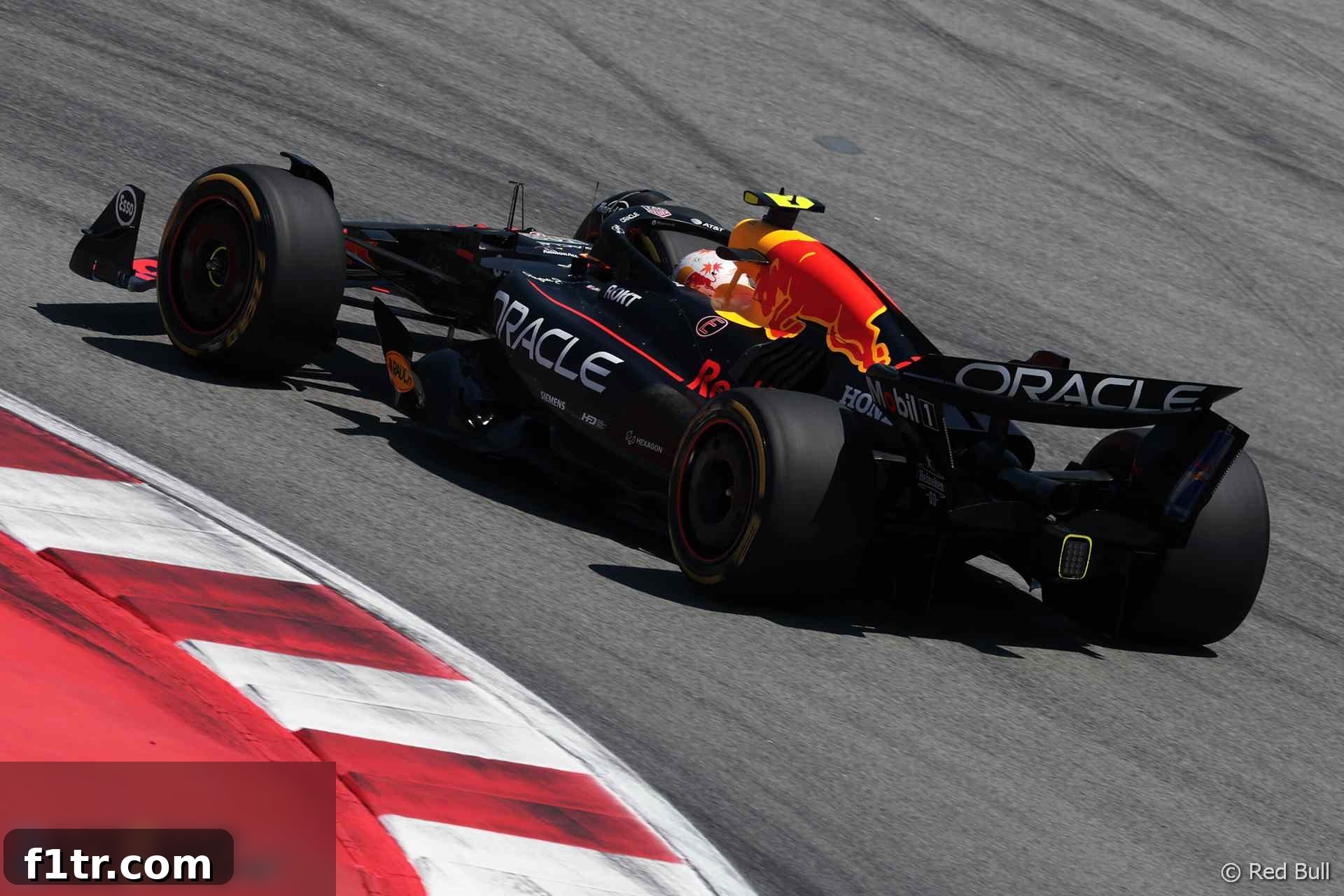
FIA documents swiftly confirmed the scope of Red Bull’s intervention, detailing changes to Tsunoda’s RB21. Specifically, the team altered the suspension setup and switched to a different rear wing specification. Both of these modifications are considered substantial enough to warrant a pit lane start. This move is a clear indication that Red Bull believes the potential gains from a radical setup overhaul outweigh the inherent disadvantage of starting outside the conventional grid formation.
This strategic gamble speaks volumes about the team’s analysis of Tsunoda’s qualifying performance. Finishing last, significantly off the pace of his teammate and the rest of the field, triggered a desperate response. For Red Bull, a team accustomed to fighting at the sharp end of the grid, having a car so fundamentally out of sync with its driver is a critical issue that needed immediate, albeit penalised, rectification. The hope is that the revised setup will unlock previously untapped performance and allow Tsunoda to climb through the field, mitigating the damage of his pit lane start.
Tsunoda’s Persistent Struggles with the RB21’s Balance
The difficulties faced by Yuki Tsunoda during the Spanish Grand Prix weekend have been palpable. Throughout the practice sessions and into qualifying, the Japanese driver expressed profound dissatisfaction with the balance of his car. His frustration was evident in his candid remarks on Friday, where he admitted, “I just don’t have any idea why I am slow.” This sentiment highlights a driver’s worst nightmare: a lack of understanding or feeling with the machinery beneath him, making it impossible to extract its full potential.
His elimination in Q1 yesterday was a stark illustration of these struggles. Tsunoda’s fastest lap was over half a second slower than that of his teammate, a significant margin in the hyper-competitive world of Formula 1. What makes his situation particularly puzzling is Tsunoda’s insistence that his qualifying runs were clean. “There’s not anything, a mistake or whatever, in both laps,” he stated, suggesting the issue was purely with the car’s inherent performance or setup, rather than driver error. This compounds the challenge for the engineers, as a clean lap with poor pace is often harder to diagnose than a lap compromised by a mistake.
This recent dip in form stands in stark contrast to Tsunoda’s earlier performances this season. He qualified an impressive fifth for the season-opening round while still driving for Racing Bulls, demonstrating his raw speed and potential. He has also achieved a starting position as high as eighth on the grid for Red Bull in previous races. These earlier successes underscore that his current predicament is not due to a fundamental lack of talent, but rather a profound mismatch between his driving style and the RB21’s characteristics, or a persistent setup issue that the team has struggled to resolve.
Christian Horner’s Assessment and the Team’s Dilemma
Red Bull team principal Christian Horner echoed Tsunoda’s concerns, confirming that the driver “has struggled all weekend” with their car. Horner also revealed the team’s attempts to alleviate the issues, stating, “We went up a little on the downforce to try and help him but it’s difficult to understand, we will need to have a look at it.” This acknowledgement from the team principal signifies the gravity of the situation and the perplexing nature of Tsunoda’s performance deficit.
The team’s efforts to increase downforce, typically aimed at providing more grip and stability, clearly didn’t yield the desired results. This suggests a more complex underlying issue than simply lacking aerodynamic load. It could point to fundamental handling characteristics, tire temperature windows, or perhaps a chassis balance problem that is exacerbated by the specific demands of the Spanish circuit, known for its high-speed corners and technical sections. For a top-tier team like Red Bull, the inability to quickly diagnose and rectify a driver’s struggle with car balance is a significant concern, especially when the other car seems less affected, or at least performing at a higher level.
The need for a thorough investigation, as Horner indicated, will be paramount. Data analysis, simulator work, and detailed feedback sessions with Tsunoda will be crucial to understand why he is finding the RB21 so challenging to drive. The pressure is on the engineering team to not only explain the current struggles but also to develop solutions that prevent similar scenarios in future races, ensuring both Red Bull cars can consistently perform closer to their maximum potential.
A Pattern of Pit Lane Starts for Red Bull This Season
Alarmingly, this marks the second time in just three races that Yuki Tsunoda has been forced to start from the pit lane. His previous pit lane start occurred at Imola, an unfortunate consequence of a crash in Q1 that necessitated extensive repairs and modifications outside of parc ferme rules. While that incident was primarily a result of driver error, the current situation stems purely from a strategic decision related to car setup, highlighting different facets of challenges within the Red Bull camp.
Even more broadly, this is the fourth pit lane start in nine Grands Prix for Red Bull this year. The team’s reserve driver, Liam Lawson, also started both of his races for the team from the pits before Tsunoda replaced him at the Japanese Grand Prix. This recurring theme of pit lane starts suggests a wider pattern that Red Bull needs to address. Whether it indicates challenges in initial setup optimization, a car that is particularly sensitive to changes, or perhaps a higher propensity for incidents requiring parc ferme breaches, it is a trend that will undoubtedly be scrutinised internally.
Frequent pit lane starts are detrimental to a team’s championship aspirations. They significantly reduce the chances of scoring points, disrupt race strategies, and place immense pressure on drivers to make up ground in highly competitive fields. For Red Bull, a team aiming for championship contention, these recurring setbacks for one of their cars represent lost opportunities and a drain on resources that could be better spent on outright performance development.
The Technical Adjustments: Suspension and Rear Wing Explained
The decision to modify the suspension setup and switch the rear wing specification are among the most impactful changes a team can make to an F1 car. Suspension is fundamental to how a car handles, influencing mechanical grip, tire contact patch, and overall balance through corners. Adjustments can alter how the car reacts to bumps, how it transfers weight, and its responsiveness to steering inputs. A radical change suggests the original setup was fundamentally flawed for Tsunoda’s needs or the circuit characteristics, or that the team is trying a completely different philosophy to unlock performance.
The rear wing, meanwhile, is a primary source of aerodynamic downforce. A different specification would typically mean a change in its angle of attack or overall design, directly affecting the car’s grip at high speeds and its drag. A higher downforce wing provides more grip but reduces top speed, while a lower downforce wing offers greater straight-line speed at the expense of cornering ability. For a track like the Circuit de Barcelona-Catalunya, which features a mix of high-speed sweeps and slower, technical sections, finding the optimal balance between downforce and drag is crucial. The team’s choice to change the rear wing suggests they are seeking a different aerodynamic compromise, possibly aiming for better stability or improved cornering performance over outright top speed, or vice-versa, depending on their analysis.
These adjustments are not made lightly, especially given the parc ferme penalty. They represent a significant commitment to altering the car’s fundamental behavior, indicating that the team believes the original configuration was severely limiting Tsunoda’s ability to drive competitively. The hope is that these targeted modifications will provide the necessary improvements in balance and grip to allow him to push the car harder and more consistently.
The Road Ahead: Challenges of Starting from the Pit Lane
Starting from the pit lane presents a unique set of challenges and opportunities for a Formula 1 driver. The most immediate disadvantage is the loss of track position, forcing the driver to start behind the entire field. This means dealing with dirty air, which reduces aerodynamic efficiency and makes overtaking significantly harder, especially on circuits like Barcelona that are notoriously difficult for passing.
However, a pit lane start also offers a strategic wildcard. Drivers can opt for a different tire compound than those starting from the grid, potentially opening up alternative strategies. They also get a clear run out of the pits on the formation lap and at the start, avoiding the congestion and potential for incidents in the main grid scramble. The key for Tsunoda will be to navigate the opening laps cleanly, make quick progress through slower traffic, and hope for a safety car period that could bunch up the field and negate some of the initial disadvantage.
Damage limitation will undoubtedly be the primary goal, but with effective strategy, strong pace, and a stroke of luck, a points finish might not be entirely out of reach. Tsunoda will need to demonstrate exceptional race craft and discipline to make the most of this challenging starting position.
Implications for Tsunoda’s Future and Red Bull’s Season
This Spanish Grand Prix weekend is proving to be a highly critical juncture for Yuki Tsunoda. His ongoing struggles with the car, compounded by the drastic measures taken by Red Bull, place his position and future within the Red Bull driver programme under intense scrutiny. While Tsunoda has shown flashes of brilliance, consistency and the ability to adapt to challenging machinery are key attributes sought by top teams.
A strong recovery drive from the pit lane, even if it doesn’t yield a significant points haul, could go a long way in rebuilding confidence and demonstrating his fighting spirit. Conversely, another underwhelming performance, despite the setup changes, would only amplify the questions surrounding his long-term prospects. For Red Bull, ensuring both cars are performing consistently is crucial for their Constructors’ Championship aspirations. The continuous need for significant interventions or the recurrence of pit lane starts for one car can impede their overall team performance and strategic flexibility.
Conclusion: A High-Stakes Gambit at the Spanish Grand Prix
Yuki Tsunoda’s Spanish Grand Prix journey is set to begin from the pit lane, a direct consequence of Red Bull’s audacious decision to overhaul his car’s setup outside of parc ferme. This move reflects a deep-seated concern over his qualifying performance and a desperate bid to unlock the car’s potential. The changes to suspension and rear wing represent a significant gamble, one that Red Bull hopes will pay off by transforming Tsunoda’s race-day pace.
The challenges ahead are formidable, from navigating traffic and managing tires to simply finding a rhythm with a fundamentally altered car. For Tsunoda, this race is not just about points; it’s about demonstrating resilience, adapting to adversity, and proving his worth in the highly competitive world of Formula 1. All eyes will be on the young Japanese driver and the effectiveness of Red Bull’s high-stakes gamble as the Spanish Grand Prix unfolds.
2025 Spanish Grand Prix
- Verstappen: Don’t blame Spanish GP penalty for hitting Russell if I narrowly lose title
- Russell’s radio comments influenced Red Bull’s decision to let him past Verstappen
- Verstappen says he won’t make any changes to his driving to avoid a ban
- ‘No issues’ with Verstappen but ‘it’d be different if he’d taken me out’ – Russell
- Ferrari “don’t want us to talk much” about “massive” Spanish GP problems – Hamilton
Browse all 2025 Spanish Grand Prix articles