Romain Grosjean: From Bahrain Inferno to a Life Transformed
In a sport defined by speed and danger, few moments have captivated the world with such raw intensity as Romain Grosjean’s horrific crash at the 2020 Bahrain Grand Prix. What began as a routine first lap erupted into a terrifying inferno, trapping the former Formula 1 driver in his Haas machine for a harrowing 28 seconds. Yet, from the ashes of that fiery ordeal, Grosjean has emerged not only physically recovered but also profoundly transformed, describing how this near-death experience has, paradoxically, imbued his life with new meaning and positive effects.
The Fiery Bahrain Crash: A Miracle of Survival
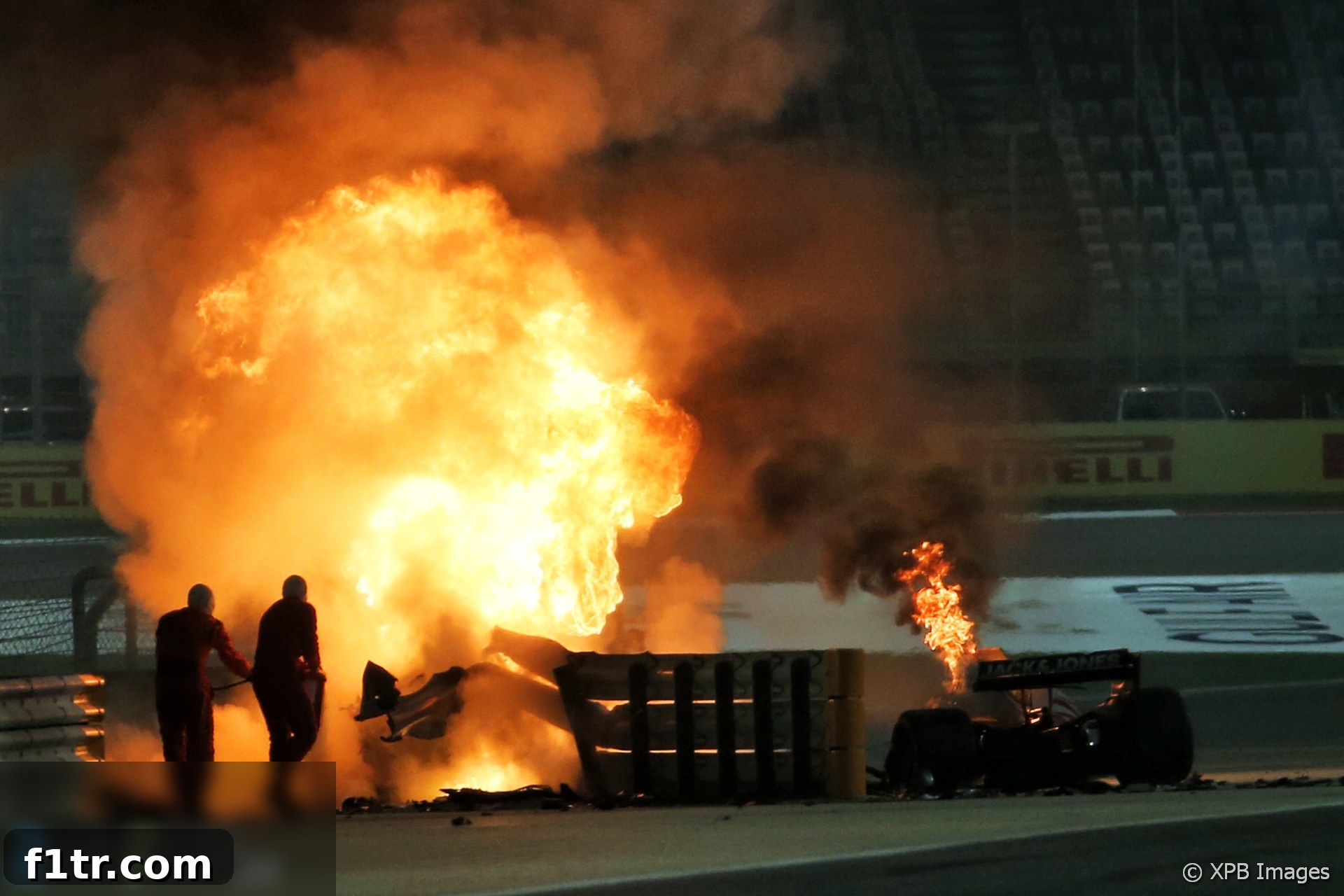
The images from that fateful day in Bahrain remain seared into the collective memory of motorsport fans worldwide. On the opening lap, Grosjean’s car made contact with another competitor, sending him careening off track at high speed. The impact with the barrier was catastrophic, ripping his car in half and instantly engulfing it in a ball of flame. For what felt like an eternity, Grosjean was trapped within the burning wreckage, battling against the inferno to free himself. The mere 28 seconds it took him to escape felt like a lifetime, a desperate fight for survival against unimaginable odds.
He recounts the terrifying moments within the blaze, the overwhelming heat, and the profound fear for his life. It was a test of human spirit and resilience, aided by the rapid response of the medical team and the critical safety advancements in Formula 1, particularly the Halo device, which undoubtedly saved his life. While the world watched in stunned silence, Grosjean performed an act of immense courage, pulling himself from the burning chassis, his hands the most exposed to the flames.
A New Perspective: Psychological Healing and Personal Growth
The physical scars from the Bahrain crash are visible, particularly on Grosjean’s left hand, but the journey of recovery extended far beyond the superficial. Just two days after the incident, he embarked on an intensive course of psychological therapy. Recognizing that an experience of such magnitude could not be left unaddressed, Grosjean proactively sought professional help to process the trauma and its potential long-term consequences. This immediate and focused approach allowed him to confront the difficult phases and emotions head-on.
Speaking to the BBC, Grosjean reflected on this pivotal chapter: “Obviously, it’s a big thing in my life but I must say I’m very happy nowadays. That experience was a tough one, I don’t wish anyone to go through that, but also made my life better.” This candid admission highlights a remarkable shift in perspective. The near-fatal accident, while traumatic, became a catalyst for introspection, gratitude, and a deeper appreciation for life, family, and his passion for racing. His work with his psychologist was instrumental in navigating these complex emotional landscapes, helping him to internalize the lessons learned and integrate the experience into a positive outlook.
The Road to Physical Recovery: Healing Hands, Renewed Determination
Romain Grosjean’s escape from the flames left him with significant burns, predominantly to his left hand. His right hand, while needing sun protection for a couple of years, healed remarkably well. The left hand, however, presented a more challenging recovery. Described by Grosjean as “still quite red,” “not pretty,” and “not very comfortable,” it required constant attention, including “creaming every hour or so and some treatment and a bit of work through the day.” This diligent and ongoing physical therapy underscored his commitment to regaining full functionality.
The motivation behind this arduous recovery was deeply personal and professionally driven. Grosjean articulated his priorities with poignant simplicity: “The most important thing is that I can play with my kids, I can cuddle them, and also I can drive a racing car.” These fundamental desires fueled his determination, transforming physical therapy into a purposeful journey rather than a mere obligation. The decision to resume his racing career provided a clear target, a tangible goal around which his physical rehabilitation could revolve. He explained, “I always think a sportsman needs a target to come back from injury. And for me, 31st of January was kind of the date where I wanted to be able to use my hands properly, and my left thumb with the ligament issues, I had to go to surgery for the ligament.” This self-imposed deadline, aligned with his planned IndyCar test, became a powerful motivator, driving him to “speed up the process, to keep doing the rehab and to push my body to heal faster.”
Back in the Cockpit: The Thrilling IndyCar Debut
Despite the life-altering crash and the ongoing physical recovery, Grosjean’s passion for motorsport remained undimmed. His next chapter saw him transition from the pinnacle of Formula 1 to the fiercely competitive world of IndyCar. He returned to the cockpit for an IndyCar test in February, marking his first time back in a racing machine since the Bahrain incident. The apprehension that might have been expected was quickly replaced by a sense of belonging. “When I jumped back in a racing car, things felt pretty normal,” he recounted. “I felt home, even though it was a different car.”
His official return to competitive racing occurred last month, making his debut in the series for Coyne/Rick Ware. This moment was another significant milestone, testing not only his physical readiness but also his psychological fortitude in a competitive environment. The question of how he would perform, how he would react to the stresses of a race start, loomed large. Yet, Grosjean proved his mettle once again. “Then the big question was how the first race was going to be when I was restarting the season in IndyCar. And actually it went really well and since then I feel good in a race car,” he affirmed. For Grosjean, racing is more than a profession; it is an intrinsic part of his identity. “It is my passion, it is my life. And I guess it’s also made [me the] dad that I am because I live what I like to live.” His successful return to IndyCar racing stands as a testament to his unwavering spirit and dedication to the sport that defines him.
A Farewell Lap: The Special Mercedes F1 Test
The Bahrain crash prematurely ended Romain Grosjean’s Formula 1 career, preventing him from participating in the final two races of the 2020 season, which were meant to be his swansong in the pinnacle of motorsport. Recognizing this unceremonious departure, Mercedes CEO Toto Wolff extended an incredibly generous and thoughtful offer: the opportunity for Grosjean to drive one of their Formula 1 cars. This gesture was not merely about driving; it was about providing closure and a proper farewell to a career that spanned a decade in F1.
The special test is scheduled for two days at the iconic Paul Ricard circuit in June, strategically placed between his demanding IndyCar races at Road America and Mid-Ohio. Grosjean anticipates this as “a very, very special day.” The first part of this unique experience will be an emotional one: a few laps during the French Grand Prix on June 27th, allowing him to greet his home crowd. “It’s great to see that even with Covid, the French Grand Prix is able to get few fans. So that’s going to be a good way to say goodbye to my fans,” he noted, emphasizing the personal significance of this moment.
Following the Grand Prix, a full day of testing awaits him on the Tuesday. This session is designed for him to fully immerse himself in the experience, enjoy the car, and provide valuable feedback to the Mercedes engineers. This rare opportunity, he acknowledges, is “just going to be a beautiful experience and I’m very lucky to have that because that is very rare in Formula 1.” It’s a poignant and fitting conclusion to his Formula 1 chapter, allowing him to end on his own terms, surrounded by the passion of the sport and the gratitude of its fans.
Embracing Life: A Legacy of Resilience and Gratitude
Romain Grosjean’s journey since the Bahrain Grand Prix crash is a powerful narrative of resilience, courage, and profound personal growth. His story transcends motorsport, offering universal lessons on confronting adversity, the importance of psychological well-being, and the transformative power of perspective. Despite enduring a terrifying ordeal and severe physical injuries, he has channeled his experience into a renewed appreciation for life, family, and his enduring passion for racing.
His candid discussions about his recovery, both physical and mental, highlight the strength of the human spirit. Grosjean’s ability to not only return to competitive racing but also to openly share how the crash “made my life better” speaks volumes about his character. He embodies the spirit of a true sportsman and a man who has learned to cherish every moment, driving forward with an unyielding determination to live fully, both on and off the track. His incredible journey serves as an enduring inspiration, proving that even from the brink of disaster, one can forge a stronger, more meaningful existence.