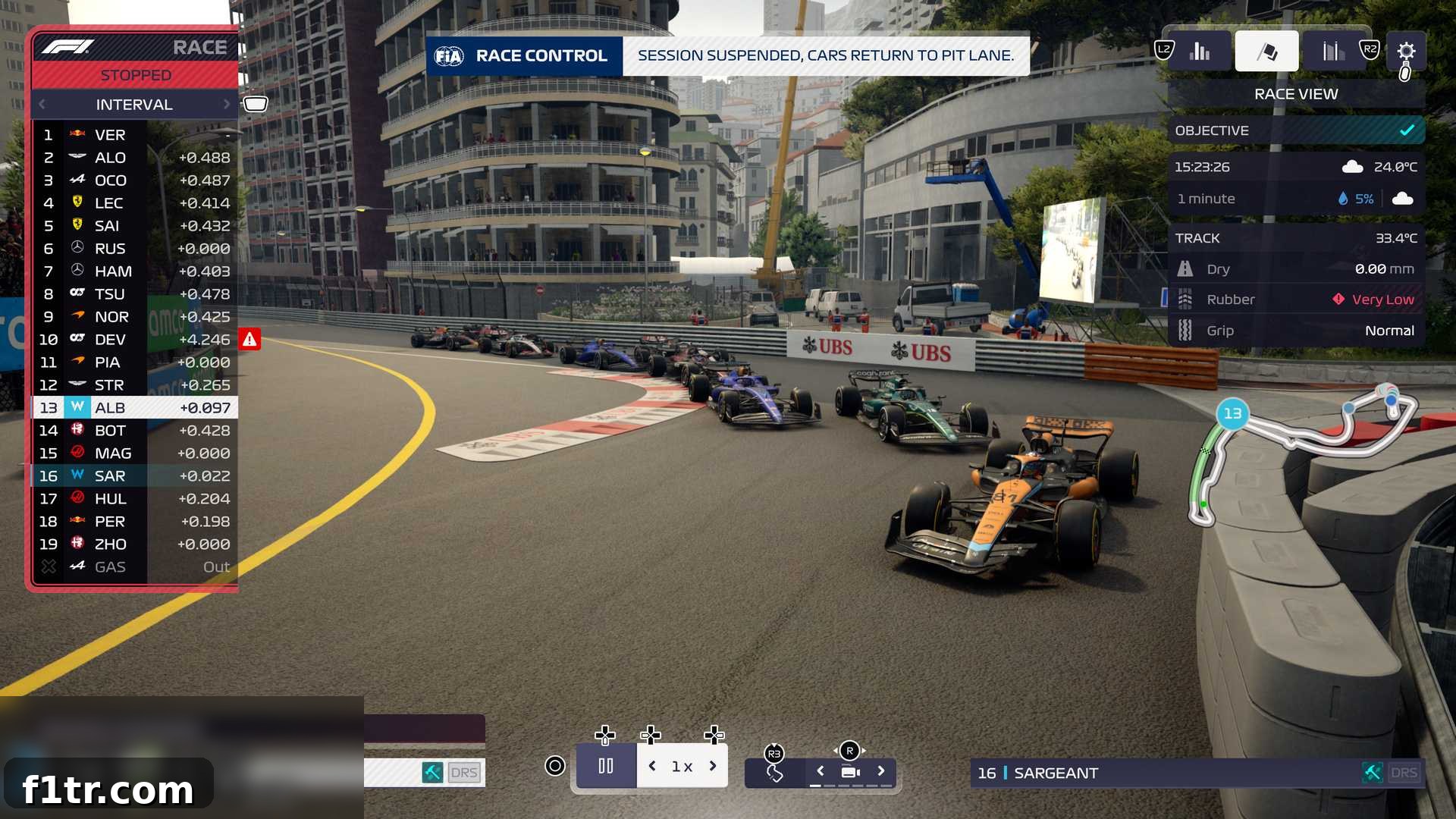
As the roar of engines fades and the Formula 1 circus packs up its gear after the Belgian Grand Prix, the sport officially enters its much-anticipated summer break. For the next three weekends, the world of F1 goes quiet, leaving avid fans yearning for the thrill of on-track action. This quiet period, however, marks the perfect backdrop for a new virtual experience to emerge, offering enthusiasts a fresh way to engage with their favorite motorsport. This is precisely the void that F1 Manager 23 aims to fill, launching publicly just a day after the checkers wave at Spa, providing a compelling distraction until the end of August.
F1 Manager 23 is the second installment in the officially licensed F1 management game franchise, developed by Frontier Developments. Its predecessor, F1 Manager 22, was a groundbreaking title, marking the return of an official F1 management simulation after two decades. Available on both consoles and PC, F1 Manager 22 was lauded as an impressive initial effort. It successfully delivered an accessible management experience, inviting a broad audience into the strategic depths of Formula 1. While it may not have offered the same granular complexity found in veteran management simulations like Football Manager or even PlaySport Games’ Motorsport Manager, it laid a solid foundation, proving the demand for a modern, licensed F1 management game.
The crucial question for many fans, especially those who invested in last year’s title, is whether F1 Manager 23 justifies its £45 price tag. Does this first sequel in the series introduce enough substantive changes and enhancements to warrant a new purchase? Or is it merely a superficial update, repackaging familiar mechanics with a fresh coat of paint? The answer lies in the detailed refinements and new features that subtly, yet significantly, elevate the gameplay experience, addressing many of the feedback points from its debut season.
Upon launching F1 Manager 23, players will immediately notice a strong sense of familiarity. This is not an extensive overhaul but rather an evolutionary step, akin to the yearly iterations seen in other popular sports franchises like F1 23 or NBA 2K23. From the user interface and menu navigation to the core gameplay loop and control schemes, the experience is largely consistent with its predecessor. Even the charming, albeit sometimes moody, driver animations on the title screen make a welcome return, providing a subtle touch of character each time you boot up the game. This immediate comfort allows players to dive straight into the action without a steep learning curve, leveraging their existing knowledge of the game’s systems.
Naturally, F1 Manager 23 is fully updated with all the official teams and driver data for the current 2023 Formula 1 season. This includes the complete roster of main drivers, reserve drivers, and a more comprehensive representation of team personnel. Notably, McLaren’s engineering team now features prominent figures like Tom Stallard and Will Joseph, adding an extra layer of authenticity to the team management aspect. Furthermore, the game beautifully renders the new circuits on the 2023 calendar, Losail and Las Vegas, capturing their unique characteristics and the stunning nighttime atmosphere that defines these highly anticipated races. These visual and data updates are essential for any licensed sports simulation, ensuring players are immersed in the most current F1 world.
One of the most significant improvements in F1 Manager 23 stems from Frontier Development’s commitment to post-launch support for its inaugural title. F1 Manager 22 initially launched without certain key functionalities, such as the crucial ability to un-lap cars behind the Safety Car. Following considerable fan feedback, many of these requested features were subsequently integrated through patches towards the end of last year. Crucially, all these vital enhancements are carried over into F1 Manager 23 from day one, making the new game inherently superior to the original at its launch. This proactive approach by the developers demonstrates a clear dedication to refining the player experience. Beyond these inherited improvements, F1 Manager 23 introduces a wealth of new gameplay enhancements that deepen the strategic layer and improve the overall immersion.
Perhaps the most immediately apparent addition to the F1 Manager 23 calendar is the full integration of sprint rounds, a feature conspicuously absent from F1 Manager 22. All six sprint weekends for the current season are faithfully reflected in the game, allowing players to experience the unique strategic challenges posed by this condensed format. However, some players may find it regrettable that there is no option to opt out of sprint rounds from the calendar, forcing every team principal to contend with them. It’s also important to note a specific rule implementation: while sprint races are included, they operate under the 2022 regulations, meaning Saturday’s sprint race result directly determines the starting grid for Sunday’s Grand Prix. This differs from the current real-world 2023 format, which separates the sprint from the main race grid, but it still adds a compelling layer of tactical decision-making for players, influencing practice sessions and qualifying strategies.
At its core, team management in F1 Manager 23 retains the robust systems established in the previous iteration. Players will find themselves immersed in the familiar processes of developing and manufacturing cutting-edge parts for their cars, meticulously managing the budget cap to ensure financial compliance, and strategically upgrading their team’s facilities. These upgrades are crucial for enhancing car design capabilities, attracting and retaining top-tier staff, and ensuring overall team happiness and efficiency. Building upon this solid foundation, a significant new addition for this season is the ability to set specific development focuses for both drivers and staff. This allows team principals to target particular weaknesses, whether it’s a driver’s raw one-lap pace, their understanding of intricate ground effect aerodynamics, or their mastery of overbody downforce. This granular control over development pathways empowers players to sculpt their team members and cars with greater precision, fostering a more tailored and long-term strategic approach.
The driver management aspect has received substantial enhancements, particularly concerning the longevity and progression of careers within the game. For the first time, Formula 2 and Formula 3 seasons are now fully simulated, enabling players to meticulously follow both championships. This allows for a more informed and strategic scouting process, as you can track the performance of promising young prospects and identify future stars before they break into Formula 1. A pivotal change from last year’s game is the introduction of age-related skill deterioration. As seasons progress, drivers’ skills and abilities will begin to decline with age. This means the grid will no longer be perpetually dominated by an elite cadre of older drivers maintaining peak performance indefinitely. Instead, once drivers reach their late thirties and early forties, their abilities will slowly but surely degrade, accelerating over time. This crucial addition introduces a dynamic element to roster management, making seasoned veterans less viable long-term options compared to younger talents who, despite perhaps lacking in some areas initially, possess greater upside and development potential. Furthermore, in a much-requested quality-of-life improvement, when signing a new driver, players now have the option to commence their contract from the following season, rather than being forced to immediately replace and potentially jettison an existing driver from the team. This offers greater flexibility in contract negotiations and long-term planning.
On the track, F1 Manager 23 delivers a more dynamic and engaging race experience through several key innovations. Driver confidence now plays a tangible role in performance during sessions. This metric ebbs and flows throughout a race, dynamically reacting to on-track events. A successful overtake or a strong sector time on fresh tires will boost confidence, potentially leading to bolder, more effective driving. Conversely, losing a position or making a mistake can dent a driver’s morale, making them more susceptible to errors or less effective in late-braking maneuvers. Players can now exert greater micromanagement over their drivers during a race, providing instructions on how aggressive they should be when attacking rivals or defending their position, in addition to the previous set of instructions. This deeper level of control allows for more nuanced tactical adjustments throughout a Grand Prix. To further enhance the immersive viewing experience, all camera options from last year’s game are present, complemented by the exciting introduction of a new visor camera, offering a true-to-life driver onboard perspective.
Addressing a common point of contention from the previous installment, the relentless radio messages concerning tyre temperatures have been significantly reduced, allowing for a less intrusive and more focused race experience. The tyre temperature system itself has also been expanded to include both carcass temperature and surface temperature, offering a more realistic representation of tyre performance and degradation. Moreover, ambient circuit temperatures now exert a greater impact on the state of a driver’s tyres, meaning that meticulous attention to weather conditions and track temperature becomes a critical factor when devising pre-race pit strategies. These refinements create a more authentic and challenging tyre management puzzle for players to solve.
Pit stops, often described as the “ballet of the pit lane,” receive a major spotlight in F1 Manager 23. The introduction of the Sporting Director role has a profound impact on pit stop performance. As team principal, you now have the direct responsibility of setting the daily pit stop training program for your pit crew. This allows you to focus on specific aspects of a pit stop, such as wheel removal, tire change, or car jack operations, in a concerted effort to shave crucial milliseconds off your stop times. However, this new system also introduces a delicate balancing act: you must be careful not to overwork your pit crew, as an exhausted team will underperform on race day. Your team’s pit stop performance will be rigorously tracked and compared against your rivals every weekend, adding a thrilling new layer of competition to your team management strategy as you vie for the coveted title of the fastest pit crew in the paddock, potentially even challenging Red Bull’s real-world dominance.
Beyond the deeply engaging main career mode, F1 Manager 23 introduces an entirely new and innovative gameplay setting: the Race Replay feature. This mode allows players to step into real-world scenarios and races from the current season, utilizing the actual grid placings and conditions from each Grand Prix. The scenarios are regularly updated as the season progresses, providing fresh challenges. This offers a unique opportunity to take over any team and attempt to improve upon their real-life results during a specific race. Many of these scenarios also include a secondary challenge, placing a specific driver in a particular race situation and tasking players with overcoming obstacles that the real team might have struggled with, or making superior strategic decisions to those made on the pit wall in real life. For instance, you might be challenged to guide Oscar Piastri to a points finish in Melbourne or to outmaneuver Max Verstappen with Fernando Alonso when the rain begins to fall in Monaco. This mode offers incredible replayability and a direct connection to the ongoing F1 season, allowing players to rewrite history.
For those who opt for the deluxe edition, an exclusive series of original challenges further diversifies the gameplay. These unique scenarios twist the conventional rules of Formula 1 in intriguing ways, such as having all cars perform at equal levels of performance, or a grueling race in Qatar where track temperatures soar into the unforgiving 40s. While these smaller, self-contained challenges provide a refreshing change of pace and an interesting “what if” dynamic, their depth can sometimes feel limited. Although it’s fascinating to see real-world conditions reflected and exaggerated in the game, some challenges may require minimal player input, leading to a somewhat hollow victory. For example, the Silverstone challenge of getting Piastri onto the podium when the Safety Car was deployed could simply boil down to telling him to push on hard tyres during the restart while strategically pitting Lando Norris for softs instead of hards. For hardcore players seeking profound strategic depth, the expansive and evolving main career mode saves are likely to offer a more consistently rewarding experience.
Ultimately, whether F1 Manager 23 resonates with you largely depends on your enjoyment of the original game. If the core gameplay loop and its minor quirks failed to capture your attention last year, it’s unlikely that this sequel will dramatically alter your perspective. However, F1 Manager 23 is unequivocally an improvement over its predecessor, thanks to numerous small adjustments, thoughtful tweaks, and significant new features. Frontier Developments has also publicly confirmed its ongoing commitment, with the promise that players will eventually gain the highly anticipated option to switch between teams deep into their career mode saves, a feature to be added in a later patch. This indicates a clear roadmap for continued enhancement and player-driven development.
F1 Manager 23 may not represent a revolutionary reinvention of this still-young franchise, which some might have hoped for. Instead, it feels much like Aston Martin’s real-world performance – a significant and commendable step up from last year’s efforts, building on a solid foundation, but perhaps not yet quite ready to challenge for a world championship. It delivers a more refined, more comprehensive, and ultimately more enjoyable Formula 1 management experience, solidifying its place as a valuable addition to any F1 fan’s virtual library.
F1 Manager 23 Review Summary
Platform(s): PS4/5, Xbox Series S|X, Steam, EGS
Developer: Frontier Developments
Publisher: Frontier Developments
Released: Monday 31st July (Thursday 27th July – Deluxe Edition)
Price: £44.99 (Deluxe Edition: £54.99)
Related Reviews
- Next new F1 game to arrive in 2027, EA to offer 2026 season as paid DLC
- “F1 Insider: Notes from the Pit Lane” – Ted Kravitz’s new F1 book reviewed
- “Rennsport”: The RaceFans review
- “Grid to Glory: 75 Milestone F1 Moments” – Alex Jacques’ new book reviewed
- “Formula 3000: Where Legends Earned Their Stripes” reviewed
Browse all Reviews