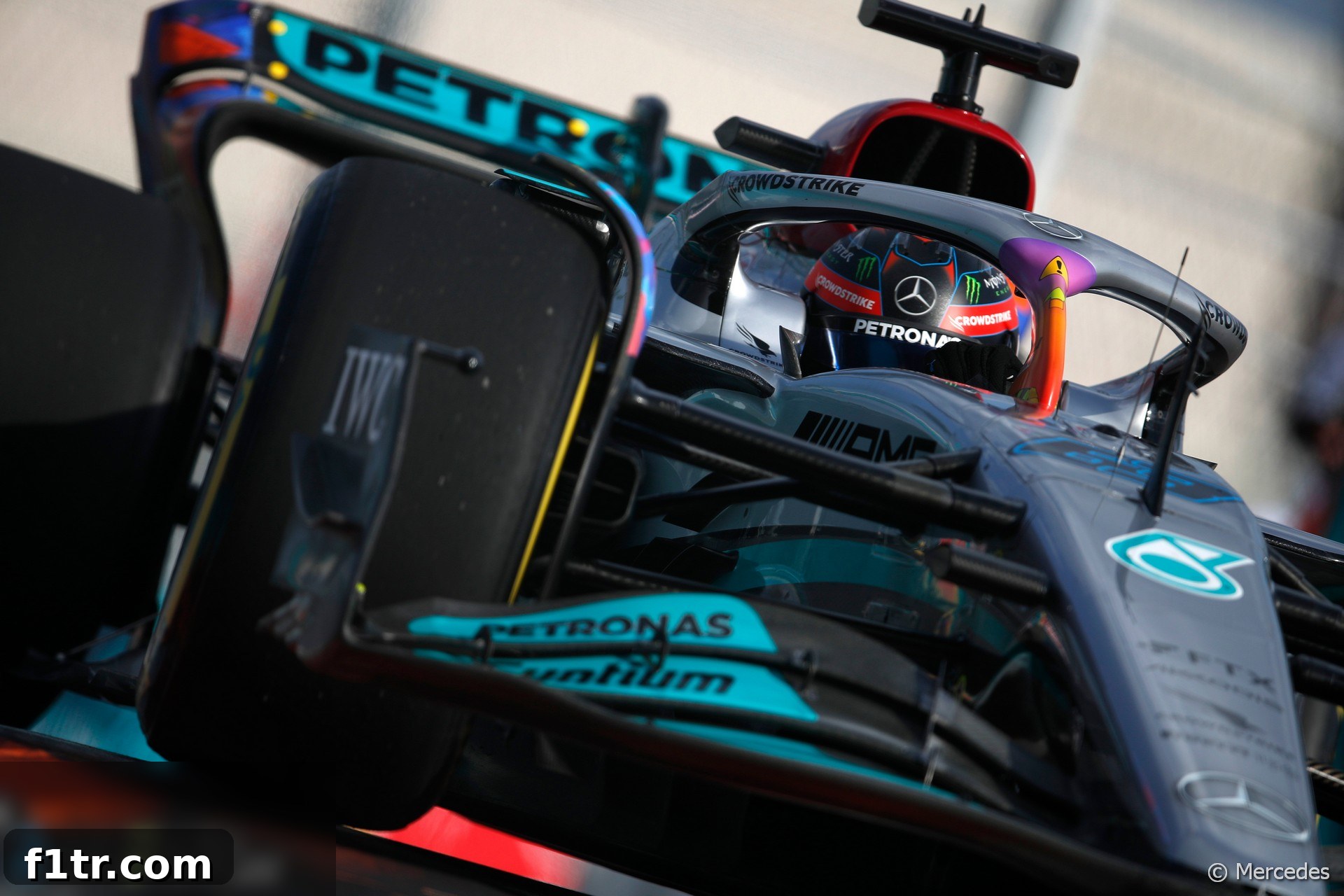
George Russell’s Miami Masterclass: How Strategic Brilliance and Fortuitous Timing Led to a Top-Five Finish
The 2022 Miami Grand Prix delivered a blend of high-octane racing and strategic intrigue, and perhaps no driver encapsulated this more perfectly than George Russell. Starting a challenging 12th on the grid, Russell orchestrated a remarkable recovery drive, culminating in a highly impressive fifth-place finish for the Mercedes-AMG Petronas Formula One Team. This stellar result was a testament to his astute race management, Mercedes’ courageous strategic calls, and a well-timed Safety Car intervention that played directly into their hands. Russell, ever the pragmatist, acknowledged the element of luck, stating he “got a bit lucky” – a humble assessment of what was undeniably a meticulously executed plan amidst the backdrop of a difficult season for the Silver Arrows.
The Genesis of a Gamble: A Risky Hard Tyre Strategy
Mercedes entered the 2022 Formula 1 season grappling with significant challenges posed by the new technical regulations, most notably the infamous “porpoising” phenomenon plaguing their W13 challenger. Qualifying in Miami had underscored these difficulties, leaving both Russell and his seasoned teammate, Lewis Hamilton, further down the grid than they were accustomed to. Russell found himself P12, a position that demanded an aggressive yet calculated approach to Sunday’s race.
Faced with limited outright pace compared to the dominant Red Bull and Ferrari cars, the Mercedes strategy team opted for an unconventional and bold move: starting Russell on the hard compound tyres. This decision starkly contrasted with many of his rivals who chose the medium compound, aiming for better initial grip and pace. The hard tyre, while offering superior durability and a longer potential stint, typically takes longer to warm up and provides less grip in the early phases of a race.
“Those opening laps were really tough,” Russell recounted, reflecting on the immediate aftermath of the lights out. “I got completely swallowed up on lap one and I just knew I needed to stay out of trouble.” Indeed, starting on the hard compound meant a significant trade-off. Russell initially lost three places, dropping further down the order as cars on the quicker mediums surged past. This initial setback was, however, a calculated sacrifice. The team’s plan was clear: endure the challenging early phase, manage the tyres diligently, and critically, hope for an opportunity to capitalize on an extended first stint.
This “offset strategy” is inherently a high-risk, high-reward gamble in the world of Formula 1. It demands supreme confidence in the driver’s ability to preserve the tyres over an extended period and the team’s foresight to predict potential race disruptions. Mercedes and Russell were effectively betting on two key factors: the hard tyres lasting an exceptionally long time, thereby allowing them to run deep into the race, and the ever-present possibility of a Safety Car or Virtual Safety Car (VSC) period disrupting the race and leveling the playing field. As the Grand Prix unfolded, Russell demonstrated exceptional tyre management, patiently making his way through the field as competitors ahead of him peeled off into the pit lane for their scheduled stops. By running a very long opening stint, he found himself in fifth position – a remarkable climb – becoming the highest-running driver yet to make a pit stop, perfectly poised for the pivotal moment that was about to arrive.
Advert | Become a Supporter & go ad-free
The Hand of Fortune: A Perfectly Timed Safety Car Intervention
The Miami Grand Prix had progressed with a relatively calm demeanor for its first two-thirds, but that tranquility was abruptly shattered on Lap 41. A dramatic collision involving Alpine’s Pierre Gasly and McLaren’s Lando Norris brought out the Virtual Safety Car, fundamentally altering the complexion of the race. Gasly, having made contact with Norris, saw the McLaren driver spin into the wall, forcing a retirement from the race. This incident was precisely the kind of unforeseen opportunity that Russell and the Mercedes strategy team had been patiently, almost wishfully, awaiting.
Crucially, at the exact moment the VSC was deployed, Russell found himself traversing the back straight of the Miami International Autodrome, putting him in an optimal position to respond decisively. He was approaching the pit lane entry, allowing him to dive in immediately for fresh medium compound tyres. The timing was nothing short of miraculous. Under VSC conditions, cars must reduce their speed significantly, minimizing the time lost during a pit stop compared to a regular race lap. This enabled Russell to gain a substantial advantage, effectively completing his mandatory pit stop without losing significant track position. He rejoined the race in seventh place, just behind his veteran teammate, Lewis Hamilton, who had already completed his pit stop much earlier in the race.
The drama, however, was not yet over. Shortly after the VSC was called, race officials deemed it necessary to deploy the full Safety Car to allow marshals to safely recover Norris’s stricken McLaren and clear the debris scattered across the track. This development further solidified Russell’s strategic advantage, transforming a good situation into an excellent one. The full Safety Car period neutralized the entire field, bunching up all the cars and effectively eliminating any time gaps that had built up between competitors. For Russell, who now had fresh, grippier medium tyres compared to many of his direct rivals who were on older or harder compounds, this was an absolutely ideal scenario. It set him up perfectly for an aggressive charge in the closing stages of the Grand Prix, with a clear opportunity to gain further positions.
The Post-Safety Car Sprint: Overtaking Teammates and Rivals
When the Safety Car eventually peeled into the pit lane and the race restarted, the final laps were transformed into an intense, high-stakes sprint to the chequered flag. Russell, armed with his significantly fresher medium compound tyres, was immediately on the attack. His first target was his teammate, Lewis Hamilton, who was running on older hard tyres and therefore struggling for outright grip and pace. The battle between the two Mercedes drivers was clean yet decisive, with Russell demonstrating superior traction and speed to execute a pass on the seven-time world champion. This move was not just about position; it was a clear statement of Russell’s capabilities and current form.
His next target was Valtteri Bottas in the Alfa Romeo, who was also on relatively older tyres and battling to maintain position. Russell executed another clinical overtake, showcasing his exceptional race craft and ability to seize opportunities with precision. These decisive moves allowed him to climb two crucial positions in quick succession during the restart phase, solidifying his fifth-place finish and capping off an extraordinary recovery drive.
“You sound like a bit of a genius when things like that happen,” Russell mused, reflecting on the outcome and the role of the Safety Car. “But that’s the case when you’re on an offset strategy. We had P7 covered. There was no point to pit, we may as well have just stayed out there and hope that something like that would happen and we got a bit lucky today.” His words perfectly encapsulate the intricate blend of strategic foresight and fortunate timing. While the Safety Car was undeniably a stroke of luck, it was luck that only manifested and could be fully capitalized upon because Mercedes had meticulously put themselves in a position to exploit such an event. Had they pitted earlier, adhering to a more conventional strategy, they would have completely missed this golden opportunity. It was a testament to the team’s brave decision-making and Russell’s unwavering execution under pressure.
A Remarkable Streak: Consistency Amidst Mercedes’ Challenges
Finishing fifth, and notably ahead of his illustrious teammate Lewis Hamilton, was a significant achievement for Russell, especially given Mercedes’ struggles to extract consistent top-tier performance from the W13. The result extended an already impressive streak for the young Briton: he had now finished all five races of the 2022 Formula 1 season inside the top five positions. This remarkable consistency, particularly in a car that was clearly not a front-runner and was battling fundamental issues like porpoising, highlighted Russell’s exceptional talent, adaptability, and unwavering ability to maximize every single opportunity presented to him on track.
When pressed on whether fifth and sixth were the highest places Mercedes could realistically aim for at that point in the season, Russell offered a nuanced and insightful perspective: “Yes and no.” He elaborated, “Five and six is where we deserve to be. Obviously, we’ve probably underperformed at some of the circuits, especially on Saturdays, which makes it difficult for us. But for sure this weekend is where we’ve shown the most amount of promise. But we’re a long way, a long way off still.”
This candid assessment underscored the ongoing challenges faced by Mercedes. While the Miami Grand Prix offered a glimmer of hope and showed better performance, particularly in race trim and tyre management, the fundamental issues with the car – especially its qualifying pace and inherent lack of speed compared to the leading contenders – remained a significant hurdle. Russell’s ability to consistently deliver strong Sunday results, even when starting further down the grid, was a testament to his mature race craft, strategic acumen, and unwavering determination. He was effectively outperforming the car’s inherent capabilities, extracting every possible point for the team during a difficult and critical developmental phase. His performances were crucial for maintaining Mercedes’ position in the Constructors’ Championship standings while they worked tirelessly on solutions.
Looking Ahead: Mercedes’ Path to Recovery and Russell’s Pivotal Role
The Miami Grand Prix, for all its strategic brilliance and fortunate timing for George Russell, served as a stark reminder of Mercedes’ position in the 2022 pecking order. While a fifth and sixth-place finish might have been a welcome relief and a strong points haul, it was still a considerable distance from the dominant performances the team had grown accustomed to in the hybrid era. The gap to Red Bull and Ferrari remained substantial, particularly in outright qualifying pace and straight-line speed, crucial metrics in modern Formula 1.
However, Russell’s exceptional performance offered a beacon of hope and demonstrated the profound impact a driver can have even with a challenging car. His strategic intelligence, combined with his raw speed, precise execution, and ability to manage tyres, showed that even with a difficult package, points and strong finishes were attainable through smart decisions and flawless driving. His consistent top-five finishes were invaluable for Mercedes in the Constructors’ Championship, keeping them in the hunt for podiums and minimizing the damage during what was undoubtedly a challenging developmental phase for the team.
As the 2022 season progressed, Mercedes would continue its arduous journey of understanding and improving the W13. Russell, with his analytical approach, consistent feedback, and relentless pursuit of performance, would play a crucial and pivotal role in this development process. His Miami performance was more than just a lucky break; it was a carefully planned operation that highlighted his immense potential and solidified his position as a key figure in Mercedes’ long-term future. It proved that even when the odds are stacked against them, a combination of audacious strategy, undeniable skill, and a touch of timely fortune can still yield significant results in the cutthroat world of Formula 1. The team knew they were “a long way off still,” but races like Miami provided crucial data, boosted confidence, and offered a clear blueprint for maximizing opportunities while they worked tirelessly to bridge the performance gap to the front-runners. Russell’s ability to consistently deliver these results under pressure was a cornerstone of Mercedes’ resilience in a season of unexpected challenges.
Advert | Become a RaceFans supporter andgo ad-free
More from the 2022 Miami Grand Prix
- Why TecPro barriers weren’t used at Miami chicane where Sainz and Ocon crashed
- Miami’s track surface is ‘a safety issue and does not offer good racing’ – Russell
- Miami Grand Prix draws F1’s largest live US television audience
- Alpine complain they had no say over penalty which cost Alonso points
- Red Bull wary of Ferrari’s high-speed cornering strength in Barcelona
Browse all 2022 Miami Grand Prix articles