In a sport where precision, speed, and adherence to regulations are paramount, the penalty point system serves as a crucial mechanism to maintain discipline and ensure fair play. Earlier this year, Kevin Magnussen made headlines by becoming the first driver to receive an automatic race ban under this system, accumulating the dreaded 12 penalty points on his licence. This landmark event highlighted the system’s impact and the very real consequences drivers face for repeated infringements. Yet, remarkably, one of Formula 1’s most dominant figures has amassed an even greater tally of penalty points since the system’s inception, all while skillfully navigating the tightrope of a potential suspension: three-time world champion, Max Verstappen.
The FIA introduced penalty points to drivers’ licences in 2014, aiming to deter dangerous driving and enforce consistent rule-following. A driver reaching 12 penalty points within a rolling 12-month period automatically faces a one-race ban. While Magnussen’s ban underscored the system’s potency, Verstappen, despite accumulating the highest number of points overall since 2014, has masterfully avoided such a fate. His ability to stay clear of a ban, even after picking up additional points in recent race weekends, is a testament to his strategic racing and perhaps a touch of good timing. Just today, two points he incurred at the Las Vegas Grand Prix 12 months ago expired, bringing his current total down to five points, further distancing him from the risk of a suspension.
It’s important to clarify that possessing the most penalty points doesn’t inherently brand a driver as the “bad boy” of the grid. The crucial factor is not merely the cumulative total, but the *rate* at which these points are accrued and, more significantly, the 12-month expiry period. Magnussen’s scenario illustrates this perfectly; his rapid accumulation of points led to his ban. He amassed points at an average rate of 0.2 per Grand Prix weekend. In contrast, Verstappen’s average stands at a slightly lower 0.19 points per start, a seemingly small difference that has proven critical in avoiding a ban. Historical data reveals even higher averages for certain past drivers, most notably Daniil Kvyat, whose career average stood at a significant 0.25 points per start, indicating a propensity for more frequent infractions relative to his race participation.
Since making his Formula 1 debut with Red Bull’s sister team, Toro Rosso (now known as RB), in 2015, Verstappen has accumulated a staggering total of 39 penalty points, two more than Magnussen’s career tally. His rookie year was particularly eventful, seeing him collect eight points. This included his sole three-point violation for driving excessively quickly during a Safety Car period at the Hungarian Grand Prix, a clear indication of his early career aggression and eagerness to push boundaries. Another notable incident from his debut season was causing an incident with Romain Grosjean at the Monaco Grand Prix, resulting in two points, underlining a period of rapid learning and sometimes overzealous maneuvers.
The following year marked a significant shift in Verstappen’s career trajectory and penalty point accumulation. Promoted to Red Bull Racing at the fifth round of the 2016 season, he largely managed to stay out of trouble, demonstrating a newfound maturity and control. By the time he embarked on his first full season as a Red Bull driver in 2017, his licence carried only a single penalty point. While he came close to the ban threshold in 2018, acquiring more than half the necessary points, he impressively maintained a clean sheet throughout 2019 and 2020, showcasing a period of consistent, disciplined driving. This period of relative calm proved crucial for his development into a championship contender.
However, the intense and often controversial 2021 championship battle with Lewis Hamilton saw both drivers pushing the limits, inevitably leading to increased scrutiny and penalties. Verstappen picked up points on four occasions that year, with three of these incidents directly involving his championship rival. Significant penalties included a collision with Hamilton at the Italian Grand Prix and two separate infractions during the Saudi Arabian Grand Prix – one for leaving the track and gaining an advantage, and another for dangerous braking that led to a collision with Hamilton. These incidents highlighted the high stakes and fierce competition that characterized one of F1’s most memorable seasons, where every millimeter and every rule interpretation was challenged. Despite the close calls and intense pressure, Verstappen managed to clinch his first world title without reaching a ban.
In the subsequent two seasons, as Verstappen cemented his dominance with consecutive world championships, his penalty point accumulation significantly reduced. Each year saw only a single incident deemed worthy of penalty points. In 2022, he received two points for causing a collision with Lewis Hamilton once more, this time at the Brazilian Grand Prix, another testament to the enduring rivalry. Then, in 2023, he incurred two points for forcing Charles Leclerc off the track at the start of the Las Vegas Grand Prix, an aggressive move typical of a driver vying for track position in a critical race. These isolated incidents, occurring amidst overwhelming championship success, suggest a calculated approach to risk-taking rather than reckless disregard for rules.
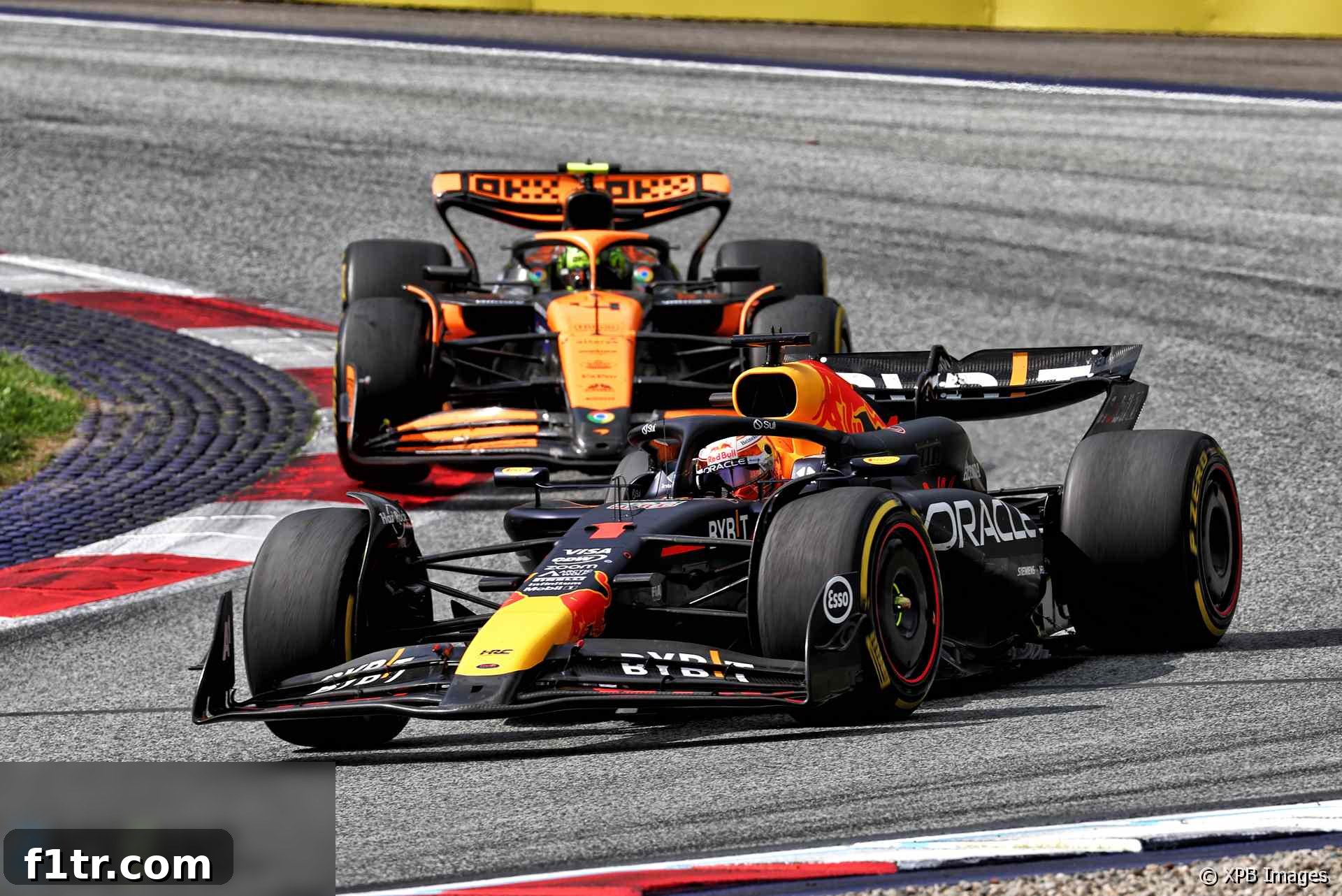
The 2024 season, even as Verstappen appears to be on an increasingly inevitable path to a fourth world championship, has again seen him accumulate points during crucial moments of his battles with rivals like Lando Norris. The Red Bull driver was deemed responsible for a collision with Norris in Austria, receiving penalty points. He picked up further points for forcing Norris off the track at Turn Four in Mexico. Intriguingly, despite a seemingly similar incident occurring just three corners later at higher speed, he was not penalized again, raising questions about consistency in stewarding. Additionally, he received another point for a Virtual Safety Car infringement during the sprint race in Brazil while attempting to challenge the McLaren pair ahead. These recent events demonstrate that even a dominant champion is not immune to the disciplinary system, especially when engaged in tight on-track duels.
Verstappen’s trajectory to what looks like a fourth world championship underscores a profound understanding not only of how to comply with the rules but also when and how to strategically push those boundaries. His driving style, characterized by aggressive overtakes and uncompromising track presence, frequently tests the limits of what is permissible. This calculated aggression, while leading to a high total of penalty points over his career, has rarely put him in immediate danger of a ban, thanks to the rolling 12-month expiry. This nuanced approach, balancing intense competition with regulatory compliance, is arguably a hallmark of multiple champions who consistently find the edge without stepping over it. A look at the top 10 table below, which includes other successful drivers, suggests that this strategic engagement with the rulebook is a common trait among elite competitors.
Max Verstappen’s Record 39 Penalty Points
| Round | Session | Infringement | Penalty points |
|---|---|---|---|
| 2015 Monaco Grand Prix | Race | Caused an incident with Romain Grosjean | 2 |
| 2015 Hungarian Grand Prix | Race | Safety Car speeding | 3 |
| 2015 Abu Dhabi Grand Prix | Race | Left the track and gained an advantage | 1 |
| 2015 Abu Dhabi Grand Prix | Race | Ignored blue flags | 2 |
| 2016 Mexican Grand Prix | Race | Left the track | 1 |
| 2017 Hungarian Grand Prix | Race | Caused a collision with Daniel Ricciardo | 2 |
| 2017 United States Grand Prix | Race | Left the track and gained an advantage | 1 |
| 2018 Chinese Grand Prix | Race | Caused a collision with Sebastian Vettel | 2 |
| 2018 Italian Grand Prix | Race | Involved in an incident with Valtteri Bottas | 2 |
| 2018 Russian Grand Prix | Qualifying | Yellow flag speeding | 2 |
| 2018 Japanese Grand Prix | Race | Rejoined the track when it was not safe to do so | 1 |
| 2019 Monaco Grand Prix | Race | Unsafe release in front of Valtteri Bottas | 2 |
| 2019 Mexican Grand Prix | Qualifying | Yellow flag speeding | 2 |
| 2021 Italian Grand Prix | Race | Caused a collision with Lewis Hamilton | 2 |
| 2021 Qatar Grand Prix | Qualifying | Failure to respect double yellow flags | 2 |
| 2021 Saudi Arabian Grand Prix | Race | Leaving the track and gaining a lasting advantage | 1 |
| 2021 Saudi Arabian Grand Prix | Race | Braked in a manner which caused a collision with Lewis Hamilton | 2 |
| 2022 Brazilian Grand Prix | Race | Caused a collision with Lewis Hamilton | 2 |
| 2023 Las Vegas Grand Prix | Race | Forced Charles Leclerc off the track | 2 |
| 2024 Austrian Grand Prix | Race | Caused a collision with Lando Norris | 2 |
| 2024 Mexican Grand Prix | Race | Forced Lando Norris off the track | 2 |
| 2024 Brazilian Grand Prix | Sprint race | Above the minimum time at end of Virtual Safety Car period | 1 |
Top 10 Drivers with the Most Penalty Points
| Rank | Driver | Penalty points | Starts* | Points/start |
|---|---|---|---|---|
| 1 | Max Verstappen | 39 | 206 | 0.19 |
| 2 | Kevin Magnussen | 37 | 182 | 0.20 |
| 3 | Sergio Perez | 34 | 222 | 0.15 |
| 4 | Sebastian Vettel | 32 | 179 | 0.18 |
| 5 | Lance Stroll | 29 | 163 | 0.18 |
| 6 | Daniil Kvyat | 27 | 110 | 0.25 |
| 7 | Fernando Alonso | 26 | 184 | 0.14 |
| 8 | Romain Grosjean | 23 | 134 | 0.17 |
| 9 | Nico Hulkenberg | 22 | 167 | 0.13 |
| 10 | Daniel Ricciardo | 21 | 207 | 0.10 |
*In grand prix weekends after penalty points were introduced
The FIA’s penalty point system, while sometimes criticized for inconsistency or severity, undoubtedly adds another layer of strategic consideration for Formula 1 drivers. For Max Verstappen, his impressive record of total penalty points without incurring a ban highlights his unique ability to push the absolute limits of his Red Bull machine and his rivals, yet remain just within the boundaries of a race-altering suspension. As he continues to rewrite the record books, his approach to the penalty system offers a fascinating insight into the mind of a champion—a driver who understands not just how to win, but how to do so within the intricate web of F1 regulations, maximizing every opportunity while minimizing catastrophic risks.
Formula 1 Insights
- F1 returning to India soon after 2027 sounds like wishful thinking
- Verstappen loathes F1’s new generation of cars – but what do his rivals reckon?
- The ‘throwback weekend’ is back in fashion. But it’s a flawed concept – especially for F1
- Is Formula 1’s double race cancellation a blessing in disguise?
- Todt admits Schumacher crashed on purpose – but did it really cost him two titles?
Browse all Formula 1 articles