The FIA’s Porpoising Metric: Mercedes’ Concerns and F1’s New Technical Challenge
The 2022 Formula 1 season marked a significant turning point with the reintroduction of ground effect aerodynamics, bringing with it a dramatic and often uncomfortable phenomenon known as porpoising. This oscillating vertical motion not only impacts driver comfort and safety but also profoundly influences car performance and setup philosophy. In response to growing concerns, particularly from teams and drivers experiencing severe bouncing, the FIA, motorsport’s global governing body, has introduced a stringent new metric to limit the extent of porpoising across the grid. This crucial technical directive, designed to safeguard driver well-being and maintain a level playing field, has already ignited considerable debate among the sport’s elite constructors.
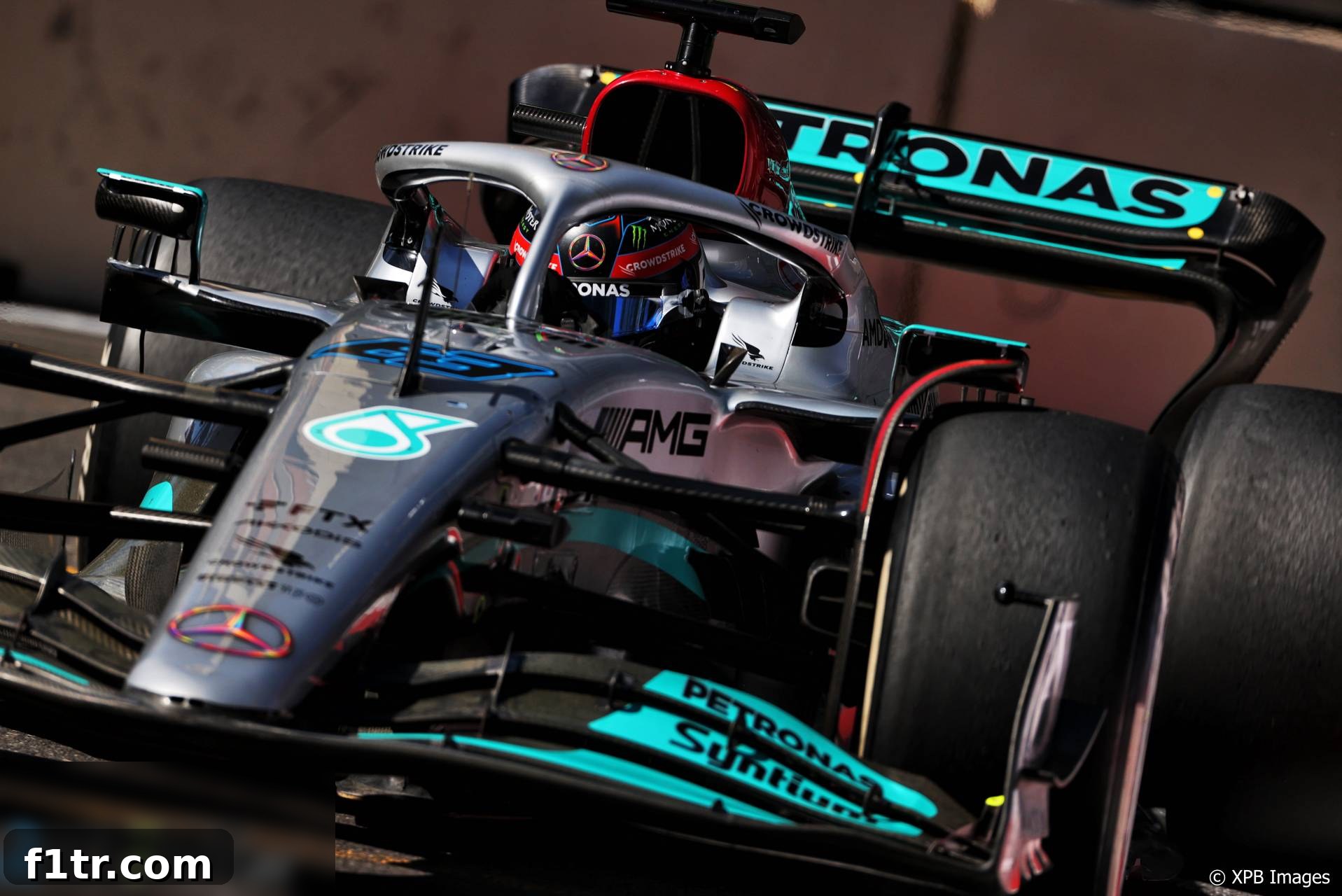
Mercedes-AMG Petronas F1 Team, one of the most vocal advocates for addressing porpoising, has openly admitted that their car would have exceeded this proposed metric at least once during the current season. This candid revelation from Mercedes highlights the immediate and profound implications of the FIA’s intervention for teams that have struggled to tame these complex aerodynamic forces. The new regulations demand adaptation, presenting a formidable technical and logistical challenge as teams race against time to comply without compromising their competitive edge.
Understanding Porpoising: The Ground Effect Phenomenon Explained
Porpoising, a term vividly descriptive of the motion it refers to, describes the rhythmic up-and-down bouncing witnessed in the 2022 Formula 1 cars. This phenomenon is a direct consequence of the unique aerodynamic properties of ground effect, which rely on generating downforce by accelerating airflow beneath the car’s floor, effectively sucking it towards the track surface. While this design principle offers immense performance potential, it also harbors an inherent instability.
The cycle of porpoising begins when the car, operating at a very low ride height to maximize ground effect, reaches a critical speed or encounters a bump. At this point, the intense downforce can pull the car so close to the track that the airflow beneath its floor ‘stalls’ or detaches, leading to a sudden and significant loss of downforce. With the downforce momentarily gone, the car’s natural suspension pushes it back up. As the car rises, the airflow reattaches, downforce is instantaneously restored, and the car is once again aggressively pulled back towards the ground, restarting the violent cycle. This continuous, high-frequency oscillation transmits severe forces through the chassis and directly into the driver, leading to a range of issues including impaired vision, severe headaches, back pain, and potential long-term spinal damage. Beyond driver welfare, porpoising significantly compromises car stability, braking performance, and tire wear, making it a critical performance limiter for many teams.
The FIA’s Proactive Stance: Introducing the Aerodynamic Oscillation Metric (AOM)
Driven by mounting safety concerns, particularly after the visible struggles of several drivers at high-speed circuits, the FIA felt compelled to intervene. Their response came in the form of an updated technical directive, which details a precisely defined metric, commonly referred to as the Aerodynamic Oscillation Metric (AOM). This metric is designed to objectively quantify and limit excessively severe porpoising. The primary objective is unequivocally driver safety, ensuring that no driver is subjected to conditions that could jeopardize their health or ability to control the car.
The AOM works by utilizing advanced accelerometer data collected from various points on the car. These sensors meticulously measure the vertical oscillations experienced over a specific time and distance. Should any team’s car exceed the predefined threshold of this metric, they will be mandated by the FIA to implement specific setup adjustments to reduce the bouncing. This unprecedented step marks a significant departure from traditional F1 regulations, as it involves the governing body directly dictating aspects of car setup that have historically been solely within a team’s purview. The FIA has outlined its intention to rigorously enforce this new limit starting from the French Grand Prix, providing teams with a short but critical timeframe to understand, adapt, and comply. While some factions within the sport view this as an overreach, the FIA staunchly defends its position, asserting that proactive measures are essential to prevent potential long-term health ramifications for its athletes.
Mercedes’ Candid Admission: A Strict Metric for the Silver Arrows
The Mercedes-AMG Petronas F1 Team has been one of the most public faces of the porpoising struggle throughout the initial phases of the 2022 season. Their W13 challenger, despite its underlying speed, has consistently battled with pronounced bouncing, especially evident on circuits characterized by long straights and uneven surfaces. The Azerbaijan Grand Prix in Baku, with its unique blend of high-speed sections and challenging street circuit bumps, proved to be an exceptionally punishing event for Mercedes drivers Lewis Hamilton and George Russell, who reported significant physical discomfort.
Mike Elliott, Mercedes’ highly respected Technical Director, provided a stark confirmation of their difficulties at Baku during an interview with RaceFans. He revealed, “From what we’ve heard from the FIA I think it’s something they’re going to have to work on and build and work out how it’s going to work pragmatically. I think Baku, going back to it, looking at the race using that metric, Baku is one we wouldn’t have passed.” This frank admission underscores the demanding nature of the FIA’s new metric and highlights the persistent battle Mercedes has faced in taming their car’s aerodynamic characteristics. It clearly indicates that had the metric been in place during the Baku race, Mercedes would have been compelled to significantly alter their car’s setup, potentially leading to a substantial performance penalty.
However, Elliott also highlighted a noticeable improvement in porpoising levels at smoother venues, such as the iconic Silverstone Circuit, host of the British Grand Prix. He optimistically stated, “If you look at where we were yesterday it wouldn’t have even triggered the metric.” This striking contrast vividly illustrates the track-dependent nature of porpoising, adding another layer of complexity for both teams and the FIA in applying a universal metric across a diverse and ever-changing F1 calendar. The fluctuating severity of the problem based on circuit characteristics further complicates consistent compliance and raises questions about the practical enforcement of such a rule.
Practical Concerns and the “Show”
While acknowledging the FIA’s admirable intentions behind the new metric, Mike Elliott also articulated significant practical concerns regarding its real-world implementation. A primary worry revolved around the feasibility of effectively resolving porpoising issues during an active race weekend, especially if a team is found to be non-compliant. “The question becomes, ‘if you are exceeding the metric, can you actually fix it during a race weekend’? Because I don’t think any of us want to see cars not taking part or cars thrown out because they’re not able to get on top of those issues,” Elliott remarked, highlighting a critical point.
Formula 1 race weekends operate under incredibly tight schedules, with minimal time allocated for extensive setup adjustments or complex modifications. If a team consistently fails to meet the metric during a race weekend, requiring fundamental and time-consuming alterations, it could realistically lead to severe consequences such as penalties, car disqualifications, or even withdrawals from the event. Such scenarios would undoubtedly have a detrimental impact on the competitive integrity and overall entertainment value of the sport, a concern Elliott explicitly raised: “I think time will tell whether that metric can be done in the right way, whether that can push teams in the right way without ending up damaging the show. We’ll see what happens. I’m sure the FIA are conscious of that.” This statement underscores the delicate balancing act faced by the FIA: enforcing vital safety standards without inadvertently penalizing teams to an extent that undermines the very essence of competitive racing and the spectacle of Formula 1.
Differentiating Types of Bouncing: Aerodynamic vs. Mechanical Influences
Adding further depth to the discussion, Mike Elliott offered valuable insights into the multifaceted nature of the porpoising phenomenon, distinguishing between two primary forms of bouncing that F1 cars experience. He elucidated, “My view is there’s a couple of different versions of bouncing. There’s aerodynamic bouncing which is where the aerodynamics are inputting energy and there’s a version of bouncing which is because these cars are really stiff, they need to be stiff to run close to the ground.” This critical distinction is essential for comprehending how different teams are approaching solutions and how the FIA’s universal metric might uniquely impact varying car design philosophies.
Aerodynamic bouncing represents the classic porpoising effect, primarily driven by the inherent instability of ground effect aerodynamics at extreme ride heights. Mechanical bouncing, conversely, is a direct consequence of the incredibly stiff suspension setups necessitated by modern F1 cars to maintain a consistent, ultra-low ride height for optimal aerodynamic performance. When these inherently rigid cars encounter even minor bumps or undulations on the track, the lack of suspension compliance means the car is subjected to significant, jarring jolts. Elliott astutely observed that different circuits exacerbate different types of bouncing. “What we’ve seen is we’ve seen different circuits have different effects. And certainly the last few circuits where we’ve seen quite a lot of bouncing I think it’s just because the circuits are quite bumpy and they’re very stiff cars.” This observation suggests that a single, universal metric might struggle to perfectly account for the complex interplay of both aerodynamic and mechanical factors, potentially leading to scenarios where cars are penalized more for their sensitivity to track roughness than for pure aerodynamic instability.
Looking ahead, while the Formula 1 calendar includes several relatively smoother tracks, Elliott suspects that circuits like the Hungaroring, which hosts the Hungarian Grand Prix, could present renewed porpoising challenges for teams due to its characteristically bumpy surface. “Budapest might be challenging for teams for the same reason,” he commented. Nevertheless, he expressed cautious optimism regarding the collective progress being made by teams across the paddock: “At the same time, I think we’re all getting on top of our issues, we’re understanding those issues and developing the cars so hopefully we can move away from that.” This sentiment reflects an evolving technical understanding of the problem and the continuous, intensive development efforts undertaken by all teams to mitigate its adverse effects, striving for both speed and stability.
Red Bull’s Contrasting Perspective: No Issues, No Changes Demanded
In stark contrast to Mercedes’ struggles and their admission regarding the porpoising metric, Red Bull Racing, another dominant force in the 2022 season, presents a distinctly different perspective. Team Principal Christian Horner stated unequivocally that their championship-contending car has not approached the limits defined by the FIA’s proposed porpoising metric. This highlights the varying degrees to which different car designs, aerodynamic philosophies, and setup choices have managed the complex challenges of ground effect.
“For us porpoising is an issue anywhere near any of the other extremities,” Horner declared, implying that Red Bull has effectively controlled the phenomenon without significant compromise. He further elaborated on their understanding of the FIA’s stance: “Now what I understand from the FIA, within their metric from what they saw in Montreal, all teams have been within that metric. So it wouldn’t change anything. But there was one team that was outside of that metric significantly in Azerbaijan. So, theoretically, it shouldn’t really change anything for us.” Horner’s careful reference to “one team” in Azerbaijan, while not explicitly naming Mercedes, clearly alludes to their main rival’s more pronounced difficulties. This statement suggests that Red Bull’s design and setup have inherently been less prone to severe porpoising, allowing them to extract optimal performance without compromising driver safety or exceeding the new limits.
Horner also voiced concerns regarding the fairness of any enforced changes for teams that have already successfully managed the porpoising issue through their own engineering efforts. “Which would seem unfair if it were to suddenly have to require a redesign or to run our car in a different manner,” he added. The underlying implication is that if Red Bull were forced to alter its car’s setup or fundamental design to accommodate a rule primarily designed to address problems faced by others, it would unfairly penalize their superior engineering and development success. He concluded by acknowledging the FIA’s overarching objective: “But I guess the TD is being used to bring into line the set-up of teams to ensure that there isn’t too aggressive porpoising for the drivers.” This sentiment perfectly encapsulates the inherent tension within Formula 1: the necessity of regulating for safety versus the desire to foster competitive innovation and allow for diverse technical solutions.
The Broader Implications for F1’s Future
The introduction of the FIA’s porpoising metric represents a significant and potentially pivotal moment for the future trajectory of Formula 1. It starkly underscores the ongoing, delicate challenge of balancing ambitious, revolutionary technical regulations with the paramount concerns of driver safety and the imperative of competitive fairness. While the safety aspect is undeniably critical and morally superior, the practical application of such a precise metric throughout a long and incredibly diverse racing calendar presents a myriad of complexities and potential unforeseen consequences.
Teams that have effectively brought porpoising under control through their design ingenuity and rigorous development might understandably feel unfairly targeted if they are compelled to compromise their car designs or performance. Conversely, those teams still grappling with severe bouncing could find themselves at an even greater disadvantage if they are unable to comply with the metric without making substantial performance sacrifices. The FIA’s decisive and proactive stance is a testament to its unwavering commitment to driver well-being, but the ultimate success and acceptance of this directive will undeniably hinge on its pragmatic, consistent, and equitable implementation across all teams and circuits.
Key questions remain unanswered: Will all teams be able to adapt quickly enough to meet the new standards without disrupting the competitive order? How will the metric be fairly and accurately enforced at circuits with vastly different characteristics, from smooth, high-speed tracks to bumpy, technical layouts? And crucially, will this intervention genuinely improve driver safety without inadvertently stifling the very innovation that drives Formula 1, or potentially leading to undesirable sporting outcomes such as disqualifications or uncompetitive grids? The answers to these complex questions will gradually unfold over the forthcoming races, shaping not only the remainder of the tumultuous 2022 season but also potentially influencing future aerodynamic and technical regulations within the pinnacle of motorsport. The porpoising saga serves as a potent and timely reminder that in the relentless pursuit of ultimate speed, fundamental physics and human factors remain immutable considerations that demand careful and continuous attention.
Related Articles: 2022 British Grand Prix
- How many victory chances did Hamilton have in his first winless F1 season?
- New rule added on drivers abandoning cars after Russell’s Silverstone retirement
- Hamilton told Leclerc ‘I didn’t want to clip you and send you off’ after Copse scrap
- Sainz: Ferrari accepted I was right not to follow “10 car lengths” instruction
- Zhou says Silverstone crash force exceeded roll hoop impact test
Browse all 2022 British Grand Prix articles