Carlos Sainz Jr.’s Ferrari Dream Tarnished? Ross Brawn Questions Confidence Amidst Deepening Ferrari Crisis
The highly anticipated transition of Carlos Sainz Jnr to the revered Scuderia Ferrari for the upcoming Formula 1 season is reportedly shadowed by significant apprehension. According to Formula 1 motorsport director Ross Brawn, Sainz may well be harbouring doubts regarding his career-defining move, a sentiment fueled by his future team’s profoundly disappointing performance at the legendary Spa-Francorchamps circuit. What was once heralded as a dream opportunity for the talented Spaniard, a clear step up from McLaren to the sport’s most decorated and historic outfit, now appears fraught with uncertainty, casting a long shadow over his prospects for 2021 and beyond.
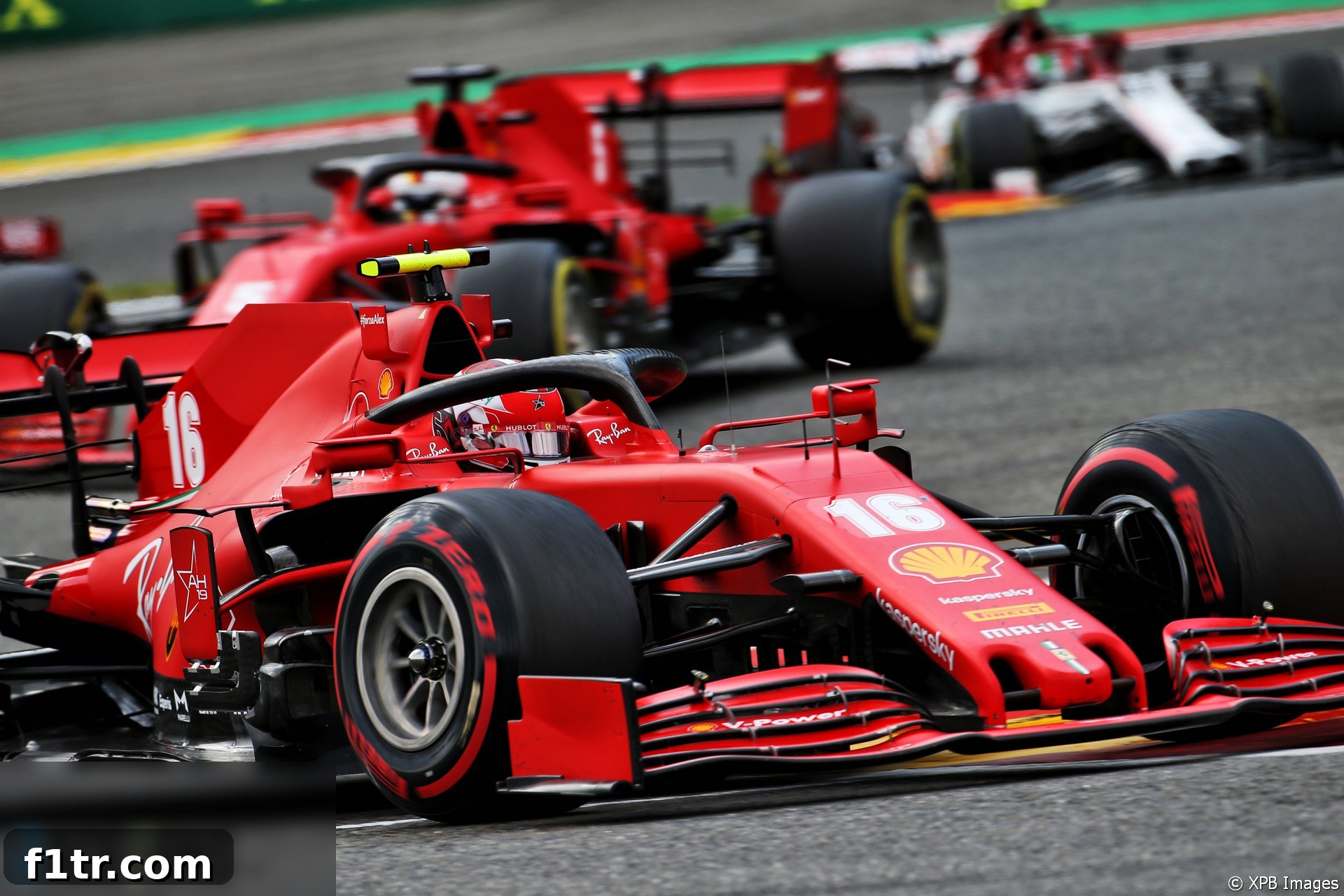
Ferrari’s showing at the Belgian Grand Prix represented a new low in what has already been an extraordinarily challenging and humbling season for the Maranello-based team. Their two cars qualified a dismal 13th and 14th on the grid, only to finish the race in precisely the same, uninspiring positions. This stark absence of competitive pace starkly highlighted their chronic struggles with straight-line performance, a debilitating handicap that has persistently undermined their efforts throughout the entire championship campaign. Yet, perhaps even more concerning for the Prancing Horse, they were not merely outclassed by their primary rivals, but also by their own engine customer, Alfa Romeo, at the notoriously power-sensitive Spa circuit – a truly alarming indictment that has reverberated with significant concern throughout the Formula 1 paddock and among their global fanbase.
Ross Brawn, a figure of unparalleled authority and insight within Formula 1, and a former technical director instrumental in guiding Ferrari through one of its most dominant eras, offered a nuanced and profoundly important perspective on the team’s dramatic slump. While acknowledging the pervasive speculation regarding the deficiencies of Ferrari’s power unit, Brawn firmly asserted that engine performance alone could not fully account for such a drastic and precipitous drop in overall competitiveness. His analysis points towards a more intricate and fundamental issue at the core of Ferrari’s current woes, transcending simple horsepower deficits to encompass the delicate and complex relationship between car setup, aerodynamic efficiency, and the critical operating parameters of the Pirelli tyres.
Drawing deeply from his extensive experience at the pinnacle of motorsport, Brawn vividly articulated a scenario he knows intimately well. “I’ve been in a situation like Ferrari have found themselves in at Spa, where you don’t get tyres to work, the temperature doesn’t come and the drop off in performance is dramatic,” he explained. This poignant statement serves to underscore a fundamental and often underestimated aspect of modern Formula 1 – the extremely narrow operating windows within which Pirelli tyres must function to generate optimal grip and deliver peak performance. When a car’s chassis and aerodynamic package fail to bring its tyres into this delicate temperature zone, their capacity to perform can plummet catastrophically, resulting in a profound and immediate loss of both outright pace and crucial handling stability, irrespective of the car’s inherent aerodynamic prowess or engine strength.
Brawn further elaborated on his compelling theory, directly challenging the widespread notion that engine power alone bears sole responsibility for Ferrari’s current plight. “Regardless of what people say about the deficit they may have with the engine following the technical clarifications, you don’t lose 1.3 seconds per lap from one year to next in that metric alone,” he emphasized, highlighting the sheer scale of the performance deficit. This substantial and alarming time difference, Brawn convincingly argues, points unequivocally to the tyres as a primary factor. Ferrari’s manifest inability to bring their tyres into their correct and narrow operating window, further exacerbated by the unusually cold ambient and track conditions prevalent at Spa, would have magnified their underlying issues significantly. Such colder temperatures make it exceptionally difficult for teams to generate and, crucially, sustain the necessary heat in the tyre compounds, effectively transforming them from high-grip, performance-enhancing components into slippery, underperforming liabilities.
The immediate and devastating repercussions of such tyre struggles are patently clear. “When that happens, the performance drops off and looks horrific,” Brawn keenly observed. However, ever the pragmatist, he also offered a vital glimmer of hope for the beleaguered Italian team. If Ferrari can successfully diagnose and, more importantly, effectively address these fundamental underlying issues – particularly in consistently getting their tyres to operate within the optimal window once again – Brawn firmly believes their performance could experience a significant and measurable upturn. “If they can make that step and get the tyres working properly again, I think the performance will snap back in. They still won’t look race-winning, but it will become more respectable,” he predicted. This expert assessment implies that while a return to championship-contending form might necessitate a longer, more arduous journey, reclaiming a competitive, respectable midfield position is well within reach, provided the complex tyre puzzle can be decisively solved.
For Carlos Sainz Jnr, who was unfortunately prevented from starting the Spa race due to an untimely power unit problem that precipitated an exhaust failure on his McLaren, these unfolding developments must be profoundly unsettling. Sainz is unequivocally scheduled to join Ferrari next year, partnering Charles Leclerc in the highly coveted red cars. This move, announced earlier in the season, was widely celebrated across the F1 community as a resounding testament to his consistent performance, exceptional race craft, and impressive driving skills. His tenure at McLaren has been marked by strong, consistent results and a pivotal role in the team’s notable resurgence, making him an exceptionally attractive and deserving candidate for Ferrari. Yet, as Brawn astutely highlights, what Sainz is currently witnessing from his future employers on track can hardly be described as confidence-inspiring, posing a significant psychological challenge.
Sainz has, throughout his career, meticulously forged an enviable reputation as one of the most resilient, adaptable, and mentally robust drivers on the Formula 1 grid. Brawn himself paid tribute to the Spaniard’s formidable character: “This has been a tough year for him, but he’s a pretty positive guy. He’s a very strong character, his career has been no easy ride after all. I’ve always rated him, I think he’s a great driver and he’ll manage this situation.” Indeed, Sainz’s career trajectory, having expertly navigated challenging and often demanding stints at Toro Rosso, Renault, and most recently McLaren, has undeniably equipped him with a robust mental fortitude. He has consistently demonstrated a remarkable ability to extract the absolute maximum performance from his machinery and to adapt seamlessly to various demanding team environments, making him a highly valued and respected asset in the paddock.
However, even for a driver of Sainz’s proven calibre and impressive mental strength, the current, precipitous state of Ferrari presents a truly formidable and unprecedented challenge. The daunting prospect of joining a team that has not only demonstrably lost its competitive edge but appears to be grappling with fundamental aspects of car performance – encompassing crucial tyre management and critical straight-line speed – is undeniably daunting. “But what looked like a dream move to Ferrari next year isn’t looking too good right now and inevitably, he must be nervous about his prospects next season,” Brawn concluded, his words echoing the palpable concerns of many within the broader F1 community. All eyes now turn with keen interest to see precisely how Ferrari will navigate these turbulent and uncertain waters, and how Sainz will approach what could undeniably become the most defining and challenging chapter of his promising career.
The journey from a promising, consistent McLaren driver to a celebrated Ferrari star was always destined to be laden with immense pressure and soaring expectation. However, the current downturn at Maranello introduces an additional and profound layer of complexity. Sainz will be required to bring not just his raw speed, exceptional race craft, and unwavering consistency, but also his astute strategic thinking and inherent leadership qualities to help steer the Prancing Horse back towards a semblance of competitiveness. His role will be absolutely crucial in providing precise, actionable feedback to the engineers and working seamlessly with the technical team to overcome these deep-seated issues, particularly if Brawn’s expert assessment regarding the pivotal role of tyre operating windows proves to be the definitive diagnosis.
For Ferrari, the path forward is unmistakably clear but promises to be arduous and fraught with challenges. They must meticulously analyze every facet of their aerodynamic package, suspension geometry, and indeed, their power unit, to gain a comprehensive understanding of precisely why they are currently unable to generate the necessary tyre temperatures and achieve optimal overall downforce without incurring excessive and detrimental drag. The historical might and unparalleled legacy of Ferrari dictate that such prolonged periods of struggle cannot, and indeed must not, persist indefinitely. Yet, the solutions to such deeply ingrained technical problems are rarely simple or amenable to quick fixes. The global fanbase, accustomed to Ferrari consistently battling at the very forefront for championships, now waits with bated breath for unequivocal signs of recovery – a recovery that will be absolutely critical not just for the team’s illustrious legacy, but also for the ambitious career aspirations of their incoming star driver, Carlos Sainz Jr.
Ultimately, while the current situation at Ferrari is unequivocally far from ideal, the inherent resilience and storied history of both the team and its future driver offer a compelling glimmer of hope. Carlos Sainz Jr. has, time and again, proven his remarkable ability to rise to significant challenges and perform under immense pressure. Similarly, Ferrari, with its vast resources, unparalleled engineering prowess, and unwavering determination, is never to be underestimated. The coming Formula 1 season will serve as a profound test for both, challenging their collective resolve, their capacity for innovation, and their ability to adapt and ultimately overcome adversity in the fiercely competitive and unforgiving world of Formula 1. The “dream move” might currently be under intense scrutiny, but the captivating and potentially transformative story of Sainz and Ferrari is truly just beginning, promising a captivating narrative replete with ambition, daunting challenges, and the relentless, unyielding pursuit of ultimate performance.
2020 F1 Season: Related Insights and Developments
Delve deeper into the pivotal events and expert analyses from the 2020 Formula 1 season, a year indelibly marked by unprecedented global challenges and compelling, often dramatic, on-track action. Explore additional articles that provide invaluable context and shed light on key moments, standout driver performances, and the broader narrative of a Formula 1 season truly unlike any other in recent memory.
- Grosjean to make F1 test return tomorrow for first time since Bahrain horror crash
- Pictures: Wrecked chassis from Grosjean’s Bahrain fireball crash to go on display
- Bottas vs Rosberg: Hamilton’s Mercedes team mates compared after 78 races each
- F1 revenues fell by $877 million in Covid-struck 2020 season
- Hamilton and Mercedes finally announce new deal for 2021 season
Browse all 2020 F1 season articles