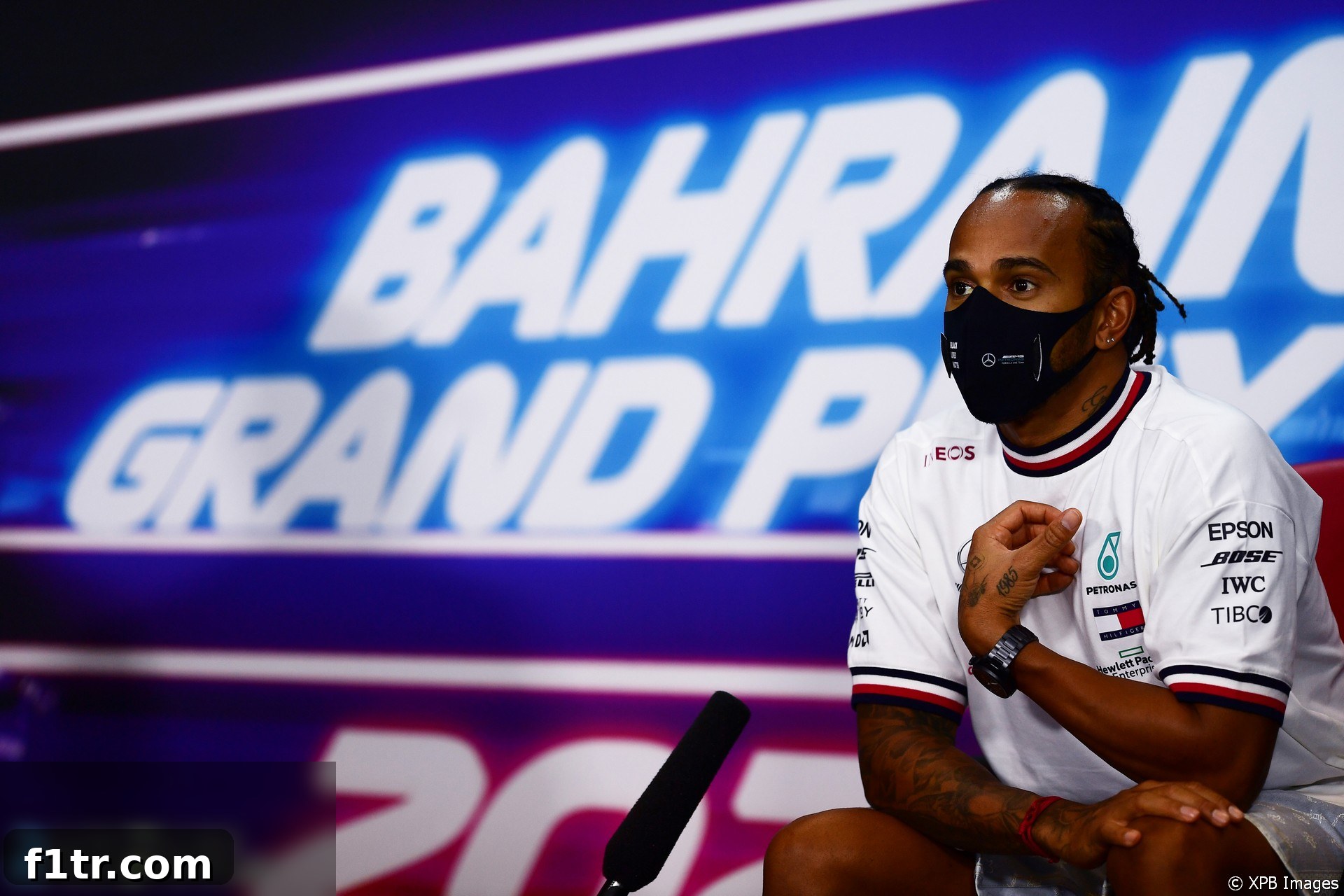
In a powerful statement reflecting his growing advocacy, Formula 1 champion Lewis Hamilton has emphasized that human rights represent a “massive problem” in several countries Formula 1 visits. He stressed the sport’s crucial responsibility to ensure concrete action is taken to address these profound issues, rather than merely issuing statements.
Lewis Hamilton Urges F1 for Real Action on Human Rights Amidst Bahrain Grand Prix Concerns
The seven-time world champion’s remarks come at a critical juncture, highlighted by a comprehensive letter he received from 17 human rights organizations, spearheaded by the Bahrain Institute for Rights and Democracy (BIRD), prior to the Bahrain Grand Prix. This significant correspondence was also addressed to key Formula 1 figures, including CEO Chase Carey, his successor Stefano Domenicali, and FIA president Jean Todt, underscoring the gravity of the concerns raised.
The letter from BIRD and its allies urged Formula 1 to leverage its influence to secure justice for victims of abuses directly or indirectly linked to the Bahrain Grand Prix. It called for the protection of protesters’ rights and insisted that F1’s adopted human rights policy be rigorously applied to guarantee that its business practices do not inadvertently contribute to, or normalize, human rights abuses, especially in light of the “worsening” human rights situation within the host nation.
The historical context of the Bahrain Grand Prix is particularly poignant. In 2011, the race was cancelled following the brutal suppression of pro-democracy protests during the Arab Spring uprisings. Despite the controversy and ongoing human rights issues, the event was controversially reinstated on the calendar the very next year, signaling a contentious relationship between sport and geopolitics.
Hamilton’s Evolving Stance on Global Human Rights
Upon his arrival in Bahrain, Hamilton confirmed receipt of these letters, acknowledging their weight. “I quickly got to see them before I got here but I’ve not had a lot of time to digest them,” he stated, adding, “So that’s something I definitely need to take some time to do over the coming days.” This deliberate approach highlights his commitment to understanding and addressing the complex issues at hand.
Hamilton, who has dedicated significant efforts to promoting diversity and environmentalism, has noticeably amplified his voice on human rights in recent weeks. Formula 1 has historically faced considerable criticism for staging races in countries with questionable human rights records. This scrutiny intensified following the announcement of the inaugural Saudi Arabian Grand Prix, scheduled for November next year, which will further test the sport’s ethical boundaries.
Speaking passionately on the matter, Hamilton reiterated his belief that “the human rights issue in some of the places that we go to is a consistent and a massive problem and I think it’s very, very important.” He underscored the unique position of sports, particularly Formula 1, to drive change.
“I think it showed this year how important it is for not only us as a sport, but all the sports around the world to utilise the platforms they have to push for change,” Hamilton explained. “We are probably one of the only ones actually that goes to so many different countries and I do think as a sport, we need to do more. I think we’ve taken a step in that direction, but we can always do more.”
He further elaborated on the necessity for genuine implementation of any commitments. “They’ve put some steps in place for the places that we are going to. But it’s important to make sure that they’re implemented in the right way and that it’s not just a saying that ‘we’re going to do something’, but actually see some action taken. So that’s going to take some work from us all in the background,” Hamilton concluded, emphasizing the need for sustained effort and accountability from all stakeholders within the sport.
Human Rights Groups Call for Accountability from Formula 1
The detailed letter from the 17 human rights organizations provides a comprehensive indictment of Bahrain’s human rights record, directly linking it to the Formula 1 event. Addressed to Chase Carey, Stefano Domenicali, Jean Todt, and Lewis Hamilton, it articulated grave concerns about F1’s decision to resume racing in Bahrain despite ongoing abuses against protestors who oppose the event.
Dear Chase Carey,
1. Stefano Domenicali, incoming CEO of F1; Jean Todt, President of the Fédération Internationale de l’Automobile; Lewis Hamilton, F1 Champion; Jean-Frédéric Dufour, Rolex CEO
We, the undersigned organisations, are writing to express our concerns about the decision by Formula 1 to resume racing in Bahrain following the postponement of the Bahrain Grand Prix in March due to the Covid-19 pandemic, despite continuing abuses against protestors who oppose the event. The Grand Prix has become a flashpoint for protesters who see the event as ‘sportswashing’ Bahrain’s worsening human rights situation, and proceeding with the event without taking steps to protect the right to peacefully protest it, including publicly opposing abuses against protestors, risks making sportswashing a reality.
Abuses Linked to the Bahrain Grand Prix Since 2011
Since the violent suppression of Bahrain’s Arab Spring uprising in 2011, the Bahrain Grand Prix has tragically transformed into a central point of popular protest. Alarmingly, Bahraini security forces have perpetrated severe human rights abuses against protestors. A harrowing example is the murder of Salah Abbas, who was arrested, assaulted, and shot dead on the eve of the 2012 race, a stark reminder of the deadly consequences of dissent.
The human rights implications of the Grand Prix were officially recognized in 2014 by the National Contact Point (NCP) of the Organisation for Economic Co-operation and Development (OECD). In response to a human rights complaint, the OECD stated that the event had become “politicised” and explicitly “recommended that the new risk warrants updated or ongoing due diligence to mitigate the human rights risks linked to the race.” This recommendation highlighted the need for Formula 1 to actively engage with the human rights context of its events.
Despite Formula 1’s public commitment to adopt a human rights policy in 2015, the letter reveals that violations linked to the Bahrain Grand Prix have regrettably continued. A prominent case is that of Bahraini activist Najah Yusuf. In 2017, she endured torture, sexual assault, and was subsequently sentenced to three years in prison, all for simply posting criticisms of the Grand Prix on social media. While Najah was eventually released by royal pardon in August 2019 following sustained international pressure, her ordeal did not end there; she was fired from her public sector job and continues to live with the profound psychological impacts of her experience.
The organizations noted that in October of the previous year, F1 had promised to raise Najah’s case with Bahraini authorities after the UN Working Group on Arbitrary Detention declared her imprisonment to be “arbitrary” and called for her to be accorded an “enforceable right to compensation and other reparations.” However, over a year later, Najah has received neither justice nor compensation, with no clear indication that F1’s interventions on her behalf have been effective, or if they even took place at all, raising serious questions about the sport’s commitment to its policy.
Furthermore, the persecution has extended to her family. Her 17-year-old son, Kameel Juma Hasan, now faces over 20 years in prison on a series of dubious charges, apparently related to his participation in opposition demonstrations. Amnesty International has unequivocally asserted that “his prosecution and imprisonment have been taken in reprisal against his mother,” citing that official pursuit of Kameel became more aggressive as Najah continued to speak out about her own ordeal, after both she and her son refused to act as informants for the security services.
Worsening Human Rights Situation in Bahrain
Beyond the unresolved issues directly tied to the race, the human rights groups expressed profound concern that the Bahraini government is strategically using the positive publicity generated by the Grand Prix to ‘sportswash’ its abysmal human rights record. As highlighted by Human Rights Watch in their 2020 World Human Rights Report, the human rights situation in Bahrain has significantly deteriorated in recent years, making F1’s presence even more problematic without strong safeguards.
Since 2017, Bahrain has witnessed a chilling more than ten-fold increase in executions. Currently, at least 25 death row inmates face imminent execution, with nearly half of these convictions based on confessions reportedly extracted under torture – a grave violation of international human rights law. The conditions in Bahrain’s prisons remain deplorable: they are overcrowded, unsanitary, and political prisoners are routinely subjected to humiliating treatment and denied adequate medical care, contravening the UN Standard Minimum Rules for the Treatment of Prisoners, also known as the Mandela Rules.
Disturbingly, at Jau Prison, located a mere 7 miles from the Bahrain International Circuit, authorities consistently fail “to provide adequate medical care to high-profile prisoners,” including elderly political leaders like Hassan Mushaima and Abduljalil Al-Singace, thereby jeopardizing their very lives and demonstrating a severe neglect of basic humanitarian standards.
The arbitrary revocation of citizenship also persists as a pressing human rights concern in Bahrain. Hundreds of individuals, including prominent journalists, activists, and leading opposition figures, remain deprived of their citizenship. This includes Sayed Ahmed Alwadaei, the director of the Bahrain Institute for Rights and Democracy (BIRD), whose brother-in-law Sayed Nizar remains unjustly imprisoned in what the UN describes as “acts of reprisal” for his human rights activism, illustrating a pattern of state-sponsored intimidation against critics.
Furthermore, fundamental freedoms of expression, assembly, and association in Bahrain have been severely curtailed. All political opposition parties and independent media outlets have been systematically shut down, effectively silencing dissent and independent reporting. According to the Committee to Protect Journalists (CPJ), at least six journalists are currently imprisoned for their work. Bahrain’s ranking has plummeted to 169 out of 180 countries on Reporters Without Borders (RSF) 2020 World Press Freedom Index, unequivocally marking Bahrain as a leader in the repression of human rights and free speech.
Intensified Crackdown Since Covid-19
The human rights organizations expressed deep concern that the Bahraini government has exploited the global coronavirus pandemic as an opportunity to tighten its authoritarian grip over the country. Since March, authorities have further cracked down on citizens’ online activity, targeted top defense lawyers with vexatious prosecutions designed to undermine legal representation, and introduced new legislation that effectively outlaws criticism of government policy. As a result, at least 40 people have been arbitrarily detained since the onset of the pandemic, demonstrating a cynical use of a global health crisis to suppress fundamental rights.
The month of November alone, coinciding with the Bahrain Grand Prix, witnessed 18 individuals arrested for merely commenting on the death of Bahrain’s prime minister. This shocking figure included a 16-year-old girl, a 14-year-old boy, and respected TV producer Yasser Nasser, highlighting a drastic measure to control public discourse. Furthermore, on November 3rd, over 50 individuals were sentenced in a mass trial marred by allegations of torture and severe due process violations, according to extensive research conducted by BIRD, raising serious questions about the fairness and legality of the justice system.
Conclusion and Recommendations to Formula 1
In light of these pervasive abuses connected to the Grand Prix, the human rights organizations voiced profound concern over F1’s decision not only to continue racing in Bahrain without implementing effective measures to address these abuses but also to increase its presence in the country with the introduction of the Rolex Sakhir Grand Prix. Bahrain’s government proudly proclaims itself “The Home of Motorsport in the Middle East,” consistently leveraging the Bahrain Grand Prix to project an image of normalcy and curate the country as a regional sports and entertainment hub, thereby diverting attention from its domestic human rights record.
The decision to postpone the Bahrain Grand Prix in March 2020 to ensure the safety of drivers, staff, and patrons was acknowledged as a sensible and necessary decision. However, the letter argues that it is now imperative for F1 to demonstrate the same level of concern for the Bahraini people, who are facing the compounded challenges of a pandemic amidst a renewed and intensified government crackdown. By increasing F1’s presence in Bahrain at such a volatile time, without robust and effective measures to end the abuses connected to the Grand Prix, the sport risks providing invaluable public relations legitimacy to the Bahraini government and further normalizing the systematic violation of human rights in the country.
Therefore, the undersigned organizations urged Formula 1 to utilize its considerable leverage to achieve three critical outcomes:
- Secure justice, accountability, and appropriate compensation for victims of abuses linked to the Bahrain Grand Prix, specifically naming Najah Yusuf and the family of Salah Abbas as urgent cases.
- Ensure that individuals who peacefully exercise their fundamental right to criticize the race are fully protected from prosecution, harassment, and reprisal.
- Rigorously enact Formula 1’s human rights policy to guarantee that its business practices and events do not, directly or indirectly, contribute to human rights abuses in Bahrain.
The letter concluded with a solemn plea: “We hope you will treat this letter with the gravity the situation warrants,” emphasizing the moral imperative for Formula 1 to act decisively and responsibly.
Yours sincerely,
1. ACAT-France (Action by Christians for the Abolition of Torture)
2. Americans for Democracy and Human Rights in Bahrain (ADHRB)
3. Amnesty International
4. Article 19
5. Bahrain Institute for Rights and Democracy (BIRD)
6. CIVICUS
7. Committee to Protect Journalists (CPJ)
8. European Centre for Democracy and Human Rights (ECDHR)
9. Football Supporters Europe
10. Freedom House
11. Human Rights Watch
12. International Trade Union Confederation (ITUC)
13. International Service for Human Rights (ISHR)
14. OMCT
15. Reprieve
16. Transparency International Germany
17. World Players Association
Further Reading: 2020 Bahrain Grand Prix
- Grosjean reunited with helmet which saved him from huge fire in 2020 Bahrain crash
- Pictures: Wrecked chassis from Grosjean’s Bahrain fireball crash to go on display
- Grosjean reveals extent of burns to right hand
- ‘I put both my hands in the fire’: Grosjean describes his 28 seconds trapped in an inferno
- “Thank you for saving my life” Grosjean tells crash scene marshals
Browse all 2020 Bahrain Grand Prix articles