Nikita Mazepin Establishes Foundation for Athletes Barred by Ukraine Sanctions
Nikita Mazepin, the former Formula 1 driver, has announced the creation of a new foundation aimed at providing comprehensive support to athletes worldwide who find themselves excluded from competitions due to political decisions. This initiative comes in the wake of widespread sanctions imposed on Russian athletes following Russia’s invasion of Ukraine, a situation that directly led to Mazepin’s own exclusion from the pinnacle of motorsport.
Advert | Become a RaceFans Supporter & go ad-free
Mazepin’s Personal Experience: A Catalyst for Change
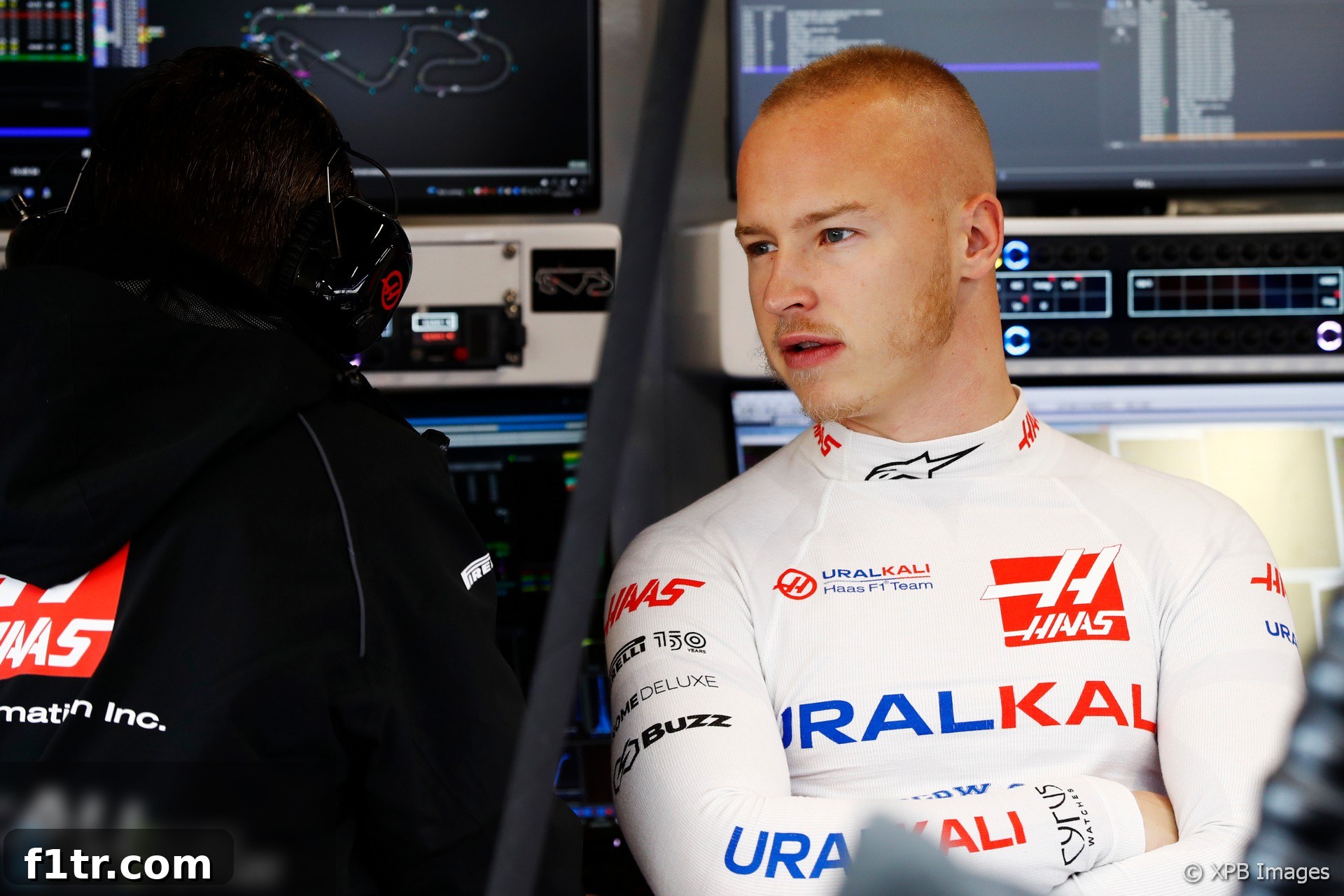
Mazepin’s personal journey serves as the primary impetus for this foundation. His tenure with the Haas F1 team was abruptly cut short just before the start of the new season. The termination of his contract was a direct consequence of the team’s decision to sever ties with its title sponsor, Uralkali, a Russian fertilizer company partially owned by Mazepin’s father, Dmitry Mazepin. This move by Haas F1 was part of a broader global response to Russia’s military actions in Ukraine, which began in February.
The FIA, motorsport’s governing body, had initially indicated a pathway for Russian drivers to compete under a neutral flag, subject to strict conditions. These conditions included signing a declaration acknowledging solidarity with Ukraine and pledging not to express any direct or indirect support for Russian or Belarusian activities related to the conflict. However, despite this provision, Haas F1 proceeded with the termination of Mazepin’s contract, leaving him without a seat for the season.
Mazepin reflected on his situation, stating, “As you know, I have lost my contract to compete in the Formula 1 World Championship this year. At first, the FIA, the highest governing body, allowed me to compete as long as I’m a neutral athlete. But then the team cancelled my contract.” This sequence of events highlighted for Mazepin the vulnerability of athletes to geopolitical forces, inspiring him to create a support system for others in similar predicaments.
The Global Impact of Sanctions on Russian and Belarusian Athletes
The athletic world has been significantly impacted by the geopolitical fallout from the conflict. Numerous international sports federations and organizations have implemented sweeping restrictions on Russian and Belarusian teams and individual competitors. These measures range from outright bans from competitions to requirements for athletes to compete under neutral flags, stripped of national symbols and anthems.
The FIA, for example, not only barred Russian and Belarusian teams from international competitions but also refused to sanction any races within Russia or Belarus. For individual athletes, the “neutral competitor” status, while allowing participation, comes with a heavy burden of compliance. The mandated declarations require athletes to explicitly acknowledge the FIA’s commitment to solidarity with Ukraine and to refrain from any expression of support for their home countries’ military actions. This places athletes in a challenging position, forcing them to navigate a complex ethical landscape where their sporting careers are intertwined with fraught political statements.
The ambiguity surrounding these conditions and their interpretation has created immense pressure. Mazepin, in his public statement, did not explicitly confirm whether he was prepared to agree to these specific FIA conditions, underscoring the difficult choices many athletes face when confronted with such requirements.
Introducing “We Compete As One”: A Pillar of Support
In response to this global challenge, Mazepin announced the formation of “We Compete As One,” a foundation dedicated to assisting athletes who have been sidelined by “non-sporting decisions.” The foundation’s mission is to provide crucial resources to help these individuals navigate the professional and personal repercussions of such bans.
“I have decided to make a foundation that will be supporting athletes that have lost their chance to compete in the sport at the highest level because of a non-sporting decision,” Mazepin explained. The foundation aims to offer a multi-faceted approach to support, addressing the diverse needs of affected athletes:
- Financial Support: Offering monetary assistance to athletes who have lost their income due to competition bans.
- Legal Aid: Providing expert legal counsel for athletes wishing to challenge or debate their position, contracts, or the legality of sanctions.
- Psychological Support: Addressing the mental health impact of career disruption, uncertainty, and the emotional toll of being caught in geopolitical conflicts.
- Job Placement and Career Transition: Helping athletes find alternative employment or new career paths, ensuring their skills and talents are utilized even if their competitive careers are on hold.
The name “We Compete As One” encapsulates the foundation’s ethos: a belief in the unifying power of sport and a commitment to ensuring that athletes, regardless of their nationality, have the right to compete based on merit, free from political interference. This initiative champions the idea that athletic performance should be the sole criterion for participation, fostering a dialogue about the politicization of sports and its impact on individual careers.
Widespread Impact Across Sporting Disciplines
The repercussions of the sanctions extend far beyond Formula 1, affecting a vast array of sports and thousands of athletes. Global federations across various disciplines have taken similar stances, leading to a near-universal exclusion of Russian and Belarusian athletes from international competitions. The list of sports that have imposed restrictions on Russian teams and individual competitors is extensive and includes:
- Football: FIFA and UEFA banned Russian national teams and clubs from all competitions.
- Tennis: ATP, WTA, and ITF allowed neutral participation but banned teams and events. Major tournaments like Wimbledon initially implemented outright bans on individual players.
- Cycling: UCI suspended Russian and Belarusian teams and national federations.
- Rugby: World Rugby suspended Russia and Belarus from all international rugby.
- Rowing: World Rowing banned all Russian and Belarusian athletes and officials.
- Volleyball: FIVB banned teams and removed events from Russia.
- Basketball: FIBA suspended all Russian and Belarusian teams.
- Badminton: BWF banned athletes and officials, and cancelled events.
- Athletics: World Athletics imposed a complete ban on all Russian and Belarusian athletes.
- Ice Hockey: IIHF suspended national teams and clubs, removing championship hosting rights.
- Figure Skating: ISU banned Russian and Belarusian skaters from all competitions.
This comprehensive list underscores the profound and far-reaching impact of the sanctions, affecting careers, livelihoods, and the mental well-being of countless athletes. Mazepin’s foundation aims to address this collective distress, offering a beacon of hope and practical assistance to those caught in the crossfire of international politics.
The Broader Debate: Sports, Politics, and Individual Rights
The decision to sanction athletes based on their nationality has ignited a passionate global debate about the intersection of sports and politics. Proponents of the bans argue that such measures are a necessary form of protest against aggression and a way to pressure governments, asserting that sport cannot exist in a vacuum separated from global events. They emphasize the symbolic power of excluding representatives from aggressor nations to demonstrate international solidarity and condemnation.
Conversely, critics argue that individual athletes should not be penalized for the actions of their governments. They contend that sport should remain a realm of fair competition, free from political discrimination, and that collective punishment undermines the fundamental principles of individual merit and human rights. Furthermore, they highlight the potential for such precedents to be misused in future conflicts, leading to further fragmentation and politicization of global sports.
“We Compete As One” steps directly into this complex discussion, advocating for the rights of individual athletes who, through no fault of their own, are denied the opportunity to pursue their professional careers. The foundation’s efforts will likely contribute significantly to ongoing discussions about ethical governance in sports, the boundaries of political intervention, and the welfare of athletes in an increasingly interconnected and turbulent world.
Conclusion: A New Era for Athlete Advocacy
Nikita Mazepin’s decision to launch “We Compete As One” marks a significant development in athlete advocacy. Born from personal experience, this foundation seeks to mitigate the severe consequences faced by athletes who become collateral damage in geopolitical disputes. By offering legal, financial, and psychological support, alongside career transition assistance, Mazepin’s initiative aims to provide a safety net for those whose sporting dreams are abruptly halted by circumstances beyond their control.
As the international community continues to grapple with the multifaceted implications of the Russia-Ukraine conflict, the role of sports in global diplomacy remains a contentious topic. “We Compete As One” will undoubtedly serve as a crucial platform for dialogue and support, reinforcing the belief that, ultimately, competition should be determined by talent and dedication, not by the politics of nations.
2022 F1 season
- Mercedes told me “you’re wrong” about 2022 car’s problems – Hamilton
- FIA confirms all 10 F1 teams complied with 2022 cost cap
- Steiner “not ashamed” of panning “slow” Schumacher in Drive to Survive
- Albon believes year out of F1 improved him as a driver
- Hamilton sees diversity gains in F1 years on from his ‘traumatising’ experience of racism
Browse all 2022 F1 season articles