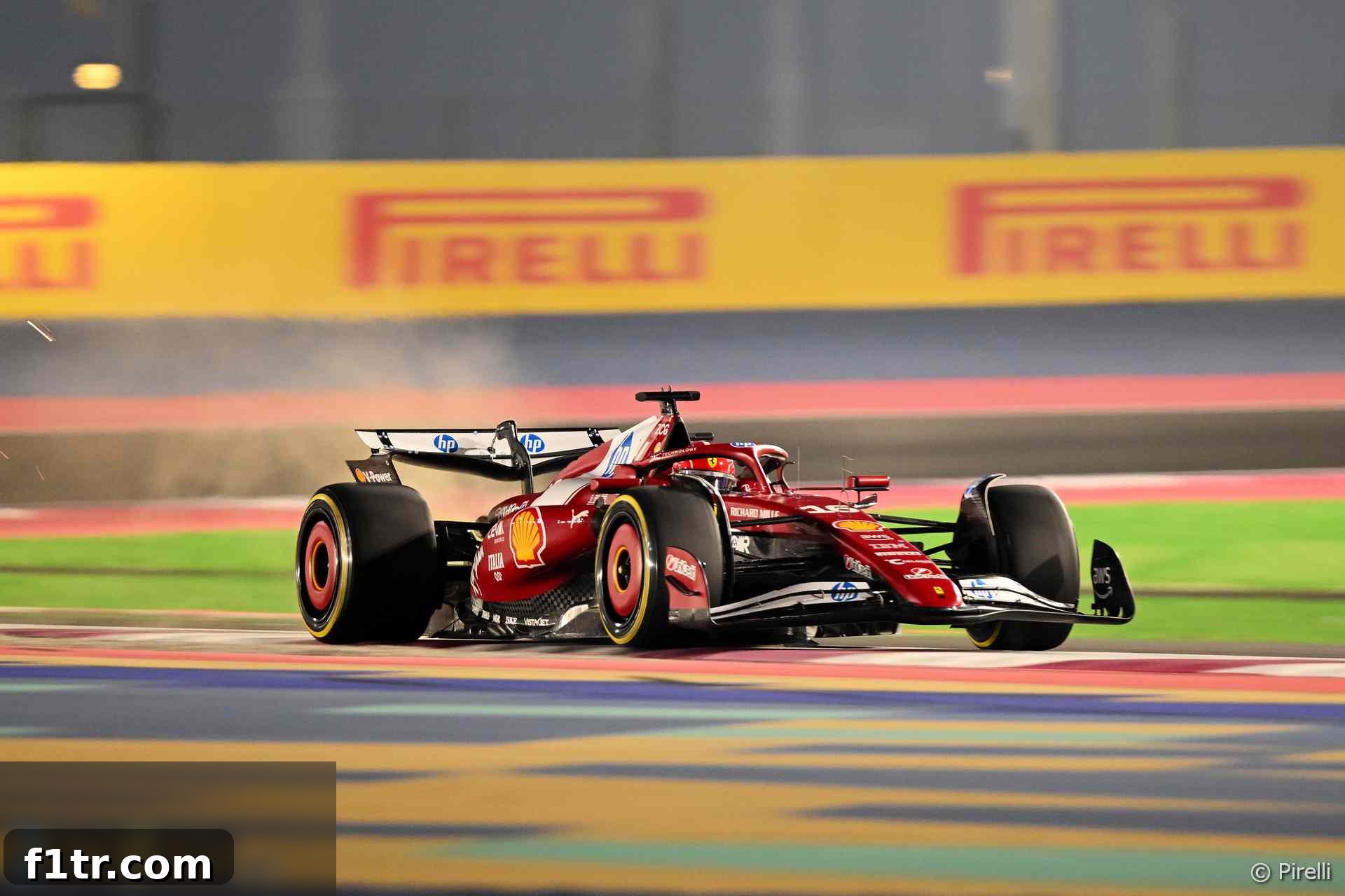
FIA Stands Firm on Losail Circuit Amid Pirelli Tyre Safety Scrutiny at Qatar Grand Prix
The Losail International Circuit in Qatar once again finds itself at the epicenter of a critical safety debate as Formula 1’s governing body, the FIA, has declared its intention to uphold recent circuit modifications. This resolute decision comes despite official tyre supplier Pirelli raising significant concerns following the discovery of worrying cuts in its tyres after yesterday’s practice sessions. The unwavering stance from the FIA sets the stage for a tense weekend at the Qatar Grand Prix, where driver safety and tyre integrity will be under intense scrutiny during the upcoming sprint race and grand prix qualifying. The recurring nature of tyre issues at Losail underscores the unique and demanding challenges presented by this high-speed circuit.
While the FIA remains committed to its track design, the F1 paddock is buzzing with discussions about the implications for performance and safety. The ongoing dialogue between the governing body, the tyre manufacturer, and the teams highlights the delicate balance required to maintain competitive racing without compromising the well-being of the drivers.
Advert | Become a Supporter & go ad-free
Advertisement Placeholder
Pirelli’s Alarming Discoveries: Gravel as the Culprit
Pirelli, the exclusive tyre supplier for Formula 1, issued a detailed and urgent report highlighting the precise cause of the tyre damage observed during the initial free practice sessions. According to their meticulous analysis, the cuts were unequivocally “caused by gravel pulled onto the circuit by cars that went off into the new gravel traps alongside the track.” This finding is particularly concerning because it directly links the tyre degradation to recent changes implemented at the Losail International Circuit, modifications that were specifically intended to enhance track limits enforcement.
The nature of these cuts is far from superficial; they represent a tangible and severe safety hazard. At the extreme speeds and immense loads experienced in Formula 1, even minor damage to a tyre can escalate rapidly, increasing the risk of catastrophic delamination or outright failure. When a car momentarily exceeds track limits and ventures into the adjacent gravel traps, it inevitably churns up sharp-edged stones. These pieces of gravel, propelled with considerable force, can then strike the delicate rubber compounds of the F1 tyres, leading to the reported incisions. The high-speed characteristics of Losail, combined with its notoriously abrasive asphalt surface, only exacerbate this issue, placing extraordinary stress on the tyre structure and composition.
Losail’s Evolving Layout: A Strategy for Track Limits Enforcement
The recent circuit modifications at Losail were primarily conceived to address and deter drivers from consistently exceeding track limits, a persistent and often controversial issue across numerous modern Formula 1 venues. For the current season, three entirely new gravel strips were strategically introduced at turns six, ten, and sixteen. Complementing these additions, the existing gravel trap at turn fourteen, a corner well-known for drivers running wide, underwent a significant extension. These changes reflect a broader philosophical shift within motorsport, moving away from an over-reliance on purely electronic monitoring systems or retrospective time penalties for track limits infringements.
Instead, the approach now favors a more immediate and physically penalizing consequence for venturing off-track. The underlying rationale behind using gravel is to make excursions naturally slower and inherently more punishing, thereby compelling drivers to respect the circuit boundaries through the intrinsic design of the track itself, rather than through punitive measures applied after the fact. RaceFans understands, based on informed discussions with sources close to the event, that none of these newly installed or extended gravel traps will be altered or removed prior to today’s crucial sprint race. This firm decision underscores the FIA’s unwavering commitment to its chosen method of track limits enforcement, even as this strategy unexpectedly presents new challenges to tyre integrity.
A Recurring Challenge: Losail’s Troubled History with Tyre Concerns
This is far from the first occasion Pirelli has grappled with significant tyre difficulties at the Losail International Circuit. The venue has developed a troubled history concerning tyre integrity, a direct consequence of its inherently demanding characteristics. Just two years prior to this incident, during its inaugural appearance on the Formula 1 calendar, Pirelli discovered alarming indicators that its tyres were at a heightened risk of failure following the initial day of practice. That particular scare was predominantly attributed to the severity and aggressive profile of the kerbs installed at various points around the high-speed track, which were primarily designed to prevent drivers from gaining an unfair advantage by running wide over the circuit edges.
In response to those earlier concerns, the FIA had taken swift and proactive steps to mitigate the identified risks. As part of its concerted effort to manage the burgeoning problem, the governing body agreed to reconfigure the lines denoting the track boundaries at several critical points around the circuit. This measure was specifically aimed at guiding drivers away from the most punishing sections of the kerbs, thereby reducing the stress on the tyre sidewalls. Furthermore, in an unprecedented move during the 2023 event, the first track session on Saturday was postponed, and drivers were granted an additional ten minutes of practice time. This extended session provided invaluable opportunity for teams and Pirelli alike to evaluate the effectiveness of the changes and thoroughly assess their impact on tyre wear and, crucially, safety. However, for the current event, a similar re-evaluation or modification of track boundaries has been explicitly ruled out ahead of today’s running, indicating a distinctly different approach to tackling the present challenge.
The historical context vividly illustrates an ongoing evolution in the FIA’s strategy for managing track limits and ensuring safety at Losail. Following the kerb-related issues in 2023, those aggressive kerbs were eased, and gravel strips were introduced at nine points around the circuit, specifically designed to enforce track limits more effectively and tangibly. Building upon this foundational strategy, even more gravel was strategically introduced this season, directly leading to the current predicament of tyre cuts. This progression highlights the intricate and persistent challenge of balancing circuit safety, ensuring sporting fairness, and accommodating the immense demands placed on modern F1 machinery and its sophisticated components, particularly the high-performance tyres.
Immediate Response: Vigilant Monitoring and Increased Tyre Pressures
In the immediate aftermath of Pirelli’s concerning findings, both the FIA and Pirelli have confirmed their commitment to a vigilant stance. They have indicated that the situation will be monitored closely throughout today’s nineteen-lap sprint race and the subsequent qualifying session for the grand prix. This comprehensive monitoring protocol will involve continuous data analysis gathered from sophisticated car sensors, meticulous visual inspections of tyres after each session, and close, ongoing communication with all teams to identify any further anomalies or signs of escalating issues. The paramount importance of driver safety remains at the forefront, and any substantial deterioration in tyre integrity could trigger further action, though the precise nature of such potential actions remains unspecified for now.
As a tangible and immediate preventative measure to counteract the heightened risk posed by the gravel debris, Pirelli has taken the decisive step of increasing the minimum starting tyre pressures by 1psi across all compounds ahead of today’s sessions. This seemingly minor adjustment holds crucial significance for tyre safety. Higher internal tyre pressures stiffen the tyre carcass, providing enhanced resistance to external impacts and significantly reducing the likelihood of punctures or cuts propagating into full structural failures. While an increase in tyre pressure can sometimes subtly impact grip levels and alter wear characteristics over a race stint, the primary objective of this specific adjustment is unequivocally to enhance the structural integrity and resilience of the tyres against the sharp and abrasive gravel debris, thereby prioritizing safety above all else.
Advert | Become a RaceFans supporter andgo ad-free
Advertisement Placeholder
Driver Perspectives: The Dual Nature of Gravel Enforcement
The ongoing debate surrounding track limits enforcement and the efficacy of different solutions frequently elicits divided opinions within the Formula 1 paddock, particularly among the drivers themselves. For a considerable period, many drivers have vocally advocated for an increased reliance on gravel traps as a primary deterrent, preferring them over the vast expanses of asphalt run-off areas commonly seen at modern circuits. Their central argument is that gravel provides a more effective and immediate punishment, making it significantly harder for competitors to gain an unfair or illicit advantage by leaving the track. Asphalt run-offs, while offering a degree of safety in high-speed excursions, often allow drivers to rejoin the track without incurring a sufficient penalty, thus blurring the critical lines of what constitutes a ‘legal’ lap and impacting sporting fairness.
However, the recent issues at Losail have brought a compelling dissenting voice to the forefront, notably that of Haas driver Oliver Bearman. Bearman articulated his concerns with clarity and conviction after an incident during yesterday’s qualifying session where he felt impeded by debris created by another car, Isack Hadjar, running off track. His remarks offered a crucial counter-perspective on the pervasive use of gravel, highlighting its potential and often overlooked drawbacks.
“For me more of the issue was on the final lap,” explained the promising young Haas driver. “I was behind someone who just kept going off so I had a lot of debris on track – gravel, which is mainly an issue of the track. A lot of us [were] complaining about the fact that the gravel there is not the best way, in our opinion, to solve things because we end up with what we had which is basically gravel everywhere, damaging tyres and ruining laps.”
Bearman’s viewpoint effectively underscores a critical practical problem: while gravel undoubtedly punishes individual drivers for exceeding track limits, the immediate consequence for subsequent drivers can be equally disruptive and potentially hazardous. When multiple cars venture into the traps, a significant amount of gravel is inevitably pulled back onto the racing line. This creates an unpredictable, abrasive surface that can cause tyre damage, severely reduce crucial grip, and compromise aerodynamic performance. For a driver on a critical qualifying lap or during a heated race, this debris can effectively “ruin” their attempt or race, irrespective of their own driving prowess. This introduces an element of lottery that many believe detracts from pure racing merit. This dichotomy highlights the complex and multifaceted challenge of designing circuits that are simultaneously safe, fair, and conducive to competitive, unadulterated racing.
Implications for the Weekend and Future Circuit Design
The FIA’s unwavering stance on the Losail circuit configuration, coupled with Pirelli’s proactive tyre safety measures, will undoubtedly have a profound and lasting impact on the remainder of the Qatar Grand Prix weekend. Teams and drivers will be compelled to adjust their approaches, potentially adopting more conservative driving lines near track limits to rigorously avoid venturing into the gravel, which could consequentially affect overall lap times and strategic options. The increased tyre pressures, while crucial for safety, might also subtly alter the delicate balance of car performance, influencing setup choices and degrading characteristics over a full race stint. Furthermore, the persistent risk of gravel debris on the racing surface could necessitate Safety Car periods during the races, dramatically reshaping the competitive landscape and introducing unforeseen strategic variables.
Beyond this immediate weekend, the recurring tyre issues at Losail, coupled with the ongoing and fervent debate surrounding track limits enforcement, will undoubtedly fuel further intensive discussions within the FIA, Pirelli, and all key Formula 1 stakeholders. This scenario poses a fundamental and pressing question for the future of motorsport circuit design: how can tracks be effectively designed to penalize drivers for exceeding track limits without simultaneously introducing new, significant safety risks or unfairly impacting the racing product? The intricate balancing act between spectacle, safety, and sporting integrity remains a constant and evolving challenge, with Losail serving as a stark and timely reminder of these inherent complexities. The lessons learned here in Qatar could very well influence future circuit modifications, safety protocols, and the fundamental philosophy of track design across the entire F1 calendar, shaping the sport for years to come.
Miss nothing from RaceFans
Get a daily email with all our latest stories – and nothing else. No marketing, no ads. Sign up here:
2025 Qatar Grand Prix Articles
Explore more content related to the 2025 Qatar Grand Prix and stay updated with the latest news:
- Norris wins 2025 F1 title and ends Verstappen’s four-year reign as champion
- McLaren “helping Stefano with TV ratings” with Qatar strategy error, jokes Brown
- Alpine are guaranteed to finish last in 2025 – but will set an obscure points record
- Norris take note: The F1 points leader usually loses three-way title fights
- Mercedes grateful for Red Bull’s statement on Antonelli after “disappointing” online abuse
Browse all 2025 Qatar Grand Prix articles