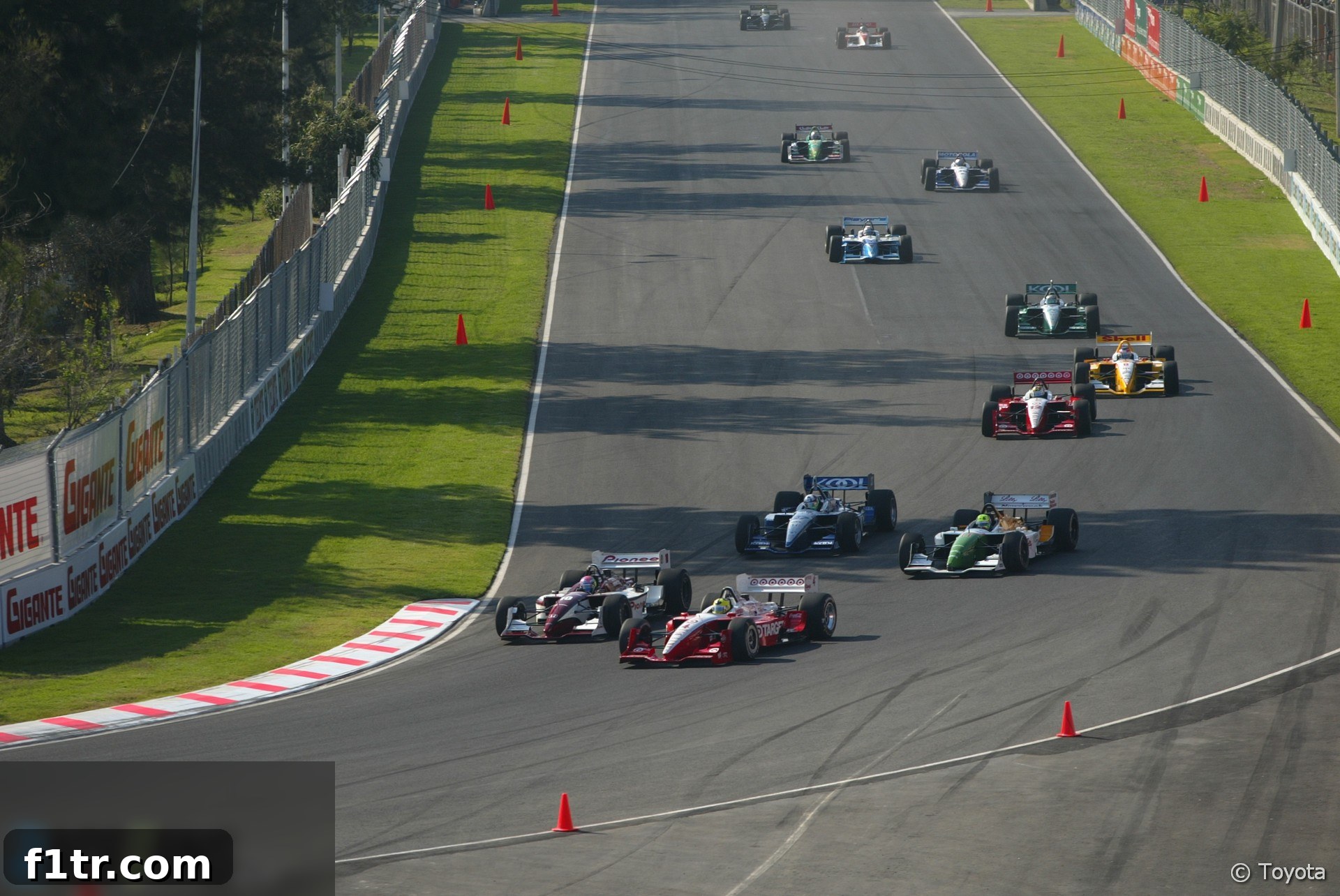
Motorsport enthusiasts worldwide are buzzing with anticipation for a truly special event at the upcoming Mexican Grand Prix. A star-studded roster of a dozen legendary drivers, primarily hailing from the iconic CART era of Indycar racing, is set to make a triumphant return to the track in an exhilarating new support event. This unique spectacle, dubbed the “Legends Cup,” promises a captivating fusion of nostalgia and high-octane racing, reigniting rivalries and showcasing the enduring skill of some of the sport’s most revered figures.
Advert | Become a Supporter & go ad-free
These celebrated drivers, who carved their names into motorsport history through their mastery of open-wheel single-seater machines, will now command powerful closed-wheel cars. Each vehicle is propelled by a formidable 500bhp V8 engine, ensuring a thrilling display of speed and driver prowess. The stage for this monumental clash will be none other than the hallowed grounds of the Autodromo Hermanos Rodriguez in Mexico City, a circuit many of these champions know intimately from their past exploits. The event offers a rare opportunity for fans to witness these titans of racing once again push the limits on a world-class stage, proving that true talent never fades.
The Legends Cup: A Glimpse into Racing History
The concept behind the Legends Cup is a stroke of genius, designed to tap into the rich heritage of motorsports and celebrate an era that captivated millions. The CART (Championship Auto Racing Teams) series, active from 1979 to 2007, was renowned for its fierce competition, diverse tracks, and charismatic drivers. It was a golden age for North American open-wheel racing, attracting talent from across the globe and producing some of the most memorable races in history. The drivers confirmed for the Legends Cup are direct products of this era, embodying the spirit and skill that made CART so legendary.
The choice of machinery – closed-wheel cars powered by 500bhp V8 engines – is particularly intriguing. While many of these drivers are synonymous with open-wheelers, the transition to high-powered, robust closed-wheel vehicles will test their adaptability and raw driving instincts. This format ensures a level playing field and promises intense, door-to-door racing, reminiscent of the no-holds-barred competition that defined their careers. For fans, it’s not just about seeing familiar faces; it’s about witnessing true racing artists adapt and excel, proving that their inherent skill transcends vehicle type.
Meet the Icons: A Star-Studded Lineup
The grid for the Legends Cup is a veritable who’s who of racing royalty, drawing talent from Mexico, Canada, the United States, South America, and Europe. Each driver brings a unique legacy and a trove of achievements, promising a weekend filled with unforgettable moments for long-time fans and newcomers alike.
Local Heroes: Mexican Motorsport Royalty
Leading the charge are five distinguished Mexican drivers, whose presence will undoubtedly electrify the home crowd. Among them is Adrian Fernandez, aged 59, a beloved figure in Mexican motorsport and a formidable competitor throughout the late 20th and early 21st centuries. Fernandez’s career highlights include finishing as the 1999 CART runner-up, a testament to his consistent speed and race craft, and securing the 2009 American Le Mans Series championship. He will be joined by his co-champion from the American Le Mans Series, Luis Diaz (44), whose tactical brilliance and endurance racing prowess complemented Fernandez’s speed perfectly.
The lineup also features Le Mans 24 Hours winner Roberto Gonzalez (46), a seasoned endurance racer with international success, and Champ Car race winner Mario Dominguez (46), known for his aggressive driving style and never-say-die attitude. Completing the Mexican contingent is Michel Jourdain Jnr (46), a consistent title contender in Champ Car, whose impressive career showcased his versatility and determination across various racing disciplines. For these drivers, competing on home soil, at a circuit where they’ve previously tasted success, adds an extra layer of pride and motivation to their participation.
North American Powerhouses: Champions from Canada and the US
Representing Canada are two of the most iconic figures from the Champ Car era: Alex Tagliani (49) and Paul Tracy (53). Tagliani, an Indianapolis 500 pole winner, was renowned for his blistering speed and spectacular qualifying performances, often setting the pace in the fastest racing series. Paul Tracy, the charismatic 2003 Champ Car champion, was a fan favorite known for his audacious overtakes, aggressive style, and outspoken personality. His championship season was a masterclass in determination and skill, making him one of the most memorable champions of his generation.
The United States’ sole representative is long-time NASCAR Cup Series driver Casey Mears (44). Mears brings a diverse racing background to the grid, having competed at the highest levels of stock car racing for many years. His experience in intense, wheel-to-wheel competition, particularly on ovals, will undoubtedly make him a formidable challenger, showcasing the versatility of American racing talent.
International Flair: European and South American Maestros
The international flavor of the Legends Cup is further enriched by drivers from South America and Europe. Bruno Junqueira (45), the 2000 International Formula 3000 champion and a three-time Champ Car runner-up, is the lone South American on the grid. Junqueira was known for his incredible consistency and speed, often challenging for championships and earning pole positions, including one at the Autodromo Hermanos Rodriguez.
A formidable trio of European racers completes the grid, bringing a wealth of Formula 1 and international sports car experience. Mark Blundell (56) and Max Papis (53) are both former Formula 1 drivers, who later transitioned to successful careers in CART and endurance racing. Blundell was a Grand Prix podium finisher, while Papis earned the nickname “Mad Max” for his relentless and aggressive racing style, making him a perennial crowd-pleaser. Joining them is ex-Formula E racer Oriol Servia (48), a highly respected Spanish driver who had a long and successful career in both Champ Car and IndyCar, known for his technical feedback and smooth driving. This blend of backgrounds promises a fascinating dynamic and an exceptional level of competition.
Autodromo Hermanos Rodriguez: A Circuit Steeped in History
The Autodromo Hermanos Rodriguez in Mexico City is more than just a race track; it’s a living monument to motorsport history, and it holds a special place in the hearts of many of these returning legends. The circuit appeared prominently on the Champ Car calendar from 2002 to 2007, quickly becoming a popular venue due to its challenging layout and the passionate Mexican fanbase. Its iconic Peraltada corner, though modified over the years, and the atmospheric stadium section create an electrifying environment unlike any other.
Many of the drivers competing in the Legends Cup have a deep familiarity with the circuit’s unique characteristics. For instance, Paul Tracy famously won the 2003 edition of the Champ Car race at Mexico City, a pivotal victory during his championship-winning season. The year prior, in 2002, Bruno Junqueira demonstrated his raw speed by clinching pole position, highlighting the competitive nature of the series at this venue. The return of these drivers to a track where they’ve created indelible memories adds an extra layer of emotion and historical significance to the Legends Cup, connecting past glories with present excitement.
A Grand Return: The Vision Behind the Legends Cup
The vision for the Legends Cup goes beyond mere exhibition; it’s a heartfelt tribute to an era and its heroes. Federico Gonzalez, the general director of the Mexican Grand Prix, eloquently articulated this sentiment: “Before hosting Formula 1 in Mexico, we used to promote the Champ Car World Series at the Autódromo Hermanos Rodríguez and it was as big as F1 [those] days.” This statement perfectly captures the profound historical connection between the circuit, the series, and the Mexican people.
Gonzalez further emphasized the immense pride and privilege associated with organizing such an event. “Being able to reunite all these legends together for a one-time only event here in Mexico is a huge privilege for us and for the Mexican fans.” This unique opportunity not only allows a new generation of fans to witness these titans in action but also offers seasoned enthusiasts a powerful trip down memory lane. It’s a celebration of motorsport heritage, an acknowledgment of the profound impact these drivers had on the sport, and a direct response to the enduring passion of Mexican racing fans, who have always embraced the highest levels of international motorsport.
Seamless Integration: The Weekend Schedule
The Legends Cup is seamlessly integrated into the already action-packed Mexican Grand Prix weekend, ensuring maximum exposure and excitement for attendees. The schedule is strategically planned to complement the Formula 1 sessions, offering continuous, high-quality racing entertainment.
Free practice for the Legends Cup will kick off shortly after Formula 1’s first session on Friday, at 2:30 PM local time, giving drivers a crucial opportunity to reacquaint themselves with the circuit and their machinery. Qualifying will then precede F1’s own qualifying session on Saturday at 1:45 PM, setting the grid for the main event and building anticipation. The grand finale, a thrilling 35-minute race, is scheduled to start at 11:05 AM on Sunday, just hours before the Formula 1 Grand Prix itself. This prime slot ensures that a massive audience, already primed for racing action, will be on hand to witness these legends battle it out, making the Mexican Grand Prix weekend an even richer and more memorable experience for everyone involved.
Advert | Become a RaceFans supporter andgo ad-free
2022 F1 season
- Mercedes told me “you’re wrong” about 2022 car’s problems – Hamilton
- FIA confirms all 10 F1 teams complied with 2022 cost cap
- Steiner “not ashamed” of panning “slow” Schumacher in Drive to Survive
- Albon believes year out of F1 improved him as a driver
- Hamilton sees diversity gains in F1 years on from his ‘traumatising’ experience of racism
Browse all 2022 F1 season articles