McLaren’s Ingenious Diffuser Design: A Masterclass in F1 Regulation Exploitation
In the high-stakes world of Formula 1, engineering ingenuity often dictates success. The 2021 season brought forth a fresh set of technical regulations, primarily aimed at reducing the overall downforce generated by the cars, largely for safety reasons and to ease the strain on Pirelli’s tires. While many teams grappled with these changes, McLaren’s technical director, James Key, openly admitted his surprise that no other team had adopted their remarkably clever solution to the new diffuser rules.
The diffuser, a critical aerodynamic component at the rear of an F1 car, is responsible for accelerating airflow beneath the vehicle, creating a low-pressure area that effectively sucks the car to the ground, generating vital downforce. For the 2021 season, one of the key changes specifically targeted this area: teams were mandated to reduce the height of the vertical strakes within the diffuser by a significant 50 millimeters. This particular alteration was designed to be a straightforward method of cutting downforce.
Unlocking a Hidden Aerodynamic Advantage
However, the genius of McLaren’s approach lay in their meticulous interpretation and exploitation of the intricate regulations. They discovered a specific clause detailing the dimensions of various diffuser parts, which permitted longer strakes, provided these elements were strategically positioned within 250 millimeters of the car’s centerline. This subtle yet profound detail allowed McLaren to regain a significant portion of the downforce that the new regulations intended to eliminate, giving them a distinct competitive edge.
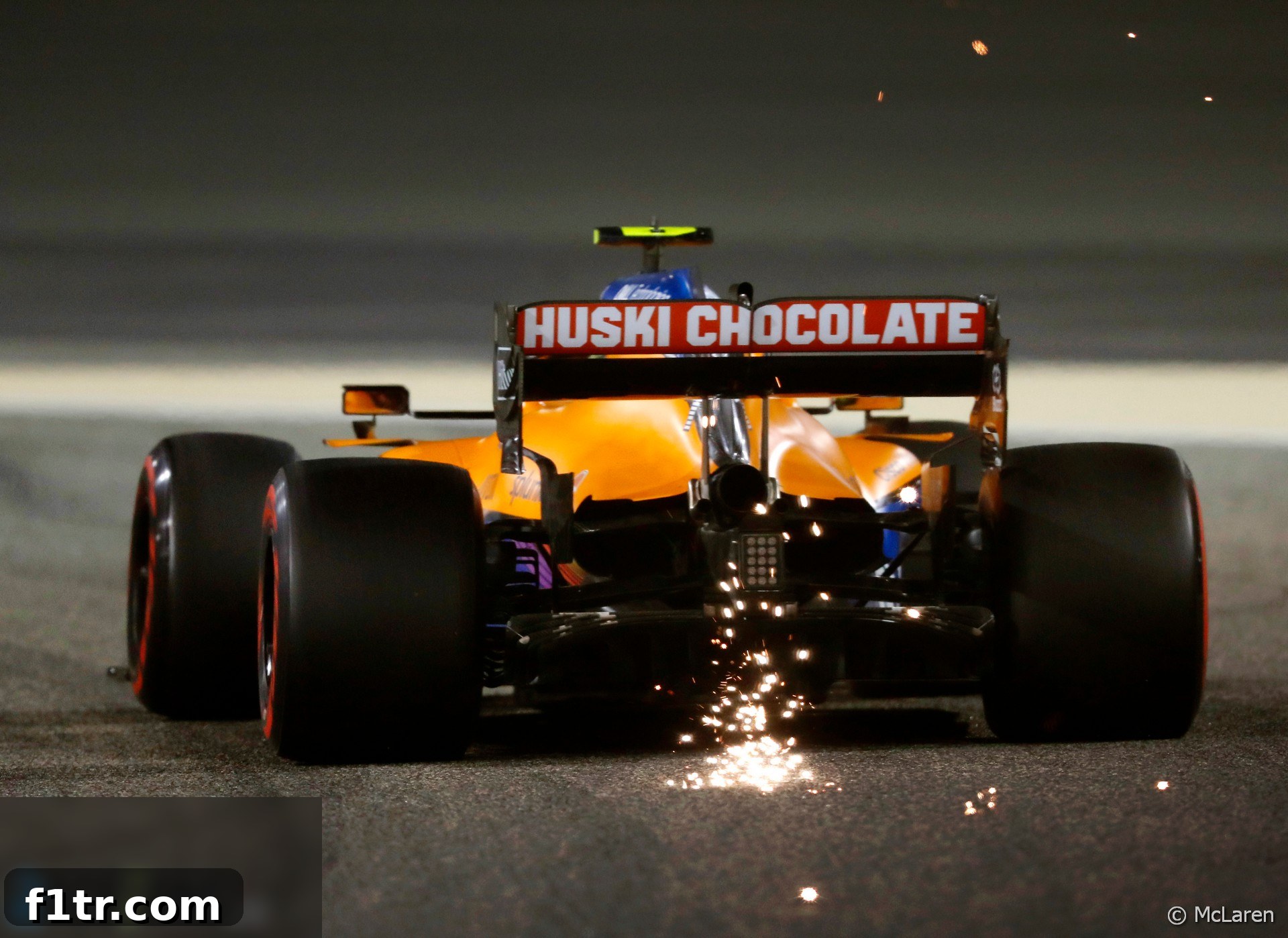
The innovation remained a closely guarded secret during McLaren’s car filming day at Silverstone, where detailed images were carefully managed to conceal the design. It wasn’t until pre-season testing commenced in Bahrain that the aerodynamic marvel came to light, catching the eye of rival engineers and analysts alike. When the design was unveiled, James Key expressed his genuine astonishment that McLaren appeared to be the sole team to have interpreted the rules in such an inventive manner.
“I think we are a bit surprised that maybe we’re the only team right now with that,” Key stated, acknowledging the unique nature of their discovery. He emphasized, however, that this was just one specific feature within a much broader and complex set of aerodynamic changes introduced for the year.
Credit to the Aerodynamicists: A Testament to Teamwork
Key was quick to lavish praise upon McLaren’s dedicated aerodynamic department for conceiving this novel solution. He highlighted the satisfaction that comes with a team developing a unique and effective idea, giving full credit to the aero group and the specific individuals working on the rear aerodynamic package. Their foresight and deep understanding of the regulatory text allowed them to identify and capitalize on an opportunity that seemingly eluded others.
“I think it’s always nice for a team to come up with an idea which is unique and the credit fully goes to our aero department and the guys in the rear aero group for realizing that there was an opportunity there to use the new regulations in such a way. So full credit to them in that respect,” Key articulated, underscoring the collaborative effort behind such breakthroughs. This kind of innovative thinking not only provides a performance benefit but also serves as a significant morale boost for the engineering team.
While acknowledging the positive attention this design garnered, Key remained pragmatic about its long-term impact. He noted, “Of course it’s nice to find something which is maybe a little bit unique to us. I suppose it’s one of those visible things which gets talked about a lot, but ultimately it’s just a bit of a much wider picture of a complex back of a car. I’m sure it’ll be forgotten by the time we get back here in a couple of weeks’ time.” This perspective highlights the constant evolution in F1, where today’s innovation can quickly become tomorrow’s standard feature as rivals catch up.
The Race to Copy: From Discovery to Track
The revelation of McLaren’s diffuser immediately sparked speculation about how quickly other teams would analyze and potentially replicate the design. Key himself offered an insightful timeline for rivals wishing to integrate a similar solution onto their own cars, suggesting it could take several weeks for any competitive team to produce a version optimally tailored to their specific vehicle architecture.
The first step in reverse-engineering any innovation in F1 is typically Computational Fluid Dynamics (CFD). “The first port of call with any idea you see elsewhere is CFD,” Key explained. CFD software allows engineers to simulate airflow over a car’s components, providing invaluable data on aerodynamic performance without the need for physical prototypes. Key believes that an initial analysis using CFD can be completed relatively quickly. “So I think you can jump on an idea that you spot on another team within a week, easily, nowadays.”
If the CFD analysis yields promising results and the innovation still holds interest—whether it’s McLaren’s unique diffuser or, for instance, Mercedes’ intricate floor edge details—the next crucial phase involves wind tunnel testing. This is where the physical interaction of the new component with the entire car’s aerodynamic package is rigorously assessed. “Then it’s really understanding how it works with your car. That’s the key to this, so you can end up with a unique geometry of your own because you might understand the principle, but then you have to adapt it accordingly that it works with your car.” Key elaborated, emphasizing that a direct copy rarely works perfectly; adaptation and integration are paramount.
The wind tunnel validation process typically adds another week or two to the timeline. Following successful testing, the component needs to be manufactured. For parts like diffuser strakes, which are relatively straightforward in terms of production, Key estimated that the entire process—from initially spotting the design to having it fitted onto a competitor’s car—could take approximately three to five weeks if teams are aggressively pushing for rapid integration. This period represents a significant window of competitive advantage for McLaren in the early races of the 2021 Formula 1 season.
Innovation and Regulation: The Perpetual F1 Dance
McLaren’s diffuser exemplifies the enduring spirit of innovation that defines Formula 1. It showcases the perpetual cat-and-mouse game between regulators, who aim to control performance and ensure safety, and engineering teams, who constantly seek to find creative interpretations and “loopholes” within the rulebook. This dynamic is what keeps F1 at the pinnacle of motorsport, pushing the boundaries of automotive technology and design.
The ability of technical directors like James Key and their highly specialized aerodynamic teams to scrutinize hundreds of pages of technical regulations and identify such subtle yet impactful opportunities is a testament to their expertise. It underscores the immense value of a deep understanding of not just physics and engineering, but also the precise language and intent behind the rules. For McLaren, this clever design signaled their intent to be strong contenders in the 2021 season, a year in which they also transitioned to Mercedes power units, adding another layer of complexity and potential.
Ultimately, while the F1 world moves on quickly, McLaren’s 2021 diffuser will be remembered as a brilliant example of how even minor regulatory wording can be leveraged for significant on-track advantage. It’s a reminder that in Formula 1, the race isn’t just on the track; it’s also in the minds of the engineers, meticulously dissecting every clause and every curve.
Further Reading: The 2021 F1 Season
- Masi ‘basically gifted the championship’ to Verstappen says 2021 FIA steward Sullivan
- Las Vegas race backers looking to extend F1 deal beyond 2025
- Why Mercedes put ‘a reminder of joy and pain’ on display in their factory lobby
- Verdict on error in GT race suggests Mercedes would have lost 2021 Abu Dhabi GP appeal
- Title ‘stolen’ from Mercedes made us ‘underdogs people cheer for’ – Wolff
Browse all 2021 F1 season articles