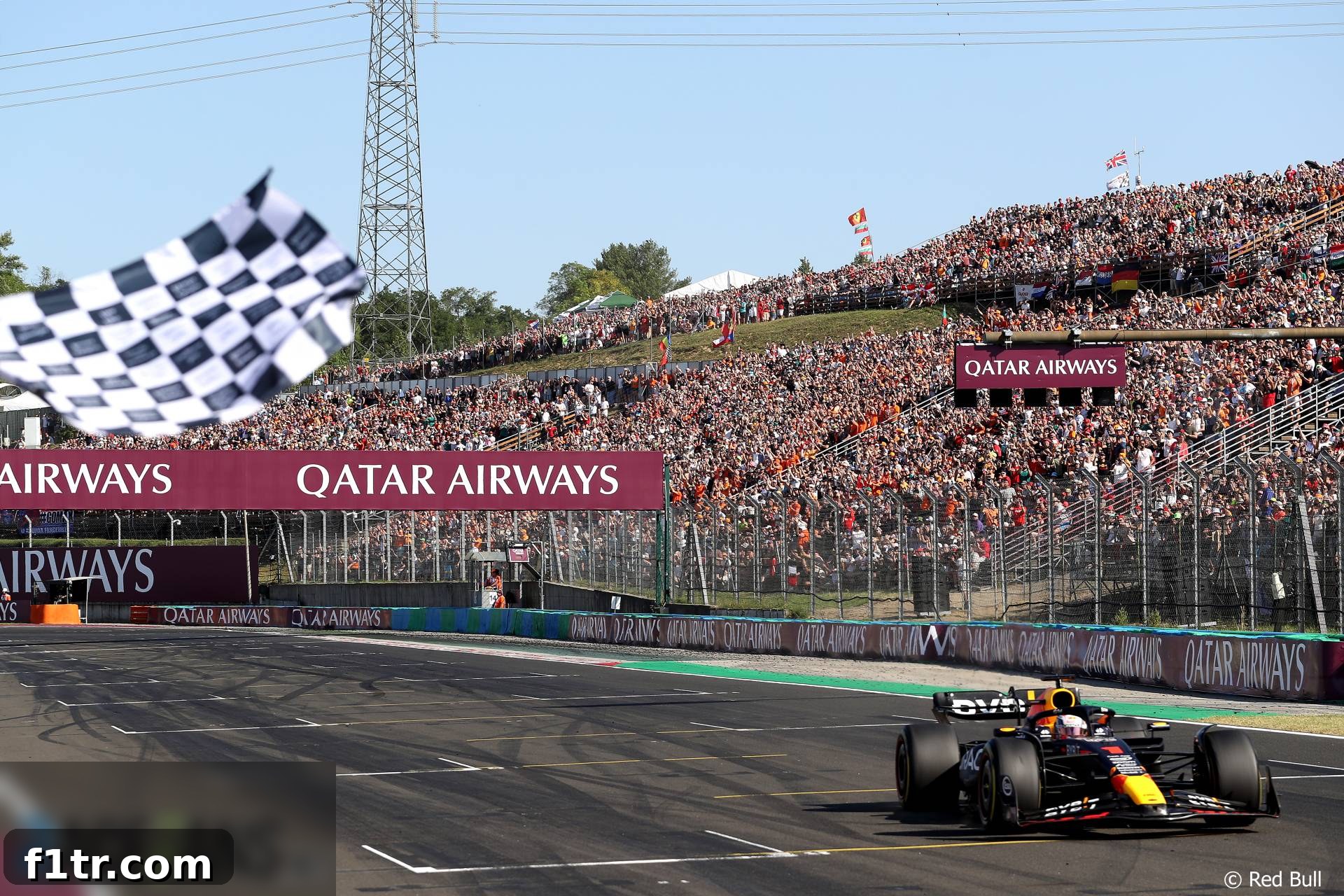
As the Formula 1 circus descends upon the Hungaroring, nestled just outside Budapest, a significant challenge looms: a relentless heatwave. Following a brief respite that saw a substantial downpour earlier in the week, teams and drivers are now bracing themselves for what is predicted to be one of the most scorching race weekends of the 2024 season. This notoriously twisty and demanding circuit, often dubbed ‘Monaco without walls’ due to its tight, challenging corners and lack of overtaking opportunities, becomes an even greater test of endurance and machine reliability when temperatures soar. The Hungarian Grand Prix is renowned for its unique character, and this year, the extreme weather is set to add another compelling layer to the drama, pushing every aspect of Formula 1 to its absolute limits, from driver stamina to intricate car cooling systems.
Advert | Become a Supporter & go ad-free
Ambient temperatures are consistently forecast to exceed a formidable 30°C across all three days of the event, with the mercury expected to hit its peak during Sunday’s gruelling 70-lap grand prix. While a heavy and welcome downpour hit the circuit on Wednesday, causing some temporary disruption as teams meticulously set up their state-of-the-art facilities in the newly redeveloped Hungaroring paddock, the track surface will have thoroughly dried out, offering maximum grip when the high-speed action commences on Friday. This initial rain might have provided a brief cooling effect, but the subsequent heat will rapidly bake the track, leading to very high track temperatures, a critical factor for tyre performance and overall race strategy in the Hungarian Grand Prix.
The Hungaroring: A Scorching Test of Skill and Strategy for F1 Teams
The Hungaroring’s inherent characteristics – its short straights, succession of medium and low-speed corners, and demanding chicanes – make it a physically exhausting circuit for drivers and an ultimate test for cooling systems on the cars. In extreme heat, engines, brakes, and gearboxes all operate at their very limits, making reliability a key concern. Teams will have to carefully manage their car setups, prioritizing optimal cooling without excessively compromising aerodynamic efficiency. Driver physical fitness will also be under intense scrutiny, with hydration and heat management inside the cockpit becoming paramount. The unique layout, combined with the forecasted high temperatures, promises a race weekend where every detail, from pit stop timing to tyre degradation and strategic calls, will play a decisive role in determining success at the Hungarian Grand Prix.
Historically, hot races at the Hungaroring have often been races of attrition, rewarding meticulous preparation and disciplined driving. The constant turning and accelerating mean there’s little opportunity for air to flow over critical components, which intensifies the heat stress on the car. Engineers will be poring over telemetry data, looking for any signs of overheating or unusual wear, and making proactive adjustments. The challenge isn’t just about speed; it’s about surviving the race distance with performance intact, making this Hungarian Grand Prix a fascinating strategic battle even before the green light.
Friday: Setting the Benchmark in Sweltering Practice Conditions
Friday’s practice sessions will offer teams their first crucial opportunity to gather data under conditions remarkably similar to what they can anticipate on race day. As Free Practice 1 (FP1) gets underway, ambient temperatures will already be well over 30°C, under typically clear and sunny Hungarian skies. This session will be vital for initial setup validation and understanding how the Pirelli tyres behave in the heat. As the afternoon progresses towards Free Practice 2 (FP2), some cloud cover is expected to roll in. While this might slightly mitigate the intensity of the direct sun, track temperatures, which often exceed a blistering 50°C at this circuit, will still remain exceptionally high. Engineers will be closely monitoring tyre wear and degradation during long runs, as managing these factors will be key to unlocking optimal performance over the Hungarian Grand Prix weekend.
The insights gained during Friday’s running will be indispensable for engineers. They will focus on fine-tuning aerodynamic balance, optimizing brake cooling, and evaluating various tyre compounds. The ultra-soft and soft compounds, typically chosen by Pirelli for this track, are particularly susceptible to overheating and blistering in such high temperatures. Understanding their performance envelope will inform Saturday’s qualifying strategies and, more critically, Sunday’s race plan. Drivers will be pushing their limits not just against each other, but also against the elements, trying to extract maximum speed while preserving their machinery and their own energy levels, all while battling the challenging Hungaroring circuit.
Saturday: Qualifying Under a Cloudy, Still-Warm Sky
Saturday is forecast to be noticeably cloudier than Friday, offering a slight reprieve from the intense direct sunlight, though ambient temperatures are not expected to drop significantly below the 30°C mark. Despite the increased cloud cover, the Hungaroring will remain a hot and demanding environment for qualifying. For drivers, this means less concern about getting their tyres up to optimal operating temperature, especially with Pirelli bringing its softest range of compounds this weekend. The challenge will instead shift towards managing overheating on a single flying lap and ensuring the tyres don’t ‘go off’ too early in a crucial Q3 run, a critical aspect of Hungarian Grand Prix qualifying.
The close proximity of the cars and the high track temperatures mean that grip levels can evolve rapidly throughout qualifying. A perfect lap will require not only precision and bravery but also an intuitive understanding of how the tyres are reacting to the heat and the circuit. The softer compounds typically provide exceptional grip but degrade quickly, making lap time consistency a premium. Given the Hungaroring’s reputation for being difficult to overtake, grid position gained in qualifying holds immense strategic importance. Teams will be pushing the boundaries of their car’s setup, aiming to find that sweet spot between outright speed and tyre longevity, all while battling the relentless Hungarian heat and the pressure of a single-lap shootout.
Sunday: The Ultimate Test – A Blazing Hot Hungarian Grand Prix Race Day
The climax of the weekend, Sunday, is anticipated to be relentlessly blazing hot throughout, with virtually no respite from the sun’s intense glare. This makes the 2024 Hungarian Grand Prix a strong contender for the hottest F1 race of the season so far. Race day temperatures are robustly forecast to be at least 33°C, coupled with very little wind, which will do little to dissipate the heat from the tarmac or the cars. These conditions will amplify every challenge presented by the Hungaroring, transforming the 70-lap race into a true test of physical and mechanical endurance, pushing drivers and machinery to their absolute limits.
The extreme heat will profoundly impact tyre degradation and potential blistering, forcing strategists to consider multiple pit stop scenarios. Managing the softest compounds over a long race distance will be a delicate balancing act, with tyre wear likely to dictate optimal pit windows. Drivers will face immense physical strain, requiring peak hydration and focus to maintain concentration for the entire race duration. Engine temperatures will be closely monitored, and any reliability issues due to overheating could prove costly. The lack of significant wind will also mean that exhaust gases and tyre marbles will linger, making conditions even more challenging for following cars and exacerbating the heating effect on brakes and engines. This combination of factors sets the stage for a dramatic and potentially unpredictable Hungarian Grand Prix, where meticulous planning and flawless execution will be essential for victory.
Some minor respite from the intense heat is tentatively due to arrive on Monday morning, with a slight chance of rain. However, this offers no comfort for the main event. Strategists across the pit lane will undoubtedly keep a close eye on whether revised forecasts over the coming days indicate that this cooler, wetter weather system may arrive any earlier, but as it currently stands, the 2024 Hungarian Grand Prix is set to be a truly scorching affair, a memorable battle against both competitors and the formidable elements of the Hungaroring.
Advert | Become a RaceFans supporter andgo ad-free
Implications for Performance and Strategic Decisions at the Hungarian GP
The high track temperatures expected throughout the Hungarian Grand Prix weekend will have significant implications for car performance and race strategy. Aero balance will be critical; teams will try to find the perfect compromise between downforce for the twisty sections and drag reduction for the short straights, all while ensuring sufficient airflow for cooling. Overheating brakes are a constant threat at the Hungaroring, and the intense heat will only exacerbate this issue, potentially leading to increased brake wear or even failures. Power unit reliability will also be under the microscope, as engines struggle to dissipate heat efficiently in high ambient temperatures, leading to potential power losses or mechanical issues. These technical challenges demand exceptional preparation and in-race management from every F1 team.
Driver management in such conditions cannot be overstated. Dehydration and fatigue can severely impact concentration and reaction times, which are absolutely critical on a circuit like the Hungaroring. Teams implement rigorous hydration protocols and design cooling solutions within the cockpit, but the drivers themselves must be at their physical peak. The mental fortitude required to navigate 70 laps in a hot, claustrophobic cockpit, while battling G-forces and managing sensitive machinery, is immense. This race will not only test the cars but also the very limits of human endurance, making the 2024 Hungarian Grand Prix a compelling spectacle for fans and a formidable challenge for all involved in Formula 1.
Beyond the Race: Staying Informed on Hungaroring Conditions
For enthusiasts eager to stay abreast of every development during the Hungarian Grand Prix weekend, keeping a close watch on live updates will be paramount. Throughout each session – from the initial Free Practices to the dramatic qualifying and the intense main race – track conditions and weather developments can shift rapidly, influencing strategy and performance. These real-time changes can dictate tyre choices, pit stop windows, and even the unfolding of the race narrative. For more immediate updates on the track conditions during each session, fans are encouraged to keep a keen eye on RaceFans Live and the official RaceFans Twitter account. These platforms provide real-time commentary, breaking news, and crucial insights that could make all the difference in understanding the unfolding drama of this potentially record-breakingly hot Hungarian Grand Prix.
2024 Hungarian Grand Prix Latest News and Insights
- Verstappen names Hungarian GP the most stressful moment of his title-winning year
- McLaren team orders “a new situation we’re inexperienced at handling” – Piastri
- Verstappen dismisses critics of “vocal” radio messages and late-night simracing
- Norris’ former McLaren team mates say he was right to give up win
- Mercedes surprised Hamilton’s car was “completely unscathed” in Verstappen clash
Browse all 2024 Hungarian Grand Prix articles