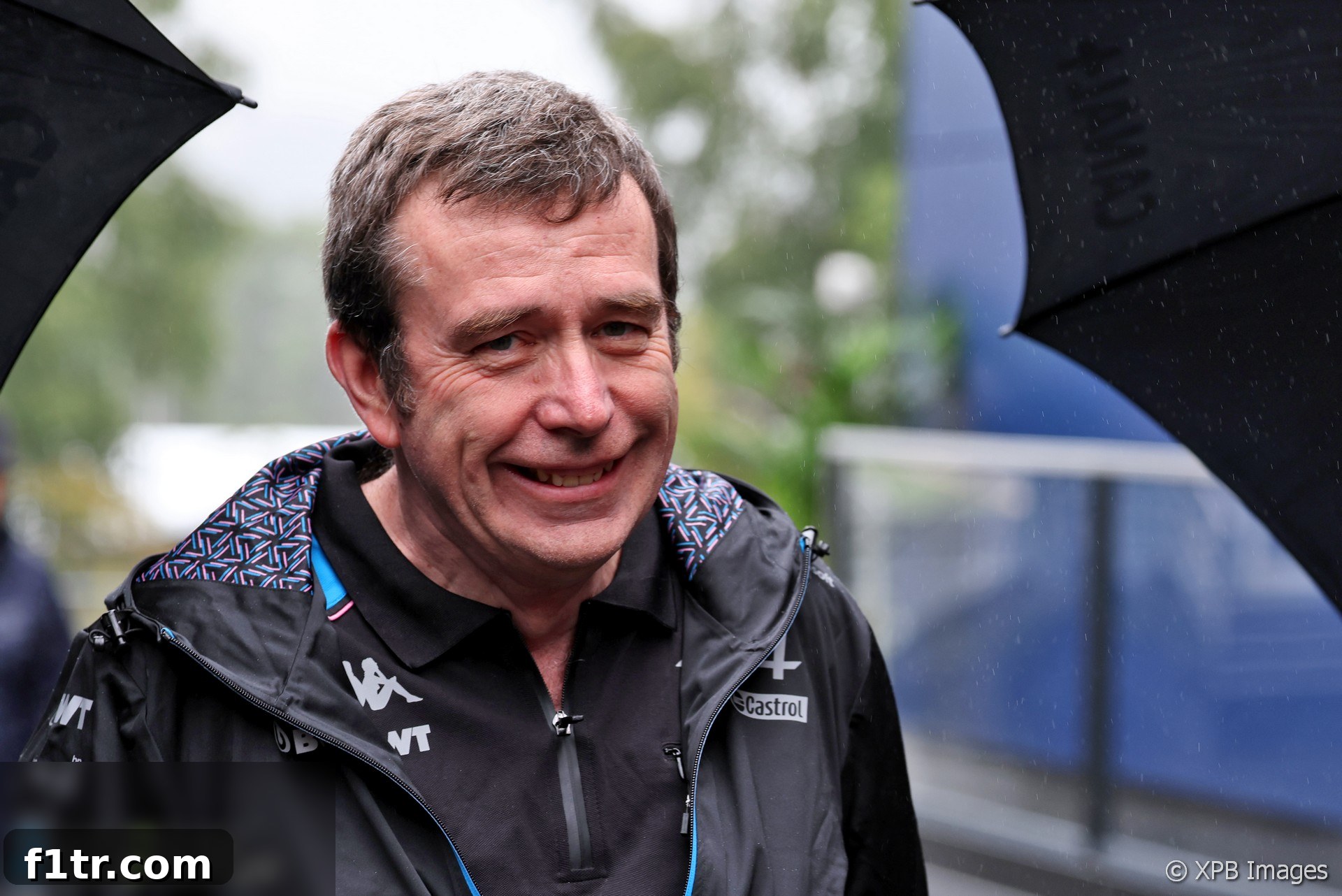
The corridors of power within the Alpine Formula 1 team have witnessed a seismic shift, stemming directly from the highest echelons of the Renault Group. This dramatic reorganization, which saw the unexpected departures of Team Principal Otmar Szafnauer and Sporting Director Alan Permane, underscores a deep-seated frustration with the team’s on-track performance and its trajectory within the fiercely competitive world of Formula 1. The decision was not sudden but the culmination of growing dissatisfaction, signaling a determined push for fundamental change from its French parent company.
Sponsored | Support Independent Journalism
Early warning signs of this discontent began to surface months ago. A particularly scathing critique emerged in April from then-CEO Laurent Rossi, who publicly lambasted the team’s error-strewn weekend at the Azerbaijan Grand Prix in Baku. This sharp admonition followed a similarly underwhelming start to the season in Bahrain, where Alpine’s performance fell short of expectations. Despite a spirited podium finish by Esteban Ocon at the Monaco Grand Prix – a race often considered Alpine’s home event due to its proximity to the team’s French roots – these isolated successes were insufficient to sway the firm conviction at the top that a more radical intervention was necessary to steer the team towards its ambitious goals.
Alpine’s Grand Ambitions Meet Harsh Reality
At the outset of the current season, Renault CEO Luca de Meo articulated a clear vision for Alpine. He spoke of building upon the respectable fourth-place finish in the constructors’ championship from the previous year, with an explicit aim to significantly close the performance gap to Formula 1’s dominant “big three” teams – Mercedes, Ferrari, and Red Bull – who had finished many hundreds of points ahead. The reality, however, unfolded quite differently. Rather than bridging the gap, Alpine found itself overtaken, first by a resurgent Aston Martin, and subsequently by a significantly improved McLaren. This regression in the pecking order served as a stark indicator that the team was not only failing to progress but was actively losing ground to key rivals.
De Meo had already hinted at his growing concern over the situation several weeks prior to the major personnel changes. “Two years ago, we were a distant sixth, genuinely,” he reflected. “We were battling AlphaTauri, which was effectively the fifth car, but they only had one primary driver. Last year, we achieved fourth. This year, the start to the season has been somewhat complicated, but things are beginning to fall back into place. I hope we can maintain this momentum.” Crucially, he also subtly foreshadowed impending adjustments within the team’s human resources. “We operate with a clear roadmap,” De Meo stated, emphasizing a step-by-step approach to progress. “It takes time to identify and recruit the right individuals, and to secure the necessary resources to augment our team, as our current team size is somewhat smaller compared to the absolute top-tier contenders.” These remarks, in hindsight, were clear precursors to the leadership overhaul.
The Leadership Purge: A New Chapter for Alpine F1
The dramatic shake-up, publicly announced just recently, initiated a few weeks earlier with the news of Laurent Rossi’s departure as CEO. Bruno Famin, who had previously headed Alpine’s engine division in Viry-Châtillon, was swiftly appointed to oversee all of Alpine’s motorsport activities, a move that immediately concentrated greater power and responsibility in his hands. It fell to Famin to deliver the truly stunning news: the team would be parting ways not only with Team Principal Otmar Szafnauer, who had only been recruited from Aston Martin a year and a half prior, but also with Sporting Director Alan Permane. Permane’s departure was arguably the most surprising development, given his remarkable 34-year tenure with the team, spanning multiple changes in ownership, leadership, and identity. His exit, more than any other, signaled a profound divergence in strategic vision between those responsible for the team’s day-to-day operations and the influential figures providing the financial backing and setting the overarching corporate direction.
“The reshuffle of the team is, naturally, a decision made by the top management,” Famin clarified when addressing selected media, including RaceFans. “This wasn’t an overnight decision; we have been in discussions for weeks. My appointment as Vice President of Motorsport a couple of weeks ago doesn’t mean my involvement in this process only began then. This narrative has been unfolding for quite some time, and I have been actively working on it with the senior leadership.”
Famin, despite the gravity of the situation, made a point of stressing his profound respect for the outgoing duo. “Nobody is suggesting that Otmar Szafnauer is not competent,” he affirmed. “I believe both Otmar and Alan are exceptionally experienced individuals. They represent genuine assets to any team. We are perfectly aware of their capabilities.” However, Famin underscored the critical importance of absolute alignment within the team, particularly given the “super tough competition” that Alpine faces in Formula 1. “You require 100% alignment to ensure everyone is working in close collaboration, and unfortunately, this was no longer the prevailing situation,” he stated, alluding to fundamental disagreements over the team’s strategic direction and execution.
The primary catalyst for these sweeping changes, Famin emphasized, was the top management’s profound dissatisfaction with Alpine’s current championship standing and the overall performance of its car. “The team is simply not where we had anticipated it would be this year,” he confessed. “Last year, we secured fourth place in the championship. The ambition was to aim for at least the same position, perhaps even closer to third. Ultimately, it is the drivers who score points, of course, but critically, it is the entire car – the complete package. And for the time being, we do not possess the best car.”
“Furthermore, we certainly do not possess the best engine,” he continued candidly. “But we must consider the entire package. At this moment, we have the potential to provide our drivers with a superior package and a more conducive environment to help them achieve better results.” This blunt assessment highlights the multifaceted nature of Alpine’s performance deficit, encompassing both chassis and power unit, and signals a commitment to holistic improvement across both key operational centers.
A History of Volatility and a Glimpse into the Future
Renault, as the owner of Alpine, re-entered Formula 1 as a full constructor in 2016. Luca de Meo assumed leadership of the Renault Group four years later, and the following year oversaw the rebranding of the F1 team under its revived sports car division, Alpine. Over this eight-year period, a recurring theme has been a remarkably volatile leadership structure – arguably more so than any other team on the current F1 grid. In stark contrast, three other teams have enjoyed the stability of being led by the same principal for a decade or more. Bruno Famin, who has now temporarily assumed the critical role of Team Principal, becomes the fourth individual to hold that position since the beginning of 2021. This constant churn in leadership means that the experience of new names arriving at the helm is, unfortunately, a familiar one for Alpine’s dedicated staff at its chassis facility in Enstone, UK, and its engine base in Viry-Châtillon, France. Famin indicated that this latest organizational restructuring has been implemented with the explicit aim of drastically altering the team’s fundamental approach to competition and development.
Sponsored | Support Our Work for Ad-Free Content
“We now have a CEO for Alpine, a Sporting Director in Julien Rouse, and a Team Principal, which for now, will be me,” Famin outlined, detailing the new hierarchy. “The core idea is to usher in a truly new phase in our project, to foster a new mindset, to enhance our facilities, and to improve every aspect necessary to develop and consistently achieve superior results, race after race, and year after year.”
Whether Famin will remain in charge for the long term remains an open question, with the decision yet to be finalized. “I do not yet have the answer to that specific question,” he admitted. “Nothing is being excluded.” He tactfully declined to comment on persistent rumors suggesting the team might be seeking to hire former Ferrari Team Principal Mattia Binotto, indicating a period of internal assessment before making such crucial long-term appointments. Regardless of who ultimately fills the Team Principal role permanently, Famin is unequivocally of the view that extensive, systemic changes are imperative. The precise nature and scope of these changes will be determined following his comprehensive assessment in the coming days and weeks.
“I believe we need to modify quite a significant number of aspects within our project,” he asserted. “My initial priority will be to conduct a thorough assessment of the team’s entire situation – from the factories themselves, to how these facilities collaborate, to every operational detail. Once this comprehensive assessment is complete, we will then make the corresponding, decisive actions.” He concluded by making it abundantly clear that Alpine is simply not content to idly observe rivals like Aston Martin and McLaren forge ahead. “We are not performing where we expected to be, and perhaps our rate of improvement has been insufficient. Our competitors have unequivocally demonstrated their capacity for significant progress and have shown they are capable of making substantial changes. We, too, must rigorously follow that path.” The message is clear: the status quo is unacceptable, and a period of intensive transformation lies ahead for the Alpine F1 Team.
Support Our Independent Formula 1 Coverage
Our dedicated Formula 1 coverage thrives thanks to the generous contributions of our readers. By choosing to contribute, you help us cover the essential costs of creating in-depth articles, hosting our platform, and continually developing our content for today and into the future.
Join our community of supporters today and enjoy an ad-free browsing experience. Find out more or sign up via the links below:
- Become a Supporter Today
- Supporter FAQ and Benefits
Sponsored | Support Our Work for Ad-Free Content
Related Formula 1 Articles
- Haas drivers express concerns over championship position after Spa difficulties
- Mercedes confident in winter development plan following recent performance gains
- Ferrari skeptical of engine equalization calls, cites Renault’s competitive standing
- Ferrari maintains “calm” approach amidst fluctuating performance across races
- Pirelli proposes new “super-intermediate” tyre to address wet weather challenges
Browse all Formula 1 News and Updates