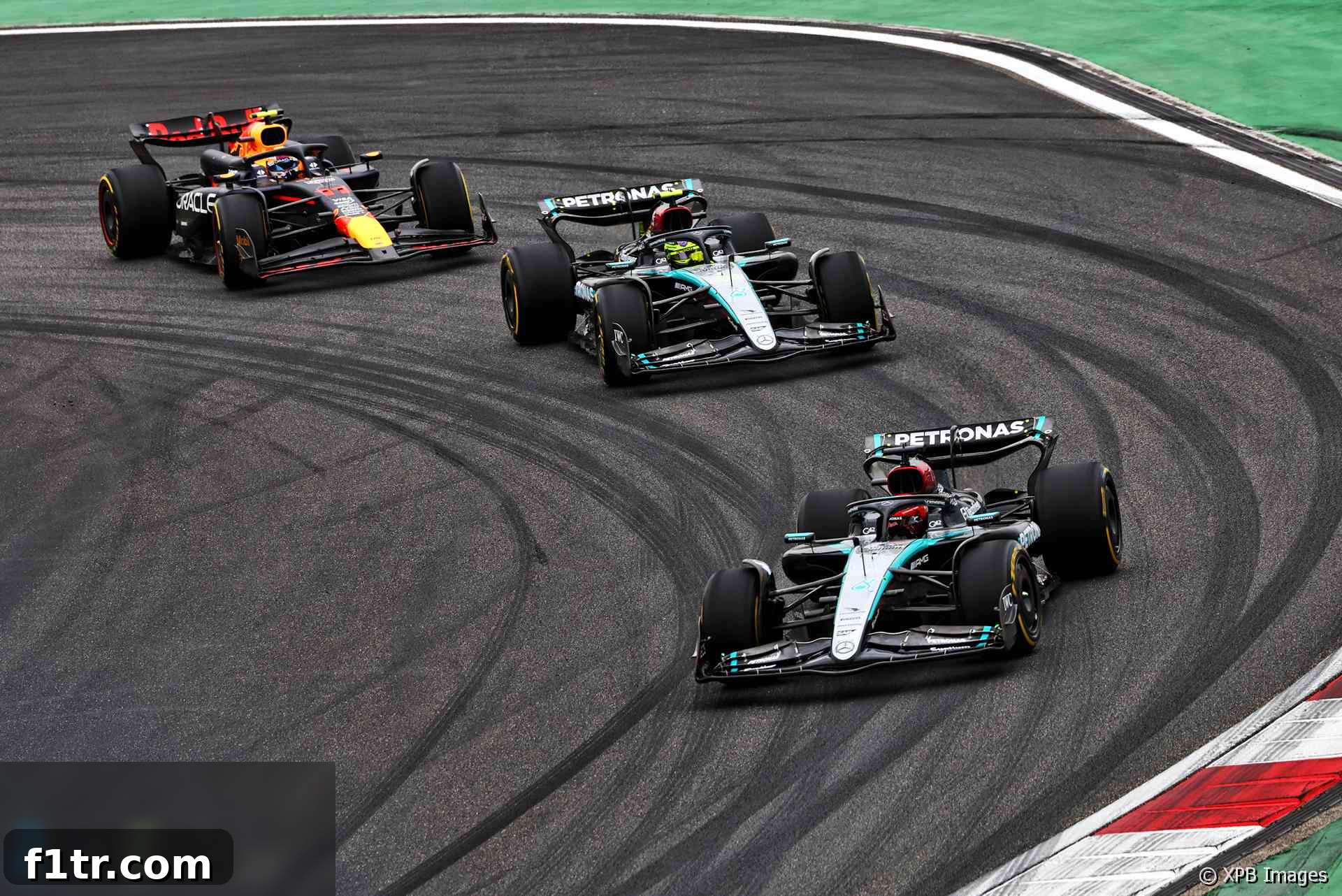
In the evolving landscape of Formula 1, the controversial sprint race format has undeniably carved out a unique niche, even among its harshest critics. One quality that stands beyond dispute is the heightened intrigue and unpredictability it injects into a Grand Prix weekend, primarily due to the significantly limited practice and preparation time afforded to teams before the competitive sessions commence.
The Shanghai International Circuit, a venue making its much-anticipated return to the F1 calendar after a five-year hiatus, provided the perfect crucible for this unique challenge. As the 20 drivers prepared to launch into the 100-kilometer sprint race, many found themselves navigating an unprecedented level of uncertainty. This was particularly true for the six drivers experiencing the Shanghai track in a Formula 1 car for the very first time, compounded by the fact that the circuit itself has undergone substantial changes since F1’s last visit.
Shanghai’s Grand Comeback: A Circuit Transformed and the Scarcity of Data
The challenges facing Formula 1 teams in Shanghai were multifaceted and exceptionally demanding. Firstly, the most recent performance data available to guide them was at least five years old. This data stemmed from a vastly different generation of F1 cars, operating under a fundamentally distinct aerodynamic philosophy and tyre regulations. Relying on such historical information, while providing a basic reference, offered little precise guidance for optimizing the cutting-edge machinery of the current era.
Secondly, while the track layout of the Shanghai International Circuit remained unchanged, the asphalt itself had been completely resurfaced. This seemingly minor alteration carried monumental implications, as it drastically altered the grip levels and abrasive characteristics of the circuit. What might have once been a familiar corner for veteran drivers now presented an entirely new dynamic, requiring fresh understanding and adaptation.
Under a typical Grand Prix format, drivers and teams would benefit from three comprehensive practice sessions totaling three hours, followed by a qualifying session, all designed to facilitate extensive track evolution. This rigorous schedule allows for meticulous car setup refinement, gathering abundant data across all three Pirelli tyre compounds, and for drivers to progressively build confidence and find the absolute limit of their machinery. However, this weekend’s sprint format severely curtailed such opportunities.
The sole practice session on Friday morning was cut short by a brief but notable interruption when grass on the inside of Turn 7 ignited, further reducing an already limited dry running window. This, combined with the initial phase of sprint qualifying, constituted the entirety of the dry running for most competitors. While a mere hour or so of track time might suffice for a casual player in a racing simulator like F1 23 to familiarize themselves with a circuit, it falls dramatically short of the meticulous preparation demanded by multi-million-pound professional Formula 1 teams, where every tenth of a second is gained through painstaking data analysis and precision engineering.
Strategic Gambles and Tyre Uncertainties: The High Stakes of Sprint Day
The compressed schedule and unique track conditions naturally led to significant strategic gambles, particularly concerning tyre choices. Several prominent teams, including Mercedes, Ferrari, McLaren, Aston Martin, RB, and Alpine, only managed to run the medium compound tyres for the very first time during SQ1, highlighting the extreme time constraints. More surprisingly, front-runners like Lewis Hamilton, George Russell, and Fernando Alonso had not yet even touched their soft tyres by the time sprint qualifying concluded. This left them with a crucial decision to make: which compound would they commit to for the 19 laps of the upcoming sprint race?
Pirelli, the official tyre supplier, largely anticipated the medium compound to be the default choice for both the sprint race and Sunday’s Grand Prix. Simone Berra, Pirelli’s chief engineer, explicitly stated, “The medium is clearly destined to be used in both tomorrow morning’s sprint race and Sunday’s grand prix.” However, he also acknowledged the potential temptation for some drivers to opt for the softer compound. “The soft is possibly a valid option for the sprint race, especially if it is held in cooler conditions than this morning’s free practice,” he added, hinting at a potential strategic split that could ignite the race.
An Unprecedented Grid: Red Bull Challenged, Norris and Hamilton Eye Victory
The Shanghai sprint race generated an uncommon level of interest, primarily because neither Red Bull car, typically dominant, would start from the top three grid positions. For the second consecutive sprint race, Lando Norris claimed pole position, poised to lead the field into Turn 1 with the fervent hope of maintaining his lead and securing his maiden victory in any official Formula 1 race. Starting alongside Norris on the front row was Lewis Hamilton’s Mercedes, equally determined to clinch a first-place finish after a challenging start to his season. Both drivers, however, expressed a cautious optimism, suggesting that more rain might be their best ally in achieving that coveted goal on Saturday.
“There is still a chance of rain tomorrow, so if it’s like this [qualifying], then I think our chances of a good result are relatively decent,” Norris commented, acknowledging the great equalizer that wet conditions often represent. “But the race is very different to qualifying and I’m sure everyone is going to catch up a bit tomorrow,” he prudently added, aware of the formidable pace of his rivals, particularly Max Verstappen.
Starting from an unfamiliar fourth position, Max Verstappen would need to demonstrate his renowned overtaking prowess if he intended to win the opening sprint race of the season. The reigning world champion had made just two competitive on-track overtakes so far in 2024: one on Norris in Jeddah and another on Charles Leclerc in the recent Grand Prix in Suzuka. However, both instances involved passes on cars that were out of sync with him in their pit cycles, rather than direct, outright gains of position in wheel-to-wheel combat from similar strategies.
Verstappen’s Challenge and Shanghai’s Overtaking Opportunities
Overtaking around the Shanghai International Circuit is certainly a possibility, largely facilitated by its exceptionally long back straight and generous DRS (Drag Reduction System) zones. These features often create exciting slipstreaming battles and offer multiple opportunities for drivers to make moves. However, before Verstappen could exploit these advantages, he faced a formidable initial hurdle: navigating what he anticipated would be a very tricky start off the grid.
“There will be low grip for everyone due to the paint on the Tarmac here and so we have to try and have the best start possible,” Verstappen explained, highlighting the localized low-grip conditions that could severely impact initial acceleration and traction. He further commented on the race strategy, “I think it is going to be quite a long stint on one set of tyres for the sprint, but I think that that will make it quite interesting,” suggesting that tyre management over the 19 laps would be a critical factor in a dry race.
Assuming a dry sprint race, the primary technical challenge for drivers would revolve around meticulously managing the left-front tyre, particularly through the notoriously long and demanding first corner, and then again through Turn 13, which leads directly onto the crucial back straight. These sections place immense stress on the tyre, making careful management essential to avoid excessive degradation and maintain performance throughout the race distance. However, if the track proved to be wet once more, drivers would be forced to improvise and adapt on the fly for the second consecutive day, relying heavily on their innate skill and intuition.
The weather forecast added another layer of complexity. Rain was expected overnight in Shanghai, which had the potential to further wash away any rubber that might have accumulated on the track surface from the opening day’s running, effectively resetting the track grip. Current predictions placed the risk of rain for the sprint race itself at just under 10%, yet the likelihood was expected to increase as the race progressed. This fluctuating forecast suggested that more surprises could well be in store, keeping teams and drivers on tenterhooks until the very last moment.
In contrast to the evolving weather picture, Ferrari team principal Frederic Vasseur expressed confidence, stating that Ferrari “expect the rest of the weekend to be dry.” Such a scenario could significantly play into the hands of his drivers, Carlos Sainz Jnr and Charles Leclerc, who were starting further down the grid in fifth and seventh positions, respectively, and whose car might perform optimally in consistent dry conditions.
The Sprint Race: A Crucial Dress Rehearsal for the Grand Prix
Beyond its standalone competitive merits, a dry sprint race holds significant strategic value for the subsequent Grand Prix sessions. The 19 laps of race data generated would be invaluable. Teams would be able to analyze real-world tyre degradation, fuel consumption, and aerodynamic performance under race conditions. This data would then allow them to make informed and precise setup changes heading into Grand Prix qualifying and, crucially, for the main Grand Prix itself. Even if a team doesn’t appear particularly strong in the sprint race, the insights gained from this extended competitive run can provide a vital pathway to rectifying performance deficits and optimizing their cars for the most important sessions of the weekend.
Until then, however, the sheer number of unknowns surrounding the first sprint race of 2024 in Shanghai meant that certainty was a luxury no team or driver could afford. This pervasive unpredictability, this embrace of the unknown, is in itself a refreshing and compelling dynamic in the current era of Formula 1, guaranteeing an enthralling spectacle for fans worldwide.
2024 Chinese Grand Prix
- Alonso and Sainz incidents prompt changes to Formula 1’s rules
- Aston Martin fail in bid to have Alonso’s Shanghai penalty reviewed
- Mercedes cleared over Hamilton pit stop infraction as ‘nearly all teams in breach’
- Aston Martin petitions FIA to review Alonso’s penalty for Sainz collision
- “You need to be more on it”: 12 unheard radio exchanges from the Chinese GP
Browse all 2024 Chinese Grand Prix articles