In the high-octane world of Formula 1, where every fraction of a second can dictate victory or defeat, the anticipation surrounding team dynamics and power unit partnerships is always palpable. Ahead of what promised to be a thrilling 2021 season, seven-time world champion Lewis Hamilton openly expressed his fervent hope for McLaren’s resurgence. With their impending switch to Mercedes power units, Hamilton envisioned his former team re-entering the championship fray, challenging not only his dominant Mercedes squad but also their fierce rivals, Red Bull Racing.
This sentiment, articulated by one of the sport’s most influential figures, highlighted the widespread desire among fans and competitors alike for a more diverse and unpredictable title battle. The prospect of McLaren, a team with a storied history in Formula 1, once again vying for top honors thanks to their renewed partnership with Mercedes, offered an exciting narrative twist that could redefine the competitive landscape of the sport.
Hamilton’s Vision: A Three-Way Championship Thriller
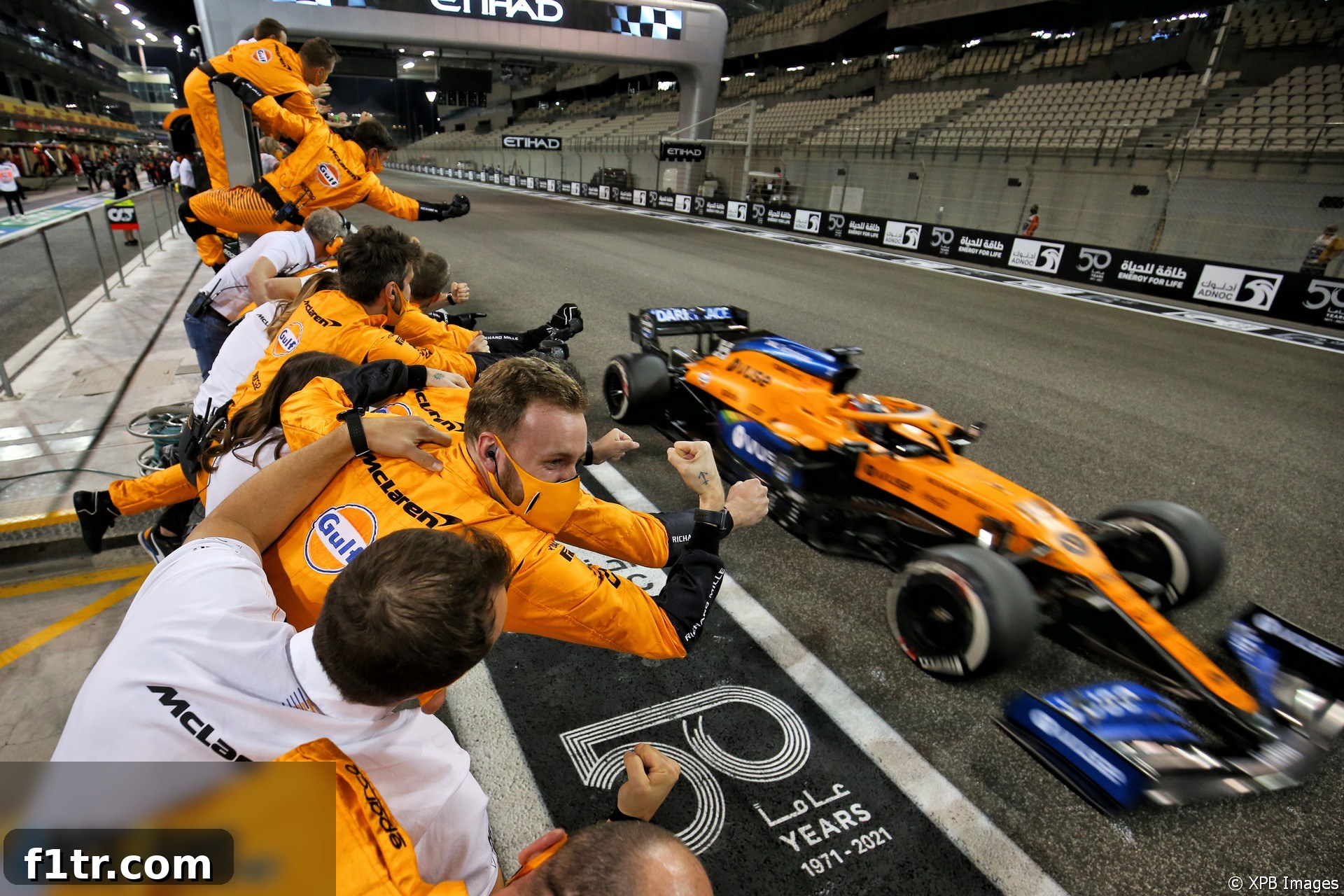
The catalyst for Hamilton’s optimism stemmed from McLaren’s impressive performance at the Abu Dhabi Grand Prix. There, Lando Norris demonstrated remarkable pace, qualifying within an astounding two-tenths of a second of Max Verstappen’s pole position time, a feat that also put him firmly in contention with both Mercedes drivers. This strong showing, particularly at the tail end of a challenging season, signaled McLaren’s inherent potential and the significant progress they had made.
Speaking after that qualifying session, Hamilton couldn’t hide his excitement at seeing his former team challenging at the sharp end of the grid. “I’m really happy to see the McLaren so close, particularly with how they’ve got changes and they’re using our engine next year,” he remarked, underscoring the direct link between their current form and the future engine switch. His words weren’t merely an acknowledgment of McLaren’s efforts but a strategic contemplation of the broader implications for the sport.
Hamilton continued, articulating a vision that resonates deeply with Formula 1 enthusiasts: “It’s great to see that at the end of the year with a good car so that they can perhaps be in the fight with us next year. If that makes it a three-way team championship, I think that would be amazing for the fans to see.” This desire for a “three-way team championship” between Mercedes, Red Bull, and McLaren speaks volumes about the champion’s hunger for intense competition and his understanding of what truly captivates the audience. A battle involving three distinct teams, each with their own strengths and narratives, promised to deliver unparalleled excitement and unpredictability throughout the season, elevating the spectacle for millions of viewers worldwide.
McLaren’s Return to Mercedes Power: A Partnership Forged in History
McLaren’s decision to switch from Renault to Mercedes power for the 2021 season marked a significant strategic move, rekindling a highly successful partnership that spanned nearly two decades. Between 1995 and 2014, McLaren was powered by Mercedes engines, a period that included their designation as a factory team for a considerable duration. This era saw McLaren achieve immense success, including three drivers’ championships with Mika Hakkinen (1998, 1999) and Lewis Hamilton himself (2008), alongside a constructors’ title in 1998.
The return to Mercedes power wasn’t merely about horsepower; it represented a deeper alignment of technical philosophies and a reunion of engineering talents. McLaren team principal Andreas Seidl expressed considerable encouragement regarding the initial stages of this renewed collaboration. “In terms of the co-operation we have for the partnership with Mercedes, it started really very well, straight from the first meeting onwards,” Seidl noted, highlighting the seamless integration process. “It’s a very open, co-operative partnership.” This emphasis on openness and cooperation is crucial, as engine integration in modern F1 cars is a complex endeavor, requiring meticulous coordination between the chassis designer and the power unit supplier.
The Technical and Strategic Advantages of the Mercedes Power Unit
The Mercedes power unit has consistently been regarded as the benchmark in Formula 1’s hybrid era. Its blend of raw power, fuel efficiency, and exceptional reliability has been a cornerstone of Mercedes’ unparalleled success since 2014. For McLaren, gaining access to this class-leading technology was anticipated to be a significant performance uplift. Beyond the sheer power figures, the integration also encompasses sophisticated software, ERS management, and detailed operational procedures, all of which benefit from Mercedes’ extensive experience.
Seidl further elaborated on the benefits of leveraging Mercedes’ established expertise. “The guys in Brixworth are very, very experienced,” he stated, referring to Mercedes-AMG High Performance Powertrains’ headquarters. “There’s also obviously a lot of history between the guys in Brixworth and McLaren, which helped us to get going again.” This historical connection meant that many engineers and technicians on both sides were already familiar with each other’s working methodologies and philosophies, streamlining the integration process and fostering a collaborative environment from the outset. This shared history provided a crucial head start, allowing McLaren to focus on optimizing their chassis around the new engine rather than overcoming fundamental communication barriers.
Navigating the Customer Team Dynamic
Despite the optimism, Seidl also prudently acknowledged the evolving nature of the partnership. “But it is also clear that it is a different partnership compared to the past. There’s a Mercedes works team in Formula 1 and we are a customer,” he clarified. This distinction is vital: while McLaren benefits from the superior Mercedes power unit, they operate as a customer team, whereas Mercedes AMG F1 is the manufacturer’s primary focus. This arrangement can sometimes mean customer teams receive engines slightly later or have less input on engine development, though Mercedes has a strong track record of providing excellent support to its client teams.
Nevertheless, Seidl remained resolute in his satisfaction: “I’m very happy with everything I’ve seen so far. The integration of Mercedes power unit is going really well and I’m sure we will be in good shape next year from the first race onwards.” This confidence underscores the belief within McLaren that the performance gains from the Mercedes engine would outweigh any perceived disadvantages of being a customer team. The meticulous planning and execution behind the engine switch, which involved significant chassis modifications and logistical challenges, were clearly paying off.
The Broader Impact on the 2021 F1 Season
The prospect of McLaren joining Mercedes and Red Bull in a genuine three-way fight had profound implications for the 2021 Formula 1 season. With relatively stable regulations compared to other years, teams were looking for marginal gains, and an engine switch of this magnitude for a team like McLaren was anything but marginal. Furthermore, the introduction of the budget cap in 2021 was designed to level the playing field over time, potentially allowing well-managed customer teams like McLaren to close the gap to the front-runners more effectively.
The driver market also played a role in McLaren’s renewed ambition. The arrival of Daniel Ricciardo, a proven race winner, alongside the rapidly developing Lando Norris, created a formidable driver lineup. This combination of a top-tier engine, a strong driver pairing, and a well-structured team under Andreas Seidl and Zak Brown positioned McLaren as a serious dark horse for podiums and potentially even race wins.
For fans, the thought of iconic papaya orange cars battling against silver arrows and charging bulls evoked memories of classic F1 eras. A multi-team championship battle not only increases the drama on track but also invigorates the sport off it, generating more storylines, rivalries, and fervent discussions. Lewis Hamilton, as a competitor and a statesman of the sport, understood this perfectly. His desire for McLaren to be competitive was not just a nostalgic nod to his past but a genuine wish for a healthier, more competitive Formula 1.
Conclusion: A Promising Future for McLaren and Formula 1
Lewis Hamilton’s optimistic outlook regarding McLaren’s 2021 prospects with Mercedes power was a powerful statement of belief. It highlighted the potential for a revitalized McLaren to inject fresh excitement into the championship battle, transforming it from a two-horse race into a thrilling three-way contest. The positive reports from Andreas Seidl on the integration process and the historical success of the McLaren-Mercedes partnership only fueled this anticipation. As Formula 1 embarked on the 2021 season, all eyes were on the Woking-based outfit, hopeful that they could indeed fulfill Hamilton’s vision and once again challenge for supremacy, promising fans one of the most enthralling seasons in recent memory.
Browse all 2021 F1 season articles