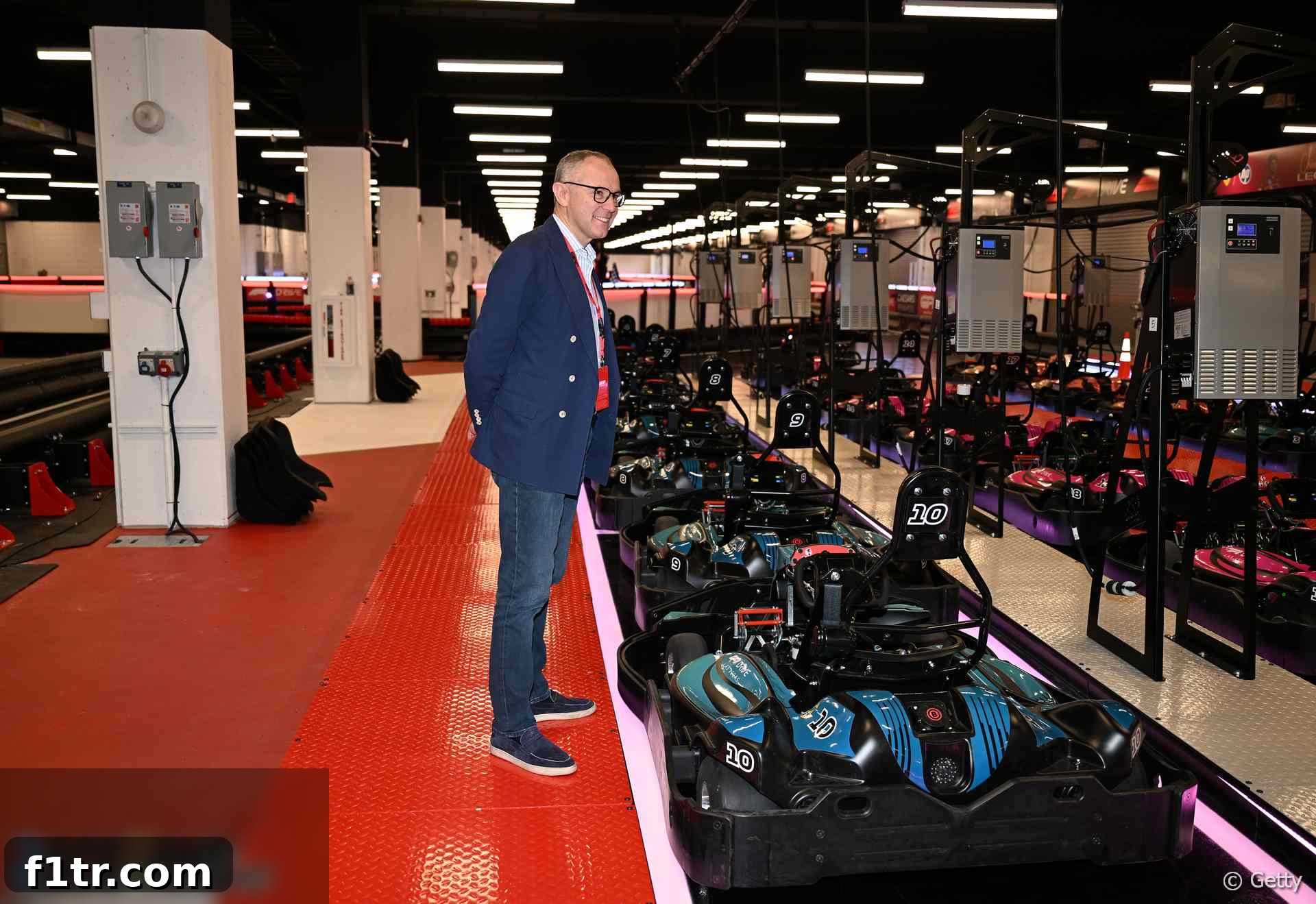
Formula 1 CEO Stefano Domenicali’s recent visit to the newly unveiled Grand Prix Plaza in Las Vegas has sparked significant discussion, offering a tantalizing glimpse into the future direction of the sport. His inspection of the electric karts at the home of the Las Vegas Grand Prix is more than just a ceremonial appearance; it’s a symbolic gesture underscoring F1’s commitment to innovation, sustainability, and fan engagement. This landmark plaza, a testament to the sport’s burgeoning presence in the United States, is poised to become a vibrant hub for motorsport enthusiasts, offering a taste of the F1 experience year-round.
The Grand Prix Plaza in Las Vegas represents a substantial investment in the Formula 1 brand, aiming to create a permanent fixture that celebrates the thrill and spectacle of racing. Beyond hosting the much-anticipated Las Vegas Grand Prix, the plaza is designed to be a dynamic destination featuring various attractions, including cutting-edge electric karting facilities. For Domenicali, exploring these electric karts isn’t merely a casual outing; it aligns directly with Formula 1’s ongoing internal dialogue about the future of its power units. As the sport grapples with environmental concerns and the shifting landscape of automotive technology, the presence of electric karts at such a significant F1 venue sends a clear message about potential future pathways.
Formula 1 is currently at a critical juncture regarding its propulsion systems. With the sport actively reconsidering its long-term plans for power unit regulations beyond 2026, the discussions are intense and wide-ranging. The current V6 turbo-hybrid engines, while technological marvels, represent a complex balance of performance, cost, and environmental impact. The debate now encompasses a variety of options, from further electrification to the development of advanced sustainable fuels, and even exploring the viability of hydrogen. Domenicali’s public statements often reflect the multifaceted challenges and opportunities facing F1. He has recently expressed a nostalgic sentiment, remarking that he misses the fervent debates and “rows” over technical regulations that were commonplace during his tenure as a team principal. This longing suggests an appreciation for the intellectual rigor and strategic battles that shaped the sport’s technological evolution, battles that are perhaps less visible to the public eye in the current era of more controlled technical frameworks.
Domenicali’s perspective on the technical regulations highlights a crucial aspect of Formula 1’s identity: its role as a pinnacle of engineering and innovation. When he speaks of missing the “rows,” he’s likely referring to the intense, often politically charged discussions among teams, manufacturers, and the governing body, FIA, regarding the minute details of engine specifications, aerodynamic rules, and other critical technical parameters. These debates, while sometimes contentious, often pushed the boundaries of what was thought possible, leading to groundbreaking advancements that eventually filtered down to road car technology. For Domenicali, these technical skirmishes were central to the sport’s competitive spirit and its status as a breeding ground for cutting-edge automotive development. The challenge now is to recapture that spirit while navigating the increasingly complex demands of sustainability, cost control, and global relevance.
The future of F1 power units is not just an engineering problem; it’s a strategic imperative that will define the sport for decades to come. The goal is to create a power unit formula that is environmentally responsible, cost-effective for participating manufacturers, technologically relevant to the broader automotive industry, and still delivers the exhilarating performance and sound that fans expect. The discussions surrounding the 2026 regulations, for instance, are focusing heavily on increasing the electrical component of the power unit, potentially moving towards a 50/50 split between internal combustion and electric power, alongside the mandatory use of 100% sustainable fuels. This shift aims to position F1 as a leader in sustainable mobility, attracting new manufacturers and appealing to a younger, more environmentally conscious audience. Stefano Domenicali, as the CEO, is tasked with steering this monumental ship through these complex waters, balancing tradition with progress.
The electric karts at the Las Vegas Grand Prix Plaza serve as a microcosm of this larger transition. While Formula 1 cars will not be fully electric in the foreseeable future, electric karting offers a sustainable and accessible entry point into motorsport, potentially nurturing the next generation of talent and fans. It allows enthusiasts to experience the thrill of racing in an eco-friendly manner, aligning with the sport’s broader sustainability goals. This initiative, combined with F1’s commitment to reducing its carbon footprint across all operations, including logistics and event management, underscores a comprehensive approach to environmental responsibility. The Las Vegas Grand Prix itself, with its focus on minimizing environmental impact, further exemplifies this commitment, making the plaza an ideal location to showcase future-oriented motorsport activities.
Beyond the serious discussions of power units and sustainability, Formula 1, through platforms like RaceFans, continuously strives to engage its passionate global community. This engagement often takes creative and interactive forms, such as our ever-popular Caption Competition. We believe in fostering a vibrant community where fans can express their wit, creativity, and love for the sport. Each week, we present a unique image from the world of Formula 1, inviting our readers to unleash their imagination and craft the funniest, most insightful, or most entertaining caption. It’s a chance for fans to connect with the sport on a lighter note, sharing a laugh and demonstrating their deep understanding of F1’s personalities, rivalries, and memorable moments.
The Caption Competition is a beloved feature because it taps into the collective humor and observational skills of our readership. It’s an opportunity to momentarily step away from the serious technical analyses and championship battles, and instead, enjoy the lighter side of Formula 1. The best suggestions aren’t just funny; they often demonstrate a keen awareness of recent events, driver personalities, or recurring themes within the F1 paddock. We encourage everyone to participate, regardless of their level of F1 expertise. Your unique perspective and comedic timing could land your submission among the elite. A selection of the most brilliant and amusing captions will be proudly featured in a future edition of the RaceFans Round-up, giving you the chance to share your humor with thousands of fellow enthusiasts.
So, we turn the spotlight to you, our valued readers! Can you come up with the most fitting and hilarious caption for a picture depicting Stefano Domenicali’s intriguing encounter with the electric karts at the Las Vegas Grand Prix Plaza? What witty observation or clever quip comes to mind? Is there a hidden meaning, a subtle jab, or a profound thought that only you can uncover? Post your funniest and most creative suggestions in the comments section below. We eagerly anticipate reading your imaginative contributions and celebrating the best of F1 fan creativity.
Caption Competition
- Caption Competition 289: I’ve got your back
- Caption Competition 288: Testing time for Williams
- Caption Competition 287: Oscar chat
- Caption Competition 286: What have we here?
- Caption Competition 285: Ricciardo returns to Red Bull
Browse all Caption Competitions