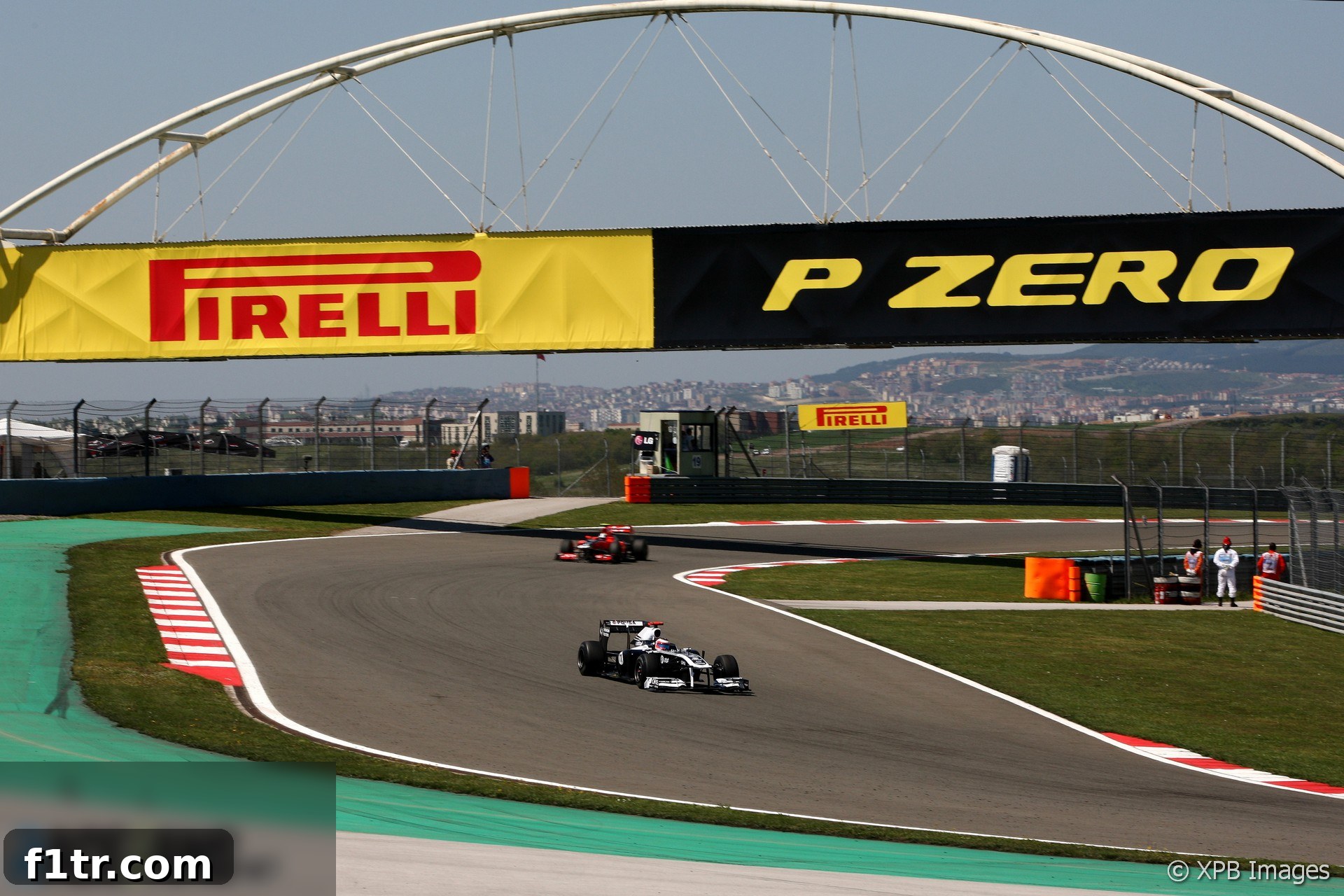
The highly anticipated return of Formula 1 to Istanbul Park for the Turkish Grand Prix has ignited significant discussions, particularly concerning tyre performance and safety. Following a challenging weekend at Silverstone earlier this year, which saw multiple tyre failures, Pirelli, F1’s sole tyre supplier, is expressing confidence that the unique demands of Istanbul Park, including its iconic high-speed Turn 8, will not pose the same severe risks. This cautious optimism stems primarily from the circuit’s recent resurfacing and extensive simulations conducted by the Italian tyre manufacturer.
Pirelli’s Optimism: Navigating Istanbul Park’s Challenges
The Turkish circuit, renowned for its challenging layout and specifically the quadruple-apex Turn 8, has been meticulously resurfaced ahead of this weekend’s much-anticipated race. This crucial development is expected to fundamentally alter the demands placed on the Pirelli tyres, offering a different dynamic compared to previous visits. Mario Isola, Pirelli’s head of motorsport and F1, highlighted the meticulous preparation and analysis undertaken by the company.
“Talking about the severity of the circuit, we made some simulations and we have an idea. Obviously, the severity of Turn 8 is something that we know, but we now have a good metric for us to compare circuits,” Isola explained. “So we made a comparison between Istanbul and some other high severity circuits; to give you an idea, in general Istanbul is less severe than Spa and Silverstone. So we are not talking about a circuit that has a higher severity compared to circuits that we know better.”
The implications of the new tarmac are profound. Isola elaborated on the surface characteristics: “The tarmac is new and actually we went there. Thanks to our people in Turkey, we had the chance to use a laser and measure the asphalt. It is quite smooth, it is very new. If I have to give you an idea of the behaviour that I am expecting, it is probably quite in line with what we have seen in Portimao.”
The comparison to Portimao is particularly telling. The Portuguese Grand Prix, also held on a newly resurfaced track, presented its own set of challenges, with drivers reporting a lack of grip and difficulties in generating tyre temperature. While Istanbul’s surface might share the smoothness, its inherent layout, especially the legendary Turn 8, ensures a unique test for tyre construction and compound resilience.
Understanding Turn 8 and Tyre Demands
Turn 8 at Istanbul Park is a legendary corner in Formula 1 history, often compared to the challenges of Eau Rouge or the demands of Suzuka’s Esses. It’s a long, sweeping left-hander with multiple apexes, subjecting tyres to immense and sustained lateral forces. Drivers spend several seconds navigating this turn at very high speeds, which builds up significant heat within the tyre structure and places considerable stress on the sidewalls. In previous years, this corner was a prime location for tyre degradation and wear. However, with the new, smoother tarmac, the abrasive forces might be reduced, but the challenge of finding optimal grip and managing heat build-up will shift.
The resurfacing means a smoother surface, which often translates to less mechanical grip initially. This can make it harder for drivers to get heat into the tyres, particularly if ambient temperatures are low. Yet, a smoother surface can also reduce graining and blistering in the long run, offering a different challenge to tyre engineers and strategists. Pirelli’s confidence, therefore, suggests their simulations account for this altered surface, predicting a less aggressive interaction with the rubber compared to the more abrasive Silverstone circuit.
Lessons from Silverstone and Portimao
The British Grand Prix at Silverstone earlier in the season was marred by late-race tyre failures, prompting an immediate investigation by Pirelli and significant concern within the paddock. The failures were attributed to a combination of extreme loads on the tyres, high speeds, and the specific characteristics of the circuit. Pirelli subsequently revised tyre pressures for subsequent races and implemented stricter guidelines.
The experience at Portimao with its new tarmac also provided valuable data. Drivers struggled with low grip, leading to a spectacle of sliding cars and a strong emphasis on managing tyre temperature and wear. If Istanbul Park’s new surface behaves similarly, teams will need to quickly adapt their setups to generate optimal tyre performance, balance grip with degradation, and potentially manage a cooler track surface than previously experienced at the circuit.
Pirelli’s assessment that Istanbul is “less severe than Spa and Silverstone” for tyres offers a level of reassurance. Spa, with its high-speed compressions and long straights, and Silverstone, with its sustained high-speed corners, are known as two of the most demanding circuits for tyres on the F1 calendar. By classifying Istanbul below these in terms of severity, Pirelli indicates that while demanding, the new surface characteristics combined with their latest tyre constructions should provide a robust and safe racing environment. Teams will still face complex decisions regarding tyre compounds and race strategy, but the overarching concern of structural integrity seen at Silverstone appears to be mitigated by Pirelli’s comprehensive analysis and the circuit’s updated surface.
Quotes: Dieter Rencken
Advert | Become a RaceFans supporter andgo ad-free
Social Media Buzz from the Motorsport World
Here’s a round-up of notable posts from Twitter, Instagram, and other social platforms, offering insights and reactions from across the motorsport community:
https://twitter.com/robertwickens/status/1325874006101090304
Really sad to hear the news of @BelardiRacing closing it’s doors. They’ve given so many great opportunities to young drivers over the years. Some of my favorite wins are with them. Thank you boys for believing in me when most thought I was done in 2016. pic.twitter.com/87VCLuA0O6
— Zach Veach (@ZachVeach) November 10, 2020
https://twitter.com/MarcCox/status/1326136384122445825
The 2021 F2 calendar is a good example of why alternative series are a positive. If there were market forces at play (eg FR3.5) there is no way that schedule would be proposed let alone a reality
— Ben Evans (@bencommentator) November 10, 2020
- Find more official F1 accounts to follow in the F1 Twitter Directory
Essential Motorsport Links and News
Delve deeper into the latest developments and stories from across the motorsport world with these curated links:
Meyer Shank Racing Expands IndyCar Programme (Meyer Shank Racing)
Meyer Shank Racing announces an expanded presence in the IndyCar Series. Helio Castroneves is confirmed to run six races, including marquee events such as the Indy Grand Prix of Alabama at Barber Motorsports Park, the Grand Prix of Long Beach, the prestigious 105th Running of the Indianapolis 500, the Indianapolis Motor Speedway Road Course (August 14), The Grand Prix of Portland, and the season-ending race at Laguna Seca. This expansion marks a significant step for the team in top-tier open-wheel racing.
Mercedes F1 Junior Antonelli Injured in World Karting Final Crash (Formula Scout)
Andrea Kimi Antonelli, a highly-rated Mercedes Formula 1 protege, unfortunately sustained injuries during a crash at the final of the World Karting Championship. The incident on Sunday resulted in him breaking a leg and a foot, a setback for the promising young talent on his path through the junior categories.
Belardi Auto Racing Announces Closure (Belardi via Facebook)
In a somber announcement, Team Owner Brian Belardi confirmed the difficult decision to close Belardi Auto Racing. This move comes with a heavy heart, particularly following the cancellation of the 2020 Indy Lights season by IndyCar leadership, which contributed to a year of profound uncertainty for many teams in junior formulae.
F1: Talking Turkey – A Look Back at Istanbul Park (Pirelli Sport)
Pirelli Sport reflects on the history of the Turkish Grand Prix, highlighting its tyre-intensive nature. The 2011 race, which was only the fourth round of Pirelli’s return to F1, featured a then-record 82 pitstops. A four-stop strategy was favored by the majority of drivers, including race winner Sebastian Vettel, underscoring the aggressive tyre wear at the circuit. This event also recorded the highest number of overtaking moves since 1983, cementing Istanbul’s reputation as a thrilling race venue.
Formula E Season 7 Regulations: A Glimpse into the Future (Motorsport Technology)
An in-depth look at the regulatory landscape for Formula E Season 7. The article discusses how the level of engineering applied to powertrains in the series has grown immensely, reaching levels comparable to Formula 1 in terms of sophistication and preparation. However, this pursuit of engineering excellence and pushing the rules to the limit inevitably comes with significant economic considerations for the teams involved.
Race Rewind from Phoenix Raceway (NASCAR)
Relive the excitement from Phoenix Raceway as the NASCAR Cup Series season concludes. This video encapsulates the key moments and the atmosphere as Chase Elliott was crowned the 2020 NASCAR Cup Series champion in a memorable race.
The Women of the ELMS Paddock (ELMS)
A compelling feature celebrating the diverse and integral roles of women within the European Le Mans Series (ELMS) paddock. This video highlights their contributions, expertise, and passion, showcasing the growing presence and influence of women in various aspects of professional motorsport.
We always endeavour to credit original sources. If you have a tip for a link to feature in the next RaceFans round-up please send it in via the contact form.
Advert | Become a RaceFans supporter andgo ad-free
Comment of the Day: Navigating the 2021 F1 Calendar’s Demands
GT Racer raises a pertinent problem for the 2021 F1 calendar, highlighting potential burnout for many involved in the sport, especially after a late-running and exceptionally intense 2020 season:
“When they tried that triple-header in 2018 everyone in the paddock universally agreed it was too much and they shouldn’t do it again. This year they were forced to due to the pandemic and again concerns were raised regarding it been too much.”
“Yet next year they have two triple-headers. I can see that going down exceptionally badly with the crews as well as FIA and FOM staff who have to attend races as well as broadcasters who universally felt triple headers shouldn’t be done again.”
“I can see a lot of very burnt-out people around F1 at the end of next year.”
GT Racer
This insightful comment underscores the significant human element behind the F1 spectacle, emphasizing the strenuous schedule and its impact on the dedicated personnel who make the sport possible.
Happy Birthday Shout-Outs!
Wishing a very Happy Birthday to Brendan, Catalina, Drmouse, and Ramatlhodi! We hope you all have a fantastic day celebrating.
If you’d like a birthday shout-out in a future round-up, simply let us know when yours is via the contact form or by adding your date to our list here.
On This Day in F1 History
- 25 years ago today, the legendary Damon Hill achieved pole position for Formula 1’s final Grand Prix held at the iconic Adelaide circuit in Australia.