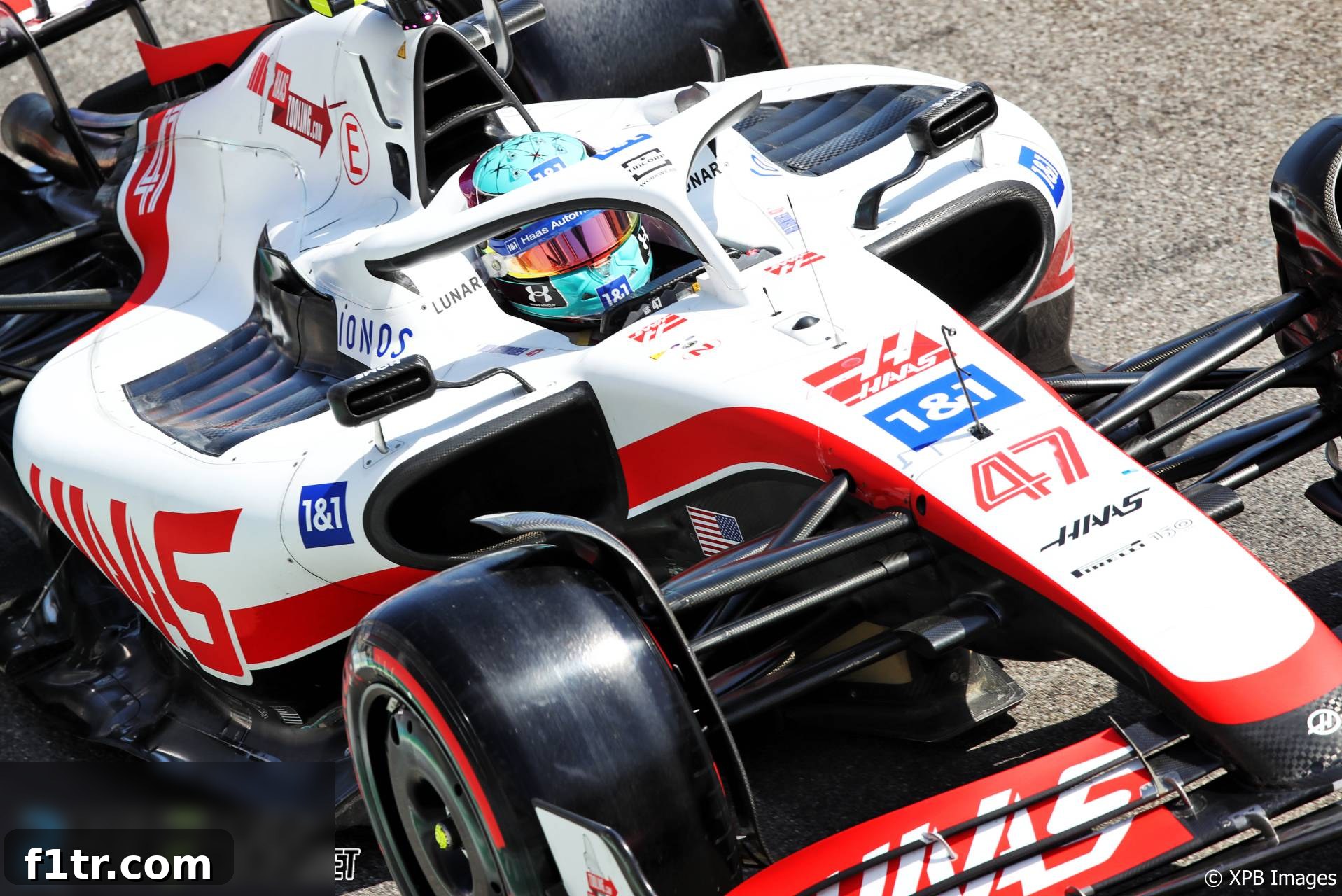
In the high-stakes world of Formula 1, every millisecond and every inch of track can make the difference between triumph and disappointment. For Mick Schumacher, the promising German driver for Haas F1, the qualifying session for the French Grand Prix presented a stark reminder of this unforgiving reality. A track limits violation, seemingly minor at the time, ultimately resulted in the deletion of his fastest lap, prematurely ending his Q1 efforts and setting the stage for a challenging race day. Schumacher has voiced his intention to engage in discussions with FIA officials regarding the incident, seeking clarity on the precise interpretation of track limits that led to his elimination.
The Critical Track Limits Infraction: A Moment of Consequence
The incident occurred during the initial phase of qualifying at Circuit Paul Ricard. Schumacher had been pushing hard, demonstrating a promising pace that suggested a strong chance of advancing to Q2, and potentially even Q3, a significant achievement for the Haas team. However, replays quickly revealed that he had inadvertently cut the inside of Turn 3, a critical section of the circuit. While the deviation might have seemed negligible to the casual observer, Formula 1 regulations are meticulously stringent, and any advantage gained by exceeding track boundaries is met with swift penalties. The stewards, after reviewing the telemetry and video evidence, made the decisive call to delete his quickest time, stripping him of his provisional Q2 spot and relegating him to the lower end of the grid.
Track limits have been a recurring topic of debate and contention in Formula 1 for many seasons. The very essence of racing involves pushing a car to its absolute maximum, often flirting with the edge of what is permissible. However, strict rules are in place to ensure fair competition, prevent drivers from gaining an unfair advantage, and maintain the integrity of track design. The enforcement of these rules, particularly through electronic monitoring and video review, has become increasingly precise. What might appear as merely a “millimetre” infringement to a driver in the heat of the moment can, in fact, be a clear violation when viewed with objective data. This constant tension between a driver’s instinct to find the fastest line and the rigid application of rules often leads to frustrating outcomes, as experienced by Schumacher.
Schumacher’s Reaction: Disappointment and the Quest for Clarity
Speaking after the qualifying session, Schumacher expressed his profound surprise and disappointment at the decision. “It was unfortunate because I think we had the pace to go to Q3,” he stated, highlighting the missed opportunity for both himself and the Haas team. This sentiment underscores the competitive nature of F1, where every session and every position gained holds immense value, not just for individual drivers but for team morale and championship aspirations.
Beyond the immediate frustration, Schumacher conveyed a clear desire for further dialogue. “It’s something to probably discuss a bit more with the stewards and the race director just to really understand this if there’s a bollard that isn’t track limits. I must be something that millimetres at the end.” His request for discussion isn’t necessarily aimed at overturning the decision – a highly unlikely outcome given the finality of such rulings – but rather to gain a deeper understanding of the precise parameters and interpretations that led to the penalty. Such conversations are crucial for drivers to adapt their approach in future events, ensuring consistency and preventing similar infractions. It speaks to a professional desire for clarity and improved performance rather than simple protest.
Despite his intent to discuss the matter, Schumacher remains pragmatic about the immediate impact. He acknowledged that once a decision of this magnitude has been made by the race officials, it is rarely, if ever, reversed. “If they have taken the decision now there’s no reason to go and discuss about it because they won’t change much anyways,” he conceded. This mature outlook reflects the reality of elite motorsport, where drivers must quickly process setbacks and channel their focus towards the next challenge. Dwelling on what cannot be changed is counterproductive; instead, the emphasis must shift to strategic planning and execution for the race ahead.
“It’s a bit frustrating,” he added, a sentiment that resonated with many watching fans. “But on the other hand also we won’t dwell on it but be more focussed on tomorrow and try and make our way through the field and try and score some points.” This demonstrates Schumacher’s resilience and commitment to extracting the maximum possible performance despite adverse circumstances. The ability to compartmentalize disappointment and pivot to a proactive mindset is a hallmark of top-tier athletes.
Starting Position and Race Day Outlook
The impact of Schumacher’s deleted lap was compounded by grid penalties applied to other drivers. Notably, his team mate, Kevin Magnussen, and Carlos Sainz Jnr of Ferrari also incurred penalties, albeit for different reasons (power unit component changes). These changes to the starting order meant that despite his Q1 exit, Schumacher was currently set to start 17th on the grid. While still a challenging position, it presented a slightly improved opportunity compared to a potential last-place start, offering a glimmer of hope for moving up the field.
Looking ahead to the Grand Prix race itself, Schumacher maintained a cautiously optimistic outlook regarding his ability to make progress. Overtaking at Circuit Paul Ricard, with its long straights and specific DRS zones, can be a viable strategy. “The DRS delta is pretty big so we should be able to overtake once we get into DRS,” he predicted. The Drag Reduction System (DRS) allows drivers to open a flap on their rear wing, significantly reducing aerodynamic drag and increasing top speed, making it a powerful tool for passing competitors on designated sections of the track. This technical advantage offers Schumacher a realistic pathway to gain positions and fight for a points finish.
However, the French Grand Prix race presented its own unique set of challenges, particularly concerning tire management in the anticipated hot conditions. High ambient and track temperatures are notoriously hard on Formula 1 tires, causing them to degrade faster and making it difficult to maintain optimal performance. Schumacher specifically highlighted this concern: “How the tyres are going to survive, that’s something we’ll have to see tomorrow.”
The Intricacies of Tire Management in High Temperatures
The choice of tire compounds – Soft (C4), Medium (C3), and Hard (C2) – becomes a crucial strategic decision in such conditions. Schumacher elaborated on the specific vulnerabilities of the softer compound. He predicted it will “be quite tough keeping the tyres in the window” for the C4 compound, which he described as “quite a vulnerable tyre at the moment.” The ‘operating window’ refers to the specific temperature range in which a tire performs optimally, delivering maximum grip and consistency. Outside this window, tires can either overheat and degrade rapidly or fail to generate sufficient heat, leading to a lack of grip. The C4, being the softest compound, is designed for maximum performance over short stints but is more susceptible to overheating and wear, especially on a demanding circuit like Paul Ricard and in scorching conditions.
In contrast, the harder compounds offer more resilience. “C3 and C2 are a bit more resilient in that case, so we should be able to push a bit harder,” Schumacher noted. The C3 (Medium) and C2 (Hard) tires are built for durability and longer stints, making them potentially more suitable for managing degradation over a full race distance in high temperatures. This understanding of tire characteristics will undoubtedly play a significant role in Haas’s race strategy, influencing pit stop timings and compound choices.
The dynamic nature of wheel-to-wheel racing further complicates tire management. “But once we get into that two-way fight and the battles I think that’s going to tear the tyres quite a bit apart,” Schumacher observed. Sustained close-quarters racing, requiring constant braking, acceleration, and aggressive cornering, places immense stress on the tires, accelerating their wear. Drivers must find a delicate balance between attacking for positions and preserving their tires to avoid unscheduled pit stops or a significant drop-off in pace. “So for sure it will play into our strategy choices,” he concluded, emphasizing the multifaceted role tires would play in shaping their race day approach.
For Mick Schumacher and Haas F1, the French Grand Prix presented a mixture of frustration and potential. While the qualifying setback was undoubtedly a blow, the team’s ability to adapt, strategize effectively, and capitalize on opportunities – particularly through DRS and shrewd tire management – would be key to turning a challenging starting position into a valuable points-scoring finish. The race would be a true test of their collective resilience and strategic acumen.
2022 French Grand Prix
- Ferrari’s season of missed chances led to “difficult” criticism for Binotto
- McLaren looking into why their starts are “more inconsistent” this year
- Mercedes expect Hungarian GP will ‘expose our qualifying weakness’
- Hamilton and Russell ‘out-performing a car that’s not good enough’ – Wolff
- “We need to decide now”: Inside Sainz and Ferrari’s French GP strategy dilemma
Browse all 2022 French Grand Prix articles