F1 Insights: Sprint Race Excitement, Halo’s Engineering Marvel, and Motorsport’s Latest Headlines
In this comprehensive Formula 1 and motorsport round-up, we delve into critical discussions shaping the sport’s future. From driver feedback on the evolving sprint qualifying format to the indispensable role of advanced engineering in driver safety, we cover the most impactful stories. Carlos Sainz Jnr voices his perspective on adding thrills to F1’s experimental sprint races, while experts elaborate on the life-saving performance of the Halo device during a high-profile incident involving Lewis Hamilton. Beyond the pinnacle of motorsport, we explore crucial updates from the broader racing world, including driver market movements and the latest championship news.
In Brief: Key Developments Across Motorsport
Sprint Qualifying Format Needs More Excitement – Carlos Sainz Advocates for Evolution
Advert | Become a Supporter & go ad-free
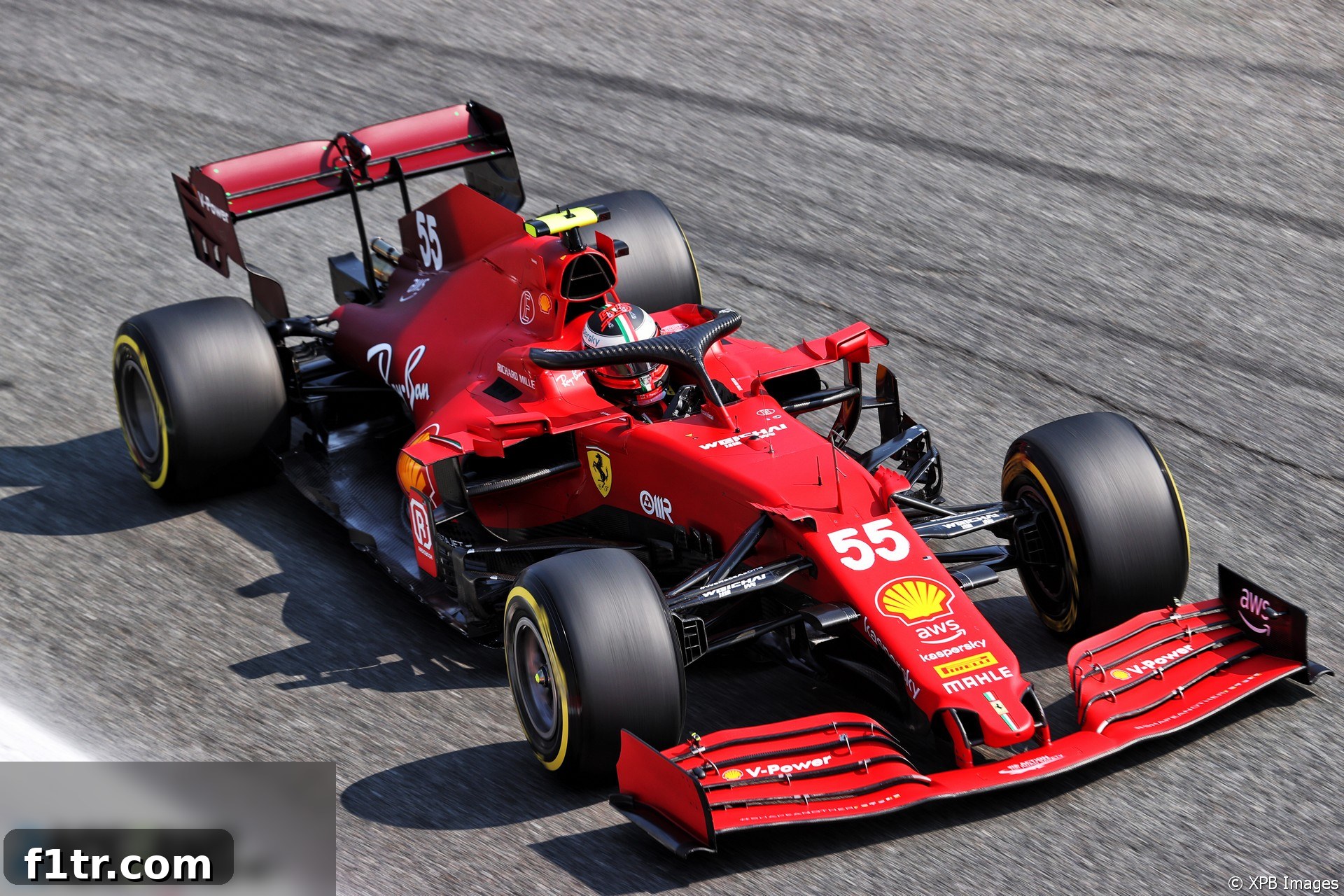
The introduction of sprint qualifying races in Formula 1 has been one of the most significant format changes in recent memory, designed to inject more unpredictability and action into Grand Prix weekends. While the concept has sparked considerable debate, Ferrari driver Carlos Sainz Jnr offers a balanced view, acknowledging the positive aspects while pinpointing areas ripe for improvement.
Sainz believes that the new format, which condenses the typical three practice sessions into just one before qualifying, has undoubtedly enhanced the Friday schedule for all participants. This compressed timetable forces teams and drivers to adapt quickly, making the single practice session a high-stakes affair where every second counts. “Friday is clearly improved for everyone, it’s progress,” Sainz stated, highlighting the immediate impact. “I think [first practice] is exciting because you know you cannot put a foot wrong and you need to learn.”
The Spanish driver further elaborated on the strategic challenges presented to teams. With sophisticated simulation tools now commonplace, the sprint format demands peak modern engineering and analytical prowess. Teams must leverage their extensive data and simulation capabilities to set up a competitive car from the outset, with minimal on-track tuning time. “For the teams, with the amount of simulation tools there are nowadays, it forces the teams to be modern, to be up-to-date and to be on top of the simulations to try and put together a good car on Friday already,” Sainz explained. He pointed to examples like Monza and Silverstone, where teams successfully navigated these constraints, demonstrating their advanced capabilities.
Despite these clear benefits for the Friday schedule, Sainz still perceives a significant opportunity to enhance the Saturday sprint race itself. Following what he described as an “underwhelming” sprint qualifying race, he emphasized the need for F1 to critically evaluate the entertainment value it provides. “We need to find a way to make Saturday a bit more exciting because at the moment I don’t think it’s giving much excitement compared to Saturday qualifying,” he commented, drawing a direct comparison to the traditional format.
His sentiment echoes a broader discussion within the F1 community regarding whether sprint races truly deliver on their promise of increased spectacle. Many fans and drivers have noted that the relatively short duration and conservative approach often adopted by competitors, who prioritize avoiding damage and securing grid position for the main race, can lead to processions rather than thrilling wheel-to-wheel action. “I don’t see the sprint qualifying being more exciting than a Saturday qualifying. So we need to find a way to make something more exciting for everyone,” Sainz concluded, underscoring the collective responsibility to evolve the format. Potential solutions could include adjustments to point allocation, reverse grid elements, or even changes in tire rules to encourage more aggressive racing and genuine strategic variations during these shorter contests, ultimately aiming to capture the excitement F1 intends to create.
Hamilton’s Monza Crash Escape: A Testament to Engineering, Not Luck, Says Expert
The terrifying collision between Lewis Hamilton and Max Verstappen at the Monza Grand Prix served as a stark reminder of the inherent dangers in Formula 1, but also as a powerful vindication of the sport’s commitment to safety innovation. Following the incident, where Verstappen’s car notably landed atop Hamilton’s Mercedes, the debate naturally shifted to the effectiveness of the Halo head protection device. An expert from Cranfield University, a leading institution where the Halo was extensively developed, asserted that Hamilton’s survival was a result of meticulous engineering and scientific rigor, rather than mere good fortune.
Clive Temple, the Motorsport MSc programme director and senior lecturer at the Advanced Vehicle Engineering Centre at Cranfield University, firmly refuted any suggestion of luck playing a primary role. “Hamilton was not lucky – it is a fact that engineering and science underpin all of this work which ensures drivers are safe. Safety is the primary concern in motorsport,” Temple emphasized. His statement underscores the years of research, development, and stringent testing that went into designing and implementing the Halo, which became mandatory in Formula 1 in 2018.
The Halo, a titanium structure designed to protect the driver’s head from flying debris and collisions with other cars, faced initial skepticism and aesthetic concerns from some quarters of the F1 community. However, its effectiveness has been unequivocally proven in multiple high-profile incidents, with the Monza crash being a particularly dramatic example. Temple further detailed the immense strength of the device: “The Halo is exceptionally strong and is integral to other safety critical elements within the car.”
To put its incredible resilience into perspective, Temple offered a compelling analogy: “Hamilton experiencing Verstappen’s car coming on top is probably around the equivalent of close to a London double-decker bus landing on top of the car.” He provided the specific engineering specifications to illustrate this point: “The current Halo is designed to withstand 100 kilonewtons – 10.2 tonnes – and a modern double-decker is around 12 tonnes or so. 10.2 tonnes is also the equivalent of two African elephants landing on the race car. This is a very strong structure indeed.” This immense load-bearing capacity highlights the critical role of advanced materials and structural design in ensuring driver survival in extreme circumstances. The incident at Monza stands as a powerful testament to the foresight and dedication of engineers and safety experts who relentlessly push the boundaries to make motorsport safer, reaffirming that such outcomes are a direct result of design excellence, not chance.
Advert | Become a RaceFans supporter andgo ad-free
Social Media Spotlight: Notable Moments from the Digital Track
The world of motorsport is vibrant on social media, with drivers, teams, and journalists sharing breaking news, behind-the-scenes glimpses, and memorable incidents. Here’s a look at some notable posts that captured attention:
NBC was filming with the pace cars at Laguna Seca and Grosjean hit the tire wall on pit in, below is what it looks like 👇🏻 pic.twitter.com/cli4xaRKJf
— Jenna Fryer (@JennaFryer) September 17, 2021
A notable moment circulating on Twitter captured an unexpected incident involving Romain Grosjean at Laguna Seca. During a filming session with NBC and the pace cars, the former F1 and current IndyCar driver experienced a minor mishap, making contact with the tire wall upon entering the pit lane. The tweet, shared by journalist Jenna Fryer, included an image showing the aftermath, serving as a lighthearted reminder that even seasoned professionals can have small slip-ups, particularly in unique, non-race scenarios. Such candid moments provide a human element to the high-stakes world of racing.
- Find more official F1 accounts to follow in the F1 Twitter Directory
Motor Racing Links of Interest: Diving Deeper into the Motorsport World
Beyond the major headlines, the motorsport landscape is constantly buzzing with news, rumors, and significant developments across various championships. Here are some interesting links that offer a closer look:
Oscar Piastri Unlikely for 2022 F1 Seat, Targets 2023 Drive and Third Driver Role (Nine)
Rising star Oscar Piastri, a highly-touted talent in the junior categories, has indicated that a Formula 1 race seat in 2022 is improbable, shifting his focus towards securing a drive in 2023. This news highlights the fierce competition and limited opportunities for young drivers aspiring to reach F1, even for those with impressive junior championship records. Piastri expressed, “I don’t think it’s going to be me. I don’t really know much about it, which is a fair indication that I’m not really in contention.” This often means targeting a third or reserve driver role, which offers invaluable experience within an F1 team environment, including simulator work and attending Grand Prix weekends, while waiting for a full-time opportunity to arise.
2021 FIA Karting World Championship in Brazil Cancelled, Relocated to Spain (FIA Karting)
The ongoing global challenges posed by COVID-19 continue to impact international sporting events, and karting, as the grassroots foundation of motorsport, is no exception. The 2021 FIA Karting OK-OKJ World Championship, initially slated for Brazil, has been cancelled due to persistent travel and health restrictions. In response, the FIA has swiftly moved to reschedule and relocate the prestigious event. “The 2021 FIA Karting OK-OKJ world championship will take place in Spain from 29th to 31st October. The venue will be announced in the coming days,” confirmed the FIA Karting body. This ensures that young talents from around the world still have a platform to compete for a world title, albeit in a different location, showcasing the adaptability required in the current climate.
Navigating the Busy IndyCar Silly Season: Driver Market Heats Up (Autoweek)
IndyCar’s driver market, often dubbed the “silly season,” is a period of intense speculation and negotiation as teams finalize their lineups for the upcoming season. This Autoweek article provides a valuable guide to the complex web of rumors and confirmed moves. One key driver in focus is Jack Harvey, with strong rumors linking him to Rahal Letterman Lanigan Racing, potentially either replacing Takuma Sato or spearheading the organization’s rumored expansion to a three-car operation. Another intriguing, albeit more speculative, possibility for Harvey is a new third car at McLaren SP. The IndyCar silly season is characterized by a mix of established veterans and promising rookies vying for coveted seats, often influenced by sponsorship deals, team ambitions, and performance metrics, making it a captivating subplot to the on-track action.
We always endeavour to credit original sources. If you have a tip for a link relating to single-seater motorsport to feature in the next RaceFans round-up please send it in via the contact form.
Advert | Become a RaceFans supporter andgo ad-free
Comment of the Day: The Enduring Debate on F1 Car Weight
The evolution of Formula 1 regulations often sparks passionate debate among fans and experts, particularly concerning the fundamental characteristics of the cars. Today’s featured comment from Phil highlights a persistent concern: the increasing weight of F1 machinery.
I have never been sure why F1 introduced the larger wheels and brakes for 2022. If the cars have had the smaller wheels for this many years then why not continue. It just seems like extra weight for no good reason. These are supposed to be ‘racing’ cars.
However, we are where we are. I would just tell the teams to get over their bleating and get on with it. They employ some the best engineers and designers in the world so I am sure they are capable of designing a car to meet the minimum weight limit. They might need to make a few cuts elsewhere but I think they should just get on with it.
It has been documented many times that the drivers say they would prefer weight to be kept to a minimum. More nimble and ideally shorter, lighter cars are what the sport should be aiming for.
Phil Norman (@Phil-f1-21)
Phil’s commentary touches upon several key points in the ongoing discussion about modern Formula 1 cars. The decision to introduce larger 18-inch wheels and brakes for the 2022 season, a significant departure from the long-standing 13-inch standard, was primarily aimed at making F1 more relevant to road car technology and improving tire performance by reducing sidewall flex. However, as Phil points out, a direct consequence is an increase in unsprung mass and overall car weight, a trend that has seen F1 cars become progressively heavier over the decades.
This increase in weight is a contentious issue. While safety enhancements, hybrid power units, and advanced aerodynamics contribute to the bulk, many purists argue that heavier cars inherently become less agile and responsive, detracting from the “racing car” ideal. Phil’s frustration encapsulates this sentiment, questioning the necessity of adding weight for changes that, from a fan’s perspective, might not immediately translate to improved racing.
Despite these concerns, Phil acknowledges the reality of the situation and places faith in the exceptional talent within F1 teams. He believes that the sport’s renowned engineers and designers, who are among the best globally, should be fully capable of adapting to new regulations and meeting minimum weight limits, even if it requires innovative solutions and compromises in other areas. This perspective highlights the constant engineering challenge in F1: balancing performance, safety, and regulatory compliance.
Ultimately, Phil echoes a sentiment frequently expressed by drivers themselves: a preference for lighter, more nimble, and ideally shorter cars. Such characteristics are often associated with a more engaging and physically demanding driving experience, promoting closer racing and allowing drivers to extract the maximum from the machinery. The debate over car weight underscores the fundamental tension between technological advancement, safety mandates, and the pursuit of pure driving exhilaration that lies at the heart of Formula 1.
Happy Birthday! Celebrating Motorsport Enthusiasts
We extend our warmest birthday wishes to members of our racing community celebrating today! A very Happy Birthday to Ukk, Texagf1, Kerbbi, and Nzumbu!
If you want a birthday shout-out in our future round-ups, please let us know your special day via the contact form or by adding your details to our list here. We love celebrating with our dedicated fans!
On This Day in Motorsport History: Rosberg’s Singapore Triumph
- Five years ago today, on September 18th, 2016, Nico Rosberg secured a pivotal victory at the challenging Singapore Grand Prix. This win allowed him to reclaim the championship lead from his Mercedes teammate and fiercest rival, Lewis Hamilton.
The 2016 Singapore Grand Prix was a defining moment in Nico Rosberg’s championship-winning season. Under the iconic floodlights of the Marina Bay Street Circuit, Rosberg delivered a masterclass performance, fending off a charging Daniel Ricciardo in the closing laps to clinch a crucial victory. This triumph was not just another race win; it was the moment he wrestled back the momentum in his intense title battle with Lewis Hamilton.
Having started from pole position, Rosberg expertly managed his tires and strategy throughout the demanding street race, which is notorious for its heat, humidity, and challenging corners. His composure and precision were exemplary, especially as Ricciardo, on fresher tires, closed the gap dramatically in the final stint. Rosberg held his nerve, crossing the finish line just 0.488 seconds ahead of the Red Bull driver.
The win propelled Rosberg to an eight-point lead over Hamilton in the drivers’ standings. This advantage, gained at such a critical juncture in the season, proved to be instrumental. Rosberg maintained this lead through the subsequent races, managing to hold off Hamilton’s relentless pursuit and ultimately clinching his maiden Formula 1 World Championship title in the final round in Abu Dhabi. His Singapore victory remains a testament to his skill, mental fortitude, and strategic brilliance in a season where every point and every race mattered immensely in his quest for motorsport’s highest honor.