IndyCar’s Groundbreaking Windscreen Test: Pioneering a New Era of Driver Safety
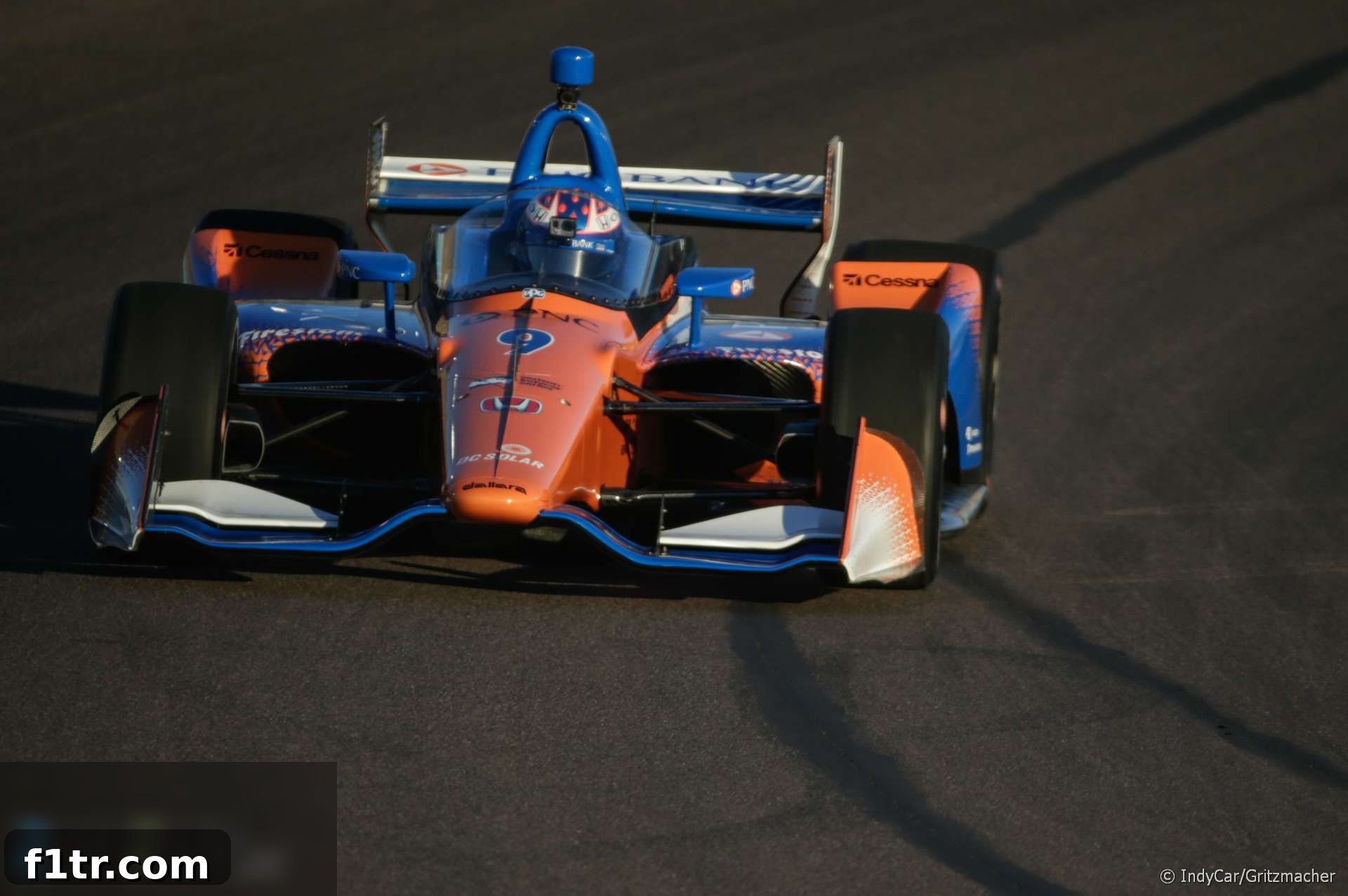
In a pivotal moment for motorsport safety, IndyCar has successfully conducted the first-ever track test of its innovative windscreen concept on an oval circuit. The historic evaluation took place at Phoenix Raceway, marking a significant step towards introducing enhanced driver protection in open-wheel racing. This development comes as the series continues its dedicated efforts to safeguard its competitors from the inherent risks of high-speed racing, particularly concerning debris strikes.
The rigorous testing session was helmed by Chip Ganassi Racing’s celebrated driver, Scott Dixon, a multiple-time IndyCar Series champion known for his technical feedback and extensive experience. Dixon’s task was to thoroughly assess the windscreen’s performance across a spectrum of dynamic conditions, with a specific focus on evaluating visibility and optical clarity under varying light scenarios. This critical phase of development aims to fine-tune the device before its potential introduction, possibly as early as the upcoming season, which is set to commence on March 11th in St. Petersburg.
The Quest for Enhanced Driver Protection in Open-Wheel Racing
The introduction of head protection systems has been a long and often contentious topic in open-wheel motorsport. Tragic incidents involving debris striking drivers’ heads have underscored the urgent need for robust solutions. Both IndyCar and Formula 1 have been at the forefront of this safety revolution, seeking designs that offer maximum protection without compromising the essence of open-cockpit racing or driver visibility. IndyCar’s windscreen project is directly aligned with these global efforts, mirroring the intent behind Formula 1’s now-mandatory Halo device, both striving to shield drivers from potential injury caused by flying debris or impacts.
Unlike the F1 Halo, which is a structural ring above the cockpit, IndyCar’s windscreen presents a different approach. It aims to provide a transparent barrier that integrates more seamlessly with the car’s aesthetic while offering comprehensive protection against smaller, high-speed debris, which has historically posed a significant threat. The design philosophy centers on mitigating the risk of objects entering the cockpit without creating the structural obstruction that some initially criticized with the Halo.
Scott Dixon’s Critical First Impressions: No Showstoppers
Following his inaugural run with the windscreen, Scott Dixon’s initial feedback was overwhelmingly positive, offering cautious optimism for the future of the device. “It’s a very good start and no showstoppers, which is the biggest part,” Dixon shared with IndyCar’s official media partner. This early assessment is crucial, as any significant flaw identified during the initial stages could necessitate extensive redesigns and delay implementation. The absence of immediate “showstoppers” suggests a solid foundation for further development.
Addressing Glare and Optical Clarity
One of the primary concerns for any transparent cockpit protection system is the potential for glare and visual distortion, which could severely impair a driver’s ability to navigate the track safely at racing speeds. Dixon specifically addressed this, noting, “What everyone was worried about is if we drive out and can’t see properly, glare was going to be an issue.” He revealed that the test was intentionally conducted during one of the most challenging times at Phoenix: “We ran it at probably one of the worst times in Phoenix, too. Going into turn one it was complete sun and then going into the darkness.” The fact that the windscreen performed acceptably under these extreme conditions bodes well for its general viability, indicating that the materials and curvature are effectively managing reflections and light transitions.
The Unexpected Sensory Shift: Quietness and Heat
Beyond visual considerations, the windscreen profoundly altered Dixon’s sensory experience inside the cockpit. Having spent his entire career in truly open-wheel cars, the immediate change was striking. “For me it’s definitely a big change,” he explained. “Having driven open-wheel cars the whole time with nothing in front of you, for me the biggest sensation to start with, outside of the visual, was how quiet it was. It felt like I was in a luxury car cruising around with no wind, your head wasn’t moving around.” This newfound tranquility could have significant implications for driver comfort, concentration, and fatigue over longer races, potentially allowing for better communication with the pit crew and reduced physical strain.
The reduction in ambient noise also led to an interesting side effect: “I started hearing a lot of things that you don’t [normally] hear. That was quite interesting.” This heightened awareness of the car’s internal mechanics could provide drivers with more subtle feedback, though it remains to be seen how this translates into practical racing scenarios.
However, one expected drawback emerged: increased heat within the cockpit due to the lack of direct airflow. “And then the heat, obviously there’s no airflow right now.” Dixon quickly pointed out that this is “something that’s a very easy fix down the road with maybe a NACA duct or something in front.” Solutions like NACA ducts are common in racing to direct airflow efficiently into enclosed spaces without creating significant drag, offering a straightforward engineering remedy for the thermal challenge.
Visual Adaptation and the “New Glasses” Analogy
Despite the initial positive feedback, Dixon acknowledged that adapting to the windscreen would require a period of adjustment. “But I think to start it’s pretty good. It is a little different to look through, you’ve got to imagine it’s quite a thick piece of material you’re transitioning and looking through.” He perfectly encapsulated the experience with a relatable analogy: “It’s more the sensation of having to get used to it, it’s like when you have a new pair of glasses or contacts or something like that, it visually takes you a little bit to get used to.” This highlights the importance of extensive testing, not just for technical validation but also for driver acclimatization to a fundamentally altered visual environment.
Comparing Driver Protection: IndyCar Windscreen vs. F1 Halo and Shield
IndyCar’s windscreen project naturally invites comparisons with Formula 1’s efforts in head protection. Last year, F1 experimented with the ‘Shield,’ a device somewhat similar in concept to IndyCar’s windscreen, designed as a transparent screen extending over the cockpit. However, that test proved problematic for then-Ferrari driver Sebastian Vettel, who rejected the design after completing only a single installation lap during practice, reporting that “it made him feel dizzy.” This negative experience ultimately led F1 to adopt the more robust, albeit aesthetically controversial, Halo device.
The key differences lie in design philosophy and material properties. The F1 Shield, while aiming for transparency, encountered issues with optical distortion, likely exacerbated by its curvature and positioning relative to the driver’s line of sight. IndyCar’s windscreen, developed with lessons learned from previous trials, appears to have made strides in optical quality. Its structure and material composition (likely a high-strength polycarbonate laminate) are engineered to minimize distortion, glare, and prismatic effects, which are critical for maintaining visual acuity at race speeds.
While the F1 Halo offers superior protection against large, heavy objects like wheels or other cars, its open structure means it doesn’t prevent smaller debris from entering the cockpit. The IndyCar windscreen, on the other hand, provides a more comprehensive barrier against smaller, high-velocity fragments, a type of incident that has unfortunately resulted in severe injuries in the past. Each solution addresses different aspects of driver safety, and IndyCar’s approach seeks to combine a high level of protection with a more integrated and aesthetically pleasing design.
The Road Ahead: Implementation and Future Prospects
With a successful initial test under its belt, the IndyCar windscreen moves closer to potential integration into the series. The possibility of its introduction during the upcoming season, which kicks off in St. Petersburg, Florida, underscores the urgency and commitment from IndyCar officials to enhance driver safety. However, before full implementation, further rigorous testing will be required, potentially involving multiple drivers and various track configurations, including different types of road courses and street circuits, to simulate the diverse challenges of the IndyCar calendar.
Engineers will meticulously analyze data collected from these tests, focusing on aerodynamic impacts, structural integrity, and long-term durability. Refinements to the design, particularly addressing the cockpit heat issue with integrated ventilation systems, will be paramount. The goal is to ensure that the windscreen not only provides superior protection but also does so without adversely affecting car performance, driver comfort, or the overall spectacle of IndyCar racing. Its eventual adoption would signify a monumental step for the series, setting a new standard for driver head protection in open-wheel motorsport globally.
Visual Insights: Photo and Video Gallery of the IndyCar Windscreen Test
IndyCar Windscreen Test Pictures
Exclusive Test Footage: IndyCar Windscreen Videos
Witness the windscreen in action with these official videos from IndyCar’s test session:
Enhance Your Experience: Support Independent Motorsport Journalism>> Discover how you can support us and get exclusive benefits
More on IndyCar
Explore additional articles and updates from the world of IndyCar racing:
- IndyCar driver McLaughlin cleared of injury after crashing through barrier at Barber
- Schumacher says his IndyCar feels like ‘an F2 car, just with better tyres’
- IndyCar “way faster than Formula 1” in some corners, says Grosjean
- FIA to award more F1 superlicence points to IndyCar drivers from 2026
- Schumacher to race full-time in IndyCar with RLL in 2026
Browse all IndyCar articles