F1 Power Unit Updates: Ferrari and Renault Make Critical Component Changes for Chinese Grand Prix
As the Formula 1 circus arrived at the iconic Shanghai International Circuit for the third round of the 2019 championship, a palpable tension surrounded the garages of both Ferrari and Renault. Both power unit manufacturers found themselves at a crucial juncture, implementing significant component changes to several of the cars utilizing their hardware. These strategic decisions, driven by a combination of reliability concerns and performance optimization, carried substantial implications for the remainder of the season, particularly concerning potential grid penalties.
Advert | Become a Supporter & go ad-free
Ferrari’s Control Electronics Gamble: A Strategic Move After Bahrain Heartbreak
The spotlight at Ferrari was undeniably on Charles Leclerc. The prodigious Monegasque driver had suffered a cruel fate at the preceding Bahrain Grand Prix, where a short circuit within his Ferrari power unit had drastically compromised his performance, slowing him by as much as six seconds per lap and robbing him of a near-certain victory. Despite the setback, Leclerc continued to use his repaired hardware for the initial practice session in Shanghai, a testament to Ferrari’s initial assessment of the issue.
However, beneath the surface, Ferrari had already made a critical decision. The Scuderia opted to replace the control electronics (CE) on Leclerc’s SF90. This was not an isolated incident; his team mate, Sebastian Vettel, and both Ferrari-powered Haas cars, driven by Romain Grosjean and Kevin Magnussen, also received fresh control electronics. The control electronics are a vital component of the modern hybrid F1 power unit, responsible for managing the complex interplay between the internal combustion engine (ICE), the MGU-K (Motor Generator Unit – Kinetic), the MGU-H (Motor Generator Unit – Heat), and the battery pack. Their proper functioning is paramount for optimal performance and reliable energy management.
This decision, while necessary for reliability, comes with significant regulatory implications. Under Formula 1 regulations, drivers are permitted to use a maximum of two sets of control electronics per season without incurring grid penalties. By fitting a second set to Leclerc, Vettel, Grosjean, and Magnussen so early in the season, Ferrari and its customer team, Haas, have placed these four drivers in a precarious position. Any subsequent replacement of the control electronics for these drivers later in the year would automatically trigger grid penalties, potentially compromising their starting positions in crucial races. This early strategic expenditure highlights the severity of the reliability concerns Ferrari faced after Bahrain.
Notably, the Alfa Romeo drivers, Kimi Räikkönen and Antonio Giovinazzi, who also utilize Ferrari’s power units, did not receive fresh control electronics. This suggests that the issue affecting Leclerc, Vettel, and the Haas cars was either specific to those units or Ferrari decided to manage its component allocation differently across its customer teams. Antonio Giovinazzi, unfortunately, faced his own technical woes during the first practice session, preventing him from setting a representative lap time, further underscoring the delicate balance of reliability in modern F1.
Renault’s MGU-K Overhaul and Hulkenberg’s Extensive Changes
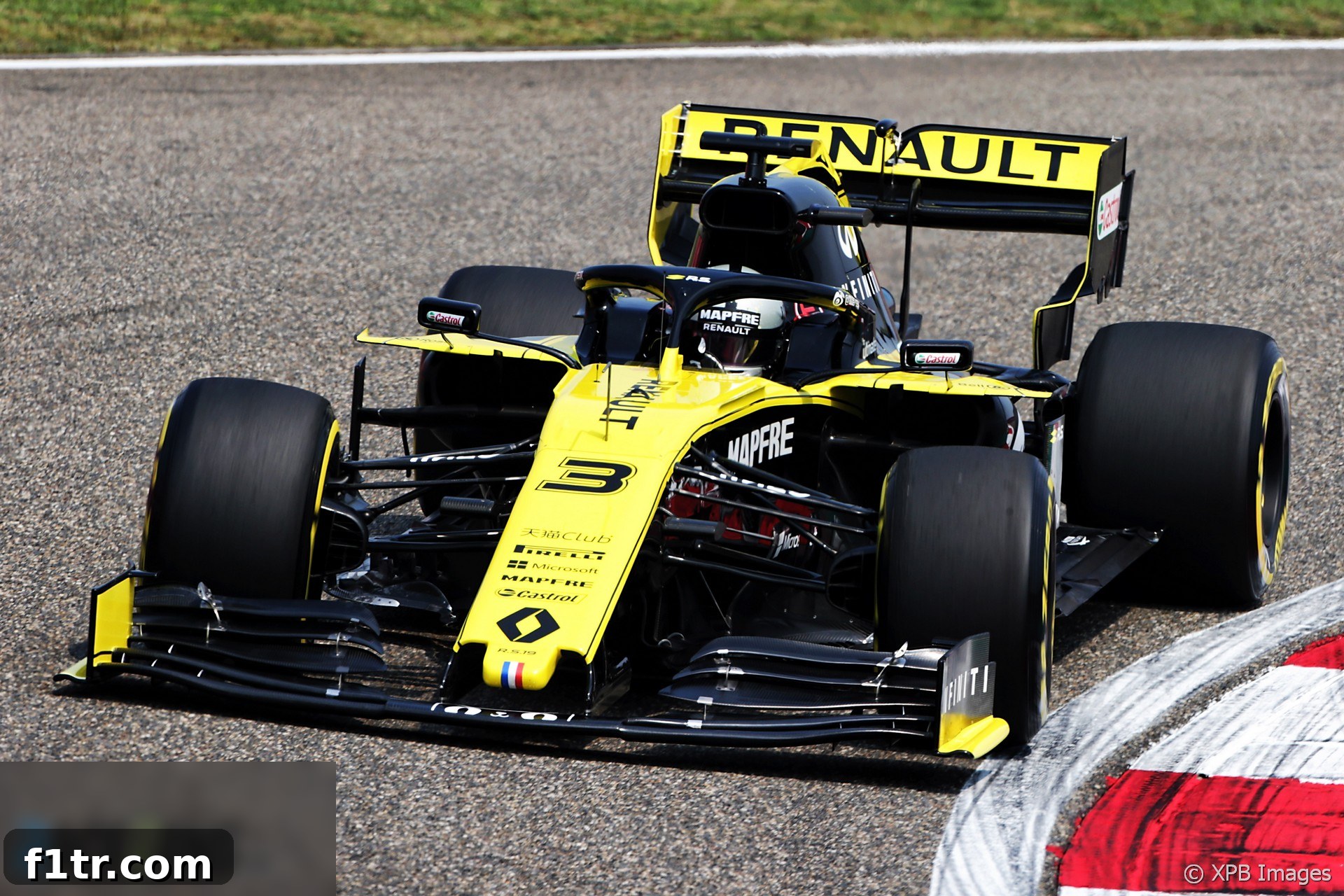
Meanwhile, in the Renault camp, a different set of power unit challenges prompted significant action. The French manufacturer had grappled with reliability problems since the start of the 2019 season, impacting both their factory team and customer outfit McLaren. To address these issues, Renault introduced a new specification of the MGU-K (Motor Generator Unit – Kinetic), a key component responsible for recovering kinetic energy during braking and deploying it as additional power.
A proactive move, three of the four Renault-powered drivers received these newly specified MGU-Ks for the Chinese Grand Prix. These included both factory Renault drivers, Daniel Ricciardo and Nico Hulkenberg, as well as McLaren’s Lando Norris. This upgrade was a direct response to the reliability team’s ongoing struggles, aiming to rectify the issues that had plagued their power units in the preceding races. McLaren’s Carlos Sainz Jnr was the only Renault-powered driver who continued to use the MGU-K that had been fitted to his car in Bahrain, indicating either a strategic deferral or perhaps a different component lifecycle plan for his specific unit.
Nico Hulkenberg, in particular, had a weekend of extensive power unit component changes. The German driver had been agonizingly close to securing a strong sixth-place finish in Bahrain when his power unit failed in the closing stages of the race, costing him valuable championship points. To avert a repeat performance and provide him with maximum reliability and performance, Hulkenberg’s car was fitted not only with the new MGU-K but also with a fresh internal combustion engine (ICE), a new turbo-charger, and a new MGU-H (Motor Generator Unit – Heat). The MGU-H is crucial for recovering energy from the exhaust gases and also for regulating the speed of the turbocharger, making it another complex and high-stress component within the power unit. Such a comprehensive suite of replacements so early in the season underscores the significant reliability concerns Renault faced and their determination to turn the corner.
Advert | Become a RaceFans supporter andgo ad-free
The Strategic Game of F1 Power Unit Management
The component changes made by both Ferrari and Renault at the Chinese Grand Prix perfectly illustrate the intricate strategic game played by Formula 1 teams when it comes to power unit management. Modern F1 power units are marvels of engineering, comprising six key components: the Internal Combustion Engine (ICE), Motor Generator Unit-Kinetic (MGU-K), Motor Generator Unit-Heat (MGU-H), Turbocharger (TC), Energy Store (ES), and Control Electronics (CE). Stringent regulations limit the number of each component a driver can use over a season without incurring grid penalties.
For the 2019 season, drivers were typically allowed three ICE, MGU-H, and TC units, and two MGU-K, ES, and CE units. Exceeding these allowances meant mandatory grid penalties – a five-place penalty for the first extra component and ten places for any subsequent extra components. This system forces teams to walk a tightrope between pushing the performance envelope and ensuring absolute reliability over a demanding 21-race calendar. An early component change, while addressing immediate reliability concerns, significantly reduces a team’s strategic flexibility for the latter half of the season, increasing the risk of future penalties. This puts immense pressure on power unit designers to deliver durable components and on strategists to meticulously plan component lifecycles.
Ferrari’s decision to change control electronics for four drivers so early in the season, following Leclerc’s Bahrain woes, speaks volumes about the perceived criticality of the component and the potential impact of another failure. It was a calculated risk, weighing immediate reliability against future penalty exposure. Similarly, Renault’s introduction of a new MGU-K specification and the extensive changes to Hulkenberg’s unit were clear indications of their resolve to overcome early-season reliability hurdles and ensure their drivers could compete without fear of mechanical failure. The development race in Formula 1 is not just about raw speed but also about the relentless pursuit of bulletproof reliability, as every component failure can mean lost points, damaged championship hopes, and significant financial implications for the teams involved.
These early-season component changes at the Chinese Grand Prix serve as a stark reminder of the intense technical battle that underpins Formula 1. Each power unit update, each strategic replacement, carries immense weight, shaping the trajectory of a team’s season and adding another layer of complexity to the thrilling world of motorsport.
Related Articles from the 2019 F1 Season
- Crying in the Melbourne car park at 2019 grand prix was my career low – Ocon
- McLaren Racing reports reduced £71 million loss in 2019
- Kvyat: Hockenheim podium last year was “my biggest achievement” so far
- How the FIA’s new encrypted fuel flow meter targets Ferrari’s suspected ‘aliasing’ trick
- “He smashed my office door”: 23 must-see moments from ‘Drive to Survive’ season two
Browse all 2019 F1 season articles