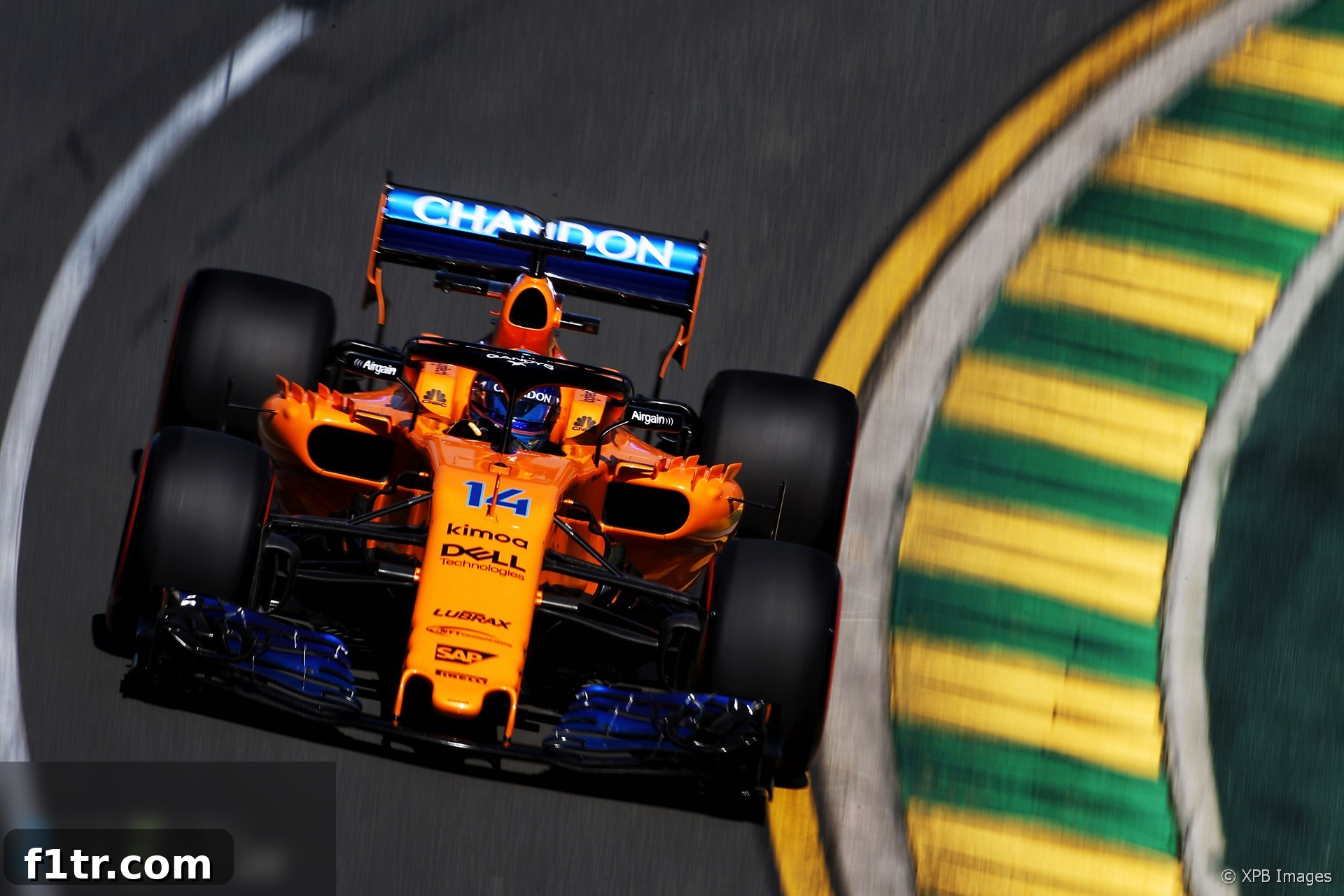
In a revealing disclosure following the 2018 Australian Grand Prix, McLaren driver Fernando Alonso confirmed that the team deliberately held back a significant portion of its intended upgrade package for the season opener. This strategic decision signals a calculated approach to the early stages of the Formula 1 season, with the Woking-based outfit prioritising data collection and foundational understanding of their new MCL33 chassis paired with the Renault power unit, rather than unleashing their full developmental arsenal from the outset.
The Australian Grand Prix, traditionally a challenging curtain-raiser held on the semi-permanent Albert Park circuit, often presents unique setup complexities. For a team like McLaren, embarking on a new engine partnership after three tumultuous years with Honda, a cautious and data-driven strategy was paramount. Alonso’s comments underlined the team’s ongoing commitment to extracting maximum potential from their car, suggesting that the true capabilities of the MCL33 are yet to be fully realised on track.
Speaking after securing a commendable fifth-place finish in Melbourne, Alonso expressed clear optimism regarding the car’s inherent qualities. “
The car has good potential as we identified in winter testing,” he stated. “I think it’s still to be unlocked a lot of potential that we have in the car.” This sentiment resonates deeply within the Formula 1 paddock, where the constant pursuit of performance gains is an intrinsic part of the sport. Unlocking this potential involves meticulous analysis, driver feedback, and the timely introduction of performance-enhancing components.
The two-time world champion further elaborated on the team’s developmental timeline, revealing, “Some of the updates that we planned for here will come for the next coming races. So I expect a lot from McLaren.” This indicates a phased approach to introducing aerodynamic and mechanical enhancements, allowing the team to test, validate, and integrate new parts systematically. Such a strategy minimises the risk of introducing unvalidated components at a critical early race, especially after a pre-season testing period that saw its share of disruptions for the Woking squad. The focus in Australia, therefore, was likely on optimising the package they had, understanding its behaviour in race conditions, and setting a reliable baseline for future development.
Alonso also highlighted the novelty and promising nature of the McLaren-Renault alliance. “And I think the integration from McLaren and Renault, this combination, is very new,” he added. “It’s the first race, so a lot more to come.” The transition from one power unit supplier to another is never a simple plug-and-play operation in Formula 1. It requires extensive engineering collaboration, chassis redesign to accommodate different packaging, and a deep understanding of the new engine’s characteristics. The inaugural race weekend in Australia served as a crucial learning experience, allowing both McLaren’s chassis engineers and Renault’s power unit specialists to fine-tune the integration and identify areas for immediate improvement.
The disrupted pre-season testing period in Barcelona undoubtedly influenced McLaren’s decision to hold back upgrades. Technical issues and a lack of consistent running meant the team couldn’t fully validate all their planned components or gather sufficient data to confidently deploy them. Rather than rushing unproven parts onto the car, a more prudent approach was adopted, focusing on reliability and gaining a stable platform. This disciplined methodology, while potentially sacrificing immediate outright pace, can pay significant dividends over a long season by ensuring that subsequent upgrades are effective and thoroughly tested.
McLaren’s Resilience: Reliability and Teamwork Underpinning Early Season Success
McLaren Racing Director Eric Boullier echoed Alonso’s sentiments regarding the team’s progress and the challenges overcome. He specifically praised the team’s efforts in ensuring a smooth race weekend in Australia, a stark contrast to their pre-season experiences. “Reliability-wise we had a trouble-free weekend, which is a relief after the issues we had in winter testing,” Boullier stated. This emphasis on reliability underscores its paramount importance in Formula 1, where points are only scored by cars that finish races. The absence of mechanical failures in Melbourne was a testament to the tireless work of every individual within the team.
Boullier continued, “It’s all thanks to a huge amount of hard work from everyone in the team, who have done a remarkable job since Barcelona.” This acknowledgement highlights the relentless pace and intense pressure inherent in Formula 1 development. From engineers working late nights to mechanics meticulously preparing the cars, the collective effort required to transform a challenging testing period into a reliable race weekend is immense. The team’s ability to diagnose and rectify the issues encountered in Barcelona, ranging from hydraulic problems to fitting challenges with the new Renault engine, showcased their resilience and technical prowess.
Looking ahead, Boullier reaffirmed the team’s commitment to continuous improvement. “Now we need to keep pushing, and work on readying the upgrades we have in the pipeline as soon as possible,” he stressed. This statement reinforces the notion that Formula 1 is a never-ending development race. The upgrades held back from Australia are merely the first wave in a season-long campaign to enhance the MCL33’s performance. The “pipeline” of upgrades implies a strategic development roadmap, with new aerodynamic components, suspension refinements, and potentially further integration improvements constantly being designed, manufactured, and prepared for introduction at subsequent races.
The New McLaren-Renault Era: Hopes and Challenges
The alliance between McLaren and Renault marked a pivotal moment for both entities. For McLaren, it represented a fresh start after a deeply frustrating period with Honda, a partnership that promised much but delivered little in terms of on-track success. The move to Renault engines, which had already demonstrated competitive performance with the factory Renault team and Red Bull Racing, instilled a renewed sense of hope within Woking. For Renault, securing McLaren as a customer team provided valuable additional data and a high-profile platform to showcase the capabilities of their power units. However, as Alonso pointed out, this was still a very “new” combination.
Integrating a completely different power unit architecture into an existing chassis philosophy presents numerous engineering hurdles. From packaging the engine and its ancillaries within the tight confines of an F1 car, to optimizing cooling systems, and recalibrating aerodynamic flow structures around the new engine cover and sidepod designs, every detail matters. The first race in Australia was therefore not just about performance, but also about gathering real-world data on how the entire package – chassis, aerodynamics, and power unit – performed under competitive pressure. This foundational understanding is crucial for guiding the development direction for the rest of the season.
Looking Ahead: The Development Race Continues
McLaren’s strategic decision to withhold upgrades at the Australian Grand Prix, coupled with Alonso’s optimistic outlook and Boullier’s praise for the team’s reliability, paints a picture of a team methodically building its campaign. The strong fifth-place finish, achieved with a car not yet at its full potential, provides a solid foundation and a morale boost. It demonstrates that the MCL33, in its basic form, possesses genuine promise.
The focus now shifts to the “next coming races” where McLaren is expected to progressively introduce the planned upgrades. These early-season races are critical battlegrounds for development, as teams strive to understand their cars better and gain a competitive edge. Each upgrade, whether it’s a revised front wing, floor, or diffuser, is meticulously designed to shave milliseconds off lap times. The expectation is that with these enhancements, combined with ongoing optimisation of the McLaren-Renault package, the team will consistently challenge for stronger points finishes and perhaps even podiums as the 2018 season progresses.
The journey for McLaren in 2018 is one of rebuilding and rediscovery. Their measured approach to the Australian Grand Prix suggests a long-term vision, prioritising sustainable development over short-term gains. With an experienced driver like Fernando Alonso at the helm, providing invaluable feedback, and a dedicated team pushing the boundaries of engineering, the ‘unlocked potential’ of the MCL33 could indeed prove to be a significant factor in the competitive landscape of Formula 1.
Don’t miss anything new from RaceFans
Follow RaceFans on social media:
- Join RaceFans on Facebook
- Follow RaceFans on Twitter
- Get daily email updates from RaceFans
Go ad-free for just £1 per month>> Find out more and sign up
2018 F1 season
- F1 feared “death knell” for Drive to Survive after Ferrari and Mercedes snub
- McLaren staff told us we were “totally crazy” to take Honda engines in 2018 – Tost
- ‘It doesn’t matter if we start last’: How Red Bull’s junior team aided Honda’s leap forward
- Honda’s jet division helped F1 engineers solve power unit problem
- McLaren Racing losses rise after Honda split
Browse all 2018 F1 season articles