The exhilarating world of Formula 1 is charting an unprecedented course in the United States, as the series officially introduces a third Grand Prix to its 2023 calendar. This significant expansion marks a new chapter for the sport in a nation that has historically shown a fluctuating relationship with F1. Guenther Steiner, the impassioned team principal of Haas F1 Team, the only American-based squad on the grid, firmly believes that the timing couldn’t be more opportune for this bold move, underscoring the sport’s burgeoning popularity across the Atlantic.
The Rise of Formula 1 in America: A New Era of Triple-Header Grand Prix Action
The much-anticipated 2023 F1 calendar, unveiled by the FIA, prominently features three distinct American rounds. Leading this charge is the spectacular addition of a night race on a brand-new street circuit in Las Vegas, set to deliver unparalleled glamour and racing drama. This new jewel in the crown will complement the already established Miami Grand Prix, a vibrant event introduced in 2022, and the iconic United States Grand Prix in Austin, Texas, a fan favorite that has anchored the F1 calendar since 2012. This tripling of races within one of the world’s largest sports markets is a testament to Formula 1’s strategic vision and undeniable growth.
Guenther Steiner on the Timing and Trajectory of F1’s US Expansion
The addition of a third US round comes amidst a significant expansion of the global F1 schedule, which is set to swell to a record 24 races. While such a demanding calendar presents its own set of logistical and operational challenges for teams and personnel, Steiner remains optimistic, asserting that the sport’s popularity has reached a critical mass, capable of sustaining these extra events and satisfying an ever-growing global fanbase.
“I think obviously 24 races is a lot of races but the demand is there, the fans want to see what we are doing which is the biggest compliment they can give us and we need to work hard to make them happy,” Steiner remarked, acknowledging the immense global interest. He particularly emphasized the strategic brilliance of the American expansion: “Three races in America, I think it comes at the right time. The sport is already popular and it’s getting even more so, as we speak, in America.” His words highlight a clear recognition from within the sport that the American market is not just ripe for expansion but actively demanding more Formula 1 action, a demand that is being met with enthusiasm and a carefully curated selection of distinct race experiences.
Understanding the Growth: Why Formula 1’s American Dream is Real
Formula 1’s recent surge in popularity across the United States is no accident; it’s the result of a concerted effort and a fortuitous confluence of factors. Central to this resurgence has been the massive success of Netflix’s docuseries “Drive to Survive.” The show peeled back the curtain on the previously opaque world of F1, revealing the intense rivalries, high stakes, and captivating personalities behind the helmets. This narrative-driven approach resonated deeply with American audiences, many of whom were previously unfamiliar with the sport, transforming casual observers into ardent fans.
Beyond Netflix, Liberty Media, F1’s American owners since 2017, have aggressively pursued strategies to enhance the sport’s appeal in the US. This includes leveraging social media, engaging with younger demographics, and actively seeking out new, vibrant host cities. The demographic shift towards younger, more diverse audiences has also played a crucial role, creating a fertile ground for a global sport like Formula 1 to flourish. The addition of races like Miami and Las Vegas, which blend high-octane racing with high-profile entertainment and celebrity appeal, directly caters to this evolving fanbase, ensuring that each event offers a unique and memorable spectacle beyond just the on-track action.
Austin: The Established Home of US F1
The Circuit of the Americas (COTA) in Austin, Texas, has been the traditional home of the United States Grand Prix since 2012. It quickly established itself as a challenging and dynamic circuit, beloved by drivers for its undulating terrain and complex corners inspired by iconic tracks worldwide. COTA has consistently drawn large, passionate crowds, creating an electric atmosphere unique among F1 venues. The race in Austin is more than just a sporting event; it’s a cultural festival, with live music, local cuisine, and a strong sense of Texan hospitality. Its success proved that a dedicated F1 facility in the US could thrive, laying the groundwork for further expansion. It remains a benchmark for what a modern Grand Prix event in America can achieve, offering a purist’s racing experience blended with lively entertainment.
Miami: The Glamorous Newcomer
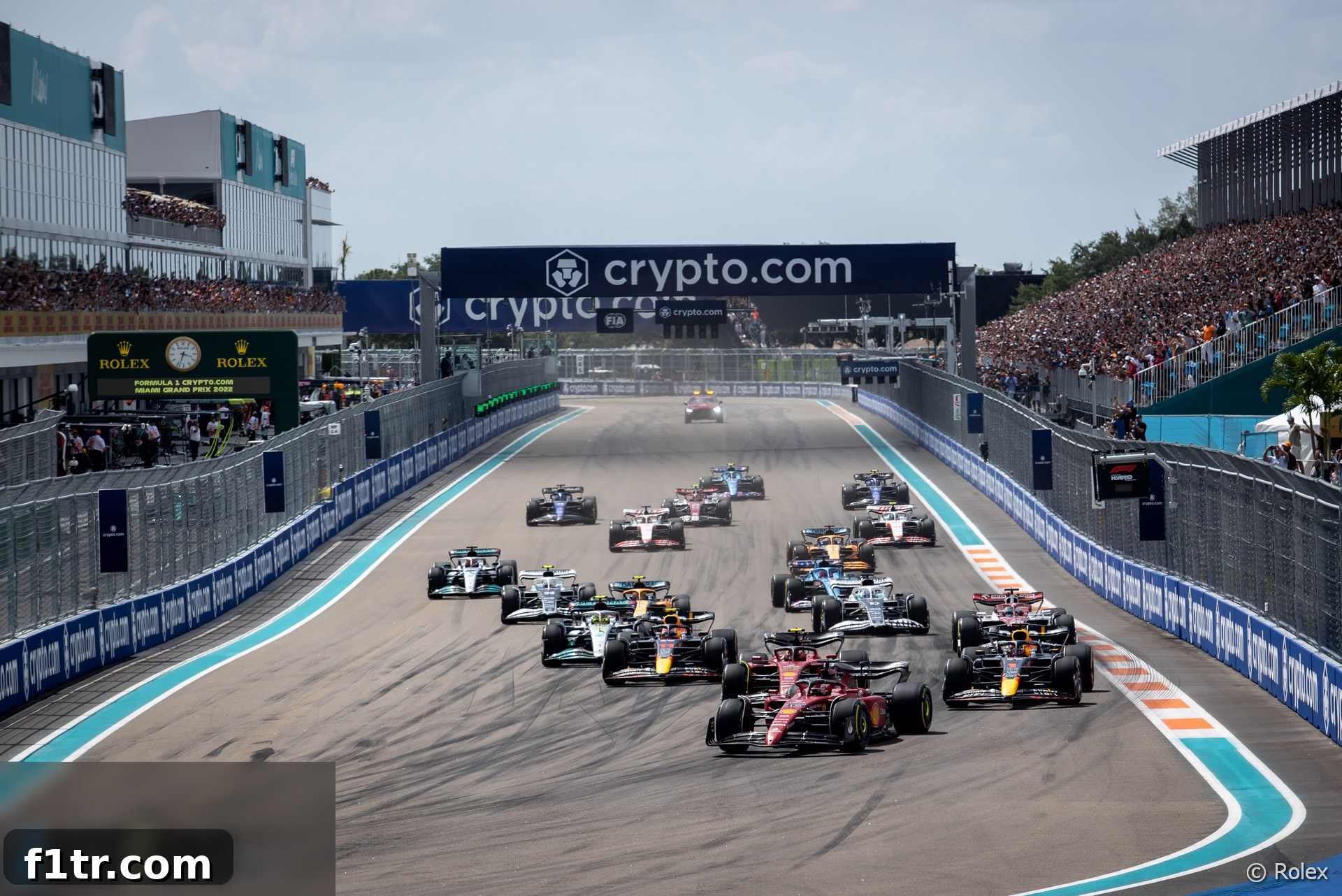
The Miami Grand Prix, introduced in 2022, immediately injected a fresh dose of glamour and celebrity into the F1 calendar. Set against the backdrop of the Hard Rock Stadium complex, the temporary street circuit brings Formula 1 to the vibrant and stylish heart of South Florida. The event swiftly became a magnet for A-list celebrities, sports stars, and high-net-worth individuals, creating an unparalleled party atmosphere that perfectly encapsulates the “Miami Vice” aesthetic. While the circuit itself presents its own challenges, the overall spectacle, fan engagement, and the sheer buzz generated by the event underscore F1’s ability to create a compelling, high-entertainment product for a new generation of fans. Miami strategically broadened F1’s appeal, proving that a blend of sport and spectacle can capture the imagination of a market hungry for experiential luxury.
Las Vegas: The Ultimate Spectacle
Slated for its debut in 2023, the Las Vegas Grand Prix promises to be unlike any other race on the calendar. A night race staged on the iconic Las Vegas Strip, it will transform one of the world’s most famous boulevards into a high-speed racing track. The concept alone conjures images of speed, neon lights, and unadulterated spectacle, perfectly aligning with F1’s current drive towards grander, more audacious events. This will be the third iteration of a Las Vegas Grand Prix, following two previous attempts at Caesar’s Palace in the early 1980s. However, this new chapter is poised to eclipse its predecessors, offering a truly unique blend of high-speed racing through an urban jungle and the unparalleled entertainment infrastructure of Las Vegas. It represents the pinnacle of F1’s ambition to merge sport and entertainment, targeting a global audience drawn by the promise of extraordinary drama and unprecedented visual splendor.
A Look Back: Precedents for Multiple Races in One Nation
While three races in a single country is a rare occurrence for Formula 1, it is not entirely unprecedented. The sport has previously run multiple rounds within the same nation in a single season, albeit under different circumstances.
Most recently, the Covid-19 pandemic-hit 2020 championship saw Italy host three Grands Prix: the traditional Italian Grand Prix at Monza, the Emilia Romagna Grand Prix at Imola, and the Tuscan Grand Prix at Mugello. This was a necessity born out of global travel restrictions, showcasing F1’s adaptability in times of crisis. These events were primarily held to fill out a depleted calendar, leveraging established European circuits that could safely host races under strict protocols.
The United States itself has a historical precedent for hosting multiple F1 races in one season. The 1982 season famously included three American rounds. These were the final edition of the Las Vegas Grand Prix at its original venue, the Caesar’s Palace car park circuit; the penultimate Long Beach Grand Prix, which later transitioned into an IndyCar event after F1’s split with the promoter; and the inaugural Detroit Grand Prix, a street race that lasted until 1988 before also becoming an IndyCar staple. While these past endeavors highlight America’s long-standing interest in F1, the current triple-header represents a deliberate, market-driven expansion rather than a reaction to external circumstances, signifying a more robust and sustainable presence for the sport in the region.
Navigating a Record-Breaking 24-Race Calendar
Despite the unprecedented number of rounds on the 2023 calendar, Steiner remains confident in the variety and appeal of each event, particularly regarding the three US races. “More races are good and each of these races has got their own little thing that stands out, they’re not a copycat of each other,” he stated. This emphasis on uniqueness is crucial; F1 has deliberately avoided creating generic events, instead striving to ensure each Grand Prix offers a distinct character and experience. “I think it’s very good and America is a very big country, and they will not get in the way of each other. Two of the races I already know are very good and I think Las Vegas will put a good show on.”
The sheer geographical vastness of the United States means that the three races – in Texas, Florida, and Nevada – cater to different regional audiences and offer vastly different experiences. This geographic and experiential diversity ensures that they complement rather than compete with one another. Furthermore, the growth of F1 necessitates a greater number of races to meet global demand, providing more opportunities for fans to witness the spectacle live and for commercial partners to engage with the sport. While the increased travel and workload will undoubtedly stretch team personnel and logistics to their limits, the commercial and outreach benefits of expanding into key markets like the US are deemed invaluable for the sport’s long-term prosperity.
The Future of F1 in America and Beyond
The commitment to three US races in 2023 unequivocally solidifies Formula 1’s presence in the American sporting landscape. It signals a belief that the momentum generated over recent years is not just a passing trend but a sustainable shift in the sport’s global appeal. This expansion will not only provide more opportunities for American fans to engage with F1 but also amplify the sport’s visibility, attracting new audiences and commercial partnerships. As Formula 1 continues to evolve, balancing its rich European heritage with an aggressive global expansion strategy, the American market is set to play an increasingly central role in defining the future trajectory of the pinnacle of motorsport. The coming seasons will be a true test of F1’s ability to maintain high standards of racing and entertainment across an ever-growing, diverse calendar, while simultaneously nurturing the loyalty of a passionate and expanding global fanbase.
Related Articles on the 2023 F1 Season
- FIA president cleared of alleged interference in two 2023 races
- First week viewing figures for new Drive to Survive season fall again
- Max who? Drive to Survive season six prefers its favourite faces
- RaceFans’ complete 2023 season review
- The F1 drivers who pulled off the 10 biggest charges through the field in 2023
Browse all 2023 F1 season articles