[smr2018test]
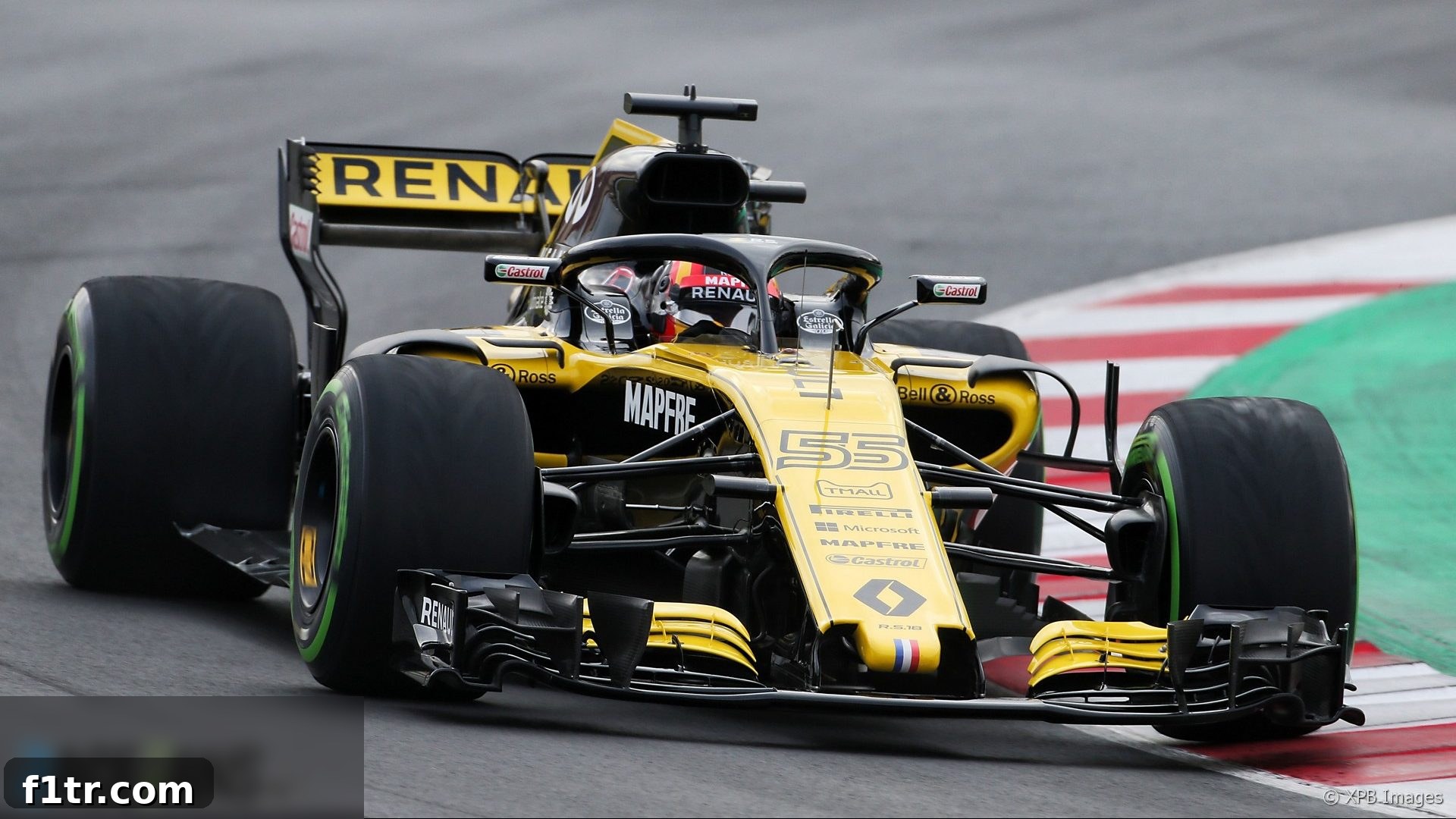
In the high-stakes world of Formula 1, pre-season testing is the crucible where aspirations meet reality, and new machinery is pushed to its absolute limits. However, the initial days of the 2018 Formula 1 pre-season testing at the Circuit de Catalunya in Barcelona presented an unexpected and formidable challenge: bitterly cold conditions that severely hampered teams’ ability to gather meaningful data and fully evaluate their new cars. For Renault Sport Formula One Team, and specifically its driver Carlos Sainz Jnr, these frigid temperatures rendered it “impossible” to truly unleash the potential of their newly unveiled RS18 challenger.
Frigid Realities: Barcelona’s Unexpected Chill Disrupts F1 Testing
The picturesque Circuit de Catalunya, typically bathed in mild Mediterranean sun, transformed into a stark, wintery landscape during the early stages of testing. Track temperatures plummeted to just above freezing point, persisting from yesterday’s session into the morning’s running. This drastic environmental shift created an unideal scenario for F1 teams, whose sophisticated machinery is designed to operate within very specific temperature windows, particularly concerning tyre performance and aerodynamic efficiency.
Carlos Sainz Jnr, who took over driving duties from teammate Nico Hulkenberg, voiced his considerable frustration, explaining that the conditions restricted his activities to only the most rudimentary checks. “The seat has to be changed here, the throttle pedal there, just adapt a bit my steering,” he detailed. These basic ergonomic adjustments, while necessary, were a far cry from the comprehensive performance evaluations drivers typically conduct during pre-season runs. The true measure of a new car’s balance, responsiveness, and ultimate speed remained elusive, trapped beneath layers of cold air and unresponsive rubber.
The Unattainable Limit: Why Cold Temperatures Cripple F1 Performance
Sainz’s inability to assess the pure feeling and balance of the RS18 stemmed directly from the environmental constraints. He emphatically stated, “On the pure feeling of the car, balance etc… I didn’t try to reach the limit of the car because it was just impossible with the temperatures: medium tyres, soft tyres…” This highlights a critical aspect of modern F1: tyres are the singular most important component connecting the car to the track, and their operational performance window is notoriously narrow and highly sensitive to temperature. When the track is cold, it becomes exceedingly difficult, if not impossible, to generate and maintain the optimal tyre temperature required for maximum grip and consistent performance.
The Spanish driver elaborated on this frustrating cycle: “It was just very difficult to reach the peak of the tyre, every lap coming faster and faster, then you have to back off a bit and the tyres were dropping and taking another five laps to come in.” This scenario means that drivers cannot push the car through corners with confidence, nor can they accurately gauge its aerodynamic capabilities or suspension setup. Each lap becomes a battle against cooling tyres rather than a push for performance, resulting in inconsistent lap times and unreliable data. For engineers, this lack of consistent data makes it incredibly challenging to understand the car’s true potential, identify areas for improvement, or validate design changes made during the off-season. The primary goal of testing – to correlate simulator data with real-world performance – is significantly undermined.
Renault RS18: A Development Stymied?
For a team like Renault, entering a crucial year in its journey back to the front of the grid, these compromised testing conditions present a significant setback. The RS18 represents a culmination of months of design and engineering work, intended to build upon the progress made in previous seasons. Each testing day is invaluable for accumulating mileage, testing new components, and fine-tuning the car’s setup for the upcoming championship. When drivers like Sainz cannot explore the car’s full envelope, crucial development work is delayed. This could mean heading into the season opener in Australia with less understanding of the RS18’s characteristics than desired, potentially putting them at a disadvantage against rivals who might have experienced more favorable testing conditions, or who simply cope better with the cold.
The impact extends beyond just raw speed. Driver feedback is paramount during testing, guiding engineers in everything from brake bias to differential settings. If a driver is constantly managing cold tyres and a lack of grip, their feedback regarding the car’s balance, stability under braking, or turn-in characteristics will be skewed and less representative of its performance in race conditions. This not only frustrates the drivers but also adds layers of complexity to the team’s data analysis and decision-making processes for car development.
A Touch of Humour Amidst the Chill: Barcelona to Finland
Despite the serious implications for testing, Sainz couldn’t resist injecting a dose of humor into the situation. He quipped that “my country is letting me down” after witnessing the rapid temperature drop coinciding with his turn in the cockpit. “It was my turn and all of a sudden the wind came, the clouds came, the North Pole came. Suddenly Barcelona turned out to be Finland.” This lighthearted comparison, while amusing, underscored the truly uncharacteristic and challenging nature of the conditions. While Finnish drivers are accustomed to colder climes, an F1 car designed for the global calendar expects more temperate conditions at a European testing venue like Catalunya.
Seeking Warmer Horizons: The Call for Test Extension
The severity of the cold prompted discussions among teams regarding potential solutions, with the possibility of extending the test schedule emerging as a prominent rumour. Sainz, for one, was openly in favour of such a move. “Maybe there’s solutions coming up, I don’t know if teams will discuss to extend, there’s a rumour going around.” The rationale is simple: the investment in time, resources, and logistics for F1 testing is immense, and wasting precious track time due to unrepresentative weather is counterproductive. If warmer conditions were anticipated later in the week, or even on a subsequent day, many teams would undoubtedly prefer to utilise that time to extract genuinely valuable data.
Sainz further elucidated his preference, noting the stark contrast in weather forecasts: “Personally, on Friday, just to let you know, it’s 17C, normal Barcelona weather and sunny so I wouldn’t mind if we could have that Friday for testing and just sit out on Wednesday, for example [when] it’s apparently snowing. The option’s there and we’ll see what happens.” This pragmatic approach highlights the desperate need for teams to test under conditions that are more reflective of typical Grand Prix weekends, or at least conditions that allow the tyres to function properly. Shifting days or adding an extra day, despite the logistical challenges, could save teams from heading into the season’s opening race with significant unknowns about their new machinery.
The Broader Impact: Preparing for the 2018 F1 Season
The disrupted pre-season testing serves as a stark reminder of the delicate balance in Formula 1 development. Every minute on track is carefully planned, every data point meticulously analysed. When external factors like extreme weather intervene, the ripple effects can be substantial, influencing not only individual team preparations but potentially the competitive landscape of the early season. Teams that manage to adapt, learn from limited data, or simply get lucky with a window of better weather, could gain a crucial edge. For the 2018 F1 season, the unexpected chill in Barcelona added an unforeseen layer of complexity to an already intense period of preparation, leaving both teams and fans eager for more representative running as the season launch approached.
Go ad-free for just £1 per month>> Find out more and sign up
Related: 2018 F1 Season Insights
- F1 feared “death knell” for Drive to Survive after Ferrari and Mercedes snub
- McLaren staff told us we were “totally crazy” to take Honda engines in 2018 – Tost
- ‘It doesn’t matter if we start last’: How Red Bull’s junior team aided Honda’s leap forward
- Honda’s jet division helped F1 engineers solve power unit problem
- McLaren Racing losses rise after Honda split
Browse all 2018 F1 season articles