Williams Remains Poised Amidst 2022 F1 Driver Market Speculation
Despite the looming uncertainty surrounding key driver decisions for the 2022 Formula 1 season, Williams Team Principal Jost Capito exudes confidence, unfazed by the possibility of a late resolution to their driver lineup. This calm approach underscores a significant transformation within the Grove-based outfit, signaling a new era of stability and strategic foresight under its current ownership. For a team that has faced considerable challenges in recent years, this composure in the face of crucial personnel decisions highlights a profound shift in its operational philosophy and long-term ambitions.
The George Russell Conundrum: A Pivotal Decision for Mercedes and Williams
At the heart of Williams’ 2022 driver situation lies George Russell, a prodigious talent currently in his third season with the team and a highly-regarded Mercedes junior driver. Russell’s consistent, often spectacular, performances in challenging machinery have earned him widespread acclaim, particularly for his qualifying prowess, which has frequently seen him drag the Williams car into the second, and occasionally third, segments of qualifying. His standout drive as a substitute for Lewis Hamilton at the 2020 Sakhir Grand Prix, where he narrowly missed a sensational victory, further solidified his reputation as a future world champion contender, leaving little doubt about his raw speed, race craft, and mental fortitude under pressure.
The world champions, Mercedes, are known to be carefully considering whether to promote Russell to their senior team for the highly anticipated 2022 F1 season, a year set to usher in radical new technical regulations. This decision carries immense weight not only for Russell’s career trajectory but also for the wider Formula 1 driver market. Should Mercedes opt to bring Russell alongside Lewis Hamilton, it would inevitably create a coveted vacancy at Williams, triggering a significant domino effect within the paddock as other drivers vie for the newly available seat. The protracted nature of this decision by Mercedes, influenced by factors such as Valtteri Bottas’s future, internal team dynamics, and the competitive landscape, presents a unique challenge for Williams – one that Capito, remarkably, appears to embrace rather than fear.
For Russell, a move to Mercedes would represent the realization of a long-held dream and a direct pathway to contesting for race wins and championships. Remaining at Williams, while still offering valuable experience, might delay his ultimate aspirations. This complex interplay of driver ambition, team strategy, and market forces means that Williams must be prepared for multiple eventualities, and Capito’s calmness suggests they have a robust contingency plan in place, a stark contrast to previous seasons where driver choices often felt dictated by immediate financial needs.
Nicholas Latifi’s Steady Presence and Unaddressed Future
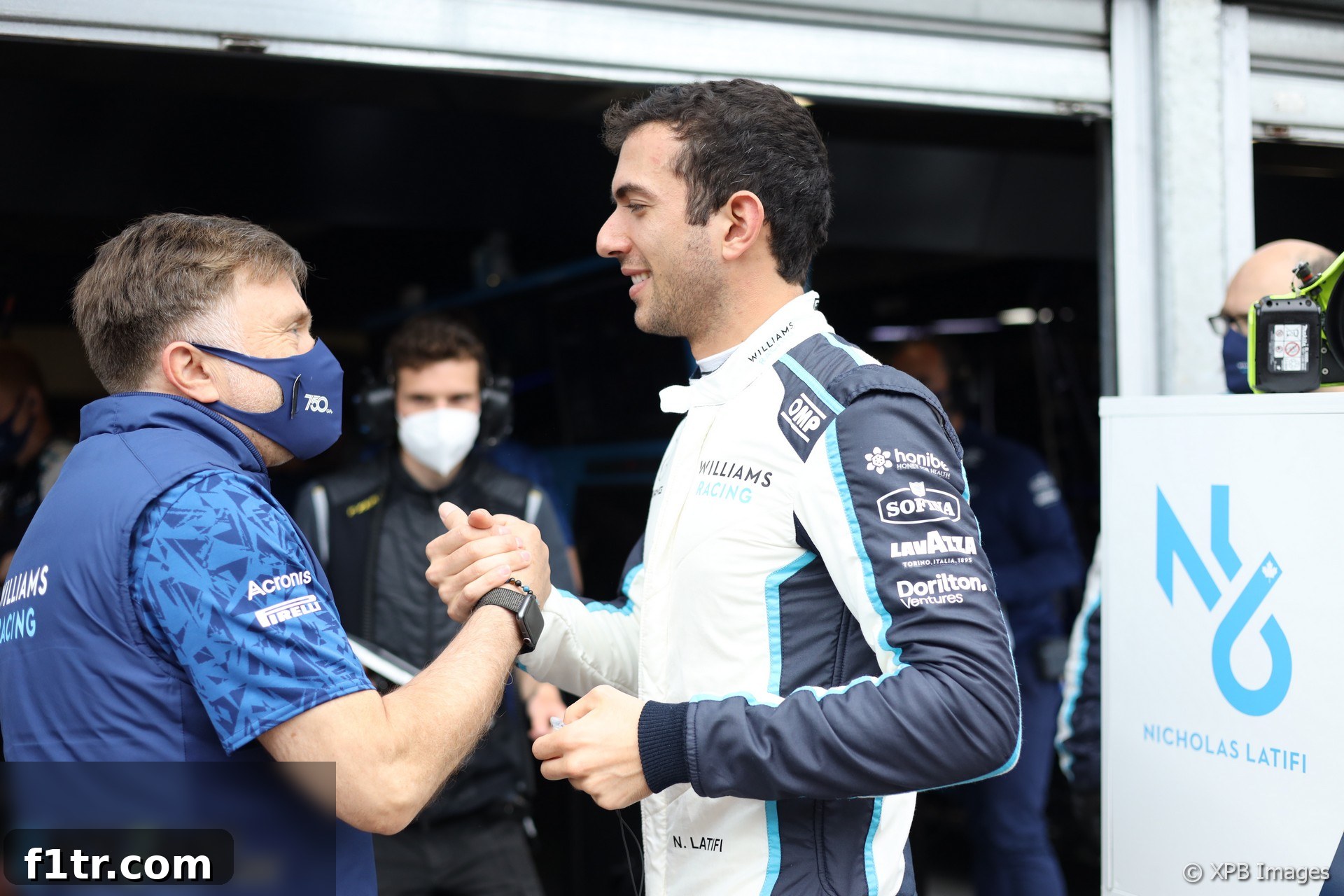
Complementing Russell at Williams is Canadian driver Nicholas Latifi, who is believed to be on a multi-year deal that could potentially extend into the 2022 season. Latifi has brought a combination of consistent financial backing and solid, if not always headline-grabbing, performances to the team. While often overshadowed by his exceptional teammate, Latifi has steadily improved throughout his tenure, demonstrating reliability and an ability to bring the car home in challenging conditions. His development as a Formula 1 driver has been evident, showing greater consistency and confidence behind the wheel.
However, in a recent interview, Latifi stated that discussions regarding his future beyond the current season were “not yet under discussion.” This remark, while seemingly straightforward, adds another layer of intrigue to Williams’ 2022 driver equation. The ambiguity surrounding Latifi’s contract length and the timing of future talks means that, theoretically, both Williams seats could become available, depending on external factors (like Russell’s move to Mercedes) and internal team assessments of performance and long-term potential. While Latifi’s contributions, both on track and off, are valued, the team’s ambition to climb the F1 grid might necessitate a re-evaluation of its driver pairing. The stability offered by his current deal could be a significant asset, yet the dynamic nature of Formula 1 means that even seemingly secure positions can be subject to change, especially when a team is undergoing a significant transformation, as Williams currently is. The team’s desire for an optimal lineup for the new regulations could potentially influence decisions even for drivers with existing contracts.
A New Era of Confidence: Capito’s Vision for Williams Racing
Traditionally, a smaller team facing late driver market decisions might find itself in a precarious position, scrambling for talent and potentially settling for less-than-ideal options. However, Capito’s declaration that he’s “not really bothered” by such a possibility speaks volumes about the profound shift in fortunes and mindset at Williams Racing. His optimism is rooted in the substantial progress the team has made since its acquisition by Dorilton Capital in August 2020, ending decades of venerable family ownership. This change of guard brought not just financial stability but also a renewed strategic direction, a professional, data-driven approach to racing operations, and a clear vision for the future.
“I think that in the moment we as a team, we are moving on quite well and the changes seem to work pretty well that we have done,” Capito articulated, highlighting the tangible improvements across all departments of the Williams F1 Team. The investment from Dorilton Capital has provided the “proper financial backing” essential for a modern F1 team to compete effectively in an increasingly competitive environment. This includes crucial upgrades to infrastructure, recruitment of key personnel from rival teams, and a more robust development budget – areas where Williams had historically lagged due to financial constraints. This financial security has liberated the team from the constant pressure of survival, allowing them to focus entirely on performance, innovation, and long-term strategic planning.
Capito further emphasized that this newfound strength is translating into increased attractiveness for prospective drivers. “I see more and more interest of drivers to drive for Williams in the future, as they see there is a proper financial backing. They see that the team is really willing to move forward and attract the drivers as well.” This suggests a proactive and strategic approach to talent acquisition, where Williams is no longer simply a stepping stone or a team desperate for any available talent, but a desirable destination for drivers looking for a solid foundation and a team with a clear upward trajectory. The perception among drivers and their management has clearly shifted, viewing Williams as a serious contender for future success, rather than a backmarker struggling to survive season after season. This positive reputation is a testament to the hard work and strategic investments made by Dorilton Capital and the leadership team.
The Strategic Advantage of Patience: Why Waiting Benefits Williams
Capito’s bold assertion, “So I think the longer we wait, the better situation we will be,” is perhaps the most telling indicator of Williams’ confidence and their refined strategic approach. This statement challenges the conventional wisdom that securing drivers early is always the best strategy for smaller teams. Instead, Capito believes that as Williams continues to demonstrate its progress and long-term vision throughout the current season, its appeal to drivers will only grow. A stronger showing on track, even if it doesn’t immediately translate into championship points, validates the team’s strategic direction, financial health, and commitment to rising up the F1 grid.
By patiently observing the driver market unfold, Williams can assess a broader range of options, potentially attracting drivers who might have initially aimed for seats at other, seemingly more established, midfield teams. The delayed decisions by top teams, particularly Mercedes regarding Russell, could create unexpected opportunities as the driver merry-go-round accelerates in the latter half of the season. If a highly-rated driver finds their preferred option unavailable, Williams, with its clear upward trajectory and secure backing, could emerge as a highly attractive alternative, offering a stable environment and a chance to be part of a team on the rise. This patient strategy allows Williams to avoid rushing into decisions and instead wait for the optimal candidates to become available, aligning with their long-term goals of returning to consistent competitiveness and securing the best possible talent for the crucial 2022 F1 season and beyond.
From Survival to Ambition: Williams’ Journey Back to Competitiveness
The transformation under Dorilton Capital and Jost Capito is all the more remarkable given the team’s recent struggles. For years, Williams battled at the very back of the grid, frequently finishing last in the Constructors’ Championship with little hope of improvement. The last time a Williams driver scored a point was at the chaotic 2019 German Grand Prix, when Robert Kubica finished tenth amidst a flurry of retirements and penalties. This protracted drought underscored the deep-seated issues that plagued the team prior to its sale, reflecting a lack of investment and an outdated operational model.
However, the narrative has shifted dramatically. Despite the absence of points finishes for a Williams driver since Kubica’s unexpected result, the team has undeniably made significant performance gains. The 2021 Formula 1 season, in particular, has seen the car consistently challenge for Q2 appearances in qualifying and occasionally battle with midfield rivals on race day, a marked improvement from previous years where they were often isolated at the back. These incremental gains, while not yet delivering championship points, are vital indicators of the team’s underlying progress and effective development. They provide concrete evidence to potential drivers and sponsors that Williams is genuinely on the rebound, laying a strong foundation for future success.
Looking ahead, the new Formula 1 technical regulations for 2022 represent a monumental opportunity for Williams. With a largely blank slate for car design, teams have the chance to leapfrog rivals if they get their interpretation of the rules right. Williams, with its newfound financial stability and strategic leadership, is ideally positioned to capitalize on this reset. The focus on long-term development and the ability to invest in sophisticated simulation tools and experienced engineers puts them in a far stronger position to approach the new regulations than they have been in over a decade. This strategic foresight and investment are crucial as the team aims to return to its former glory and become a consistent midfield contender.
Nurturing Future Talent: Williams’ Driver Academy
Beyond its current F1 lineup, Williams also boasts a robust driver development program, nurturing talent for the future. Reserve driver Jack Aitken, who famously debuted as George Russell’s substitute at the 2020 Sakhir Grand Prix, stands ready should an opportunity arise. The team’s junior academy further includes promising talents such as Formula 2 drivers Roy Nissany and Dan Ticktum, both of whom regularly participate in test sessions and provide valuable feedback, gaining crucial experience within the Formula 1 environment. Additionally, W Series champion Jamie Chadwick is part of the academy, representing the team’s commitment to promoting diverse talent in motorsport and fostering female participation at the highest levels. This strong talent pipeline provides Williams with an internal pool of drivers, offering flexibility and an additional layer of security should they need to make quick decisions regarding their lineup, ensuring a sustainable future for the team’s personnel.
Williams: Building a Future on Strategy, Stability, and Talent
In conclusion, Williams Racing’s seemingly calm approach to the 2022 F1 driver market, spearheaded by Jost Capito’s confident statements, reflects a deeper transformation within the team. No longer a financially fragile outfit battling for survival, Williams, under Dorilton Capital’s stewardship, is strategically positioning itself as a desirable destination for top talent. The impending decisions regarding George Russell’s future, while significant for both driver and team, are not viewed as a threat but rather as potential opportunities to further strengthen their lineup, attracting experienced drivers or promoting promising juniors.
With an unwavering eye on the major rule changes in 2022 and a steadfast commitment to sustained growth, Williams is not just surviving but thriving, embarking on a carefully planned journey back to the competitive heart of Formula 1. The coming months will undoubtedly reveal the specifics of their 2022 driver lineup, as the F1 silly season heats up. However, one thing is abundantly clear: Williams is playing a long game, and they are doing so with quiet confidence, strategic intent, and a renewed sense of purpose that promises an exciting future for this legendary F1 team.