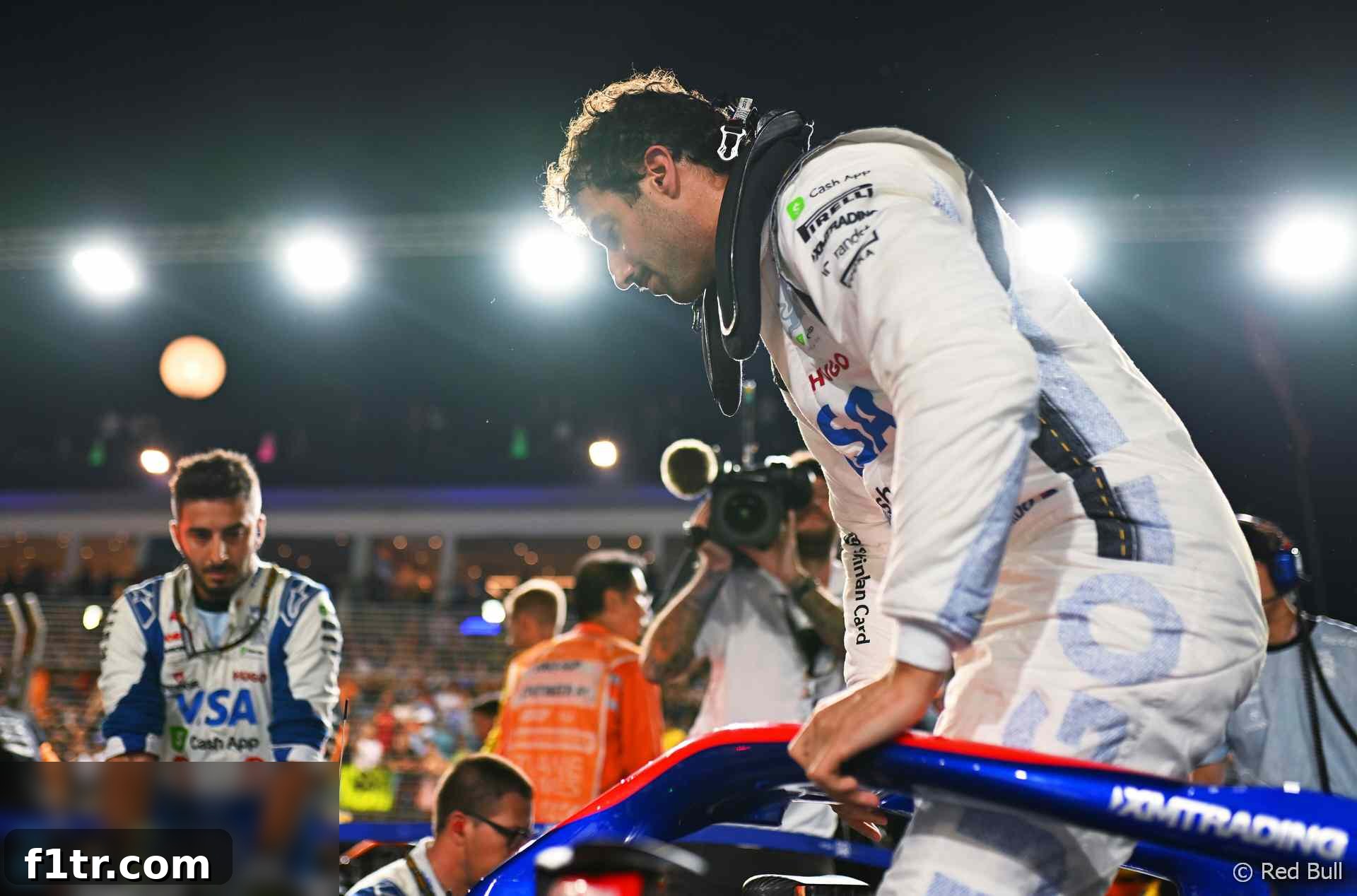
In a sport defined by relentless pursuit and unwavering ambition, candid admissions about vulnerability are rare. Yet, Daniel Ricciardo, one of Formula 1’s most charismatic and beloved figures, recently offered a refreshingly honest insight into his state of mind regarding his recent career trajectory. The eight-time Grand Prix winner confessed to a profound sense of relief when external circumstances dictated a shift in his Formula 1 journey, particularly during a period marked by a significant slump in his performance and intense introspection about his future in the sport. This revelation provides a rare glimpse into the immense pressures faced by elite athletes and the mental fortitude required to navigate a career at the pinnacle of motorsport.
The Weight of Expectations: From McLaren to AlphaTauri/RB
Ricciardo’s journey in Formula 1 has been a rollercoaster of exhilarating highs and challenging lows. After a highly successful stint with Red Bull Racing, which saw him clinch multiple victories and establish himself as a genuine title contender, his move to Renault (now Alpine) and later McLaren was met with high expectations. The McLaren chapter, in particular, was envisioned as a triumphant return to the front-running grid positions. However, despite a memorable victory at the 2021 Italian Grand Prix, his tenure at Woking was largely characterized by struggles to adapt to the car’s unique characteristics, often finding himself outpaced by his younger teammate, Lando Norris.
The mounting pressure and the inability to consistently extract performance from the machinery took a significant toll. McLaren ultimately decided to cut short his contract at the end of the 2022 season, a decision that, while undoubtedly painful in the immediate aftermath, sowed the seeds for the relief Ricciardo would later articulate. This early termination marked a significant setback for the Australian driver, pushing him onto the sidelines as a reserve driver for Red Bull in 2023, a position far removed from his aspirations of competing at the sharp end of the grid.
A Fleeting Comeback and an Unfortunate Injury
The 2023 season presented an unexpected opportunity for Ricciardo to return to the active grid mid-year with AlphaTauri (now known as Visa Cash App RB). This return ignited hopes among fans that the “old Daniel” was back, ready to rediscover his scintillating form. However, fate had other plans. During practice for the Dutch Grand Prix, a seemingly innocuous incident led to a broken hand, forcing him back onto the sidelines just three races into his comeback. “In the third race in I broke my hand,” he recounted in a video released by Ford, reflecting on the trivial nature of the accident that nevertheless had significant consequences. “It was such a nothing accident, but I missed however many races, I was out for 10 weeks or something.”
This injury, coming hot on the heels of his previous struggles, triggered a profound period of self-doubt and introspection. He questioned his path, wondering, “Is this now a bit of a sign like should I just quit while I’m ahead, nearly. And I was like, no, there’s still unfinished business and I pushed through it.” This internal conflict highlights the immense mental resilience required to stay in a demanding sport like Formula 1, even when facing significant physical and emotional hurdles. His determination to push through and prove himself once more underscored his deep love for racing and his belief in his own capabilities.
The Exhaustion of Sustained Struggle and the Relief of Decision
Despite his unwavering commitment, the subsequent year presented continued challenges. The performance struggles that had plagued him at McLaren reappeared, making it increasingly difficult to consistently deliver the kind of results he and his fans expected. “I lasted another year in F1 and then ultimately got let go,” he admitted, referring to the culmination of these challenging periods, which led to a precarious position or a definitive parting of ways. This recurring experience of having his contract ended by teams, particularly the McLaren departure, brought him to a crossroads.
Ricciardo revealed that RB’s (or similar team management) decision to potentially drop him or simply not renew his contract ultimately spared him from having to make an agonizing choice himself. “Once that happened, I’d been let go twice in the last two years. It had also taken a lot out of me. I’d put a lot of my soul into it and I did feel pretty exhausted by it,” he explained. This sentiment underscores the immense emotional and psychological toll that sustained underperformance and career uncertainty can inflict on an athlete operating at the highest level. The constant pressure to perform, the public scrutiny, and the internal battle against self-doubt can be profoundly draining, leading to a state of mental exhaustion.
In a remarkable display of self-awareness and honesty, Ricciardo expressed gratitude for the team making the difficult call. “In reflection, I was grateful that they made the decision for me, because I think it would have been hard to [say]: ‘I’m done’.” This admission speaks volumes about the difficulty of walking away from a lifelong dream, especially when that dream has been so intimately tied to one’s identity. The relief of having the decision taken out of his hands allowed him to process the situation without the added burden of being the one to initiate the departure.
The Courage of Self-Assessment: Knowing When You’re “Done”
A crucial aspect of Ricciardo’s reflections is his courageous self-assessment regarding his own performance level. He candidly admitted to a feeling that he was no longer operating at his peak. “I think I knew I was probably done because I knew that it was harder for me to perform at the level I could,” he stated. This kind of honesty is rare in competitive sports, where the narrative often revolves around pushing through every barrier.
He even drew comparisons with other veteran drivers, acknowledging their continued success while recognizing his own shift. “Okay, Alonso, these guys, they’re in their forties in F1, [still] competing very highly. For whatever reason, I lost a little bit of something and it’s okay to admit it, it’s fine.” This humility and acceptance of a natural decline, or simply a shift in his personal capacity to perform at the absolute limit, is a testament to his maturity. It highlights that even for the most talented athletes, there comes a point where the magic that once allowed them to transcend limits might diminish, and acknowledging this is a sign of strength, not weakness.
This introspection reveals a deep understanding of his own capabilities and limitations. In a sport where self-belief is paramount, recognizing a subtle loss of edge requires immense courage. It’s about being true to oneself, even when that truth is difficult to face, and prioritizing personal well-being over the relentless pursuit of an increasingly elusive dream.
The Solitary Decision: Tuning Out External Voices
While many athletes might cling to external validation, Ricciardo emphasized the importance of making such a pivotal decision based purely on internal honesty. He acknowledged that many well-meaning individuals would continue to offer encouragement. “There’s people that love you and will still tell you that you’re great and you can do it. But as much as you love them as well, you need to just close the door and make that decision on your own and be really honest with yourself.”
This statement speaks to the unique isolation that comes with being an elite performer. While support systems are invaluable, the ultimate responsibility for one’s career path rests solely on the individual. The ability to filter out external noise, no matter how positive or well-intentioned, and engage in profound self-dialogue is critical. Ricciardo understood that others, while caring deeply, could not truly comprehend the depth of his internal struggle or the effort required to achieve results that once came more naturally.
He further elaborated on this internal process: “If I would have got to the end of last year, I think I would have still had a lot of these thoughts and had the conversation with myself because I knew it was becoming harder for me and I had to dig really deep to pull out a result that I was proud of.” This relentless battle to achieve satisfactory outcomes, knowing the immense effort involved, underscores the mental burden. “You always want to believe everyone’s looking out for you, and they probably still are, but they don’t know what it’s like to be you and in your situation,” he concluded, highlighting the solitary nature of such significant life and career decisions.
Beyond the Grid: Daniel Ricciardo’s Enduring Legacy
Daniel Ricciardo’s journey, from his triumphant early career to his recent introspective phase, offers valuable lessons not just for aspiring racers but for anyone navigating the complexities of their professional lives. His candidness about exhaustion, the relief of difficult decisions, and the courage to admit a loss of ‘something’ resonates deeply. It challenges the conventional narrative of sports, reminding us that even the most successful individuals are human, susceptible to burnout, and capable of profound self-reflection.
Regardless of what his ultimate future holds in Formula 1 – whether it’s a full-time drive, an ambassadorial role, or a transition to other ventures – Ricciardo’s legacy is secure. He will be remembered not just for his incredible race wins and his signature “shoey” celebration, but also for his infectious smile, his unwavering optimism, and now, for his remarkable honesty. His willingness to open up about the challenging aspects of his career adds another layer to his enduring appeal, positioning him as an advocate for athlete mental health and the importance of self-awareness in a world that often demands perfection.
His story serves as a powerful reminder that sometimes, the greatest strength lies not in relentlessly pushing forward, but in recognizing when it’s time to pause, reflect, and embrace a different path, allowing relief to replace the burden of expectation.
Formula 1 Insights
- F1 returning to India soon after 2027 sounds like wishful thinking
- Verstappen loathes F1’s new generation of cars – but what do his rivals reckon?
- The ‘throwback weekend’ is back in fashion. But it’s a flawed concept – especially for F1
- Is Formula 1’s double race cancellation a blessing in disguise?
- Todt admits Schumacher crashed on purpose – but did it really cost him two titles?
Browse all Formula 1 articles