Fernando Alonso Explains “Three Ferrari Teams” Comment Amidst Intense F1 Midfield Battle
Fernando Alonso, the two-time Formula 1 world champion, recently shed light on his intriguing comment made to Spanish television regarding McLaren’s perceived challenge against “three Ferrari teams” in the sport. This statement ignited discussions within the paddock and among fans, highlighting the intricate dynamics of technical partnerships and their impact on grid competitiveness in Formula 1.
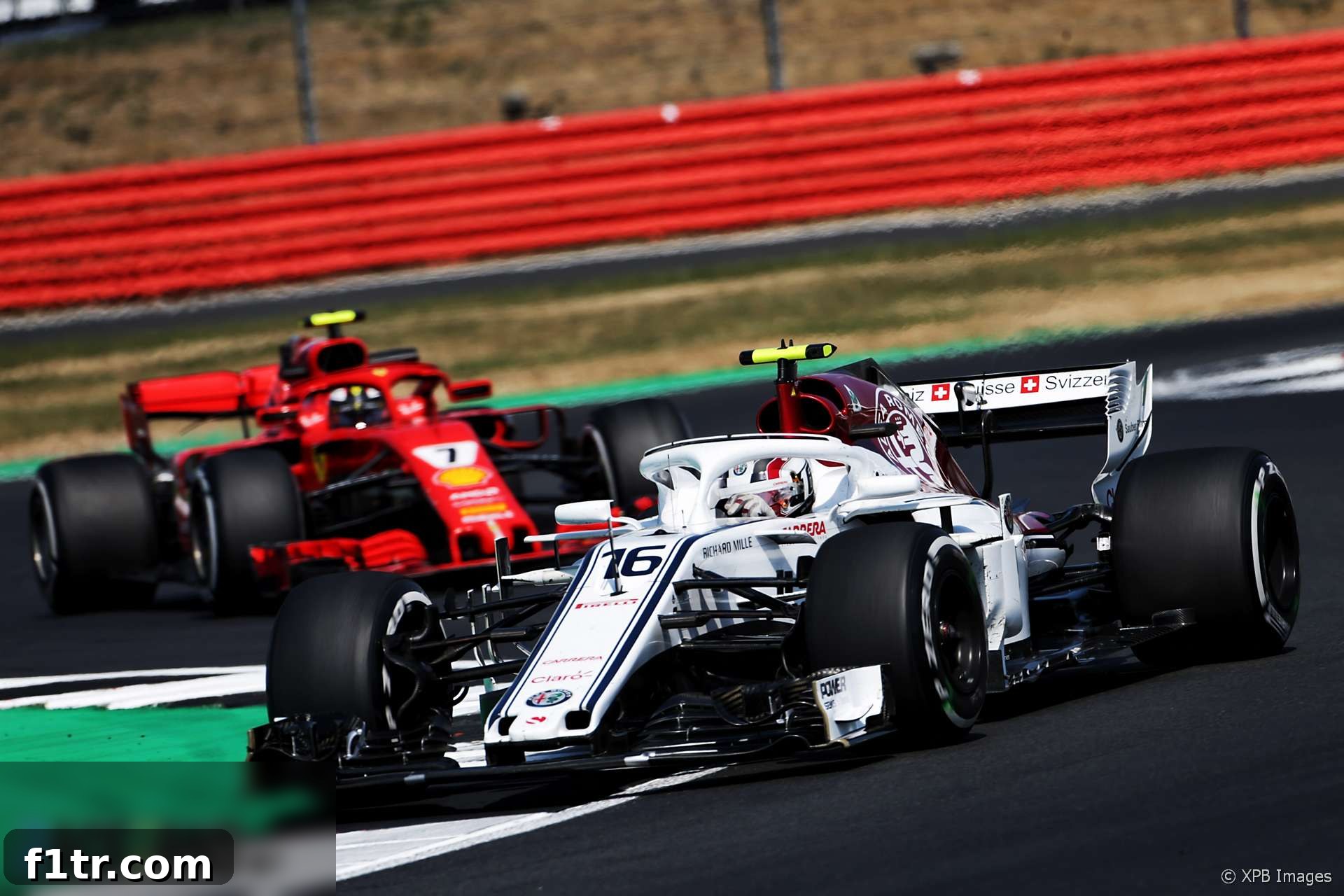
Alonso’s remarks specifically targeted Ferrari’s two power unit customers at the time: Haas F1 Team and Sauber F1 Team. While both outfits utilized Ferrari’s highly-regarded power units, their operational models differed significantly. The American-based Haas team was known for its aggressive strategy of sourcing the maximum permissible number of components directly from Ferrari, leveraging Maranello’s extensive expertise and resources. In contrast, the Swiss-based Sauber team, while still a Ferrari customer, traditionally manufactured a greater proportion of its own parts, maintaining a more independent design philosophy.
The competitive implications of these alliances became particularly evident in qualifying sessions, as experienced by Alonso himself. In the specific qualifying event that prompted his initial comments, both Haas drivers and Charles Leclerc’s Sauber managed to advance into the coveted Q3 segment. This achievement came at the direct expense of Alonso’s McLaren, underscoring the formidable challenge posed by these Ferrari-aligned teams to McLaren and other midfield contenders. Alonso firmly believes that the profound relationships these teams share with Ferrari played a crucial role in their improved performance and ability to punch above their weight.
The Advantage of Ferrari’s Experience and Shared Components
“It’s not simply that Haas and Sauber are ahead of the midfield group,” Alonso articulated, elaborating on his initial assessment. “They benefit, definitely, from some of the experience Ferrari has.” This statement points to a deeper level of collaboration than mere engine supply. In modern Formula 1, technical partnerships can extend beyond power units to include various non-listed parts, shared research, and even design philosophies. By leveraging Ferrari’s extensive engineering prowess and developmental insights, Haas and Sauber gain an undeniable edge, effectively fast-tracking their progress in a fiercely competitive environment.
The McLaren driver had previously made headlines for describing Haas’s car as a “Ferrari replica,” a comment that sparked considerable debate about the nature and legality of customer team relationships. Alonso clarified that his remarks about Haas were essentially a “copy and paste” of observations that many others had made during winter testing but had largely gone overlooked by the wider media. “I say that like everyone says that,” he explained to reporters, including RaceFans. “In Australia I said something about the Haas and it seems that only Alonso said something about the Haas.” This suggests that his ‘replica’ comment was less an accusation and more an acknowledgment of an open secret within the F1 paddock regarding the close technical ties between Ferrari and its American customer.
The benefits derived from such partnerships are multifaceted. Beyond the power unit itself, customer teams can gain access to gearbox designs, hydraulic systems, and even wind tunnel data, all within the strict confines of FIA regulations. This strategic approach allows teams like Haas, with comparatively smaller budgets and less historical infrastructure, to accelerate their development curve significantly. For Sauber, a team with a longer history in the sport but often constrained by financial limitations, the stronger ties with Ferrari offered a renewed lease of life, injecting vital resources and technical guidance that had been sorely missing in previous seasons.
A Boost for the Sport: Increased Competitiveness
Despite the challenges it presented for McLaren, Fernando Alonso surprisingly claimed that the improved performance of Haas and Sauber was, in fact, a positive development for the sport as a whole. “It’s good for Formula 1 and for them that with the small budgets or less resources they are still being competitive,” he asserted. This perspective highlights the broader implications of a more tightly contested grid. When teams with fewer financial resources can genuinely compete for points and even Q3 spots, it makes the sport more unpredictable, more exciting, and ultimately, more engaging for fans.
Alonso further emphasized this point by contrasting the then-current Sauber performance with its recent past. “We don’t see the Sauber we saw in the last couple of years. This is more the Sauber we saw with Perez and Kobayashi in 2012,” he noted, referencing a period when the Swiss team, with drivers like Sergio Perez and Kamui Kobayashi, occasionally challenged for podiums. “Sergio was doing a couple of podiums, I don’t know if this year it will be possible to do a podium or not with the Sauber but definitely they are going in the right direction.” This demonstrates how strategic partnerships can revitalize struggling teams, bringing back a level of competitiveness that enriches the F1 narrative and offers hope for smaller outfits.
The enhanced performance of Haas and Sauber meant that the traditional midfield hierarchy was disrupted, creating a more dynamic and unpredictable racing environment. McLaren and other established midfield teams could no longer take their progression to Q2 for granted. The margins between the teams became incredibly fine, pushing every competitor to extract maximum performance from their packages and drivers. This intensified pressure fosters greater innovation and relentless pursuit of marginal gains across the entire grid.
The New Reality: No Small Teams Anymore
Alonso underlined the new reality facing all teams in Formula 1: the days of guaranteed progression for larger outfits and easily predictable outcomes were fading. “Definitely it is a motivation for McLaren and for the other teams to keep working hard. We know there are no small teams anymore,” he stated. This shift signifies a maturation of the sport’s regulations and a more equitable distribution of performance, where even teams with comparatively smaller operations can pose a serious threat if they optimize their resources and partnerships effectively.
The McLaren driver cited specific examples of this newfound unpredictability. “Being out of Q1, it can happen for anyone. [Yesterday] it was a Renault out in Q1. That was unthinkable in Australia or China,” he pointed out. The fact that a factory team like Renault could unexpectedly fail to make it out of the first qualifying segment underscored how razor-thin the margins had become. This level of competition, where every tenth of a second and every strategic decision counts, ensures that no team or driver can afford to be complacent.
“I think quite good news and quite interesting for the sport,” Alonso concluded, reflecting on the overall impact of this competitive surge. “Every weekend is quite close and no one is safe to be out of Q1 any more. That’s good news for everybody.” While challenging for his own team, Alonso, ever the competitor, recognized the value of a harder-fought contest. A more competitive grid invariably leads to more exciting races, compelling narratives, and ultimately, a healthier and more engaging sport for its global fanbase. The “three Ferrari teams” phenomenon, therefore, was not just a complaint, but a stark observation about the evolving landscape of Formula 1’s midfield, where strategic alliances were reshaping the battle for supremacy.
2018 F1 Season Insights
The 2018 Formula 1 season was a pivotal year for many teams, marked by significant technical developments and shifting power dynamics. The discussions around customer teams and the competitiveness of the midfield, as highlighted by Fernando Alonso, were central to the season’s narrative. McLaren, for instance, embarked on a new chapter with Renault power after parting ways with Honda, hoping to regain its competitive edge. The performances of teams like Haas and Sauber, empowered by their Ferrari association, became a key benchmark for others in the tight midfield pack.
- F1 feared “death knell” for Drive to Survive after Ferrari and Mercedes snub
- McLaren staff told us we were “totally crazy” to take Honda engines in 2018 – Tost
- ‘It doesn’t matter if we start last’: How Red Bull’s junior team aided Honda’s leap forward
- Honda’s jet division helped F1 engineers solve power unit problem
- McLaren Racing losses rise after Honda split
Browse all 2018 F1 season articles