Advert | Become a Supporter & go ad-free
Ferrari’s Costly Tyre Gamble: Leclerc’s Q3 Nightmare at the Brazilian Grand Prix
Scuderia Ferrari openly conceded a significant strategic error at the 2022 Brazilian Grand Prix, a misjudgment that saw their star driver, Charles Leclerc, sent out on intermediate tyres at the crucial start of Q3. This ill-fated decision ultimately relegated him to a disappointing 10th place on the grid, severely compromising his race prospects even before the lights went out. The event unfolded under typically dramatic Interlagos skies, where the threat of rain loomed large but failed to materialize decisively at the precise moment Ferrari made their controversial call.
The Interlagos Imbroglio: A Q3 Strategy Gone Wrong
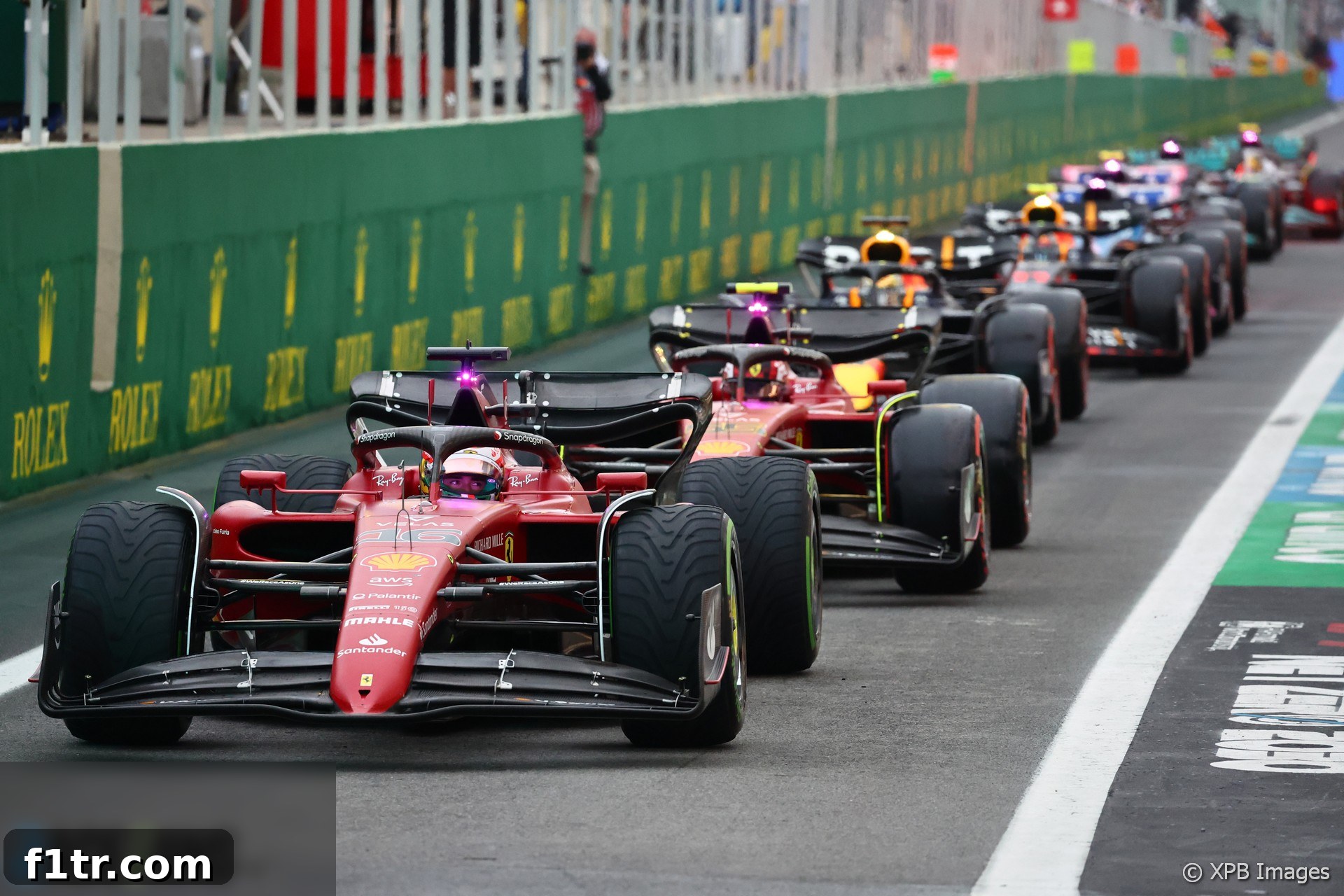
The final segment of qualifying, Q3, began with an atmosphere thick with anticipation and meteorological uncertainty. While dark clouds gathered ominously over the iconic Autódromo José Carlos Pace, the track itself remained dry. This critical detail was grasped by virtually every other team, as the remaining nine cars on the grid all opted for slick tyres, primed to exploit the fleeting dry conditions before any potential downpour. Ferrari, however, chose a different path for Leclerc, equipping his F1-75 with intermediates – a tyre compound designed for damp but not fully wet tracks.
This initial incorrect tyre choice was only the beginning of Leclerc’s woes. Realizing their mistake almost immediately, the Ferrari pit wall then made a late call to bring the Monegasque driver back in for slick tyres. However, this crucial radio message arrived just after Leclerc had passed the pit lane entrance, forcing him to complete an entire second lap on the unsuited intermediates. This delay proved catastrophic. As he finally made his way back to the pits, a red flag was deployed due to a separate incident, bringing the session to a halt. By the time Q3 resumed, the heavens had opened, and the track was genuinely wet, rendering any chance of setting a competitive lap on slicks impossible. Consequently, Leclerc finished the qualifying session 10th and last, a stark contrast to his teammate, Carlos Sainz Jnr, who made it onto the second row with slick tyres early in the session.
Mattia Binotto’s Candid Admission and the “Lottery” Analogy
Ferrari team principal Mattia Binotto did not shy away from admitting the team’s error, acknowledging that they had not made the right call for Charles Leclerc. However, he also emphasized the inherent unpredictability of such rapidly changing weather conditions, describing it as a “lottery.” Binotto highlighted how different teams and drivers experienced vastly different fortunes in the same session, illustrating his point with examples such as Kevin Magnussen’s sensational pole position for Haas, while Lewis Hamilton and Sergio Perez found themselves further down the grid in eighth and ninth respectively.
“Obviously, when you’ve got such weather conditions, it’s always a lottery,” Binotto explained, underscoring the razor-thin margin between genius and folly in such strategic decisions. “As seen by the fact that Kevin [Magnussen] was on pole or [Lewis] Hamilton eighth on the grid and [Sergio] Perez ninth. It’s proving it’s a lot.” He further elaborated on Ferrari’s specific mistake: “But we made it wrong, because certainly we were the only one on intermediate at the time and not on slicks.”
Binotto also offered a nuanced perspective, suggesting that while their decision proved incorrect on this occasion, it could have easily turned into a stroke of genius had the rain arrived just a minute or two sooner. “Now those types of mistakes I think in such a lottery situation, they always happen, and those mistakes can turn into the right decision as well. Because it’s only the weather changing that maybe a minute after wasn’t really happening [that could make the decision correct],” he said, acknowledging the fine line strategists walk in Formula 1’s most challenging conditions.
Unpacking Ferrari’s Strategic Process: A Focus on Improvement
Beyond simply admitting the mistake, Mattia Binotto stressed the importance of a thorough internal review of the decision-making process that led to such an outcome. He indicated that the team would be scrutinizing how they arrived at a strategy that saw Leclerc on intermediates while his teammate, Carlos Sainz Jnr, was on slicks, especially when the rest of the field had converged on a single choice.
“What I’m looking at is, together with the team, what’s the process that brought us to such a decision, which I think is more important rather than the decision itself,” Binotto affirmed. “Was it right or wrong? Why are we doing that when maybe others didn’t?” This focus on the “how” rather than just the “what” suggests a deeper commitment to rectifying systemic issues within the team’s strategic department, aiming to prevent similar errors from recurring in future high-pressure scenarios. The transparency in Binotto’s statements indicated a willingness to address shortcomings head-on, an essential trait for any top-tier motorsport team.
A Recurring Theme: Ferrari’s 2022 Strategy Woes
The Brazilian Grand Prix incident was, unfortunately, not an isolated event for Ferrari in the 2022 Formula 1 season. The team faced persistent criticism for its strategic calls throughout the year, often undermining strong qualifying performances and leading to lost points or potential race victories. A notable example that comes to mind is the Hungarian Grand Prix, where Charles Leclerc was leading the race comfortably in the early stages. However, a controversial decision to switch him onto the hard tyre compound proved disastrous, as the tyres failed to perform as expected, costing him a probable win.
These repeated strategic missteps put immense pressure on both the drivers and the team principal, Mattia Binotto. While Leclerc often delivered scintillating qualifying laps and strong race pace, the team’s inability to consistently execute flawless race strategies often left him vulnerable. This pattern of errors not only impacted their championship aspirations but also tested the morale and confidence within the Scuderia. In the cutthroat world of Formula 1, where every millisecond and every point counts, a strong car and talented drivers must be complemented by impeccable strategic acumen. The consistent scrutiny highlighted the need for Ferrari to refine its operational processes to match its on-track potential.
The High Stakes of F1 Qualifying: Impact on Championship Aspirations
Qualifying in Formula 1 is more than just securing a starting grid position; it’s a foundational element of a successful race weekend. A strong qualifying performance provides track position, reduces the risk of incidents in the midfield, and offers a clearer path to points or podiums. For Charles Leclerc, the tenth-place start in Brazil was a severe setback, especially in a season where he and Ferrari were challenging for both the Drivers’ and Constructors’ Championships. While their title hopes had faded by this stage of 2022, every point remained crucial for consolidating second place in the Constructors’ standings.
Strategic errors in qualifying, particularly in unpredictable conditions, carry a magnified impact. They force drivers into recovery drives, demanding more tyre management, fuel saving, and aggressive overtaking, all of which introduce additional risks. For a team like Ferrari, with its rich history and passionate fanbase, these errors weigh heavily, fueling public debate and internal pressure. The Brazilian GP blunder served as another painful reminder of how easily a promising weekend can unravel due to a single, ill-timed decision, underscoring the relentless pursuit of perfection required at the pinnacle of motorsport.
Navigating Interlagos’s Unpredictable Weather: A Constant Challenge
The Autódromo José Carlos Pace, better known as Interlagos, has a long-standing reputation for its highly changeable weather conditions. Nestled in a valley in São Paulo, the circuit is often subjected to sudden downpours and rapidly shifting cloud cover, making it a nightmare for strategists but a delight for spectators. This unpredictability has historically led to some of the most memorable and dramatic races in F1 history, where strategy calls under dynamic conditions can make or break a driver’s or team’s fortunes.
The 2022 Brazilian Grand Prix qualifying was a classic example of Interlagos showcasing its capricious nature. The threat of rain was real, but its exact timing remained elusive, creating a high-stakes guessing game for all teams. Ferrari’s decision, while ultimately proven wrong, highlights the immense pressure and split-second calculations involved. Strategists must analyze vast amounts of data, including radar forecasts, track temperature, and competitor behaviour, all while communicating effectively with their drivers. The fine line between an inspired gamble and a costly mistake is never thinner than when dealing with the ever-changing elements at Interlagos, a track where adaptability and precise execution are paramount.
Lessons Learned and the Road Ahead for Ferrari
The strategic misstep at the Brazilian Grand Prix served as a crucial, albeit painful, learning experience for Ferrari. In the aftermath of the 2022 season, the focus shifted towards a comprehensive overhaul of their operational and strategic decision-making processes. The incident underscored the vital importance of robust internal communication channels, clear protocols for handling dynamic weather scenarios, and a culture that encourages swift, data-driven adjustments rather than rigid adherence to pre-planned strategies.
For Ferrari, rebuilding confidence and demonstrating consistent, flawless execution will be key to reclaiming their position at the very top of Formula 1. The relentless pressure from their rivals and the demanding nature of the sport mean that every strategic call, every tyre choice, and every pit stop must be executed with precision. By learning from past mistakes, particularly those as conspicuous as the Interlagos Q3 blunder, Ferrari aims to fortify its strategic framework, ensuring that their formidable car and talented drivers are consistently given the best possible chance to compete for victories and championships in the seasons to come. The journey of improvement is continuous in Formula 1, and Ferrari’s commitment to dissecting and rectifying these errors is a testament to their enduring ambition.
Advert | Become a RaceFans supporter andgo ad-free
2022 Brazilian Grand Prix: Further Insights
- Ferrari’s season of missed chances led to “difficult” criticism for Binotto
- How many victory chances did Hamilton have in his first winless F1 season?
- Red Bull “never envisaged” Brazil team orders situation – Horner
- Red Bull “accept Max’s reasoning” over radio row and condemn online abuse
- Russell’s first grand prix victory means F1 has a dozen winners – for one race only
Browse all 2022 Brazilian Grand Prix articles