Daniel Ricciardo Hails Renault’s Monza Breakthrough: A Defining Moment for the Power Unit
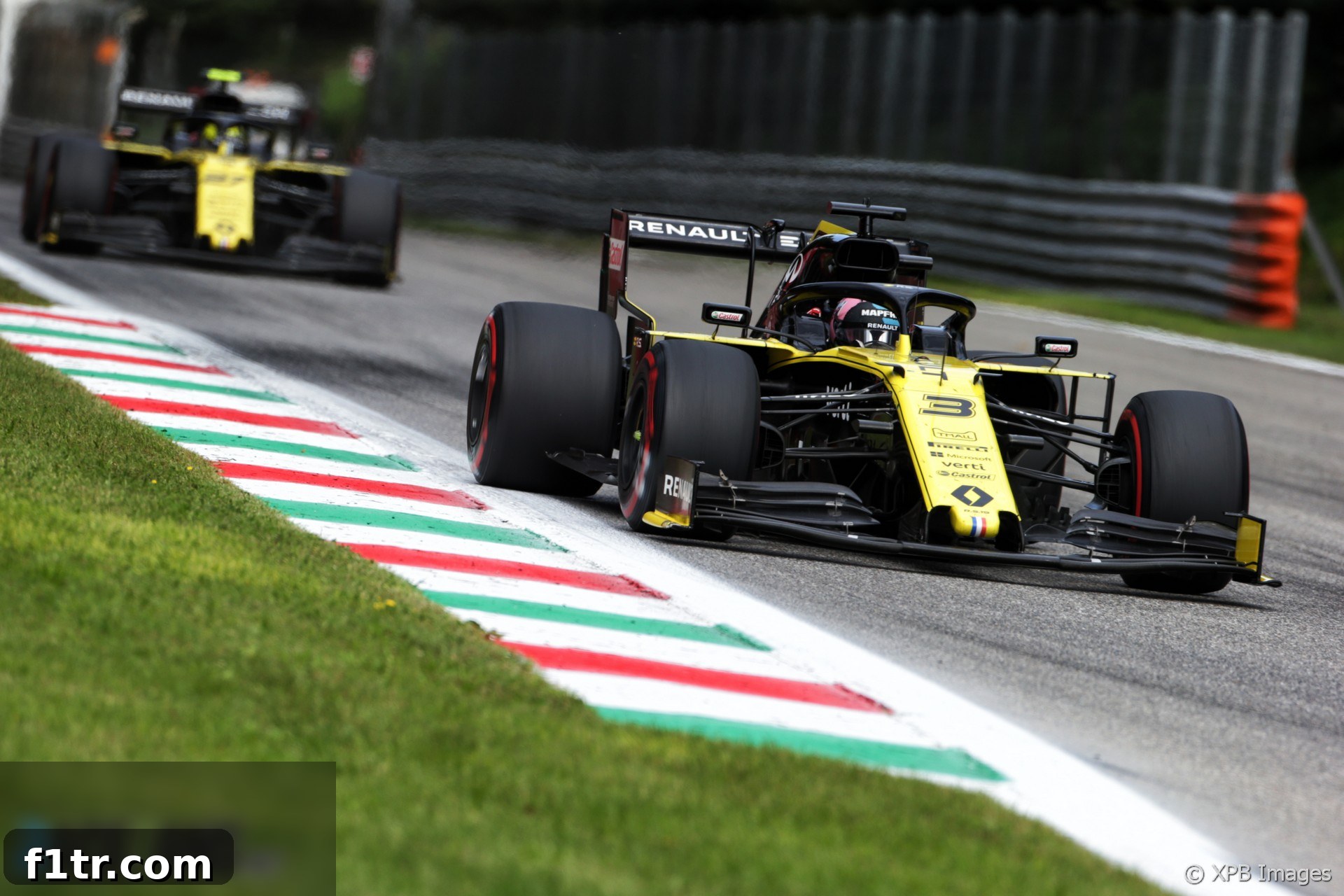
The Italian Grand Prix at Monza, a circuit renowned for its high-speed challenges and demands on power units, witnessed a remarkable resurgence for the Renault F1 Team. Driver Daniel Ricciardo, reflecting on the team’s standout performance, declared that their best result of the season – a phenomenal fourth and fifth-place finish – served as irrefutable proof of the substantial progress achieved with their power unit.
This triumphant double-points finish, with Ricciardo leading home his esteemed teammate Nico Hulkenberg, was particularly significant. Monza, historically, had been a circuit where Renault’s power unit had struggled to excel, often lacking the outright top-end speed and sustained power required for its legendary straights. The 2019 performance, however, painted a dramatically different picture, marking a pivotal moment in the team’s journey.
A Testament to Relentless Engine Development
Ricciardo was quick to lavish praise upon the dedicated engineers and technicians at Viry-Chatillon, the heart of Renault’s engine development. “I want to give an extra special shout-out to Viry [Chatillon, home of the team’s engine base], to the engine boys, because I think to get this sort of result here as a Renault team and power unit is quite a statement,” he articulated with palpable pride. His words underscored the immense effort, countless hours of dedication, and the technical ingenuity invested in transforming the power unit into a competitive force.
For years, the ‘Temple of Speed’ had been a source of apprehension for the Renault team. “Every year we come here it feels like there’s a lack of optimism,” Ricciardo openly admitted, acknowledging the team’s past struggles at the iconic Italian venue. The low-downforce nature of the track, combined with its long straights, traditionally exposed any weaknesses in engine performance, making previous visits to Monza challenging and often disheartening for Renault-powered cars.
However, the 2019 season brought a profound shift. The significant gains made in engine development allowed Renault to not only compete but to genuinely threaten the established front-runners on a circuit where they were least expected to shine. “Obviously the last few years it was never a strength of ours coming here. For them to turn it around this year and make the gains and put on this result here is special. I think this one is for them, they definitely deserve a glass of champagne tonight.” This heartfelt sentiment encapsulated the sheer emotional weight of the achievement, highlighting the deep satisfaction and vindication felt by everyone involved in the engine program.
An Overdue Triumph and Renewed Confidence
Ricciardo candidly described the emphatic result as “overdue” for the team, hinting at the underlying pressure and anticipation for such a breakthrough performance. “I’m very happy with the weekend,” he stated, reflecting on a comprehensively executed race. “A bit like Canada, we executed the qualifying result into a strong race result. I felt this one was a bit overdue. It was really [not] since Canada we had a strong team result. But we finally got maximum points, if you know what I mean, and that’s really pleasing.”
The comparison to the Canadian Grand Prix, another circuit with significant power demands, underlined a pattern of improving performance on tracks where engine output is paramount. However, Monza’s unique history for Renault made this result particularly sweet. The ability to qualify strongly and then convert that into a dominant race performance, securing a double-points finish, showcased not just raw speed but also improved reliability, strategic acumen, and operational efficiency from the entire team. This combination of factors delivered what Ricciardo rightly called “maximum points” for the team, a crucial haul that energized their championship aspirations.
Shifting Dynamics in the Constructors’ Championship
Beyond the immediate euphoria, the Monza result carried significant implications for Renault’s position in the fiercely contested Constructors’ Championship. This strong points haul allowed the team to significantly close the gap to McLaren, their primary rival in the battle for fourth place. The fight for constructor positions often comes with substantial financial rewards and bragging rights, making every point invaluable. The morale boost and tangible progress demonstrated at Monza injected fresh impetus into Renault’s pursuit of McLaren, setting the stage for an exciting conclusion to the season.
The strategic importance of outperforming key rivals cannot be overstated. A robust performance in the constructors’ standings not only validates the investment in the F1 project but also helps attract and retain top talent and commercial partners. Renault’s consistent progress, punctuated by results like Monza, reinforced their long-term commitment to F1 and their ambition to return to the sport’s pinnacle.
The Road Ahead: Consistency Across Diverse Circuits
While celebrating the Monza success, Daniel Ricciardo also looked ahead, acknowledging the next challenge: translating this newfound performance into consistent results across a variety of circuit layouts. “Hopefully we can learn something from these low downforce circuits and take it into a high downforce one like Singapore,” he remarked, highlighting the demanding nature of Formula 1 where a car must perform optimally in vastly different aerodynamic and mechanical configurations.
Monza, with its long straights and fast corners, requires a specific car setup focused on straight-line speed and efficient aero in low-downforce trim. Singapore, in stark contrast, is a high-downforce, street circuit demanding maximum grip, precise handling through tight turns, and excellent braking performance. The ability to adapt the car and power unit to such disparate requirements is a true test of a team’s engineering prowess. Ricciardo’s call for learning from Monza and applying those lessons to high-downforce tracks underscored Renault’s broader ambition to develop a truly versatile and competitive package.
The journey from a mid-pack contender to a consistent front-runner is arduous, requiring continuous innovation in aerodynamics, chassis design, and, critically, power unit development. The Monza result provided a significant confidence boost and a clear data point demonstrating the advancements made. The focus now shifted to extracting similar levels of performance and reliability from the RS19 and its power unit across the remaining races, proving that Monza was not an anomaly but a true indicator of their upward trajectory.
A New Chapter for Renault in Formula 1
In essence, the 2019 Italian Grand Prix marked a significant milestone for the Renault F1 team. It was a race where years of hard work, engineering dedication, and strategic perseverance culminated in a defining performance. Daniel Ricciardo’s powerful drive, complemented by Nico Hulkenberg’s strong support, delivered an overdue and emotionally charged result. It wasn’t just about the points; it was about the statement, the confidence, and the tangible proof that Renault’s power unit, and indeed the entire team, was making genuine and impactful progress in the hyper-competitive world of Formula 1. This result fueled their ambition and set a new benchmark for their capabilities, pointing towards a brighter future for the Enstone-based outfit.
2019 F1 Season Articles
- Ocon’s Emotional Melbourne Experience in 2019
- McLaren Racing’s Financial Performance in 2019
- Kvyat Reflects on His Hockenheim Podium
- FIA’s New Fuel Flow Meter and Ferrari’s Strategy
- Key Moments from ‘Drive to Survive’ Season Two
Browse all 2019 F1 season articles