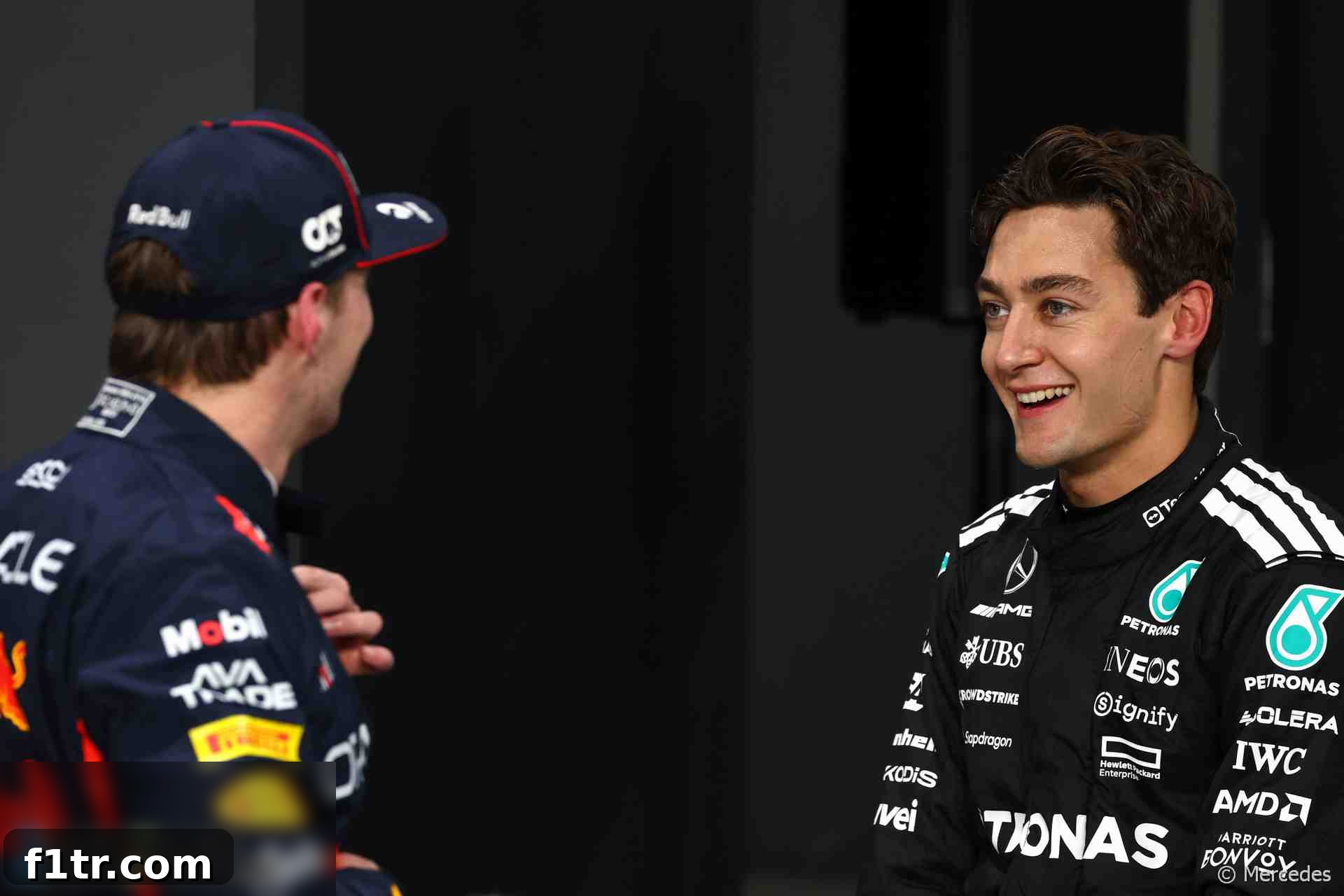
In the high-stakes world of Formula 1, where every tenth of a second and every strategic decision can mean the difference between triumph and defeat, driver contracts are more than mere agreements; they are statements of intent. As the current season unfolds, one of the grid’s standout performers finds himself in a fascinating, yet potentially precarious, position: George Russell, a driver who has consistently delivered for Mercedes-AMG Petronas F1 Team, remains without a confirmed contract for the upcoming season. This situation has ignited a fervent debate across the motorsport community, centering on whether Mercedes should swiftly secure their rising star or keep their options open for a seismic shift in the driver market.
George Russell’s performance this year has been nothing short of exceptional, establishing him as one of Formula 1’s most consistent and promising talents. He has rarely dipped outside the top five in race finishes, accumulating a commendable trio of podium appearances. With a significant points tally, he sits within striking distance of the championship lead, a testament to his skill and the potential of the Mercedes W16 package. Should the engineers at Brackley manage to extract even a fraction more performance from their car, Russell could very well emerge as a dark horse contender in the title fight. His dedication, analytical approach, and seamless integration into the team culture have made him an invaluable asset. While rookie Andrea Kimi Antonelli is showing promising signs in the other Mercedes seat, it is Russell who is consistently setting the benchmark, accumulating the lion’s share of the team’s points and demonstrating true leadership qualities.
Given Russell’s undeniable contributions and stellar form, many observers believe it’s time for Mercedes team principal Toto Wolff to solidify his future with a long-term contract extension. Yet, an undeniable shadow looms large over these negotiations – a shadow cast by the sport’s reigning superstar, Max Verstappen. Red Bull Racing, Verstappen’s current team, has experienced a notable erosion of its once-dominant performance edge over the past year. Compounding this, Red Bull is embarking on an ambitious and potentially risky venture: building their own power unit for the first time, coinciding with Formula 1’s sweeping new technical regulations set to debut next year. This unprecedented challenge introduces an element of uncertainty that could ripple through the team.
Adding fuel to the speculative fire, Red Bull motorsport consultant Helmut Marko has publicly hinted at the possibility of Verstappen departing the team before his current contract expires, should certain performance targets not be met. This declaration has sent shockwaves through the paddock, creating an intoxicating mix of anticipation and strategic maneuvering. For Mercedes, this presents a monumental dilemma: Should they maintain a glimmer of hope for the four-time world champion, leaving the door ajar for a driver widely considered the most formidable competitor on the grid? Or should they demonstrate unwavering faith in George Russell, the talented driver whose career they have meticulously nurtured since he joined their junior squad eight years ago?
The Argument For Retaining Russell
Proponents of a swift contract extension for George Russell argue that pinning Mercedes’ hopes on Max Verstappen’s availability is a strategic misstep, bordering on fantasy. The consensus within the F1 community is that Verstappen’s departure from Red Bull is highly improbable, and even if he were to seek a new challenge, Mercedes might not be his primary destination. Verstappen is renowned for his shrewd career management and a deep understanding of organizational consistency – a factor he would prioritize heavily. The difficulties faced by Lewis Hamilton in adapting to a new environment at Ferrari, for instance, serve as a stark reminder of the complexities involved in relocating, even for a seasoned champion. Verstappen understands that his unparalleled championship success at Red Bull is intrinsically linked to the cohesive environment and focused priority the team has built around him. Breaking away from that meticulously crafted ecosystem would be a monumental decision, not to be taken lightly.
Furthermore, if Verstappen were genuinely inclined to explore other avenues, Aston Martin appears to be a far more plausible suitor than Mercedes. At the Silverstone-based outfit, Verstappen would have the tantalizing prospect of reuniting with Adrian Newey, widely revered as Formula 1’s greatest technical designer, whose innovative genius could unlock unparalleled car performance. Additionally, a potential reunion with Honda, the engine manufacturer with whom he forged a highly successful and harmonious partnership during Red Bull’s championship years, would undoubtedly be a significant draw. The existing synergy and proven track record with both Newey and Honda could offer a compelling and less disruptive transition for Verstappen, making Aston Martin a more natural fit if he were to seek change.
From Mercedes’ perspective, Russell has performed magnificently this year, leaving no logical justification for his replacement. His consistent points scoring, mature race management, and ability to extract performance from a sometimes-challenging car underscore his value. Given the remote prospects of securing Verstappen, the most sensible and rewarding path for Mercedes is to demonstrate their confidence in Russell through a well-deserved contract extension. Such a move would not only secure a top-tier talent for the future but also provide a crucial confidence boost to a driver who is clearly on an upward trajectory, poised to lead the team into a new era.
The Argument Against Rushing Russell’s Extension
While George Russell’s talent and potential are undeniable – he is undoubtedly a top-drawer, race-winning driver with the capability to contend for world championships – a crucial question remains: has he truly proven himself under the unique and relentless pressure of a full-blown world championship fight? His career has seen moments of brilliance, but the sustained, week-in, week-out intensity required to battle for a title against the likes of Verstappen is a different beast entirely. This is where Max Verstappen presents an almost irresistible proposition. Verstappen is not merely a proven champion; he is a formidable competitor unlike any other in Formula 1’s current era. His prowess extends beyond extreme speed and ruthless wheel-to-wheel racing; he possesses an almost singular, unyielding determination to win at all costs, a mental fortitude that translates into an unparalleled competitive edge.
Some critics might raise questions about whether Verstappen’s highly individualistic and dominant approach would seamlessly integrate into a team not specifically cultivated around him over nearly a decade, as Red Bull has been. His demand for absolute control and tailored car characteristics could potentially disrupt existing team dynamics. However, such concerns, though valid, do not diminish Mercedes’ desire to bring a driver of Verstappen’s caliber into their fold. Even if the chances appear remote, the strategic imperative of pursuing the sport’s benchmark talent is undeniable. The mere possibility of securing a driver of Verstappen’s proven championship pedigree offers a tantalizing prospect that any top team would be remiss to ignore. His presence guarantees not just speed, but a winning mentality that permeates an entire organization.
Perhaps this season will be the crucible where Russell finally proves himself as a genuine title contender, showcasing the mental resilience and consistent performance needed under peak pressure. In the interim, however, Mercedes’ calculated pursuit of Max Verstappen, whether genuine or a strategic play, makes perfect sense from a competitive standpoint. It allows them to maintain leverage in the driver market, potentially unsettling rivals while simultaneously holding out for the ultimate prize. This waiting game is not a slight against Russell’s abilities but rather a testament to the extraordinary nature of Verstappen’s talent and the relentless ambition of a team like Mercedes, always striving for the absolute best possible outcome in their quest for championship glory.
Expert Analysis and Outlook
Mercedes biding their time over whether to launch a full-scale bid for Max Verstappen is a strategically sound maneuver, particularly if it contributes to an atmosphere of uncertainty and speculation within the Red Bull camp. The psychological warfare inherent in Formula 1’s driver market can be as impactful as on-track performance, and keeping rivals guessing about potential high-profile transfers can yield significant dividends. However, it is also crucial to temper expectations regarding Verstappen’s ultimate destination. While the allure of Mercedes is undeniable, Aston Martin appears to be a likelier eventual home for the Dutch superstar, should he decide to leave Red Bull.
This potential move might not materialize as early as next year, but a transition around 2027 seems more plausible. By then, Fernando Alonso would have likely completed the final year of his current contract, and Verstappen would have had ample opportunity to thoroughly assess the performance and reliability of Red Bull’s inaugural self-developed power unit. The success or failure of Red Bull’s engine project for the new regulations will be a pivotal factor in Verstappen’s long-term commitment to the team. Should the new power unit fall short of expectations, or prove unreliable, a shift to a team like Aston Martin, potentially with Newey and Honda components, would become an even more attractive proposition.
From George Russell’s perspective, the prolonged wait for a contract extension undoubtedly places him in an uncomfortable spotlight, potentially giving the impression that Mercedes lacks complete faith in his capabilities. This perceived hesitancy could be unsettling for any driver. However, the pragmatic reality of the current Formula 1 driver market is that Russell is unlikely to have significantly better offers on the table from rival top teams that could provide a clearer path to championship contention. From Mercedes’ vantage point, therefore, there isn’t an immediate need to rush negotiations. They hold a strong negotiating position, knowing Russell’s ambition aligns perfectly with their own.
Ultimately, despite the strategic gamesmanship and the tantalizing possibility of a Verstappen transfer, the most probable outcome is that Mercedes will re-sign George Russell. His consistent performance, dedication, and integral role in the team’s future development make him an indispensable asset. While the team may prefer for speculation to remain centered on Max Verstappen for the immediate future, leveraging the uncertainty to their advantage and perhaps even driving a harder bargain in their negotiations, their commitment to Russell as a cornerstone of their long-term strategy remains evident. He is, after all, the driver they have groomed for this very role, and his continued presence is vital for stability and future success as F1 approaches its next era of technical regulations.
Your Voice in the Debate
The contract saga surrounding George Russell and the looming shadow of Max Verstappen present a captivating dilemma for Mercedes, a situation that encapsulates the blend of sporting ambition, strategic maneuvering, and high-stakes negotiation inherent in Formula 1. The team’s decision will undoubtedly have profound implications not just for the drivers involved, but for the competitive landscape of the sport in the years to come. While our analysis points towards a probable re-signing of Russell, the intricacies of the F1 driver market always leave room for surprises.
Earlier, a significant poll was conducted among fans, asking if Mercedes should extend George Russell’s contract into 2026. The results were clear: a strong majority of voters expressed their agreement, highlighting the widespread support for Russell and belief in his future with the team. Only a small percentage held no opinion, indicating the passionate engagement of the fanbase on this critical issue. We encourage you to cast your own vote in future polls and share your insights in the comments section below, contributing to the vibrant discussion that defines our community.
Engage with fellow fans and offer your perspective on this pivotal decision. Should Mercedes reward Russell’s current form with a definitive long-term deal, or is the strategic waiting game for a generational talent like Verstappen a risk worth taking?
Further Debates and Polls
- What must Formula 1 fix with its new rules – and what should it leave unchanged?
- ADUO: Do F1 teams who fall behind deserve to get help to catch up?
- F1 is considering doubling its sprint races. Do you want more or fewer?
- Will this be a fight or a rout? 20 questions for the 2026 Formula 1 season
- Which Formula 1 team has the best-looking car – and the worst – for the 2026 season?
Browse all debates and polls