Formula 1’s Interlagos Controversy: Unpacking the Hamilton DRS and Verstappen Parc Fermé Incidents
The 2021 Formula 1 season was defined by intense rivalry, and the Sao Paulo Grand Prix at Interlagos provided one of its most dramatic and contentious chapters. Following Friday’s qualifying session, two amateur videos quickly circulated on social media, offering crucial, often conflicting, insights into the unfolding saga involving Lewis Hamilton’s Mercedes W12 and the actions of his championship rival, Max Verstappen. These incidents thrust the FIA stewards into a high-pressure situation, demanding decisions that could profoundly impact the direction of the championship.
Hamilton’s Mercedes and the DRS Dimension Breach
The first video brought to light a significant technical compliance issue concerning Lewis Hamilton’s Mercedes W12. It showed the car undergoing a routine inspection, specifically focusing on its Drag Reduction System (DRS). The regulations are unequivocally clear: when the DRS flap is fully open, the gap between the lower and upper planes of the rear wing must not exceed 85 millimetres. This seemingly minor measurement is critical, as even a fraction of a millimetre can significantly influence aerodynamic performance, particularly on long straights where DRS is deployed to reduce drag and increase top speed.
The footage visibly suggested that Hamilton’s car failed this crucial test. The inspection method involves placing a standardised measurement disc between the two wing surfaces. If the disc passes through, the gap is within limits; if it doesn’t, or if the gap is too large, it indicates a potential breach. In Hamilton’s case, the gap appeared to be larger than the allowed maximum. Crucially, the same meticulous test was conducted on 13 other competing cars, including that of Hamilton’s teammate, Valtteri Bottas, and Max Verstappen’s Red Bull, all of which successfully passed the stringent technical scrutiny.
FIA Technical Delegate Jo Bauer, responsible for ensuring cars comply with the sport’s complex technical regulations, promptly issued a notification to the stewards. His report explicitly stated that “the requirement for the maximum of 85mm… [was] not fulfilled” for Hamilton’s W12. This formal notification immediately triggered a summons for a Mercedes representative to attend a hearing with the stewards, initiating a formal investigation into the suspected technical infringement. At this juncture, the situation appeared dire for Hamilton, with a clear breach of a fundamental technical regulation making the outcome seem, as many observers noted, an “open-and-shut” case.
Max Verstappen’s Controversial Parc Fermé Action
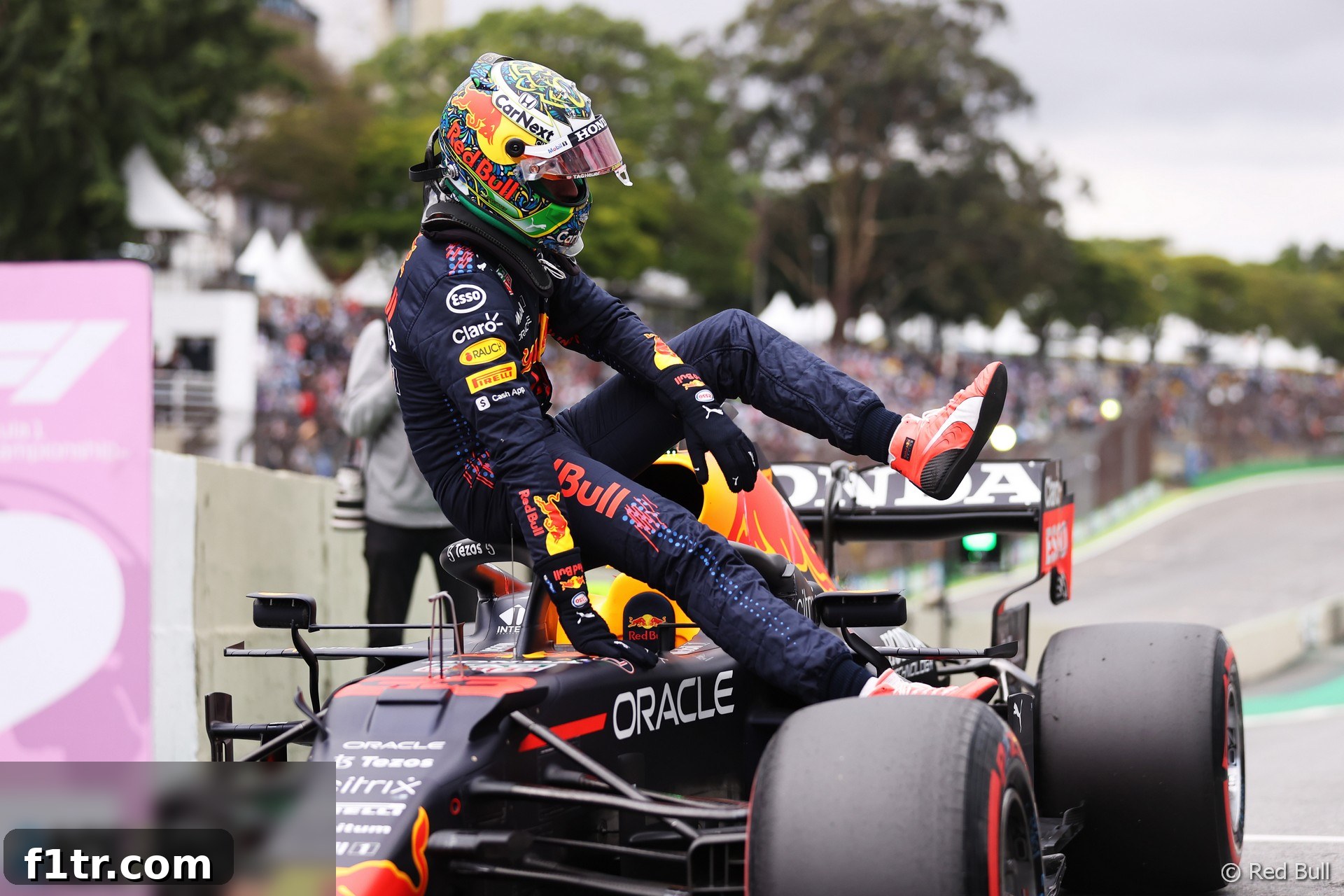
Just as the initial incident pointed towards a straightforward penalty for Hamilton, a second piece of footage from the track dramatically altered the narrative, introducing a stunning new twist and drawing Hamilton’s primary championship rival, Max Verstappen, directly into the escalating controversy. While television cameras focused on Hamilton celebrating his pole position for the upcoming sprint qualifying race with his Mercedes team, a less public but equally significant event unfolded.
Verstappen, instead of heading straight to his team, was observed closely examining the rear wing of his own car before proceeding to scrutinise that of his competitor, Lewis Hamilton. Drivers taking the opportunity to study rival machinery at close quarters is a common, almost traditional, practice in Formula 1. Legends like Michael Schumacher were known for this, and in more recent years, Sebastian Vettel earned the nickname ‘Inspector Seb’ for his meticulous post-session observations. However, Verstappen’s actions on this occasion transcended mere visual inspection.
The critical point of contention arose when Verstappen physically touched first his own car’s rear wing, and then, crucially, Hamilton’s. This seemingly innocuous act, captured on video, quickly became the focal point of a new FIA investigation. Consequently, the stewards summoned Verstappen for an “alleged breach of article 2.5.1 of the International Sporting Code.” This article governs the highly restricted environment of parc fermé, a critical area designed to ensure fair play and prevent tampering with the cars after qualifying or races, before they undergo final technical checks or are prepared for the next session.
Article 2.5.1 represents a fundamental pillar of racing regulations, extending its reach far beyond Formula 1 to various motorsport categories globally. Its core purpose is unequivocally clear and self-evident: to prevent any unauthorised interference with the competitors’ machines between the time they complete a session and when they are declared fully legal and returned to the teams under controlled conditions. This rule is paramount for maintaining the integrity and fairness of the sport, ensuring that no advantage can be gained through illicit modifications or adjustments outside of authorised procedures.
The specific wording of the rule Verstappen was accused of breaking reads: “Inside the parc ferme, only the officials assigned may enter. No operation, checking, tuning or repair is allowed unless authorised by the same officials or by the applicable regulations.” Verstappen’s physical interaction with Hamilton’s car, without explicit authorisation, directly contravened this strict regulation. This violation raised immediate questions about its potential impact on the earlier DRS inspection and, more broadly, on the integrity of the parc fermé system.
An Intertwined Web: The Stewards’ Complex Dilemma
A critical development in this unfolding drama was the stewards’ decision to suspend the Hamilton investigation until the following day. This suspension was explicitly made “as they await further evidence that will not be available until the morning.” Coincidentally, Verstappen was scheduled to meet with the stewards at 9:30 am the next day regarding his parc fermé breach. This raised a crucial question: was the outcome of the Hamilton investigation now directly contingent upon what Verstappen would disclose or explain during his hearing? The initial “open-and-shut” technical breach had morphed into a far more intricate and ethically challenging case for the FIA officials.
The stewards were now faced with ruling on a case that had become significantly more complicated than it first appeared. Initially, the outlook for Hamilton was bleak. A breach of technical regulations, such as an illegal DRS, typically carries severe penalties, most commonly exclusion from the qualifying session. This would force a back-of-the-grid start for the sprint qualifying race. Furthermore, any progress Hamilton might make in the sprint would then be compounded by a pre-existing five-place grid penalty for an engine change, pushing him even further back for the main Grand Prix. The prospect of replacing the problematic rear wing also loomed, which itself could constitute a parc fermé breach, potentially forcing a pit lane start for the sprint or even the main race.
Conversely, Verstappen stood to gain significantly from Hamilton’s misfortune. He would likely inherit pole position for the sprint qualifying race, putting him in a prime position to secure a maximum haul of 29 points from the weekend (sprint points + race points + fastest lap). Hamilton, under such circumstances, would be fortunate to salvage a handful of points from the lower end of the top 10, creating a massive swing in the championship battle in Verstappen’s favour.
However, with Verstappen’s actions now seemingly intertwined with Hamilton’s investigation, the potential consequences became far less predictable. The stewards had to deliberate whether either driver, neither, or indeed both, would face penalties. This unprecedented situation forced them to consider the interplay between a potential technical infringement and an alleged breach of sporting conduct.
It is easy to understand the stewards’ potential hesitation to penalise Mercedes for a technical infringement on a component that had been physically touched by a rival driver before the official post-session technical checks were fully completed. This scenario directly undermines the very purpose of parc fermé rules, which are designed to protect the cars from external interference and ensure the integrity of the inspection process. If a rival’s actions could potentially compromise a technical component, it introduces a layer of doubt that the stewards cannot ignore. Moreover, the fact that only one of the two Mercedes W12s failed the DRS inspection – despite any potential subtle differences in specification between the two cars – could also strengthen Mercedes’ argument that the issue was not a systemic design flaw but perhaps an isolated mechanical failure, or even, hypothetically, exacerbated by external contact.
Should Verstappen be found to have transgressed Article 2.5.1, there is very little precedent for how such a specific type of violation—touching a rival’s car in parc fermé—might be treated. Past breaches of sporting conduct have ranged from financial penalties to sporting sanctions. For instance, Verstappen himself received a ‘public service’ penalty for his previous transgression in the Interlagos pit lane in 2018, when he shoved Esteban Ocon after a collision. The stewards needed to determine whether his current action warranted a similar, perhaps more severe, sporting sanction, or merely a financial one, weighing the symbolic importance of parc fermé integrity against the severity of the act itself.
The FIA stewards were therefore faced with a pair of incredibly difficult decisions, made all the more complex by the knowledge that the outcome could have a decisive impact on one of the most hotly contested Formula 1 world championships in recent memory. The balance of fairness, sporting integrity, and championship implications lay heavily on their shoulders.
The “Inspector Max” Revelation: Red Bull’s Prior Knowledge?
Beyond the immediate disciplinary implications, the “Inspector Max” video proved fascinating for another, more strategic reason: it strongly suggested that Red Bull Racing, even before the FIA’s official technical inspection of Hamilton’s rear wing, had suspicions about its legality. Verstappen’s deliberate actions – first checking his own car, then directly moving to examine Hamilton’s – indicated that he, or his team, knew precisely what they were looking for.
This raises a crucial question: what triggered those suspicions? In the hyper-competitive world of Formula 1, teams employ sophisticated tracking and analysis tools. They scrutinise competitor onboard footage, utilise high-speed cameras positioned around the track, and deploy advanced aerodynamic analysis software to understand every nuance of rival performance. It is plausible that Red Bull had observed Hamilton’s Mercedes displaying unusually high top speeds or a particularly effective DRS activation on the Interlagos straights, leading them to suspect a potential technical anomaly with the rear wing’s legality. This proactive intelligence gathering underscores the relentless pursuit of competitive advantage in Formula 1, where every millimetre and every rule interpretation can spell the difference between victory and defeat.
Link to tweet by Ada06Mese
Peguei o Max conferindo as asas ao final do Qualy. pic.twitter.com/QY8gr66ujO
— Frederico Monteiro (@frd182) November 12, 2021
Further Coverage of the 2021 Sao Paulo Grand Prix
- Red Bull and Mercedes summoned to FIA hearing on review of Sao Paulo incident
- McLaren must “get back to scoring the results that are on the table” – Seidl
- Hamilton makes his second-biggest climb to victory from 10th on the grid
- F1 releases missing video footage from Verstappen’s car of Hamilton incident
- How Alonso and Ocon “pushed team tactics to the ultimate limit” to delay Gasly
Browse all 2021 Sao Paulo Grand Prix articles