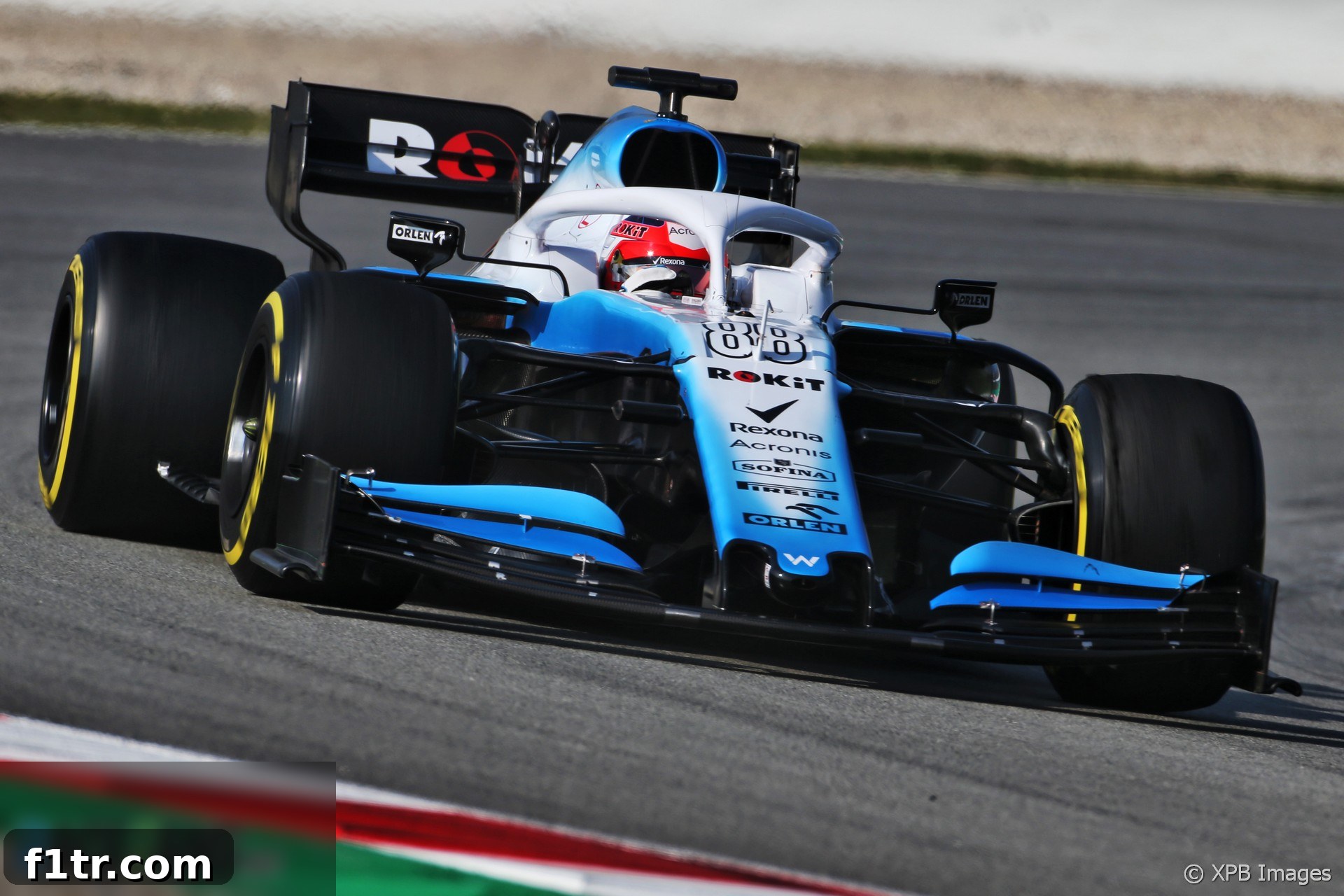
Robert Kubica, the veteran Polish driver making a highly anticipated return to Formula 1, expressed a blend of frustration and admiration as his Williams team navigated a tumultuous start to pre-season testing. Despite significant delays that saw their FW42 chassis hit the track five days later than planned, Kubica lauded the extraordinary effort of his crew in rapidly assembling the car under immense pressure.
Advert | Become a Supporter & go ad-free
Williams FW42’s Delayed Debut: A Rocky Start to F1 Pre-Season Testing
The highly anticipated 2019 Formula 1 pre-season testing session in Barcelona, Spain, began on a challenging note for Williams Racing. While competitors racked up hundreds of laps, gathering crucial data and refining their new machinery, the Grove-based outfit was conspicuously absent for the first two days. The team’s brand-new FW42 car finally made its track debut on the third day of testing, a full five days behind its intended schedule. This significant setback immediately put Williams on the back foot, costing them invaluable preparation time ahead of the demanding 2019 F1 season.
“It’s not ideal but it looks like I learned that in life nothing can be ideal,” Kubica remarked, reflecting on the situation. His pragmatic outlook, honed through years of experience and overcoming immense personal challenges, underscored the gravity of the team’s predicament. Despite the clear disadvantage, Kubica was quick to acknowledge the monumental effort made by the Williams mechanics and engineers to get the car running. “We have what we have and I think still the team did a good job to bring and to build up the car in probably five times shorter time than normally should be. So we have to have big respect.”
Kubica’s Candid Assessment: Understanding the Root Causes of Delay
While praising the dedication of the crew, Kubica also emphasized the critical need for an internal review to prevent future occurrences. The loss of precious track time in Formula 1 pre-season testing can have far-reaching consequences for a team’s championship campaign. “But on the other hand, we have to understand what happened because [we lost] in the end four days or three days,” he stated, highlighting the urgency of identifying and addressing the root causes behind the production delays. This introspection is crucial for Williams, a team that had already faced significant performance challenges in recent seasons.
For Robert Kubica himself, this delayed start carried additional weight. His return to Formula 1 after an eight-year absence due to a rally crash injury is one of the sport’s most compelling storylines. Every lap on track is vital for him to re-acclimatize to the physical and mental demands of modern F1 machinery, especially as he partners with rookie sensation George Russell. Handing the car over to Russell for the remainder of the day, Kubica admitted that the testing disruptions had severely hampered his personal preparations for the opening round of the season, the Australian Grand Prix.
“Definitely we cannot talk [if] I did prepare something for Australia. I’m in the same situation as I was one month ago, three months ago,” Kubica revealed, underscoring the lack of targeted development and setup work he had been able to complete. “So this week it was more about getting something done for the team which was a big challenge to bring the car first and now we are here it’s more about preparing the car for next week.” This stark admission illustrates the pressure on Williams to simply get their new FW42 car functioning reliably, rather than focusing on performance optimization – a luxury most other teams had already enjoyed for days.
Advert | Become a RaceFans supporter andgo ad-free
Limited Laps, Immense Challenge: The Impact on Driver Preparation
The limited running time meant that Kubica’s initial experience with the FW42 was far from comprehensive. “It doesn’t feel like day four of testing,” he added, “it felt like day one. So I get the opportunity for 12 laps to get a feel of the car which is of course limiting. But at least most of the stuff we achieved, not all, it wasn’t an easy morning.” Twelve laps in a modern Formula 1 car during pre-season testing is an incredibly small sample size. To put this into perspective, many teams often complete over 100 laps in a single day, allowing drivers to conduct long runs, evaluate tire degradation, test various setup configurations, and push the car to its limits. For Kubica, those 12 laps were more of a shakedown than a proper test session, providing only the most rudimentary understanding of the new car’s characteristics.
Kubica’s arrival at the circuit on Friday, ahead of the team’s initially planned filming day last weekend, only heightened the anticipation and subsequent frustration. “I never waited so long to get the 12 laps I could drive my own pace,” he quipped, a testament to his eagerness to get back behind the wheel. While admitting he has faced similar situations in the past – “Well actually I did some tests in the past where I was on the track for two days and I [didn’t] jump the car so it’s not the first time situation for me” – the context of his F1 comeback amplifies the significance of every lost minute on track.
The FW42’s Evolving State: Missing Parts and Compromises
Adding another layer of complexity to Williams’s pre-season challenges, Kubica candidly admitted that the FW42 was still missing some vital components. This suggests that the car that finally took to the track was not yet in its complete, optimal specification, likely due to the rush to get it built. “You can get a feel of where it is,” he said, offering a glimmer of positivity. “It’s not like the car is completely off.” This indicates that despite the compromises, the fundamental design might hold some promise, although its true potential remains elusive without its full complement of parts and extensive testing.
However, Kubica remained tight-lipped about the specifics of these missing elements, reiterating his role as a driver. “I think there is still something to put on the car, probably not a lot but there are for sure things which were compromised. But it is not right that I talk about them.” This professional deference highlights the sensitive nature of team development and the need to maintain internal discretion, especially when a team is under such intense scrutiny. His priority, he emphasized, is to focus on what he can control: driving the car to the best of his ability and providing valuable feedback to the engineers.
“I’m here for driving so I have to concentrate on this,” he affirmed. “Finally I have a car so hopefully next week we can concentrate on preparing better for our first race because it is very close.” The hope now lies in the upcoming second week of pre-season testing, where Williams will desperately need to maximize track time to bridge the gap created by their initial delays. The clock is ticking towards the Australian Grand Prix, and every minute spent on track will be critical for both drivers – Kubica and Russell – to build confidence, understand the FW42’s behavior, and provide the engineers with the data necessary to fine-tune the car for competitive performance. Williams’s path to recovery this season promises to be one of the most compelling narratives in Formula 1.
Advert | Become a RaceFans supporter andgo ad-free
2019 F1 season
- Crying in the Melbourne car park at 2019 grand prix was my career low – Ocon
- McLaren Racing reports reduced £71 million loss in 2019
- Kvyat: Hockenheim podium last year was “my biggest achievement” so far
- How the FIA’s new encrypted fuel flow meter targets Ferrari’s suspected ‘aliasing’ trick
- “He smashed my office door”: 23 must-see moments from ‘Drive to Survive’ season two
Browse all 2019 F1 season articles