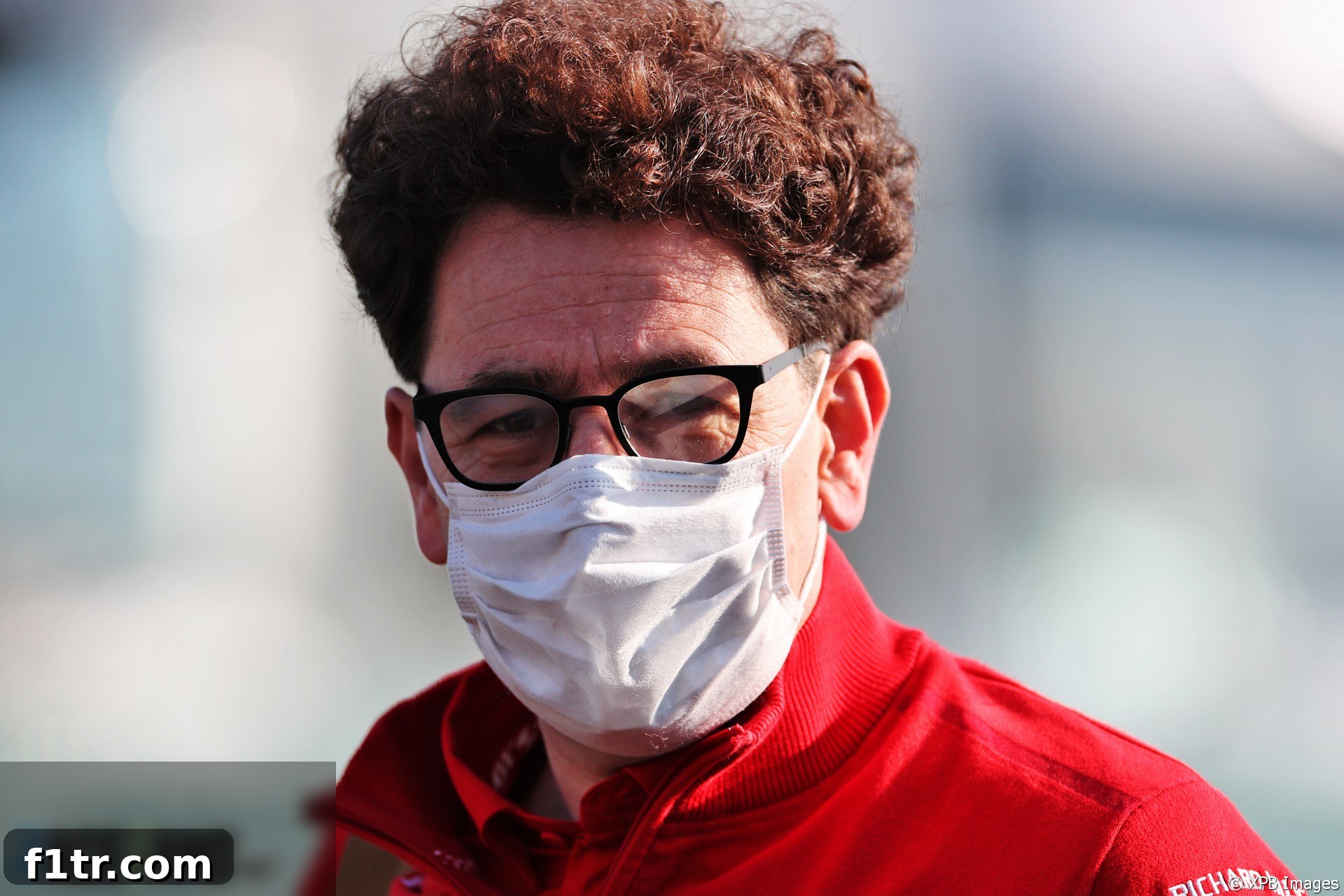
In a pivotal moment for their championship aspirations, Ferrari has confirmed a strategic shift, heavily reallocating development resources towards the significantly overhauled 2022 Formula 1 season. Team Principal Mattia Binotto indicated that while minor refinements might still appear on this year’s car, the focus has predominantly moved to designing a competitive challenger under the radical new technical regulations set to debut next year. This forward-looking approach reflects a calculated gamble, prioritizing future success over incremental gains in the current campaign, a decision influenced by both the team’s improved 2021 performance and the unique regulatory landscape.
Formula 1 Insights: Strategic Shifts & Financial Maneuvers
Ferrari’s Ambitious Leap: Prioritizing 2022 Development Since Early Season
Advert | Become a Supporter & go ad-free
With the Formula 1 landscape on the brink of its most significant transformation in decades, teams are grappling with the immense challenge of resource allocation. The 2022 F1 season will introduce a completely revised set of technical regulations, designed to promote closer racing and greater competitive parity. This overhaul necessitates a complete redesign of the cars, from their aerodynamic philosophy to suspension architecture, making it a critical juncture for every constructor on the grid.
Adding layers of complexity to this strategic balancing act are two revolutionary financial and sporting regulations. Firstly, the introduction of a stringent budget cap fundamentally reshapes how teams operate, compelling them to make tough choices about where every dollar is spent. No longer can the wealthiest teams outspend their rivals with endless development cycles; efficiency and smart design are now paramount. Secondly, the aerodynamic development handicap system, known as the Aerodynamic Testing Restrictions (ATR), offers a lifeline to teams that finished lower in the previous year’s Constructors’ Championship. This system grants them more wind tunnel and CFD (Computational Fluid Dynamics) time, providing a crucial advantage in catching up to the front-runners.
Speaking after the exhilarating Emilia-Romagna Grand Prix, Ferrari Team Principal Mattia Binotto articulated the Scuderia’s clear long-term vision. Having endured a challenging 2020 season, which saw them finish a disappointing sixth out of ten teams, Ferrari has shown promising signs of recovery in the early stages of 2021. Binotto expressed satisfaction with the progress made, noting strong correlations between their simulator data and real-world performance. This positive assessment has provided the confidence needed to commit substantial resources to the 2022 project. Crucially, finishing sixth last year means Ferrari benefits significantly from the ATR system, affording them more development hours than a majority of their direct rivals, a factor undoubtedly influencing their early switch.
Binotto elaborated on their strategy, stating, “I think the car for 2021 is where we were expecting, so good correlations with our data, which is great.” He then confirmed the aggressive timeline: “Is it time to switch to 2022? We already switched from January. So the team is already focussed on next year. We will have still some development on 2021 but that’s not our priority.” This declaration underscores Ferrari’s determination to return to championship contention, leveraging the unique regulatory environment to build a strong foundation for future seasons. It’s a bold move, sacrificing potential short-term gains for what they hope will be a triumphant return to the top echelon of Formula 1. The challenge lies in ensuring that minimal 2021 development doesn’t lead to a significant drop in current performance, thereby maintaining momentum while building for a brighter future.
McLaren Technology Centre Sold: A Strategic Financial Maneuver for Long-Term Stability
In a significant financial move aimed at bolstering its long-term stability and injecting capital for future investments, McLaren Group has successfully completed a sale-and-leaseback agreement for its iconic headquarters. This landmark deal, valued at £170 million over a 20-year term, includes the distinctive McLaren Technology Centre (MTC), the operational heart of its Formula 1 team and automotive division. Global Net Lease (GNL), a leading real estate investment trust, confirmed its acquisition of the state-of-the-art facility yesterday.
The McLaren Technology Centre, designed by the renowned architect Sir Norman Foster, is not just an office building; it is a symbol of McLaren’s innovation, engineering excellence, and aspirational brand identity. Its futuristic design and sprawling campus in Woking, Surrey, have become synonymous with cutting-edge technology and motorsport success. GNL CEO James Nelson praised the acquisition, describing the Norman Foster-designed building as a “world-class facility” and precisely “the type of mission-critical, net-leased properties that make up the GNL portfolio.” This sentiment highlights the MTC’s intrinsic value and strategic importance to McLaren’s operations, even under new ownership.
For McLaren, the sale-and-leaseback arrangement offers a crucial financial lifeline, providing a substantial cash injection without disrupting their day-to-day operations. This strategic decision comes as McLaren Group, like many entities in the automotive and motorsport sectors, has navigated significant financial pressures exacerbated by the global pandemic. The funds generated from this transaction are expected to be reinvested into McLaren’s core businesses, including its Formula 1 team, which has shown remarkable resurgence in recent seasons, and its high-performance road car division. This move ensures that McLaren maintains its operational independence and continues to drive innovation, while securing the necessary capital to compete effectively in the highly competitive worlds of F1 and luxury automotive manufacturing. It represents a pragmatic approach to asset management, transforming a tangible asset into liquid capital that can fuel growth and competitive advantage in a fiscally constrained era of motorsport.
Advert | Become a RaceFans supporter andgo ad-free
Social Media Pulse: Voices from the F1 World
Catch up on some of the notable conversations and insights from prominent figures across Twitter, Instagram, and other social media platforms:
Those were the days 🙏🏾 pic.twitter.com/UKh1JJEzcU
— Lewis Hamilton (@LewisHamilton) April 20, 2021
Lewis Hamilton, ever reflective of his illustrious career, shared a nostalgic glimpse into his past, reminding fans of the journey that led him to become a seven-time world champion. These moments of reflection often resonate deeply with fans, highlighting the human element behind the sporting titan and inspiring many with his dedication and perseverance.
Another driver congratulating ‘the boys’ for their work yesterday when they literally have a female strategist – it’s getting tiring
— Claire Cottingham (@Cla_Cottingham) April 19, 2021
Motorsport journalist Claire Cottingham sparked an important discussion on social media, drawing attention to the persistent use of gender-specific language in Formula 1, particularly when drivers thank “the boys” after a race. Her tweet highlighted the growing frustration among those advocating for greater inclusivity and recognition of the diverse talent, including women, working tirelessly behind the scenes in F1 teams. It serves as a timely reminder for the sport to evolve its language and practices to truly reflect and celebrate the contributions of all its personnel, fostering a more inclusive environment.
- Find more official F1 accounts to follow in the F1 Twitter Directory, connecting you directly with the pulse of the paddock.
Essential Reading: Motorsport News & Analysis
Dive deeper into the latest developments and expert analyses across the world of motor racing:
F1 teams will meet to finalise sprint race details (Speedcafe)
“The FIA and all 10 Formula 1 teams are expected to meet tomorrow to discuss the final details relating to the proposed introduction of sprint races.” The prospect of sprint races has ignited considerable debate among fans, teams, and drivers alike. This proposed format aims to inject more excitement into Grand Prix weekends by featuring a shorter race on Saturday to determine the grid for Sunday’s main event. Discussions center not only on the sporting aspects – how points will be awarded, the impact on championship strategies – but also on crucial financial considerations, especially in the era of the budget cap. Teams are particularly keen to iron out details regarding potential cost allowances for crash damage during these additional competitive sessions, a critical factor for smaller outfits operating on tight margins.
- Reports suggest a $600,000 budget cap break for crash damage in ‘Sprint Qualifying’ races, indicating the financial implications are a major point of contention and negotiation.
Brundle: The promise of an F1 battle for the ages and Imola’s Russell-Bottas crash (Sky)
“I agree with the stewards that it was largely a racing incident given the track conditions. I can’t see any blame for Bottas, and Russell needs to carefully consider if he should have seen the peril unfolding, backed out and waited for a less risky move, and also how he behaved after the shunt with his words and actions.” Martin Brundle, a respected voice in Formula 1, offers his insightful perspective on the dramatic collision between George Russell and Valtteri Bottas at the Emilia-Romagna Grand Prix. The incident, which resulted in significant damage to both cars and a red flag, sparked intense debate. Brundle’s analysis aligns with the stewards’ decision, classifying it largely as a racing incident attributable to the treacherous, damp track conditions. However, he also provides a nuanced critique of Russell’s decision-making and his subsequent conduct, urging the young Briton to reflect on anticipating potential risks and managing emotions in the aftermath of high-stakes racing situations. Such incidents highlight the fine line between aggressive racing and avoidable collisions, especially when championship points and reputations are on the line.
We always endeavour to credit original sources and provide diverse perspectives on the latest F1 news. If you have a tip for a link relating to single-seater motorsport to feature in the next RaceFans round-up, please send it in via our contact form. Your contributions help keep our community informed and engaged.
Advert | Become a RaceFans supporter andgo ad-free
Fan Insights: The Great Restart Debate at Imola
The Emilia-Romagna Grand Prix delivered plenty of drama, not least during the Safety Car periods and subsequent restarts. User @Stefmeister weighed in on why a rolling restart was arguably the more judicious choice over a standing start last weekend, offering two compelling reasons:
The bigger reason not to do a standing start for me wouldn’t so much have been the damp patches on the run to Tamburello, but more the damp patches on the grid. You would have had some drivers starting on a dry spot and others on a damp spot which would likely have resulted in a good chunk of the grid been severely disadvantaged.
@Stefmeister
Stefmeister’s observation highlights a critical safety and fairness concern. While the dampness on the approach to Tamburello was indeed a factor, the varying conditions across the actual grid slots presented an even greater challenge. A standing start under such mixed conditions could have led to a lottery, with some drivers gaining unfair traction advantages from drier patches while others struggled on wet tarmac. This scenario not only compromises competitive integrity but also significantly increases the risk of multiple collisions off the line, especially with the high power of modern F1 cars. Rolling restarts, in contrast, allow for a more controlled resumption of racing, minimizing these variables and ensuring a safer and more equitable restart for all competitors, particularly crucial after a lengthy Safety Car period following a major incident like the Russell-Bottas crash.
Happy Birthday to Our Fellow F1 Enthusiasts!
A very special happy birthday goes out to Vincent, The Kef, Cyberaxiom, and Dylan Mota! We hope you have a fantastic day filled with celebration and all things Formula 1.
If you’d like a birthday shout-out in our next round-up, be sure to tell us when yours is via the contact form or by adding to the list here. We love celebrating with our community!
On This Day in Motorsport History
- 30 years ago today, Arie Luyendyk, a renowned figure in open-wheel racing, secured victory in the third round of the CART IndyCar series at the challenging Phoenix oval, triumphing over Bobby Rahal. This marked a significant moment in the highly competitive IndyCar championship, showcasing Luyendyk’s skill on the demanding oval circuits that are a hallmark of American single-seater racing history.