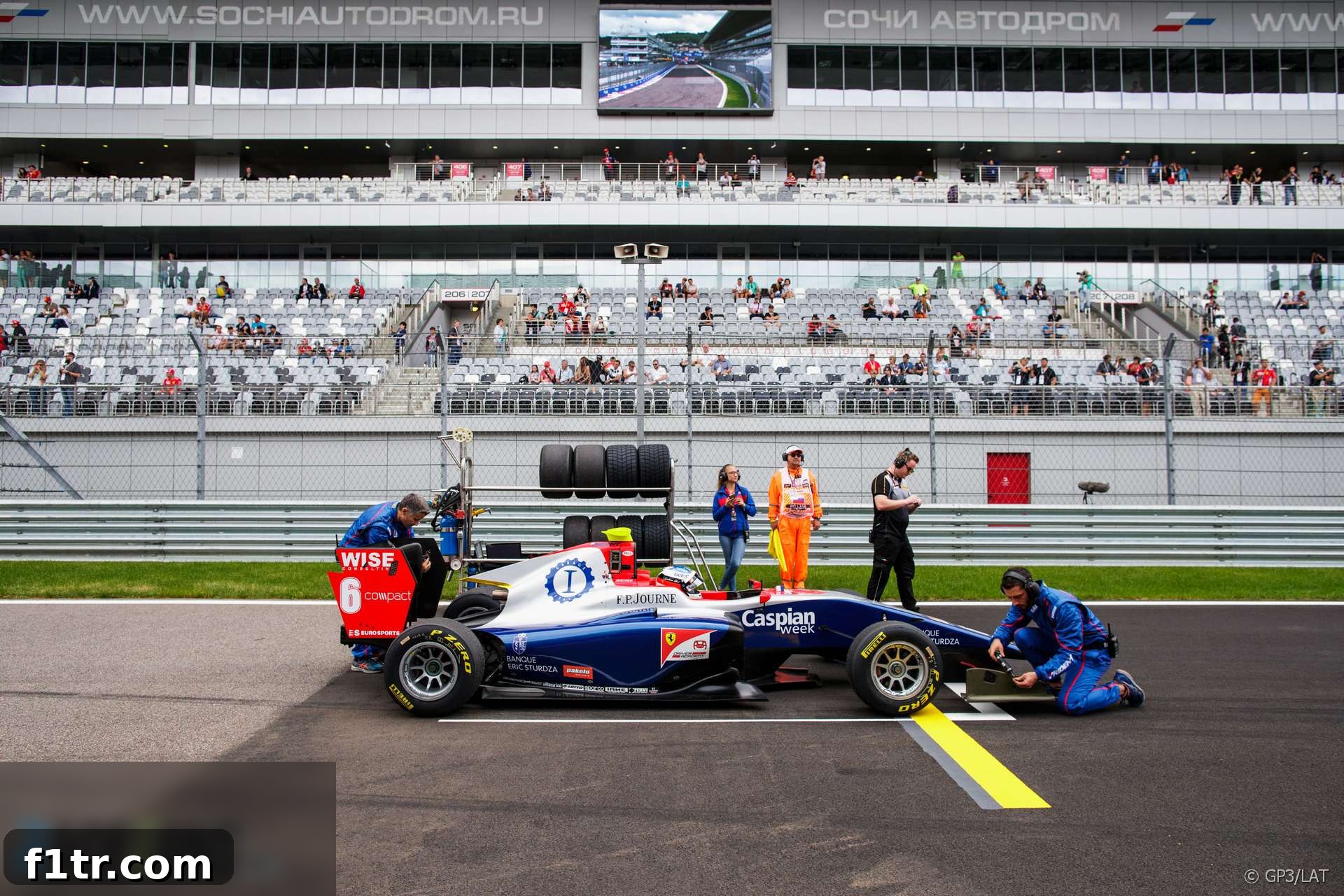
Sebastian Vettel Criticizes Partial Resurfacing of Sochi Grid, Raising Concerns Over Fair Play
Formula 1 drivers and fans alike are buzzing with debate following the controversial partial resurfacing of the starting grid at the Sochi Autodrom ahead of the Russian Grand Prix. While seemingly a minor maintenance detail, the decision to lay new tarmac on only the first three grid slots has ignited a discussion about competitive fairness and the integrity of the race start. Leading the chorus of criticism is four-time world champion Sebastian Vettel, who has openly stated that the practice is “wrong.”
The newly laid tarmac spans only the prime starting positions, where the two Mercedes drivers and Vettel himself will begin Sunday’s race. This localized change means that these drivers will benefit from a potentially higher grip surface, while the remaining seventeen cars will start on the older, more worn track. The implications of this differential grip level are a significant talking point, as even a fraction of a second’s advantage at the start can drastically alter the outcome of the race.
Vettel, known for his staunch views on sportsmanship and consistency, was unequivocal in his assessment. “I think the grip should be a bit higher,” he conceded, acknowledging the potential benefit for those starting on the fresh surface. However, his core objection lies not in the existence of new tarmac, but its selective application. “But I think it’s wrong to resurface just a bit, whether that’s positions one, two, three, or four, five, six, eight, nine, ten, it doesn’t matter,” he elaborated, emphasizing the principle of equal conditions for all competitors. “If you resurface something of the grid you should resurface everything. But it is what it is.” His comments highlight a fundamental expectation within motorsport: that every driver should face the same conditions at the start of a race, ensuring a level playing field from the moment the lights go out.
The Principle of Parity: Why a Level Playing Field Matters
In a sport as intensely competitive as Formula 1, where milliseconds separate triumph from defeat, every detail is scrutinized. The starting grid is arguably one of the most critical elements of a race weekend. A strong start can propel a driver several positions up the field, dictating their strategy and confidence for the entire grand prix. Conversely, a poor start due to unforeseen grip issues can ruin a driver’s chances before the first corner.
The resurfacing of only a segment of the grid directly contravenes the widely accepted principle of parity. It introduces an uncontrolled variable that could arbitrarily favor certain drivers. While the exact advantage of the new tarmac remains to be seen, the very possibility of an unfair edge is what vexes drivers and purists. Sebastian Vettel’s frustration stems from this perceived compromise of competitive integrity. His argument is simple yet profound: if maintenance is required, it should be applied uniformly to maintain fairness for all 20 cars on the grid. This isn’t just about personal gain or loss, but about upholding the spirit of competition that defines Formula 1.
Valtteri Bottas’s Cautious Outlook: An Unknown Advantage?
Pole sitter Valtteri Bottas, who stands to benefit directly from starting on the new surface, offered a more measured perspective. While acknowledging the general tendency for new tarmac to offer improved grip, he also pointed out the inherent uncertainties. “Usually new Tarmac tends to have a bit more grip but also it depends on the type of Tarmac,” Bottas explained. His cautious optimism reflects the scientific nuances of track surfaces. Different asphalt mixes can behave differently, and factors like curing time, temperature, and prior track activity can all influence grip levels.
Bottas emphasized that the true impact would only be revealed during the race start. “We’ve been only driving around that part of the track in non-grip-limited conditions, so flat-out. We’ll find out tomorrow how it’s going to affect.” This statement underscores the fact that practice and qualifying laps, often completed at high speed with minimal tire slip, don’t fully simulate the intense demands of a standing start, where drivers are pushing their tires and engines to the absolute limit for maximum acceleration. The dynamic forces and wheelspin associated with a race launch on varying surfaces could present an unpredictable challenge for all involved.
The Science of the Start: Grip, Tyres, and Torque
A Formula 1 start is a meticulously choreographed ballet of power, precision, and grip. Drivers manage thousands of horsepower through delicate clutch control and throttle input, aiming to find the perfect balance between maximum acceleration and avoiding wheelspin. The coefficient of friction between the tyre compound and the track surface is paramount. A higher coefficient of friction, typically associated with newer, less worn tarmac, allows the tyres to transmit more torque to the ground before breaking traction, resulting in a quicker getaway.
Conversely, a lower grip surface can cause excessive wheelspin, leading to slower acceleration and potentially losing positions. The differential grip on the Sochi grid creates a complex scenario. Drivers on the new tarmac might find immediate traction, while those on the older asphalt might struggle, requiring more delicate throttle application to avoid spinning their wheels. This not only affects their launch but could also create dangerous situations in the congested run down to the first corner, as cars accelerate at different rates. The FIA and local organizers have a responsibility to ensure these variables are minimized, guaranteeing the safest and fairest environment for all competitors.
Implications for Race Strategy and Safety
Beyond the immediate advantage, the differential grip could influence race strategies. Teams might factor in potential gains or losses at the start when planning their tire choices or pit stop windows. More significantly, it introduces an element of unpredictability that could heighten the risk of incidents in the notoriously tight opening laps of a Formula 1 race. Uneven acceleration across the grid could lead to unexpected convergences of cars, increasing the chances of contact and collisions.
For the organizers of the Russian Grand Prix and the governing body, the FIA, such decisions warrant careful consideration. While track maintenance is essential for safety and performance, how it is executed can have profound competitive consequences. The incident at Sochi serves as a reminder of the delicate balance required to ensure that Formula 1 remains a contest of driver skill and engineering prowess, free from unintended external influences that could skew the outcome.
Looking Ahead: The Race Day Verdict
As the lights prepare to go out for the Russian Grand Prix, all eyes will be on the starting grid. The performance of the cars on the partially resurfaced tarmac, and how it compares to those on the older surface, will be one of the most talked-about aspects of the opening lap. Will those starting in the first three positions truly gain a noticeable advantage? Will the uneven conditions lead to a chaotic start?
Sebastian Vettel’s criticism, while firm, also carries an underlying acceptance of the current situation: “But it is what it is.” This pragmatic acknowledgment reflects the reality that once the decision is made, drivers must adapt. However, the conversation initiated by his remarks will undoubtedly resonate throughout the paddock and among fans, prompting questions about best practices for track maintenance and the consistent application of rules in the pursuit of fair and exhilarating motorsport. The Sochi Grand Prix will not only be a test of speed and strategy but also a live experiment in the dynamics of partial grid resurfacing.
Stay Connected with the Latest Formula 1 Insights
Never miss a moment of the action or a critical development from the world of Formula 1. Join our community and get exclusive updates, in-depth analysis, and breaking news delivered straight to you.
- Like Us on Facebook for Daily F1 News
- Follow Us on Twitter for Live Race Coverage and Updates
- Subscribe to Our Newsletter for Exclusive Email Content
Explore More Formula 1 Seasons & Topics
Dive deeper into the rich history and ongoing drama of Formula 1 with our extensive archive of articles, analysis, and race reports. From iconic seasons to technical deep dives, there’s always more to discover.
- Classic F1 Races: Relive Legendary Moments
- Driver Rivalries: The Battles That Defined Eras
- F1 Technical Insights: Understanding the Engineering Marvels
- Circuit Analysis: Exploring the World’s F1 Tracks
- F1 Regulations: How Rules Shape the Sport
Browse all 2018 F1 season articles and beyond