Lewis Hamilton Champions Formula 1’s Ambitious Drive to Net Zero Emissions
Formula 1 superstar Lewis Hamilton has emerged as a vocal proponent and influential figure in the sport’s groundbreaking commitment to achieve “net zero” carbon emissions. The seven-time world champion is not merely endorsing the target; he is actively involved in high-level discussions, working closely with F1’s leadership to strategize how he can best leverage his global platform to amplify and promote Formula 1’s profound dedication to environmental sustainability.
As an athlete known for his passionate advocacy beyond the racetrack, Hamilton has made environmental causes a cornerstone of his public discourse and personal lifestyle. His fervent belief in a sustainable future for motorsport aligns perfectly with the modern direction of Formula 1 under Liberty Media. He views this initiative as not just a necessity but a crucial step for the sport’s long-term relevance and ethical standing in a world increasingly conscious of climate change.
Hamilton’s Proactive Engagement with F1 Leadership
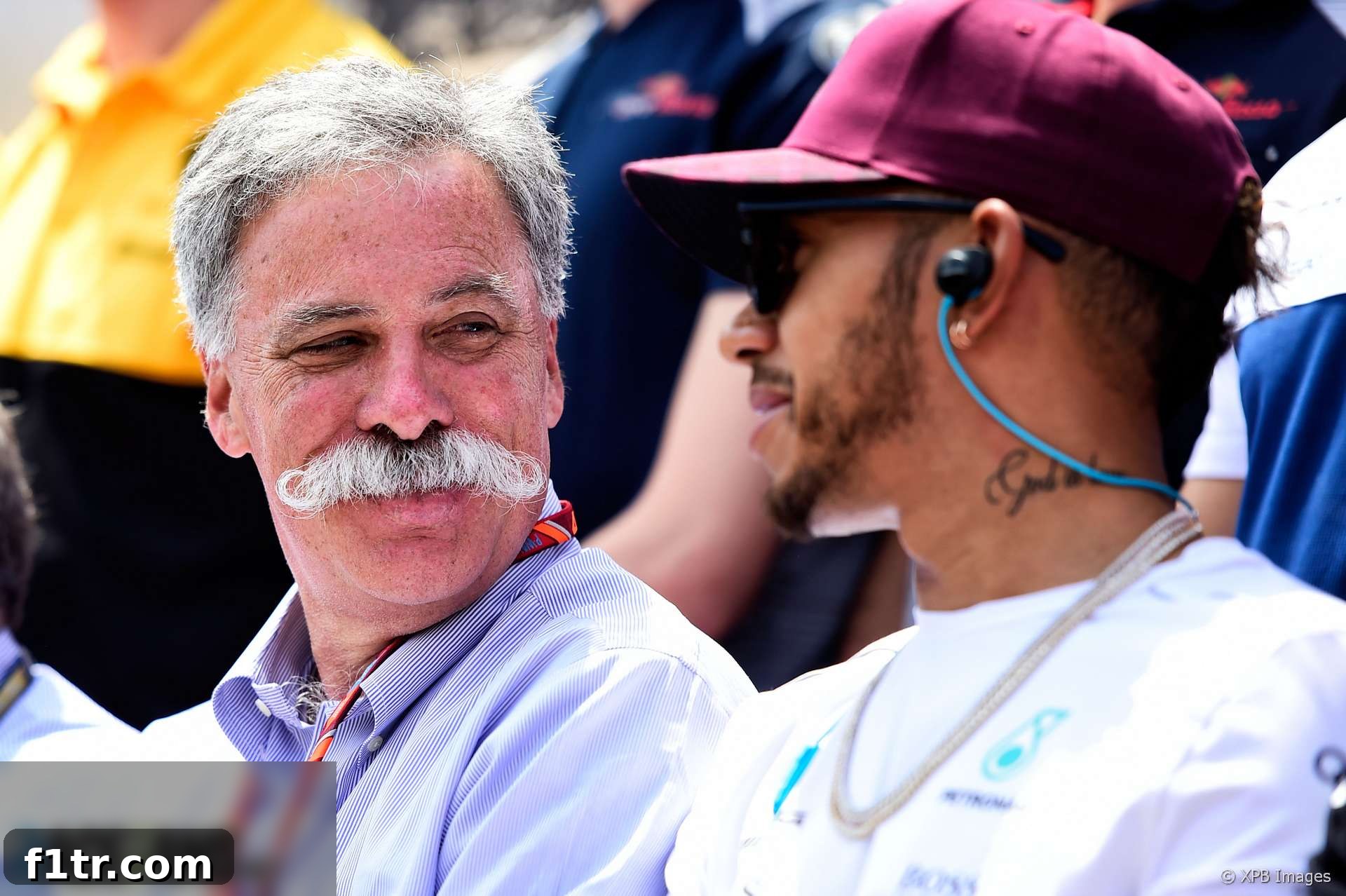
The Mercedes driver’s commitment goes beyond mere lip service. Hamilton has confirmed ongoing discussions with Formula 1 CEO and Chairman, Chase Carey, regarding his potential role in spearheading and promoting these vital environmental initiatives. Their dialogue underscores a shared vision for a greener future for the sport, signaling a significant cultural shift within Formula 1.
“I definitely am open to working with Chase and with his team and the FIA,” Hamilton stated, emphasizing his readiness to collaborate at the highest levels. “I’ve been talking to Chase for two, three years saying that we’ve got to do something. We’ve not quite yet figured out what that role is, but it’s something in that area.” This sentiment highlights a sustained effort on Hamilton’s part to instigate change, even before the official announcement of the net-zero target, demonstrating his deep-seated conviction.
Hamilton’s unique position as one of the most recognizable and respected athletes globally provides an unparalleled opportunity to bridge the gap between elite motorsport and broader environmental consciousness. His involvement lends significant credibility and public visibility to Formula 1’s ambitious goals, encouraging both fans and stakeholders to embrace the transition.
A New Era: Liberty Media’s Vision Versus Past Regimes
The current focus on sustainability marks a distinct departure from Formula 1’s past. Hamilton has previously articulated his satisfaction with Liberty Media’s ownership, noting their progressive approach compared to the sport’s previous leadership. He publicly stated that the former F1 chief, Bernie Ecclestone, showed little to no interest in making the sport more sustainable. This change in governance has proven to be a pivotal factor in enabling Formula 1 to embark on such an ambitious environmental agenda.
Under Liberty Media, Formula 1 has redefined its priorities, moving beyond solely commercial interests to embrace social responsibility and environmental stewardship. This strategic shift reflects a broader global trend where major corporations and sports leagues are increasingly held accountable for their ecological footprint. By committing to net zero, Formula 1 aims not only to mitigate its own impact but also to inspire technological innovation and promote sustainable practices across its vast global ecosystem.
The Indispensable Role of Investment and Collaboration
Achieving a net-zero target by 2030 is an monumental undertaking, requiring substantial financial commitment and concerted effort from all parties involved. Hamilton firmly believes that the sport possesses the necessary resources to reach this ambitious goal, provided the investment is made strategically and effectively. “It’s not like they’ve got a lack of money to make the changes,” he asserted, pointing to the financial health of Formula 1 as a key enabler.
The scale of Formula 1’s global operations – encompassing races across continents, complex logistics, and advanced manufacturing – necessitates significant capital investment in green technologies, sustainable infrastructure, and innovative operational changes. This includes everything from developing advanced sustainable fuels for the cars themselves to overhauling the supply chain and event management practices.
Beyond financial input, the active participation of all ten competing teams is paramount. Hamilton highlighted his own team, Mercedes, as being fully committed to the sustainability journey. “I think the teams have to also be willing to participate. I know my team, Mercedes, is. I’ve not heard or read about Ferrari or any of the other teams, particularly, but maybe they are also with it,” he commented. This emphasizes that while some teams may be more vocal, a collective buy-in is essential for the initiative to succeed.
The competitive nature of Formula 1 means that sustainable practices could also become a new arena for innovation and a differentiator for team brands. Teams that embrace environmental responsibility early could gain a significant advantage in public perception and attract new partnerships. “They need to be on the same journey because it’s going to take the whole of the sport to make the change,” Hamilton concluded, underscoring the necessity of unity.
Operational Strictness and Implementable Solutions
Transitioning to net zero will require Formula 1 to be “really strict” in curbing the waste and emissions generated across its vast operations, according to Hamilton. This strictness will extend to various facets, including energy consumption at event venues, waste management at circuits, the environmental impact of fan travel, and the immense logistical footprint of transporting cars, equipment, and personnel around the globe. Implementing these changes, Hamilton believes, should be a straightforward process, particularly for new venues.
For circuits joining the Formula 1 calendar in the future, the integration of sustainability mandates can be embedded from day one. “When you go to all these different countries, particularly the ones the new ones that they’re bringing onto the circuit, [it’s] super easy for them to implement already in a contract to say from day one this is what we’re going to [do to] be sustainable,” he explained. This proactive approach allows for the design and construction of new facilities with sustainability at their core, from renewable energy sources to advanced waste recycling systems.
For existing circuits, while the transition may be more complex, Hamilton is optimistic about their ability to adapt. “For the other ones, they’ve got plenty of time to make change, particularly for the following years. So I don’t see why it won’t happen,” he added. This acknowledges the practical challenges of retrofitting existing infrastructure but also highlights the ample timeframe leading up to the 2030 target, allowing for phased improvements and investment.
The Broader Impact: F1 as a Catalyst for Change
Formula 1’s commitment to net-zero emissions extends far beyond the confines of the racetrack. As a global technological showcase, the sport possesses immense potential to drive innovation in sustainable technologies that can have broader societal benefits. The development of advanced sustainable fuels, for instance, could revolutionize not only motorsport but also the aviation and automotive industries, offering viable alternatives to fossil fuels.
Moreover, the rigorous demands of Formula 1 often accelerate research and development. This pursuit of efficiency and performance in a sustainable context can lead to breakthroughs in energy recovery systems, lightweight materials, and logistics optimization that find applications in other sectors. By setting a high bar for environmental performance, Formula 1 can inspire other sports leagues, events, and industries to re-evaluate their own ecological footprints and accelerate their journey toward sustainability.
Lewis Hamilton’s fervent advocacy and active participation reinforce the notion that environmental responsibility is no longer an optional add-on but an integral component of modern sports and business. His voice, combined with the strategic vision of Liberty Media and the regulatory power of the FIA, positions Formula 1 as a potential leader in the global fight against climate change, proving that high-octane excitement and environmental consciousness can indeed coexist.
Conclusion: A Sustainable Future for the Pinnacle of Motorsport
The journey towards net-zero carbon emissions by 2030 represents Formula 1’s most ambitious environmental challenge yet. With influential figures like Lewis Hamilton championing the cause, and a clear strategic direction from Liberty Media and the FIA, the sport is poised to transform its operations and impact significantly. The emphasis on investment, unified team participation, and stringent implementation demonstrates a serious commitment to this goal.
As Formula 1 embraces this sustainable future, it not only safeguards its own long-term viability but also sets a powerful example for other global industries. Hamilton’s unwavering dedication serves as a testament to the fact that even at the pinnacle of motorsport, environmental stewardship is a non-negotiable imperative. The coming years will undoubtedly showcase Formula 1’s innovation not just in speed, but in its profound commitment to a greener, more sustainable world.