Charles Leclerc Accuses Max Verstappen of Yellow Flag Infraction at Mexican Grand Prix
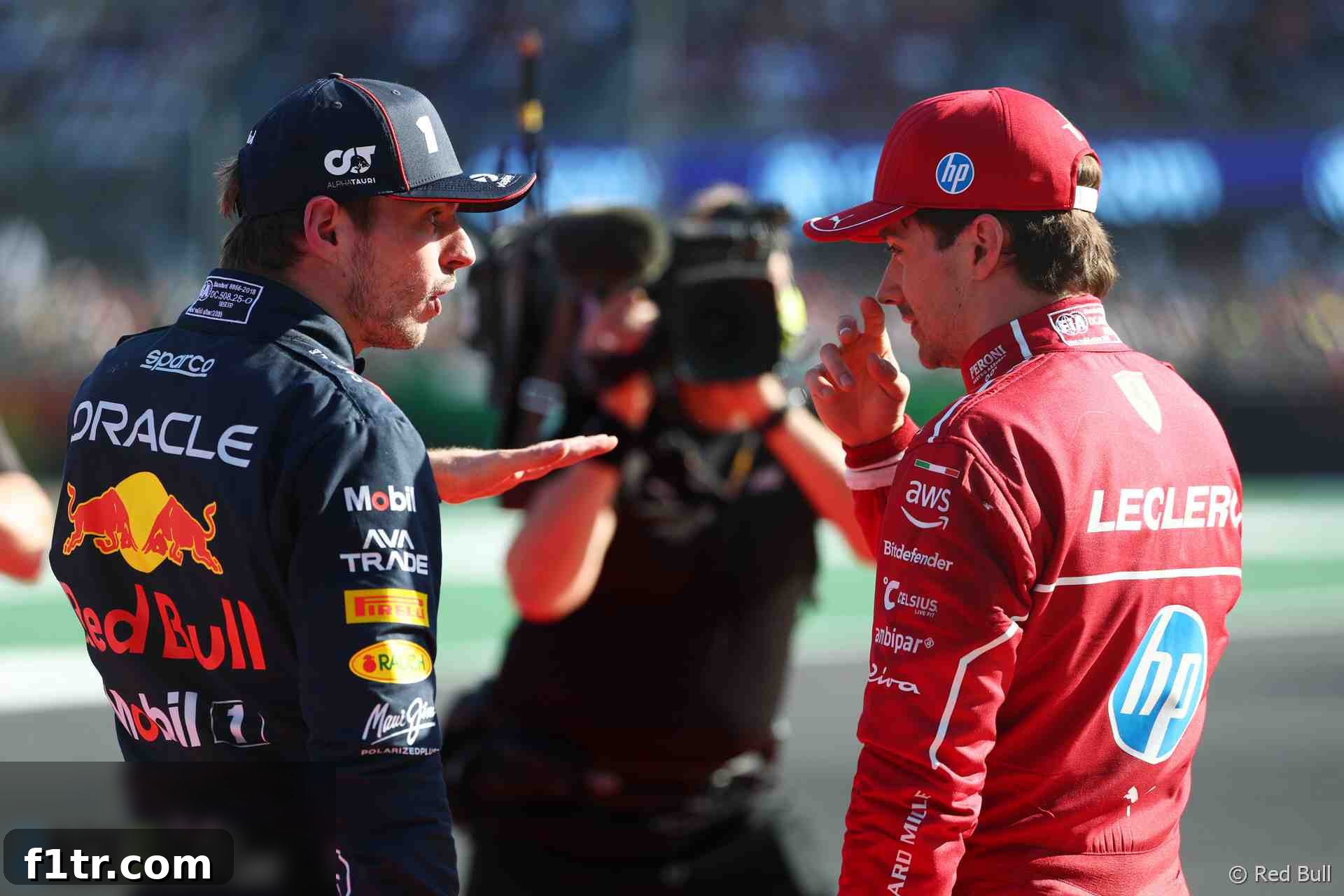
The intensity of Formula 1 racing often boils down to split-second decisions and strict adherence to regulations. At the recent Mexican Grand Prix, a fierce battle for second place between Charles Leclerc of Ferrari and Max Verstappen of Red Bull Racing took a contentious turn in the closing laps. The incident saw Leclerc openly accuse his rival, Verstappen, of failing to slow down sufficiently under double waved yellow flags, prompting a request for his team to report the alleged infraction to the race stewards.
The Critical Moment: Yellow Flags and the Battle for Second
As the Mexican Grand Prix reached its thrilling conclusion, the fight for the runner-up position was heating up. Max Verstappen was rapidly closing the gap on Charles Leclerc, setting the stage for a dramatic finale. However, the high-stakes pursuit was suddenly complicated by the deployment of double waved yellow flags at Turn 13, located within the stadium section of the circuit. This warning, indicating a significant hazard on track, mandates drivers to reduce speed considerably and be prepared to stop. The expectation is a clear and immediate reduction in pace to ensure safety.
Leclerc, keenly aware of the rules and the potential advantages gained by ignoring them, quickly voiced his concerns over the team radio. Addressing his race engineer, Bryan Bozzi, the Monegasque driver’s message was unequivocal: “Max, that’s too much. That’s a penalty he will take, for sure.” Leclerc’s immediate reaction highlighted his belief that Verstappen had not respected the severity of the yellow flag deployment, potentially gaining an unfair advantage during a crucial phase of the race. The detection point for the DRS (Drag Reduction System) zones on the main straight and the subsequent straight is situated just after Turn 13, at Turn 15. While Verstappen ultimately did not get close enough to Leclerc to attempt an overtake, the Ferrari driver remained deeply troubled by the perceived time gain.
The urgency in Leclerc’s voice was palpable. As the drivers commenced their penultimate lap, he reiterated his demand to the pit wall: “You need to report that.” This insistence underscored the gravity of the situation in Leclerc’s mind, reflecting not only his competitive spirit but also a broader concern for fair play and the consistent application of racing regulations.
Virtual Safety Car Thwarts Verstappen’s Final Assault
The unfolding drama took another twist as the final lap began. Just as Verstappen might have been preparing for a last-ditch effort to challenge Leclerc, the Virtual Safety Car (VSC) was deployed. This deployment was triggered by Carlos Sainz Jr.’s Ferrari coming to a halt in the stadium section, a development that, paradoxically, ended Verstappen’s immediate threat to Leclerc but ignited a separate frustration for the Red Bull driver.
Verstappen quickly vocalized his displeasure regarding the VSC deployment to his race engineer, Gianpiero Lambiase. He argued that Sainz’s car was in a “completely safe” position, implying that the VSC was an overreaction and unnecessarily interfered with the race’s natural conclusion. However, the FIA later clarified its decision, explaining that the VSC was deployed due to a “risk of fire on Sainz’s car,” a legitimate safety concern that justified the measure. The FIA’s swift action, while frustrating for Verstappen, prioritized the safety of marshals and potentially other drivers, underscoring the critical role of safety protocols in Formula 1.
Yellow Flags: A History of Controversy and Scrutiny
The incident at the Mexican Grand Prix is far from an isolated event when it comes to controversies surrounding yellow flags. The consistent application and interpretation of these rules have frequently been a point of contention among teams and drivers. Red Bull Racing itself has a history of scrutinizing rivals’ conduct under yellow flag conditions.
A notable instance occurred at the Miami Grand Prix, where Red Bull protested the race result, alleging that George Russell had not slowed sufficiently in response to yellow flags. However, in that particular case, the stewards reviewed the evidence and ultimately dismissed Red Bull’s claim, finding no breach of regulations. This decision highlighted the nuanced nature of such investigations, where factors like the specific location of the flags, the degree of speed reduction, and the potential for advantage are all carefully considered.
Conversely, during the previous year’s Qatar Grand Prix, McLaren driver Lando Norris faced a penalty for failing to reduce his speed adequately under yellow flags. Interestingly, this penalty followed a complaint lodged by none other than Max Verstappen himself. The contrasting outcomes of these incidents — Russell being cleared while Norris received a penalty — underscore the complexities faced by race stewards. Each yellow flag incident is unique, and decisions often hinge on precise data analysis, telemetry, and on-board footage, leading to varying interpretations and, occasionally, perceived inconsistencies by teams and fans alike.
The yellow flag regulations are fundamental to driver and marshal safety, particularly in modern Formula 1 where cars travel at immense speeds. Drivers are expected to react immediately and significantly reduce their pace when flags are shown, removing any competitive advantage they might gain from maintaining speed. Failure to do so can result in severe penalties, ranging from time penalties to grid drops, reflecting the FIA’s commitment to upholding safety standards.
The Broader Implications for F1 Sporting Integrity
The yellow flag controversy involving Leclerc and Verstappen in Mexico City once again brings to the forefront the ongoing debate about the consistency of stewarding decisions and driver conduct under safety conditions. While no penalty was ultimately issued to Verstappen for this specific incident (likely due to the subsequent VSC deployment which negated any potential time advantage), Leclerc’s immediate and emphatic calls for reporting the perceived infraction illustrate the competitive pressures and the importance of fair play at the highest level of motorsport.
Such incidents serve as critical reminders of the fine line between aggressive racing and adherence to vital safety regulations. They challenge the FIA and its stewards to continually refine their guidelines and ensure transparency and consistency in their rulings, thereby maintaining the integrity of the sport. For the drivers, it’s a constant test of judgment, discipline, and respect for the rules, even when battling fiercely for position at the pinnacle of racing. The tension between pushing the limits and respecting safety protocols remains a defining characteristic of Formula 1, shaping the narrative and outcomes of countless races.
Related Articles from the 2025 Mexican Grand Prix
- F1 fans shocked as ferry company screens “adult film” by mistake
- Russell: Lack of penalties over corner-cutting was ‘especially unfair for Lewis’
- Williams aim to give Albon more “consistent” car after consecutive Q1 exits
- Lawson “not at fault” for marshal incident says FIA following criticism from Mexico’s OMDAI
- Stats: Norris takes F1’s biggest win for two years as Ferrari go win-less for 12 months
Browse all 2025 Mexican Grand Prix articles