Alfa Romeo F1 Points Appeal: The Hockenheim Clutch Controversy and Its Wider Implications
The aftermath of the thrilling and chaotic 2019 German Grand Prix left an indelible mark on the Formula 1 season, not just for its on-track drama but also for the controversial post-race penalties that directly impacted Alfa Romeo Racing. The team found itself embroiled in a legal battle with the sport’s governing body, the FIA, fighting to regain 10 crucial championship points lost when both its cars were penalized for a technical infringement. This saga highlights the intricate balance between technological innovation, strict regulations, and the pursuit of sporting fairness in Formula 1.
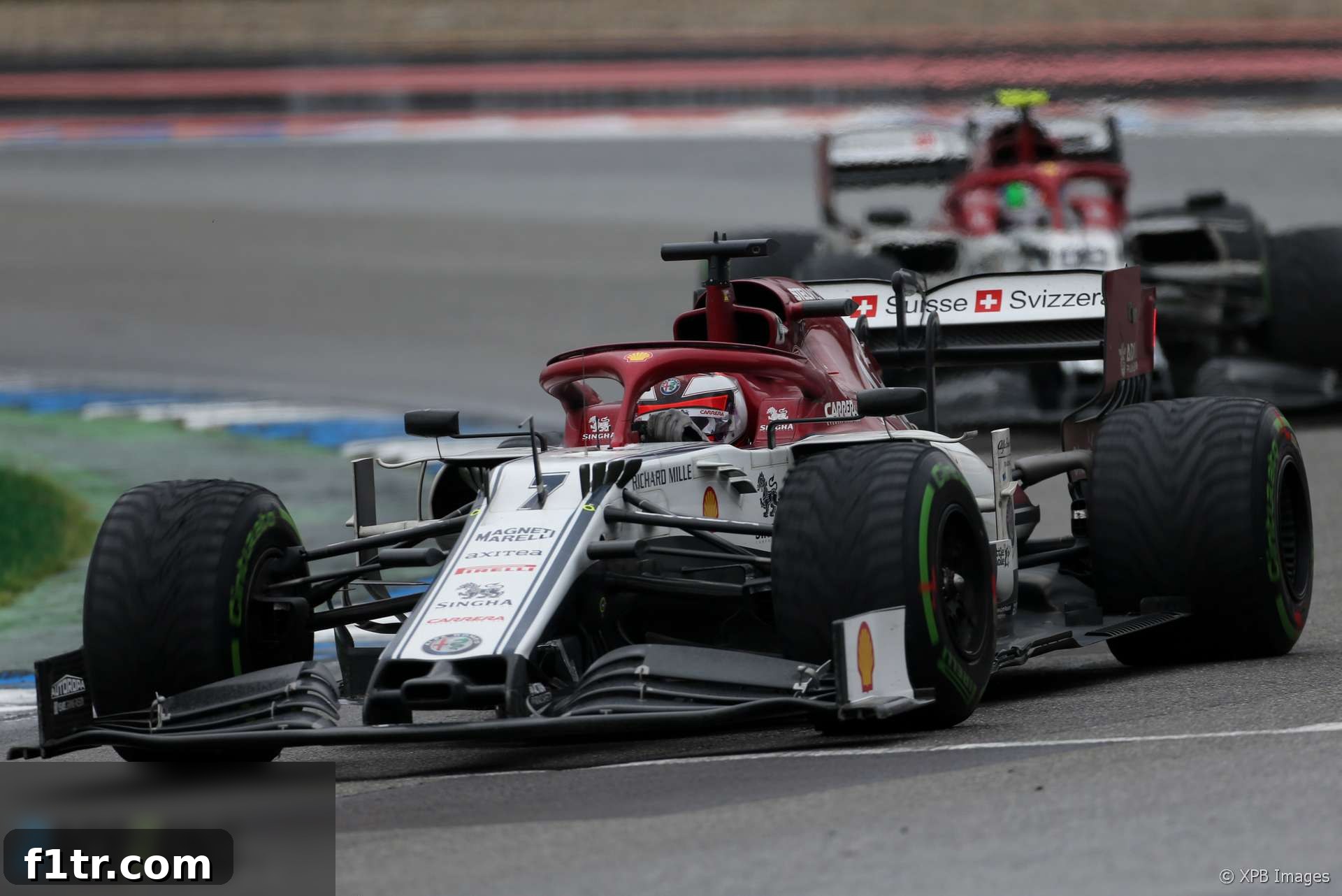
The incident in question revolved around the performance of the clutch on both Alfa Romeo C38 cars driven by Kimi Raikkonen and Antonio Giovinazzi. Following a rigorous post-race inspection, stewards determined that the clutches on both vehicles were found to be outside the accepted operating parameters set by the FIA. This technical breach led to severe repercussions: a 30-second time penalty was retrospectively applied to both drivers’ race times, effectively stripping them of their hard-earned points at Hockenheim. For Raikkonen, who had finished seventh, and Giovinazzi, who had crossed the line in eighth, this decision was a bitter blow, pushing them out of the points-scoring positions entirely.
The stakes were incredibly high for Alfa Romeo. As a midfield contender, every point is vital for their standing in the Constructors’ Championship, which has significant financial implications through prize money distribution. The loss of 10 points could dramatically alter their season trajectory and competitive position against rivals. In response to the stewards’ verdict, the team immediately announced its intention to appeal the decision, signaling its firm belief that it had strong arguments to present and that the ruling was unjust or based on a misinterpretation of the technical data.
The Appeal Process: Alfa Romeo’s Fight for Fairness
Alfa Romeo’s appeal against the penalties was officially scheduled to be heard on September 24th at the FIA headquarters in Paris. This crucial hearing, set to take place after the Singapore Grand Prix, represented the team’s final opportunity to overturn the stewards’ original ruling and reclaim the lost points. Beat Zehnder, the team manager for Alfa Romeo, confirmed the date during an FIA press conference, emphasizing the team’s resolve.
“We’ve been penalised after the race and we went for appeal, which is the normal procedure if you want to fight, and you think you have some arguments to win – otherwise you wouldn’t do it,” Zehnder stated, clearly indicating the team’s confidence in their case. He further added, “It’s an ongoing process and I cannot give you any information,” underscoring the confidentiality surrounding legal proceedings within Formula 1.
The FIA’s appeal process is a multi-layered system designed to ensure fairness and adherence to regulations. When a team decides to appeal a stewards’ decision, the case is typically escalated to the International Court of Appeal. This independent judicial body of the FIA meticulously reviews all evidence, technical data, and arguments presented by both the appealing party (Alfa Romeo) and the FIA’s technical department. The court’s decision can either uphold the original penalty, overturn it, or modify it. For Alfa Romeo, a successful appeal would mean the reinstatement of Raikkonen and Giovinazzi’s original race classifications and the crucial 10 points.
The Cascade of Consequences: Who Benefited from Alfa Romeo’s Penalty?
The immediate consequence of Alfa Romeo’s penalties was a reshuffling of the points-scoring positions at the German Grand Prix, creating a ripple effect across the grid, particularly for teams in the lower midfield. While Alfa Romeo suffered a significant blow, other teams found unexpected gains.
Williams Racing: A Solitary Point in a Challenging Season
Perhaps the most significant beneficiary was Williams Racing. Following the penalties, Robert Kubica was promoted to tenth place, securing a single championship point. This solitary point was incredibly monumental for Williams, marking their only score of the entire 2019 season. The team had been enduring one of its most challenging periods in its illustrious history, often struggling at the very back of the grid. While the point was technically gained through the misfortune of another team, it provided a rare moment of relief and a glimmer of hope for the struggling outfit.
Claire Williams, then deputy team principal, reflected on the unexpected point with a mix of pragmatism and ambition. “Alfa have submitted their appeal against that so I think we’re going to have to wait and see,” she acknowledged, recognizing the provisional nature of the points. She then articulated the team’s broader aspirations: “But one point for me, I think, as a Williams, I can’t personally be happy with that and I don’t think anyone in our team is necessarily ecstatic about it.” Her comments underscored the team’s desire for genuine on-track performance rather than relying on penalties to score. Nevertheless, for a team that had battled so hard, even an unexpected point was a testament to perseverance.
Haas F1 Team: A Boost in the Midfield Battle
The Haas F1 Team also saw a substantial gain as a direct result of Alfa Romeo’s penalties, inheriting seven crucial points. This was a significant boost for Haas in their tight battle against other midfield teams for Constructors’ Championship positions. Every point accumulated in the highly competitive midfield can make a substantial difference in year-end standings and, consequently, prize money. The unexpected influx of points from Hockenheim could provide a vital edge for Haas as they navigated their own challenges throughout the season.
Mercedes-AMG Petronas F1 Team: Hamilton’s Modest Promotion
Even the dominant Mercedes team saw a slight benefit. Lewis Hamilton, who had initially finished outside the points after a challenging race, was promoted to ninth place. While a single point held less significance for a team accustomed to winning championships, it still highlighted how thoroughly the grid was reordered by the stewards’ decision.
The Context of the 2019 German Grand Prix: A Race of Unpredictability
The 2019 German Grand Prix at Hockenheim was an extraordinary race even before the post-race penalties added another layer of complexity. Held in treacherous wet-dry conditions, it quickly descended into a chaotic spectacle filled with numerous safety car periods, multiple crashes, and unpredictable outcomes. Max Verstappen ultimately triumphed, but many established front-runners struggled, including Lewis Hamilton, who spun and made errors. The race created opportunities for drivers and teams who might not typically score high points, making Alfa Romeo’s initial strong performance, and subsequent penalty, even more poignant.
The unpredictable nature of the race meant that teams had to make critical decisions regarding tire strategy, pit stops, and car setup in rapidly changing conditions. Technical parameters, such as clutch performance during crucial safety car restarts or rolling starts, would have been under intense scrutiny. The FIA’s technical regulations are designed to ensure fair competition and prevent any team from gaining an unfair advantage through non-compliant components or systems. The Alfa Romeo case, therefore, underscored the FIA’s commitment to enforcing these rules, even when it led to contentious and impactful post-race decisions.
The Broader Implications for Formula 1
The Alfa Romeo appeal was more than just about 10 points; it represented a broader discussion about the interpretation and enforcement of technical regulations in Formula 1. Technical infringements, especially those relating to complex systems like clutches, can often be subtle and open to different interpretations. Teams continuously push the boundaries of design and engineering within the framework of the rules, leading to moments where the FIA must decide if a particular innovation or performance characteristic crosses the line into illegality.
Such appeals also highlight the meticulous scrutiny applied to every component and system on an F1 car. The clutch, for instance, is a critical element for race starts and restarts, directly impacting a driver’s ability to gain or lose positions. Ensuring all clutches operate within defined parameters is essential for maintaining a level playing field. The outcome of Alfa Romeo’s appeal could set a precedent for how similar technical issues are handled in the future, influencing other teams’ approaches to design and compliance.
The anticipation leading up to the September 24th hearing was palpable within the F1 paddock. For Alfa Romeo, a successful appeal would not only restore their points but also bolster their reputation and confidence for the remainder of the season. Conversely, an upheld penalty would cement their loss and force them to accept the stewards’ initial ruling. The decision held the power to alter the Constructors’ Championship standings further and potentially affect millions in prize money, making it a critical moment in the 2019 Formula 1 calendar.
Looking Ahead: The Lingering Impact of Hockenheim
Regardless of the appeal’s outcome, the 2019 German Grand Prix and its ensuing controversy served as a powerful reminder of Formula 1’s intricate blend of high-speed racing, cutting-edge technology, and stringent regulatory oversight. It showcased the fine margins that separate success from setback, and the unwavering determination of teams to fight for every advantage, both on and off the track. Alfa Romeo’s battle to reclaim its points became a microcosm of the intense competition that defines the pinnacle of motorsport.
The final verdict on Alfa Romeo’s appeal would not only close this chapter of the 2019 season but also contribute to the ongoing narrative of technical enforcement and sporting justice within Formula 1. It underscored that in a sport where precision and compliance are paramount, every detail matters, and the pursuit of fairness is a continuous endeavor.
More from the 2019 F1 Season
- Browse all 2019 F1 season articles