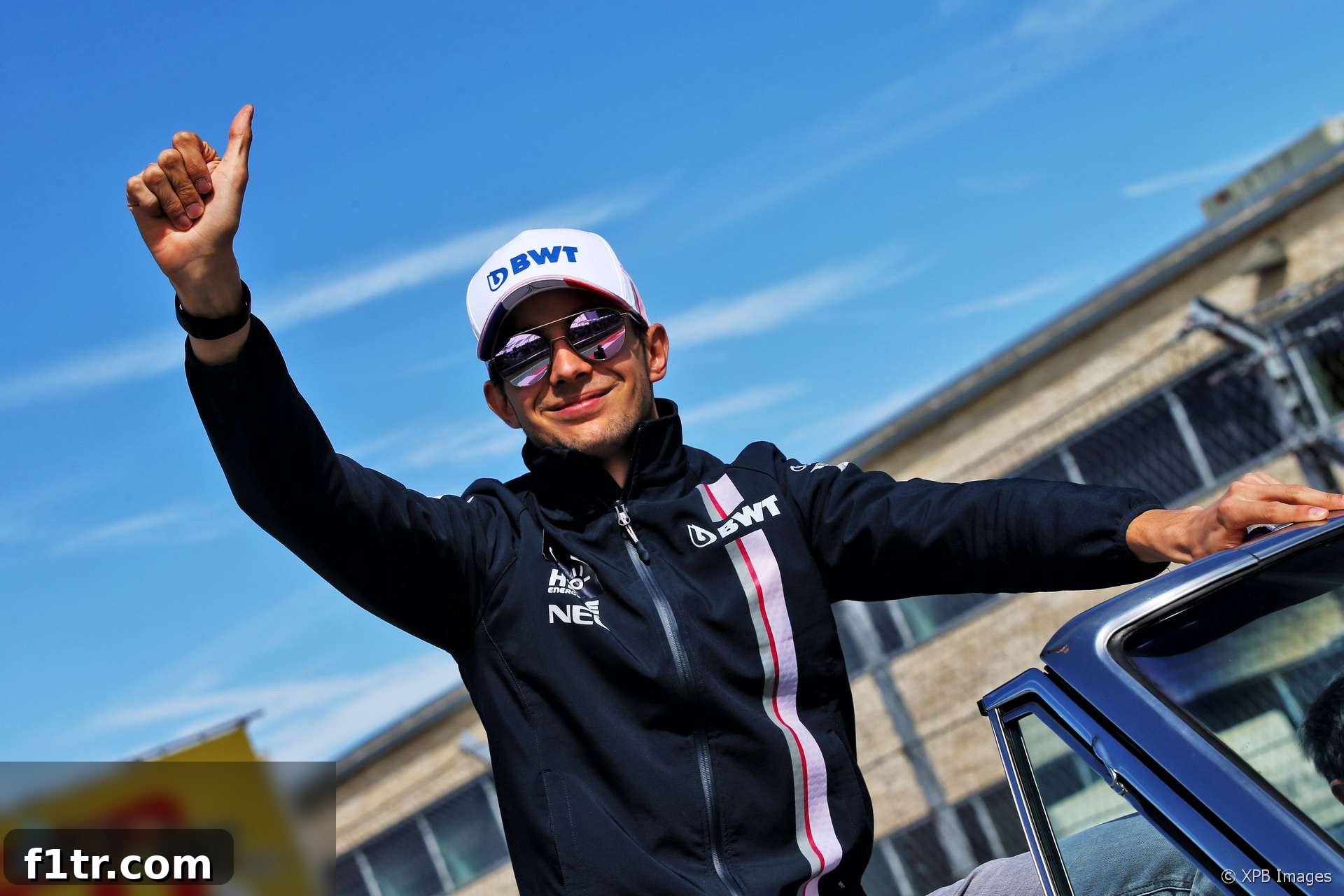
Mercedes team principal Toto Wolff has unequivocally stated his commitment to ensuring Esteban Ocon makes a strong return to the Formula 1 grid in 2020, even if it means the highly-rated young Frenchman has to endure a season on the sidelines. Ocon’s predicament highlights the intense and often brutal nature of the F1 driver market, where talent alone sometimes isn’t enough to secure a coveted seat. For many observers, Ocon’s situation is baffling, given his demonstrable speed, consistency, and professional approach during his time with Force India.
The 2019 F1 season promises to be a pivotal year for many drivers, and for Ocon, it presented a series of unforeseen challenges that ultimately left him without a confirmed drive. As a Mercedes junior driver, Ocon is a prime example of a talent nurtured by a top team, yet even with that powerful backing, navigating the complex landscape of Formula 1 transfers proved exceptionally difficult. Wolff’s steadfast assurance acts as a beacon of hope for Ocon, suggesting that his absence from the grid would only be temporary and strategic, rather than a definitive end to his promising F1 career.
The Shifting Sands of the 2019 F1 Grid
Esteban Ocon’s journey through the junior ranks was nothing short of impressive. A former GP3 Series champion and FIA Formula 3 European Champion, he quickly established himself as a future star. His F1 debut came in 2016, and by 2017, he was a full-time driver for Force India, where he consistently demonstrated his speed and racecraft, often outperforming expectations in a midfield car. Mercedes invested significantly in Ocon’s development, viewing him as a potential long-term asset, possibly even a future Mercedes factory driver.
The Renault Deal That Wasn’t: Ricciardo’s Surprise Move
The summer of 2018 brought a significant twist in Ocon’s career trajectory. Reports indicated that a move to Renault for the 2019 season was all but sealed. Mercedes, recognizing the importance of track time for their young protégé, had seemingly brokered a deal that would allow Ocon to gain valuable experience with a works team. Toto Wolff himself was optimistic, confessing, “They say only fools are optimistic and in July I was really optimistic about having Esteban in a Renault.” However, the F1 paddock was then rocked by the unexpected news that Daniel Ricciardo would be leaving Red Bull Racing to join Renault. This seismic transfer instantly closed the door on Ocon’s potential move, leaving him in a precarious position as the dominoes of the driver market continued to fall.
The Force India Takeover and Stroll’s Arrival
Further complicating Ocon’s future was the dramatic change of ownership at Force India. The team, which had been in administration, was rescued by a consortium of investors led by Lawrence Stroll, the father of then-Williams driver Lance Stroll. While the takeover saved many jobs and ensured the team’s survival, it also brought an almost inevitable consequence for Ocon. It became clear that Lance Stroll would likely take one of the seats at the newly rebranded team (which would later become Racing Point Force India, and then Racing Point). Force India effectively confirmed this by indicating they would run Lance Stroll in the end-of-season test at Yas Marina, a strong sign of his impending move and Ocon’s displacement.
Williams: A Crossroads for Ocon’s Immediate Future
With the doors at Renault and his current team, Force India, firmly shut, Williams emerged as Ocon’s only remaining viable option for a seat on the 2019 F1 grid. Williams, a team with a rich history but struggling significantly in recent seasons, had already confirmed Mercedes junior George Russell as one of their drivers. This meant only one seat remained available, placing Ocon in direct competition with other seasoned contenders.
Why Ocon is Cautious: The One-Year Deal Preference
Despite the dwindling options, Ocon was reportedly hesitant to commit to a multi-year deal with Williams. Unlike Russell, who signed a longer-term contract, Ocon was understood to be pushing for a single-year agreement. His motivation was clear: he wanted to keep his options open for 2020, should more competitive seats become available. This strategy, while understandable from a career progression standpoint, added another layer of complexity to negotiations with Williams, a team that might have preferred a longer-term commitment from a driver of Ocon’s caliber. As Ocon himself had articulated, he wanted to be ready to take advantage of opportunities which may become available in 2020, rather than being locked into a potentially less competitive long-term contract.
The Other Contenders: Sirotkin and Kubica
Williams had several candidates vying for the remaining seat alongside George Russell. Among the most prominent were their current driver Sergey Sirotkin, who brought significant backing, and test driver Robert Kubica, a fan favorite whose return to F1 after a career-altering injury would be an extraordinary story. Both drivers presented strong cases, whether through financial sponsorship or inspiring narratives. Toto Wolff acknowledged the competition, stating, “It’s not only Esteban, there is Robert in the frame and others and all of them deserve the chance. Williams will make their choice.” This diverse field of contenders further highlighted the intense competition for F1 seats and the difficult decisions teams must make.
Toto Wolff’s “Plan B” and Mercedes’ Long-Term Vision
Amidst the uncertainty surrounding Ocon’s 2019 prospects, Toto Wolff’s public declaration offered a crucial safety net. The Mercedes team principal, a shrewd operator in the F1 paddock, articulated a clear “Plan B” for Ocon, emphasizing Mercedes’ unwavering commitment to his future. This strategy underscores Mercedes’ long-term investment in driver development, a testament to their belief in Ocon’s talent and potential.
Guaranteeing a “Good Car” in 2020
Wolff’s most significant assurance was his guarantee that Ocon would be in a “good car in 2020.” This statement carries immense weight, coming from the head of the reigning constructor champions. It implies that Mercedes would leverage its considerable influence and relationships within Formula 1 to secure a competitive seat for Ocon. This could involve placing him with a Mercedes customer team, or even bringing him into the Mercedes fold as a reserve driver with a clear pathway to a race seat in 2021, perhaps even at the factory team if current drivers’ contracts expire. The “good car” promise is not just a casual remark; it reflects a strategic commitment to ensure Ocon’s talent is not wasted.
The Role of a Reserve Driver: A Year on the Sidelines?
Should Ocon be unable to secure a 2019 race seat, a reserve driver role for Mercedes would be the most logical “Plan B.” While a year out of competitive racing can be detrimental for some drivers, for Ocon, it could be a valuable learning experience. As a reserve driver for a top team, he would be deeply integrated into the team’s operations, attending races, participating in simulator work, and potentially driving during test sessions. This close exposure to a championship-winning environment could hone his skills further and provide an unparalleled understanding of how a top F1 team functions, preparing him for a stronger return. Many successful drivers have had brief sabbaticals and returned to perform at their peak, proving that a year away doesn’t always signal the end of a career.
Mercedes’ Commitment to Junior Drivers
Mercedes’ proactive stance with Ocon is not an isolated incident. The team has consistently shown a strong commitment to its junior driver program, which has also produced talents like George Russell. This commitment stems from a belief in nurturing talent from within and securing future stars for Formula 1. By publicly backing Ocon, Mercedes reinforces its reputation as a team that genuinely supports its young prospects, making it an attractive destination for aspiring drivers.
Navigating the F1 Driver Market: Talent vs. Opportunity
Esteban Ocon’s situation perfectly encapsulates the harsh realities of the Formula 1 driver market. It’s a complex ecosystem where immense talent, financial backing, political maneuvering, and sheer luck all play a role in determining who secures a coveted spot on the grid. While Ocon undoubtedly possesses the talent to be a permanent fixture in F1, his journey highlights how easily even a driver with significant backing can be squeezed out.
The Challenges for Young Drivers
For young drivers aspiring to reach F1, the path is fraught with challenges. Beyond displaying exceptional skill, they must navigate a landscape increasingly influenced by commercial considerations. Teams often weigh the financial contributions a driver can bring against their pure talent. This can put drivers without significant personal or sponsor backing at a disadvantage, regardless of their performance on track. The rise of “pay drivers” is a perennial concern, creating a bottleneck for even the most gifted individuals like Ocon.
The Influence of Team Principals and Financial Backing
The power of team principals like Toto Wolff is immense, but even their influence has its limits when faced with major financial decisions or unexpected market shifts. Lawrence Stroll’s acquisition of Force India and his desire to place his son Lance in the team was a commercial decision with direct consequences for Ocon. This scenario is a stark reminder that F1 is not just a sport; it’s a multi-billion dollar business where strategic investments and financial interests often dictate driver lineups. While Toto Wolff can guarantee a “good car” due to Mercedes’ standing, even he cannot force a team to take a driver if their commercial interests dictate otherwise for a specific season.
Historical Precedents: Drivers Who Sat Out and Returned Stronger
History provides numerous examples of drivers who have spent a season or more on the sidelines before returning to F1 with renewed vigor and success. Fernando Alonso, for instance, took a break from F1 before returning. Kimi Räikkönen famously took a sabbatical to rally before making a successful comeback. While not ideal, a year away can sometimes offer a mental reset, an opportunity for further physical and mental preparation, and a chance to assess future options strategically. For Ocon, a year as a Mercedes reserve could serve this purpose, keeping him sharp and ready for a return to racing in a better position in 2020.
Anticipating Ocon’s Return: Potential Prospects for 2020
Toto Wolff’s confidence in securing a “good car” for Esteban Ocon in 2020 sets the stage for what could be an exciting and much-anticipated return. The F1 driver market is notoriously fluid, with contracts expiring, team dynamics shifting, and new opportunities constantly emerging. Ocon’s absence in 2019, if it comes to pass, will only amplify the expectation surrounding his comeback.
The F1 Landscape in 2020 and Beyond
Looking ahead to 2020, several significant driver contracts will be nearing their end, potentially opening up seats across the grid. The political and technical regulations for F1 are also subject to changes, which could influence team strategies and driver preferences. Mercedes itself will likely face decisions regarding its driver lineup in the coming years, particularly concerning the future of Valtteri Bottas. If Ocon maintains his strong ties with Mercedes and continues to develop, he could become a prime candidate for a top-tier seat. His performance record and the backing of Mercedes make him an incredibly attractive prospect for any team looking to bolster its lineup with young, proven talent.
Where Could Ocon Land?
The possibilities for Ocon’s return in 2020 are varied. A likely scenario would involve a loan to another Mercedes-powered team, such as Racing Point (formerly Force India) if Lance Stroll were to move on or if the team expands. Other potential destinations could include Haas, Alfa Romeo Racing, or even Williams again, depending on their performance trajectory and driver movements. The key will be to secure a seat in a car that allows him to demonstrate his full capabilities and compete for points consistently, rather than languishing at the back of the grid. Wolff’s promise implies that Mercedes will work tirelessly to ensure this outcome, aligning Ocon with a team that has the potential to allow him to shine.
The Importance of Performance in Previous Seasons
Ocon’s strong performances during his time with Force India will be critical in his favor when teams assess their 2020 options. He has consistently shown his ability to extract performance from the car, deliver strong qualifying results, and race intelligently. These qualities are highly valued in F1 and will serve as powerful arguments for his inclusion on the grid. Even a year out of the race seat won’t erase the memory of his talent and professionalism from the minds of team principals and engineers across the paddock.
View the current list of 2019 F1 drivers and teams
Esteban Ocon’s Unwavering Path to F1 Success
Esteban Ocon’s challenging position for the 2019 Formula 1 season is a stark reminder of the cutthroat nature of elite motorsport. Yet, the unwavering support from Mercedes team principal Toto Wolff offers a strong indication that this setback is merely a temporary pause in a career destined for greater heights. Wolff’s “Plan B” and his guarantee of a “good car” for Ocon in 2020 underscore Mercedes’ commitment to nurturing and protecting their investment in one of F1’s most promising young talents. While a year on the sidelines might test Ocon’s resolve, it also provides an opportunity for strategic preparation and an anticipated return to the grid with potentially even stronger prospects. The F1 paddock will undoubtedly be watching closely as Ocon navigates this critical phase, eagerly awaiting his return to competitive racing and the fulfillment of his clear potential.
2019 F1 Season Insights and Related Stories
- Crying in the Melbourne car park at 2019 grand prix was my career low – Ocon
- McLaren Racing reports reduced £71 million loss in 2019
- Kvyat: Hockenheim podium last year was “my biggest achievement” so far
- How the FIA’s new encrypted fuel flow meter targets Ferrari’s suspected ‘aliasing’ trick
- “He smashed my office door”: 23 must-see moments from ‘Drive to Survive’ season two
Browse all 2019 F1 season articles