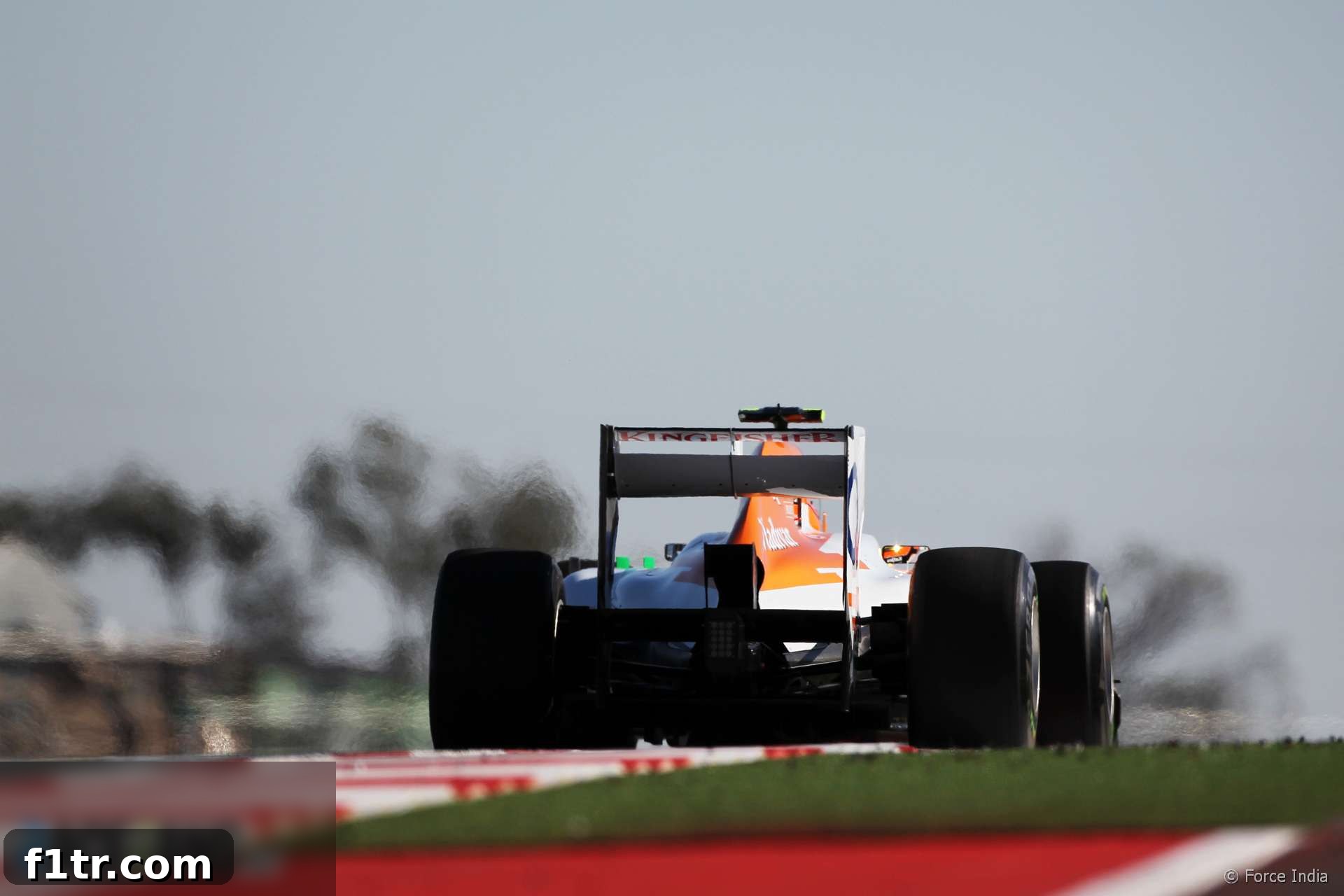
In the latest motorsport update, FIA Race Director Charlie Whiting has definitively stated there is “no point” in reverting to Formula 1’s original Drag Reduction System (DRS) rules. These initial regulations permitted drivers to activate DRS at any point on the track during qualifying sessions. Whiting’s firm stance underscores the FIA’s commitment to the fundamental principle behind DRS: to enhance overtaking opportunities during races, rather than simply boosting qualifying lap times.
Why the FIA Resists Free DRS Use in Qualifying
The discussion surrounding DRS activation resurfaced following instances where drivers utilized the system in high-speed sections like Abbey and Farm corners at Silverstone. This practice naturally led to questions directed at Whiting regarding the potential for greater freedom in DRS use. His response provided a clear rationale:
I don’t think there’s any point. All you’re doing is creating faster lap times, nothing else. I think the whole principle of DRS was to help overtaking. To allow them to use it in places they can use it in the race seems entirely logical to me. So I wouldn’t be in favour of going back.
Whiting’s comments highlight the core philosophy behind DRS. Introduced in 2011, DRS was designed to overcome the challenge of aerodynamic turbulence, which often made close-quarters racing and overtaking difficult. By allowing drivers to momentarily reduce drag on specific straights during a race, the system aims to give the chasing car a speed advantage, thereby facilitating genuine overtaking maneuvers. Allowing unrestricted use in qualifying, as was briefly explored, was found to serve little purpose beyond artificially inflating lap speeds, detaching from the system’s primary goal of improving racing spectacle.
The debate surrounding DRS has been ongoing since its inception. While it has undoubtedly increased overtaking numbers, some purists argue it makes overtakes too easy or artificial. However, the FIA’s current stance, as articulated by Whiting, reflects a measured approach, balancing performance enhancement with the integrity of racing. The designated DRS zones are carefully chosen to offer a genuine chance for an overtake, requiring skill and strategy from the driver, rather than simply being a free speed boost. The consistent application of these rules ensures a level playing field and maintains focus on the strategic deployment of the system during competitive race conditions.
Quotes: Dieter Rencken
Advert | Become a RaceFans supporter andgo ad-free
Social Media Insights: Catching the Pulse of Motorsport
Social media continues to be a vibrant hub for breaking news, driver updates, and fan reactions across the motorsport world. Here’s a glimpse of notable posts that recently captured attention from Twitter, Instagram, and beyond:
No @Ericsson_Marcus in first practice at the @GermanGrandPrix on Friday – @Anto_Giovinazzi will make his first practice appearance of the year for @SauberF1Team. #F1 #GermanGP
— RaceFans (@racefansdotnet) July 17, 2018
This update from RaceFans highlighted a significant moment for the German Grand Prix weekend: Antonio Giovinazzi, a highly-rated Ferrari junior driver, stepping into a Sauber for the first practice session. This not only provided valuable track time for Giovinazzi but also offered Sauber an opportunity to assess talent and gather additional data. Such driver changes in FP1 are common, allowing teams to fulfill contractual obligations with reserve drivers or evaluate potential future talent, often at the expense of a regular driver’s session.
Personally glad to see the back of the car-swap stops in @FIAFormulaE They involved consistent cheating, injuries, unnecessary risks for drivers/team personnel and a baffling management by the powers that be especially this season. Good riddance. 👋🏻 #ABBFormulaE
— sniffermedia (@sniffermedia) July 17, 2018
A strong sentiment from sniffermedia expressed relief over the discontinuation of car-swap pit stops in @FIAFormulaE. These unique pit stops, where drivers would switch to a second car halfway through a race due to battery limitations, were a hallmark of Formula E’s early seasons. While novel, they became a source of controversy, safety concerns, and even accusations of rule bending. The introduction of the Gen2 Formula E car, with its significantly increased battery capacity allowing a full race distance on a single charge, rendered these swaps obsolete, a move widely welcomed by fans and many within the paddock for streamlining the racing format and enhancing safety.
3 years. We’ll never ever forget you Julio❤️ pic.twitter.com/rV7pMt41zE
— Charles Leclerc (@Charles_Leclerc) July 17, 2018
A heartfelt tribute from Charles Leclerc, remembering Jules Bianchi three years after his passing, touched the hearts of many. Leclerc and Bianchi shared a close bond, with Bianchi having been a mentor to a young Leclerc. Bianchi’s tragic accident in 2014 and subsequent death served as a stark reminder of the inherent dangers in motorsport and catalyzed significant advancements in F1 safety, including the introduction of the Halo cockpit protection device. Leclerc’s consistent remembrance underscores the profound impact Bianchi had on the racing community and on Leclerc’s personal journey to Formula 1.
- Find more official F1 accounts to follow in the F1 Twitter Directory
Essential Motor Racing Updates & Insights
Beyond the immediate headlines and social chatter, the world of motor racing constantly evolves with strategic decisions, technical challenges, and reflections on its rich history. Here’s a selection of insightful links that provide deeper context to the ongoing narrative in Formula 1 and beyond:
Advert | Become a Supporter & go ad-free
We’re hungry and ambitious – Toto (Mercedes)
Mercedes Team Principal Toto Wolff’s declaration about the team’s “hungry and ambitious” spirit comes at a crucial juncture in the season. Despite not maximizing points during a challenging triple-header, Wolff’s conviction that they had the “quickest car” in all three races speaks volumes about the team’s underlying performance and their determination to overcome operational errors. This resilience is a hallmark of championship-winning teams, indicating that Mercedes remains a formidable force committed to reclaiming top form.
Remembering James Hunt with Bernie Ecclestone (Havoline Europe via Facebook)
Bernie Ecclestone’s reflections on media practices, particularly in remembering the iconic James Hunt, offer a nostalgic yet critical look at how F1 news has evolved. His observation that media “used to be able to write what they thought” but now “most of them write what they told” highlights a perceived shift from independent reporting to more controlled narratives. This insight is particularly relevant in today’s media landscape, where team and sport PR strategies heavily influence public perception, differing greatly from the more unfiltered era Ecclestone recalls.
- Only one thing mattered in the Ecclestone era
Epstein biding his time for new COTA contract (Reuters)
The strategic patience shown by Bobby Epstein, chairman of the Circuit of the Americas (COTA), regarding a new F1 contract underscores the shifting dynamics of Formula 1 in the United States. His hope that “the sport will have taken off in the US” by the time negotiations conclude suggests a belief in Liberty Media’s growth strategy for the region. As F1 gains traction with new audiences, the reliance on promoter income might decrease, potentially leading to more favorable terms for host venues like COTA, which is a vital cornerstone of F1’s presence in North America.
Renault says it must look for Sainz alternatives (Motorsport)
Renault’s acknowledgement of needing to “look for Sainz alternatives” signals a critical phase in the F1 driver market. With Carlos Sainz on loan from Red Bull, his future availability is directly tied to Red Bull’s own driver decisions. This situation puts Renault in a proactive position, exploring options for their 2019 lineup, potentially considering emerging talent or other experienced drivers. Such movements often trigger a domino effect across the grid, making the driver market an exciting subplot to the championship battle.
Red Bull’s power vs downforce conundrum (F1)
The technical analysis highlighting Red Bull’s “power vs downforce conundrum” at Silverstone vividly illustrates the intricate balance teams must strike. The observation that Daniel Ricciardo and Max Verstappen experimented with different low-downforce front wings to complement Baku-spec rear wings suggests Red Bull was wrestling with fundamental trade-offs. Their struggle to find a clearly superior setup indicated they were pushing the limits of their aerodynamic package, likely attempting to compensate for a power unit deficit, a recurring challenge for the team with their then-Renault engines.
Patrese to contest 2018 Spa 24 Hours (Motorsport magazine)
The news of Riccardo Patrese, a revered former Grand Prix winner and F1 World Championship runner-up, returning to competitive racing in the 2018 Spa 24 Hours, is a testament to the enduring passion of motorsport legends. Patrese, classified as a bronze driver due to his age (64), demonstrates how FIA driver categorization allows experienced veterans to contribute significantly to pro-am endurance racing teams. His participation underscores the appeal of endurance events and provides a link between F1’s storied past and the current racing landscape.
It’s coming home (McLaren)
McLaren’s celebration of the “M16 homecoming” is a poignant reminder of the team’s illustrious history beyond Formula 1. The return of Johnny Rutherford’s iconic M16 IndyCar, a machine that brought two Indy 500 victories to McLaren in the 1970s, highlights the team’s significant legacy in North American open-wheel racing. This event not only honors Rutherford’s contributions but also reinforces McLaren’s deep roots and multi-faceted heritage within global motorsport, connecting past glories with its ongoing pursuit of excellence.
We always endeavour to credit original sources. If you have a tip for a link to feature in the next RaceFans round-up please send it in here:
- Contact RaceFans
Advert | Become a RaceFans supporter andgo ad-free
Comment of the Day: Motorsport in the Olympics?
The intriguing prospect of motorsport becoming an Olympic sport often sparks lively debate among enthusiasts. Tristan’s comment, expressing full support, encapsulates the argument for recognizing motorsport as a premier athletic endeavor:
Driving on the limit requires the best split second decision making along side incredible intuition with a combination of a forceful hand and the lightest touch. And to do that in concert with the psychology of a race really is an amazing sporting endeavour. I really hope it takes off and the government gets behind supporting their best drivers to push Motorsport competition to new heights.
Tristan (@skipgamer)
Tristan’s perspective champions the immense skill, precision, and mental fortitude demanded of racing drivers, challenging the notion that motorsport isn’t a “true” sport due to its reliance on machinery. Arguments often center on the physical endurance, strategic thinking, and lightning-fast reflexes required, comparable to other Olympic disciplines. While obstacles like the cost of equipment, environmental impact, and the ‘man vs. machine’ debate persist, the passion from advocates like Tristan highlights a growing desire for motorsport to achieve broader global recognition.
Happy Birthday!
A big Happy Birthday shout-out to Wizardofoz, Icemangrins, Bill Niehoff, and Gruntr18! We hope you have a fantastic day celebrating.
If you want a birthday shout-out on RaceFans, simply let us know when yours is via the contact form or by adding your date to our dedicated list here. We love celebrating with our community!
On This Day in F1 History
- 65 years ago today, on July 18, 1953, the legendary Alberto Ascari showcased a masterclass in driving at the British Grand Prix. Ascari dominated the race from start to finish, driving his Ferrari to a commanding victory with an astounding margin of over a minute. This win was part of his incredible run during the 1952 and 1953 seasons, where he secured two consecutive World Championships, solidifying his place as one of Formula 1’s earliest and most formidable champions.