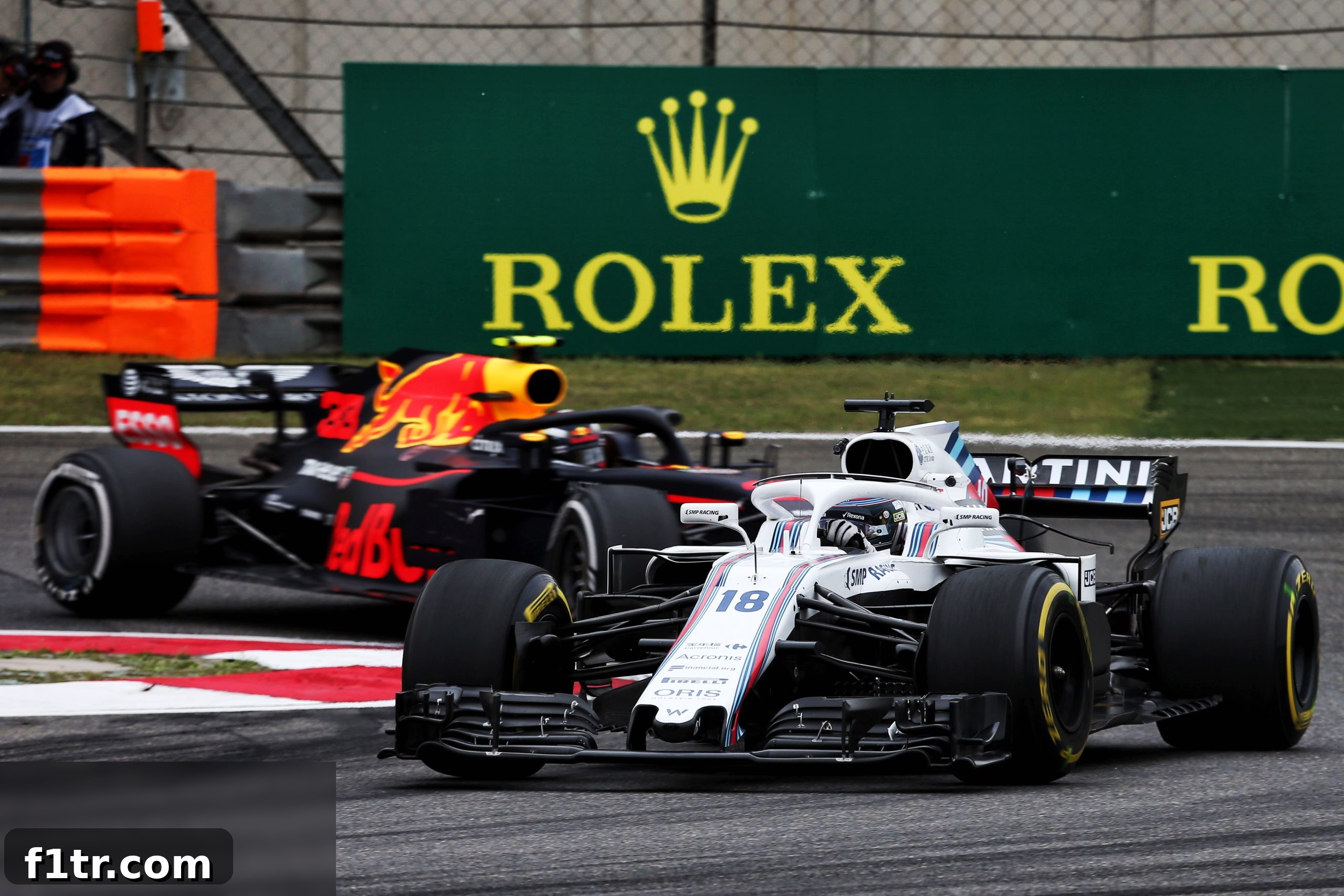
Formula One, the pinnacle of motorsport, constantly strives for the perfect balance between technological innovation and exhilarating racing spectacle. One of the most persistent challenges in modern F1 has been the difficulty for cars to follow closely and overtake, often leading to processions rather than wheel-to-wheel battles. Recognising this, key stakeholders in the sport initiated discussions and studies to fundamentally reshape the aerodynamic regulations. Despite an initial failure by teams to reach a consensus on proposed changes in Bahrain, the determination to enhance the racing product remains strong, with plans for tweaking aerodynamic rules for the 2019 F1 season still very much on the table.
The Quest for Closer Racing: Addressing F1’s Overtaking Dilemma
For years, fans and drivers alike have voiced concerns over the diminishing ease of overtaking in Formula One. The intricate and highly performance-optimised aerodynamics of contemporary F1 cars, while undeniably impressive, inadvertently create a significant obstacle to close racing. When one car follows another, the leading car generates a turbulent wake of “dirty air.” This disturbed air severely reduces the aerodynamic efficiency and downforce of the following car, making it harder for the driver to maintain grip and challenging the car’s stability, especially through corners. The result is often a significant drop in performance for the chasing car, making it exceedingly difficult to launch an attack and complete an overtake.
The complexity of front wings, in particular, has been identified as a major contributor to this phenomenon. Designed to meticulously manage airflow over and around the car, these multi-element wings are highly sensitive to disruptions. Even slight turbulence from a preceding vehicle can render them ineffective, causing the following car to ‘wash out’ or slide wide, forcing the driver to back off. This aerodynamic conundrum has led to a strategic shift among the sport’s governing bodies and commercial rights holders to prioritize changes that can create a more level playing field for attacking and defending.
FIA and Liberty Media’s Collaborative Initiative
The commitment to revitalising the on-track action has been a cornerstone of Liberty Media’s vision since acquiring the commercial rights to Formula One. Working in close collaboration with the Fédération Internationale de l’Automobile (FIA), the sport’s governing body, a proactive approach was adopted to dissect the root causes of the overtaking problem. This collaboration culminated in the commissioning of a comprehensive study, spearheaded by former F1 designer Pat Symonds, known for his vast technical expertise and long history in the sport with teams like Benetton and Renault.
The FIA is actively engaged in an ongoing dialogue with the various F1 teams regarding potential modifications to both the front and rear wings. These proposed adjustments are specifically designed to enable cars to follow each other more closely without suffering the severe aerodynamic performance penalties currently experienced. The aim is not to diminish the technological marvel that F1 cars represent, but rather to refine their aerodynamic characteristics in a way that promotes more dynamic and competitive racing. This strategic effort underscores a shared understanding that while speed and innovation are paramount, the excitement of close competition is what truly captivates the audience.
Pat Symonds’ Groundbreaking Study: Unlocking Future F1 Aerodynamics
Pat Symonds’ study represented a significant scientific undertaking, delving deep into the complex physics of Formula One aerodynamics. His team utilized advanced computational fluid dynamics (CFD) and simulations to model various aerodynamic configurations and their impact on following cars. The primary objective of this extensive research was to inform the major regulatory overhaul slated for the 2021 F1 season, which aims for a complete redesign of the cars to promote even closer racing.
However, an important outcome of Symonds’ comprehensive analysis was the identification of certain beneficial changes that could be introduced much sooner, specifically for the 2019 season. These ‘short-term’ solutions were deemed achievable within the existing car architecture and build cycles, offering an immediate, albeit partial, remedy to the overtaking issue. The study provided empirical data and theoretical frameworks that supported the idea that even relatively minor tweaks could yield noticeable improvements in a car’s ability to retain downforce when operating in another car’s turbulent wake. This dual approach – addressing immediate concerns while laying the groundwork for a larger future transformation – showcased a pragmatic and forward-thinking strategy for the sport’s evolution.
Proposed Aerodynamic Tweaks for 2019: Simplifying for Speed
The core of the short-term proposals for the 2019 F1 season revolves around simplifying key aerodynamic components. As Renault’s chief technical director, Bob Bell, articulated, the drive is to “simplify the wings, increase the rear wing and increase the DRS effect.” These three elements are interconnected and designed to work in synergy to improve the racing spectacle:
- Simplified Front Wings: The current generation of front wings features numerous complex elements, flaps, and endplates, all designed to meticulously shape airflow. While incredibly efficient for generating downforce in clean air, they also create highly turbulent wakes. Simplifying these wings would mean fewer complex surfaces and less sophisticated flow conditioners. The theory is that a simpler front wing would generate a ‘cleaner’ wake, reducing the detrimental effect on a following car’s aerodynamics. This subtle but significant change aims to make the air behind a leading car less disruptive, thereby allowing the chasing car to maintain more of its own aerodynamic performance.
- Increased Rear Wing Size: Counter-intuitively, increasing the size of the rear wing could help overtaking. A larger rear wing would generate more downforce at the rear of the car. While this might seem to increase drag, it provides a more stable platform for the car, potentially allowing for greater confidence in aggressive maneuvers. More importantly, it could allow teams to balance the loss of front downforce from simplified front wings.
- Enhanced DRS Effect: The Drag Reduction System (DRS) has been a controversial but essential tool for promoting overtaking. By allowing drivers in designated zones to open a flap on their rear wing, drag is reduced, and top speed increases, making it easier to pass. Increasing the DRS effect would mean that when activated, the rear wing would generate even less drag, leading to a greater speed differential between the attacking and defending cars. This could make overtakes more decisive and less dependent on the preceding car making an error.
These modifications, while seemingly minor, represent a fundamental shift in aerodynamic philosophy, moving away from hyper-complex designs that prioritize individual car performance in isolation, towards designs that foster closer combat. Bob Bell confirms that “All these things are do-able,” underscoring the technical feasibility of the proposals.
The Looming Deadline and Team Consensus Challenges
The path to implementing such rule changes in Formula One is rarely straightforward, primarily due to the intricate political landscape and the competitive nature of the teams themselves. A critical deadline looms large over these discussions: after April 30th, any non-safety-related rule changes for the subsequent season (in this case, 2019) require the unanimous support of all ten teams. Achieving such consensus is notoriously difficult, as each team possesses its own unique developmental strengths, weaknesses, and strategic objectives.
A rule change that might benefit one team could disadvantage another, leading to a natural reluctance to agree unless there’s a clear, overarching benefit to the sport that supersedes individual competitive interests. The fact that teams failed to agree on the changes during their meeting in Bahrain highlights this inherent challenge. While the FIA is keeping the dialogue open, the clock is ticking. Missing the April 30th deadline for unanimous agreement would mean either shelving the changes for 2019 or pursuing them for a later season, potentially 2020 or 2021.
However, there remains a degree of flexibility. Bob Bell suggested that the deadline “could stretch a bit into the summer” under certain conditions. This flexibility hinges entirely on the scope of the proposed changes. If the modifications are confined solely to external aerodynamic elements like the front and rear wings, they are considered less intrusive and can be integrated into a team’s design and manufacturing schedule later in the year. “If it’s only going to affect things like front wing, rear wing, yes you could do that,” Bell stated. The challenge intensifies significantly if the changes were to impact fundamental components such as the chassis. Redesigning and re-homologating a chassis is a monumental undertaking that requires extensive lead time. “If it was going to affect the chassis then you’d have to have really made your made up so you can crack on with it properly in July. So it depends what it affects.” This clarifies the narrow window of opportunity for the more immediate 2019 adjustments.
Looking Beyond 2019: Paving the Way for 2021 and Beyond
While the immediate focus is on 2019, it is crucial to understand that these proposed aerodynamic tweaks are part of a much grander strategy for Formula One’s future. Pat Symonds’ study was primarily geared towards the more radical changes envisaged for the 2021 F1 season, which will see a completely new generation of cars with significantly revised aerodynamic principles, standardized parts, and potentially new power unit regulations. The 2019 changes can, therefore, be viewed as a crucial interim step or a ‘proof of concept’ for some of the underlying principles identified in the broader study.
Introducing simplified aerodynamics and enhanced DRS earlier allows the sport to gather real-world data and feedback on how these modifications affect racing dynamics. This empirical evidence will be invaluable in refining the more extensive 2021 regulations, ensuring that the sport makes informed decisions that genuinely improve the spectacle without compromising F1’s core identity of innovation and performance. The commitment to a phased approach demonstrates a measured and analytical strategy to evolve the sport, aiming for continuous improvement rather than sudden, untested overhauls.
Potential Impact and Ongoing Dialogue
Should these 2019 aerodynamic changes come to fruition, the hope is for a tangible improvement in the quality of racing. Imagine cars being able to follow more closely through high-speed corners, leading to tighter braking zones and more opportunities for genuine overtakes, not just DRS-assisted passes on straights. Such changes could lead to a significant increase in excitement, reducing the prevalence of ‘processional’ races and placing more emphasis on driver skill and daring maneuvers.
However, the journey is not without its challenges. Balancing the desire for closer racing with maintaining the unique technological DNA of Formula One is a delicate act. Teams will always push the boundaries of regulations, and unintended consequences from rule changes are always a possibility. The ongoing dialogue between the FIA, Liberty Media, and the teams is therefore paramount. It is a testament to the collective determination within Formula One that despite initial disagreements, the conversation continues, driven by a shared vision for a more competitive and thrilling future for the sport.
Ultimately, the success of these aerodynamic reforms hinges on finding common ground and fostering a collaborative spirit among all stakeholders. The goal is clear: to ensure that Formula One remains the pinnacle of motorsport, delivering an unparalleled blend of speed, innovation, and, most importantly, unforgettable racing.
Browse all 2018 F1 season articles
- F1 feared “death knell” for Drive to Survive after Ferrari and Mercedes snub
- McLaren staff told us we were “totally crazy” to take Honda engines in 2018 – Tost
- ‘It doesn’t matter if we start last’: How Red Bull’s junior team aided Honda’s leap forward
- Honda’s jet division helped F1 engineers solve power unit problem
- McLaren Racing losses rise after Honda split