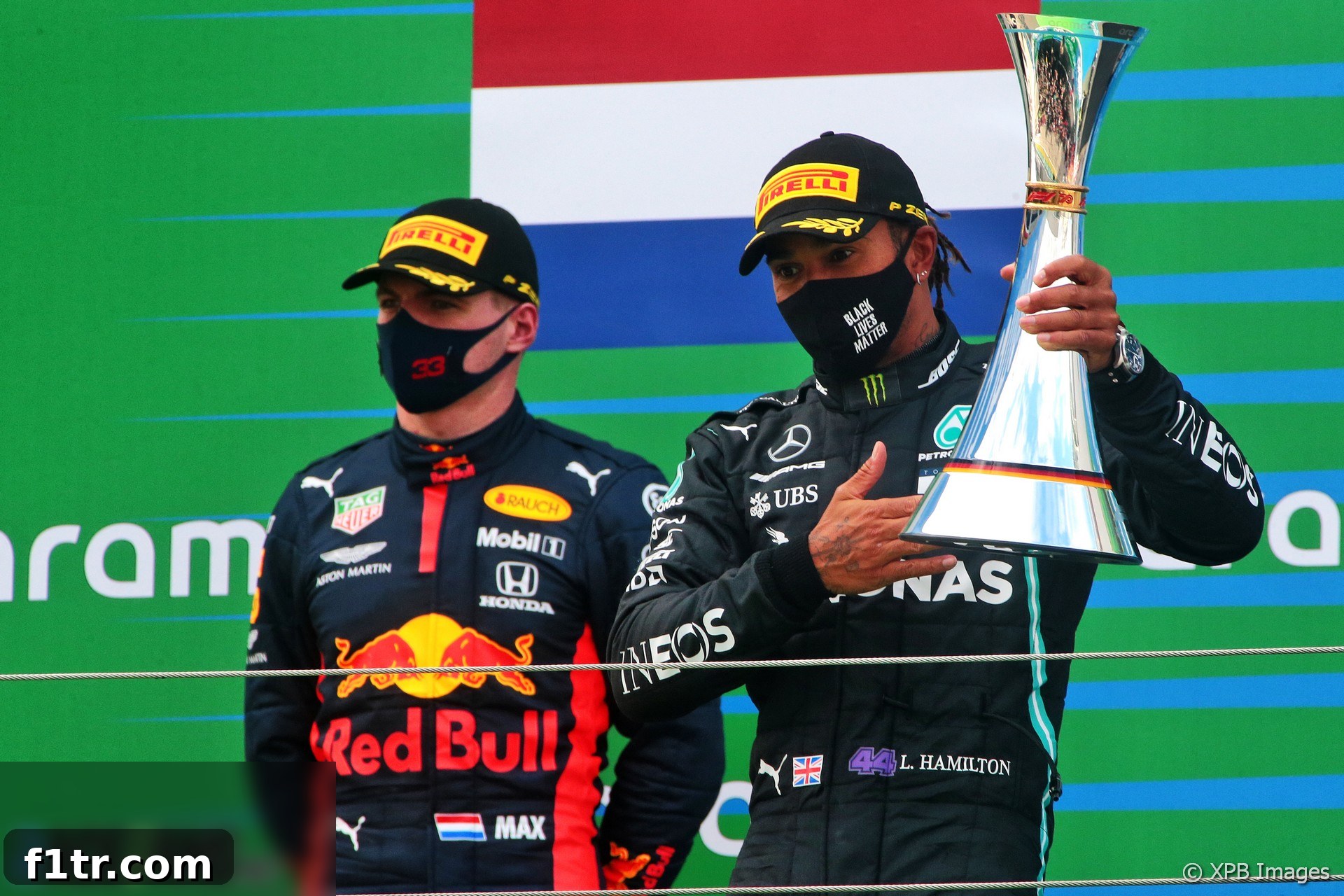
The High Stakes of F1 Driver Market: Red Bull Prepares for Mercedes’ Verstappen Ambition
The exhilarating world of Formula 1 is perpetually abuzz with speculation, not just about race outcomes but also about the intricate dance of driver contracts and team strategies. At the heart of recent discussions lies the formidable talent of Max Verstappen and the strategic positioning of his current team, Red Bull Racing. As the sport looks ahead to the transformative 2022 season, Red Bull is keenly aware of the potential for rival Mercedes to make a significant move for their star driver, particularly if seven-time world champion Lewis Hamilton opts not to extend his tenure with the Silver Arrows.
This scenario underscores the intense competition not only on the track but also within the driver market, where top talent is a prized commodity. Christian Horner, Red Bull’s long-serving Team Principal, openly acknowledged the probability of Mercedes targeting Verstappen, stating, “I’m sure that should Lewis decide to stop then Max would naturally be the driver at the top of the list.” This candid assessment highlights the undeniable appeal of Verstappen, widely regarded as one of the most exciting and potent forces in contemporary F1.
The Lewis Hamilton Conundrum: A Pivotal Decision for Mercedes
Lewis Hamilton’s future remains a dominant narrative in Formula 1. After signing a single-year extension to his Mercedes contract earlier this year, his long-term commitment beyond the 2021 season has been a subject of considerable debate. Hamilton, who has redefined what is possible in modern F1 with numerous records and championships, has continually pushed the boundaries of the sport. His decision, whether to continue his illustrious career or step away, carries immense weight, not only for Mercedes but for the entire F1 landscape.
Should Hamilton choose to retire or seek new challenges, it would create an unprecedented vacancy at one of the sport’s most dominant teams. This hypothetical departure would trigger a frantic search for a replacement, and as Horner correctly surmises, Max Verstappen’s name would undoubtedly be at the very top of Mercedes’ wish list. The prospect of such a move speaks volumes about Verstappen’s exceptional talent and his perceived ability to seamlessly transition into a championship-contending seat, maintaining Mercedes’ competitive edge.
Max Verstappen’s Unmatched Value and Contractual Nuances
Max Verstappen, despite being contracted to Red Bull until the end of the 2023 season, possesses a unique allure in the driver market. His aggressive driving style, raw speed, and unyielding determination have positioned him as a generational talent capable of challenging for world championships. While long-term contracts in F1 are designed to provide stability, they often contain intricate clauses that offer a degree of flexibility to both driver and team, particularly concerning performance benchmarks.
Christian Horner confirmed the existence of such safeguards within Verstappen’s contract, acknowledging that “all drivers have safeguards within performance and the reality is that yes, of course, as there has always been, there is an element of performance related to Max’s contract.” While the specific details of these clauses are, understandably, kept confidential, they generally relate to the team’s ability to provide a competitive car within a certain timeframe or achieve specific results. These provisions act as a crucial mechanism, ensuring that top drivers are not inadvertently tied to underperforming machinery. Horner, however, emphasized the primacy of relationships over rigid contractual obligations, stating, “it’s more about relationships than contracts, and you only pull a contract out of a drawer when you’ve got a problem, in my experience.” This sentiment highlights Red Bull’s strategy of fostering a strong, trust-based environment to retain their star driver, rather than relying solely on legal bindings.
Red Bull’s Strategic Independence: The Honda Power Unit Transition
A significant factor in Red Bull’s long-term strategy and their efforts to retain Max Verstappen is the team’s bold decision regarding its power unit supply. With Honda’s departure from Formula 1 at the end of the current season, Red Bull announced its groundbreaking plan to take over the production and maintenance of Honda-designed power units. This monumental undertaking involves establishing a new dedicated facility at their Milton Keynes base, symbolizing a profound commitment to future competitiveness and strategic independence.
This strategic pivot is more than just a logistical solution; it represents a substantial investment and a clear declaration of intent. By bringing the power unit operation in-house, Red Bull aims to exert greater control over every aspect of their car’s performance, fostering a seamless integration between chassis and engine development. This move is designed to reassure Verstappen and other key personnel about Red Bull’s unwavering ambition and its capacity to provide a championship-winning package. Horner expressed confidence that this commitment would resonate with Verstappen, stating, “He believes in the project. He believes in what we’re doing. He sees the investment that Red Bull is making it’s very much with this recent commitment on the power train.” The expectation is that this deep investment will negate the need for any contractual clauses to be invoked, as the team itself is proactively demonstrating its dedication to top-tier performance.
The 2022 Regulations: A Clean Slate for Opportunity
The advent of new technical regulations for the 2022 Formula 1 season presents a unique opportunity for all teams, including Red Bull. These regulations, arguably the most significant overhaul in decades, aim to promote closer racing, increase overtaking opportunities, and potentially reshuffle the pecking order. With a complete redesign of aerodynamic principles and other car components, teams are essentially starting from a “clean sheet of paper,” as Horner described it.
This regulatory reset offers Red Bull a prime chance to close the gap to rivals like Mercedes and potentially leapfrog them. The extensive changes mean that previous advantages might be diminished, and teams that master the new rules quickly could gain a significant edge. This prospect of a level playing field is undoubtedly enticing for a driver of Verstappen’s caliber, who thrives on the potential for victory. Horner highlighted this crucial aspect, stating, “If there’s going to be a significant mix-up of the order, one would assume it’s going to be with that big regulation change.” For Red Bull, excelling under these new rules is paramount to proving their capabilities and fulfilling Verstappen’s championship aspirations, making a competitive car under the new regulations the ultimate trump card in retaining him.
The Ultimate Goal: A Championship-Caliber Car
Ultimately, the retention of a driver like Max Verstappen hinges on one fundamental factor: the delivery of a championship-caliber car. While relationships, investments, and long-term projects are vital, the tangible performance on track is what truly matters in the ruthless world of Formula 1. Verstappen’s ambition is unequivocal: to win world championships. Red Bull’s goal aligns perfectly with this, as their entire operation is geared towards achieving the same objective.
Horner articulated this shared vision succinctly: “I’m confident that we won’t need to refer to any contractual clauses. I think it will ultimately be down to us to deliver a competitive car. That’s what he wants, that’s what we want. He needs that, we need that. So in that respect, we’re both in the same, identical situation.” This statement encapsulates the symbiotic relationship between a top driver and a top team. The team needs Verstappen’s talent to maximize the car’s potential, and Verstappen needs a car capable of challenging for wins and titles to fulfill his career ambitions. The success of Red Bull’s new power unit project and their adeptness at interpreting the 2022 regulations will therefore be under intense scrutiny, as they are crucial in securing their future with their star driver.
While the focus is heavily on Verstappen, Christian Horner also pragmatically acknowledged other strong candidates, mentioning George Russell as another driver Mercedes might consider. This highlights the depth of talent available in F1 and the constant ebb and flow of the driver market, even among the sport’s elite teams.
Conclusion: A Pivotal Era for Red Bull and Verstappen
The intersection of Lewis Hamilton’s uncertain future, Max Verstappen’s contractual nuances, Red Bull’s audacious power unit strategy, and the seismic shift of the 2022 technical regulations creates a compelling narrative for the upcoming Formula 1 seasons. Red Bull faces the critical task of not only building a faster car but also demonstrating an unshakeable commitment to their star driver’s championship aspirations. Their strategic moves, particularly with the Honda power unit takeover, are clear signals of their intent to be a dominant force.
The ongoing saga surrounding top driver movements is a testament to the high stakes and constant evolution within Formula 1. For Red Bull, securing Max Verstappen for the long term by delivering a world-beating car in the new era of F1 regulations is not just a strategic objective; it’s an imperative for their championship hopes and their continued status at the pinnacle of motorsport.
2022 F1 Season Insights
- Mercedes told me “you’re wrong” about 2022 car’s problems – Hamilton
- FIA confirms all 10 F1 teams complied with 2022 cost cap
- Steiner “not ashamed” of panning “slow” Schumacher in Drive to Survive
- Albon believes year out of F1 improved him as a driver
- Hamilton sees diversity gains in F1 years on from his ‘traumatising’ experience of racism
Browse all 2022 F1 season articles