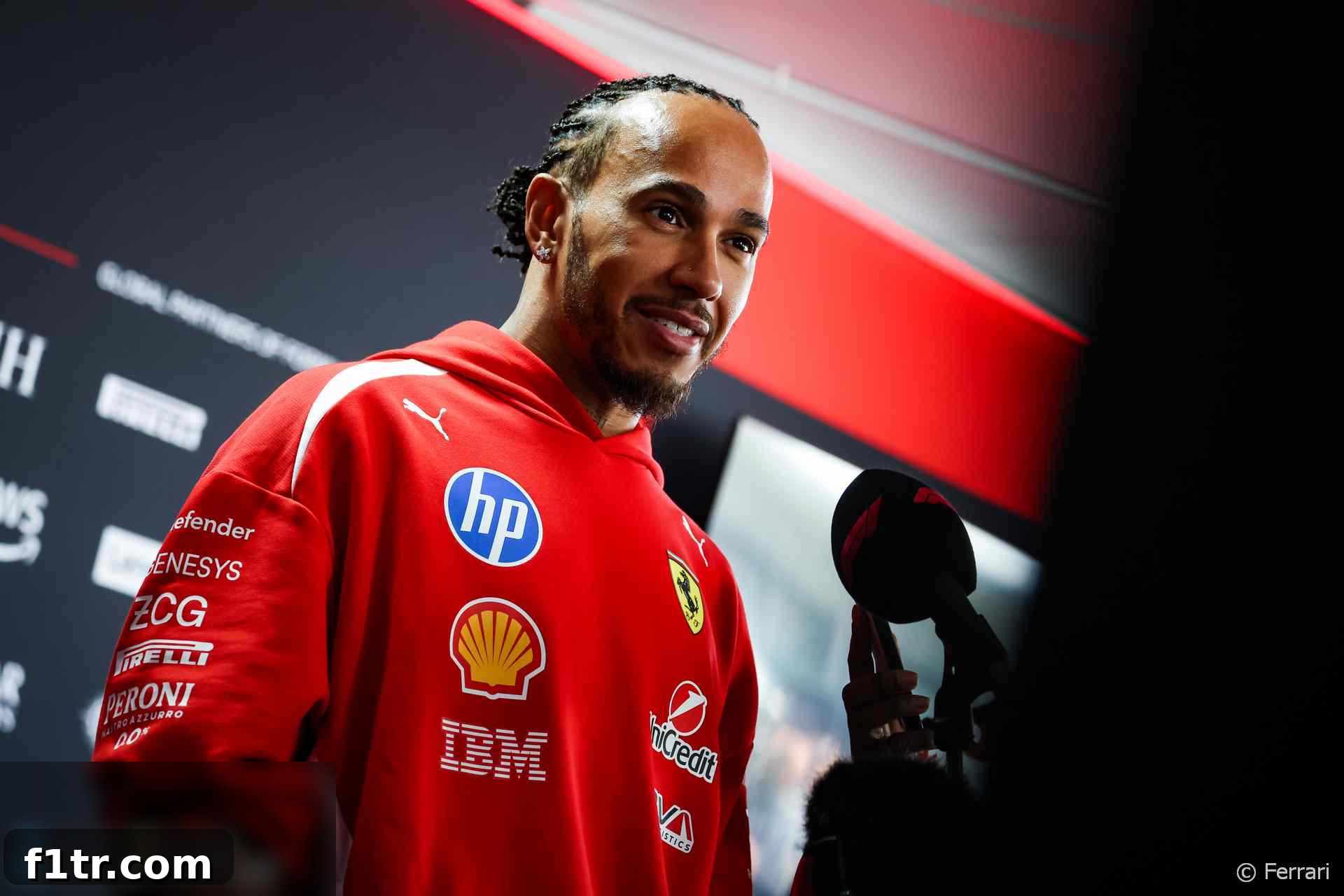
Lewis Hamilton, a titan of Formula 1, has voiced profound satisfaction with the sport’s latest regulatory changes, asserting that they have fundamentally reshaped the championship for the better. The seven-time world champion highlighted a significant improvement in car behavior, specifically the elimination of the much-dreaded ‘bouncing’ phenomenon that plagued teams in previous seasons. This evolution marks a pivotal moment, ushering in an era where driver comfort and raw vehicle performance take precedence once more.
Advert | Become a Supporter & go ad-free
The preceding regulatory cycle, particularly from 2022 onwards, introduced a ground-effect aerodynamic philosophy that granted teams extensive freedom in designing their car floors. While intended to generate immense downforce and promote closer racing, this approach inadvertently led to widespread issues with ‘porpoising’ – a violent, high-frequency oscillation where cars repeatedly slammed into the track surface at high speeds. This relentless bouncing caused severe physical discomfort for drivers, compromised visibility, and made car setup an agonizing compromise between performance and survivability. Engineers scrambled to understand and mitigate this complex aerodynamic challenge, often sacrificing potential speed to ensure their drivers could complete a race without excessive strain.
Hamilton, having navigated these challenging years at the pinnacle of motorsport, expressed palpable relief with the new rules. These regulations have compelled teams to simplify their floor designs, effectively eradicating the root cause of the bouncing. His candid remarks underscore the profound impact this technical shift has had on the sport, both for those behind the wheel and for the engineers striving for optimal performance.
“It’s really nice that we’ve started the season and we don’t have bouncing,” Hamilton shared in an interview with the official F1 channel. He vividly recalled, “because obviously that last generation was a nightmare for everyone with bouncing, apart from maybe the Red Bulls.” His observation speaks volumes about the competitive landscape of the recent past, where one team’s superior understanding and management of porpoising granted them a significant, often insurmountable, advantage. For Mercedes, Hamilton’s team for many years, the struggle with balancing aerodynamic efficiency and ride comfort was a defining characteristic of their recent campaigns, costing them valuable development time and competitive edge.
The elimination of bouncing, as Hamilton eloquently put it, means, “So that’s one thing out of the way and it comes then back down to just pure car performance.” This statement encapsulates the sentiment shared by many within the paddock: a return to fundamental engineering principles where mechanical grip, aerodynamic efficiency without violent oscillations, and driver skill once again become the primary determinants of success. The focus shifts from merely making the car drivable to optimizing every facet of its design for maximum speed and consistency.
The new regulations have effectively initiated a ‘reset’ across the grid, fostering an intense engineering arms race. Teams are now forced to approach car design with a fresh perspective, making the development trajectory over the season a critical factor in championship contention. This dynamic period presents both challenges and unparalleled opportunities for teams and drivers alike.
“Everyone’s starting from scratch and it’s a big reset for everybody,” Hamilton explained, highlighting the level playing field. “So then it’s a race to the finish line. It’s like a race to see who can develop and push the team and row faster and stronger and with more stamina through the season to continue to pile on performance to a car.” This description vividly paints a picture of the relentless pursuit of marginal gains, where every aerodynamic tweak, every suspension adjustment, and every software update can make a tangible difference. It’s a testament to the collaborative spirit within a team, where designers, engineers, strategists, and drivers must work in perfect harmony.
Advert | Become a RaceFans supporter andgo ad-free
This renewed focus on iterative development has invigorated Hamilton’s involvement within his team. He elaborated on the active role he now plays in shaping the car’s evolution. “That makes it so much more exciting. We’re seeing development coming through, I was at the factory last week, and this is the time that you can go to the different departments and you can hold meetings with people and say: ‘What are you focusing on here?’ ‘These are the areas that I’m really struggling with the car, can you put some more resource here?’ ‘This is exactly what we need.’” This direct line of communication between driver and development teams is crucial. Drivers, as the ultimate interface with the machine on track, provide invaluable feedback that engineers translate into design modifications, aiming to create a car that not only performs optimally but also inspires confidence in its pilot.
The contrast with previous seasons is stark. Hamilton reflected on the frustration of earlier periods: “Last year, we couldn’t do that, because there was no point going and having those meetings for the car that we were in, but at least we [were able] to have those in plan for this year.” This indicates a fundamental shift in design philosophy and a renewed sense of purpose. When a car is inherently flawed due to a specific regulatory interpretation, as was the case with the porpoising era, the scope for effective in-season development becomes severely limited. Teams might spend vast resources merely trying to make the car tolerable, rather than unlocking its full performance potential. With the new regulations, the canvas is cleaner, allowing for more impactful and meaningful development.
Hamilton’s recent years have been a departure from his usual championship-winning form. He has secured only two grand prix victories in the last four seasons, one of which was inherited after a disqualification. This period, coupled with his age at 41, has inevitably led to questions and scrutiny from critics and pundits about whether he remains at the peak of his formidable powers. The narrative surrounding his continued competitiveness has been a recurring theme in the sport.
However, Hamilton approaches these doubts with characteristic resilience and a burning desire to silence his detractors. He articulated his motivation: “When you have difficult years, there’s lots of questions all over the place.” He acknowledged the negativity from some observers, stating, “Ultimately I saw certain individuals that hadn’t had anywhere near the success that I’d had just talking negatively as they continue to do so today.” This perspective fuels his drive, transforming external skepticism into internal resolve.
The early indicators of the current season, under the new regulations, have provided Hamilton with a renewed sense of belief and vindication. “It felt great to be able to come back and come into this season and start off strong, to be able to show that I still have what it takes to compete at the front, and I’ll continue to try and show up and deliver in that way.” This statement is a powerful declaration of his enduring capability and commitment. It underlines his faith not only in his own talent but also in the potential of the current regulatory framework to create a more level and exciting playing field. His determination to consistently perform at the highest level, even after years of unparalleled success, reaffirms his status as one of Formula 1’s most tenacious and inspiring figures. The journey ahead, free from the constraints of bouncing and with a renewed focus on fundamental performance, promises to be a compelling chapter in his illustrious career.
Advert | Become a RaceFans supporter andgo ad-free
Formula 1 Insights
- F1 returning to India soon after 2027 sounds like wishful thinking
- Verstappen loathes F1’s new generation of cars – but what do his rivals reckon?
- The ‘throwback weekend’ is back in fashion. But it’s a flawed concept – especially for F1
- Is Formula 1’s double race cancellation a blessing in disguise?
- Todt admits Schumacher crashed on purpose – but did it really cost him two titles?
Browse all Formula 1 articles