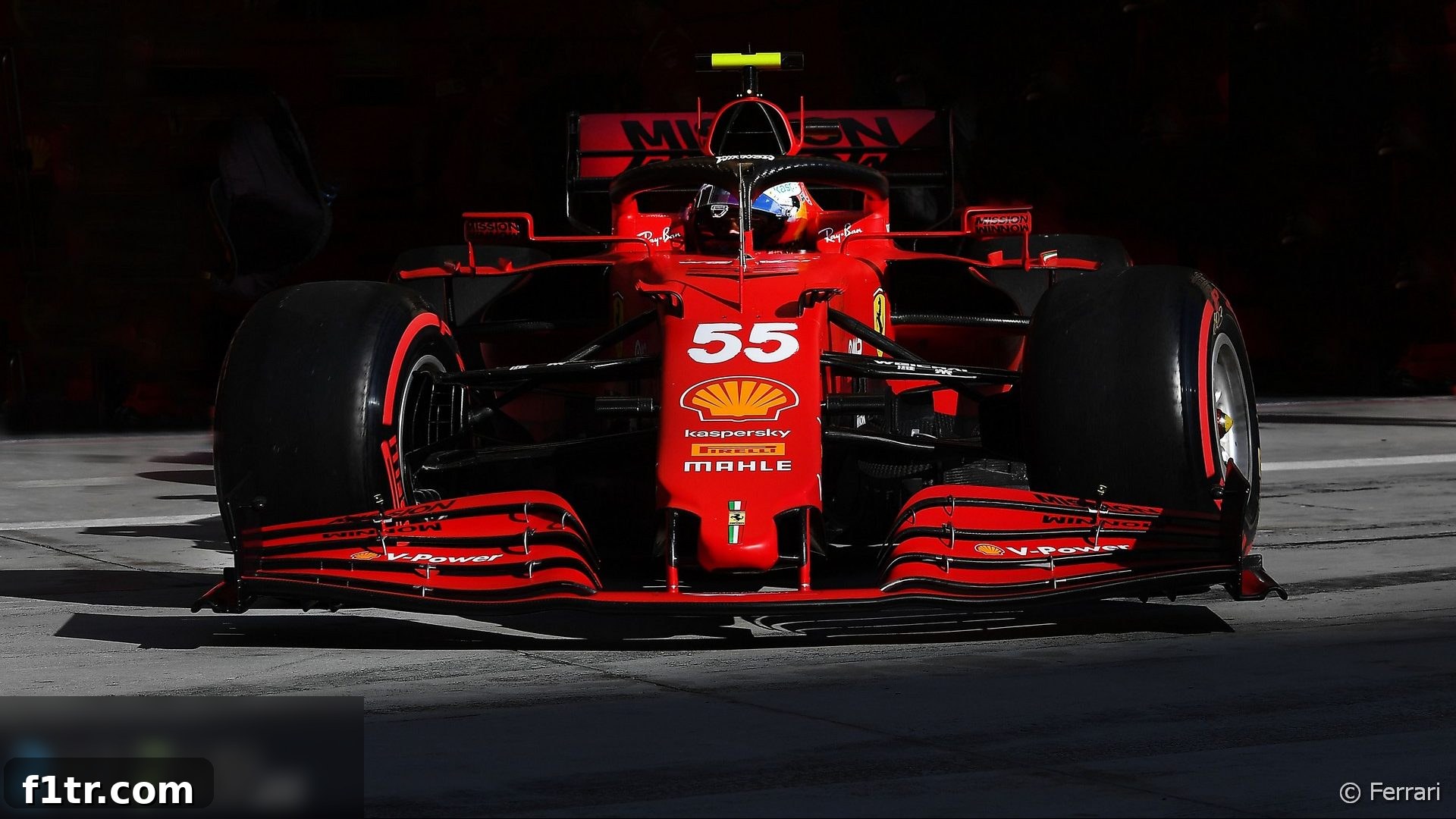
After a deeply challenging and disappointing campaign last year, the highly anticipated pre-season testing for the 2021 F1 season offered a glimmer of hope and potentially something to smile about for the Scuderia Ferrari. The iconic Italian team, which endured its worst season in decades in 2020, arrived in Bahrain with a renewed sense of purpose, keen to demonstrate that the difficult lessons of the previous year had been learned and applied.
Team principal Mattia Binotto, often under immense pressure, expressed a palpable sense of satisfaction with the team’s performance during the compressed three-day testing schedule. Despite the limited track time available to all teams, Ferrari managed to complete a significant workload, gathering crucial data on their new challenger, the SF21. Binotto’s initial assessment suggested clear and tangible improvements in the car’s overall performance, a stark contrast to the struggles that plagued them throughout the 2020 season.
Ferrari’s Resurgence: A Glimmer of Hope from 2021 F1 Pre-Season Testing
“These were three very busy days of testing,” Binotto stated, highlighting the intensity of the program. “One of our priorities was to make the most of the short time available to gain an understanding of the behaviour of the SF21 and we succeeded in doing that.” This focused approach allowed Ferrari to systematically evaluate key areas of the car, from aerodynamic efficiency to power unit integration and chassis balance. For a team that had lost its way so dramatically, a clear understanding of their new machine was paramount.
Binotto confidently asserted that the team has “improved in many areas compared to last season.” While he prudently added the standard caveat that “it’s hard to say where we are compared to our opponents, because this test was even harder than usual to interpret,” his underlying optimism was evident. The most significant area of improvement, and indeed Ferrari’s biggest weakness in 2020, was its straight-line speed. Binotto is certain they have made substantial progress in this critical department, a factor that could fundamentally alter their competitive standing.
Decoding Ferrari’s Performance: More Than Just Lap Times
The improvement in straight-line speed for the SF21 is particularly crucial given the context of Ferrari’s 2020 power unit issues. After a technical directive issued late in 2019, Ferrari’s engine performance dropped significantly, leaving them severely disadvantaged on the straights and struggling to compete with rivals. To address this, the team invested heavily in a revised power unit for 2021, and early indications from testing suggest these efforts have paid off. This newfound confidence in their engine performance, coupled with reported aerodynamic refinements, points towards a more competitive package overall.
Furthermore, the 2021 regulations introduced changes specifically designed to reduce downforce levels, aiming to cut lap times and reduce stress on tyres. For teams, this meant finding innovative ways to recover lost downforce while maintaining aerodynamic efficiency. Ferrari’s ability to minimize the impact of these changes, coupled with a perceived improvement in the car’s overall balance and handling, underscores a commendable effort from their technical department. The goal was not merely to be faster than last year, but to be faster relative to the new, more restrictive rules.
Interpreting the Data: Why Ferrari’s Numbers are Promising
While the raw lap times from pre-season testing are notoriously difficult to interpret, often dubbed as “meaningless” by seasoned observers, certain trends and comparisons can offer valuable insights. Ferrari’s third-place finish on the overall lap time chart, while visually appealing, should be taken with a grain of salt; even the most optimistic Tifosi would acknowledge that it’s highly improbable they have leapfrogged Mercedes into a comfortable lead. Teams run varying fuel loads, engine modes, and test programs, making direct comparisons treacherous.
However, a more revealing metric for Ferrari lies in comparing their SF21 lap times to those achieved during the Bahrain Grand Prix weekend just four months prior. Despite the 2021 regulations aiming to significantly cut downforce levels and thus slow the cars, the SF21 was less than half a second slower than its predecessor, the SF1000. This is a considerable achievement, indicating that Ferrari has managed to recover much of the downforce lost due to the new rules, or that their overall package efficiency has improved dramatically.
Only one team came closer to their 2020 pace than Ferrari, and that was their engine customer, Alfa Romeo. Kimi Raikkonen achieved his benchmark lap time using the softest tire compound available, the C5, known for its maximum grip but short lifespan. In contrast, Ferrari’s benchmark lap time was set on the slightly harder C4 compound, suggesting that with the same tire specification, Ferrari could have matched or even surpassed Alfa Romeo’s delta. This nuanced comparison offers a more accurate reflection of Ferrari’s true gains.
Beyond lap times, Ferrari’s test was also incredibly productive in terms of mileage. Covering the third-highest testing mileage among all teams is a strong indicator of reliability and the team’s ability to execute its comprehensive test plan. Both drivers, Charles Leclerc and Carlos Sainz, gave positive feedback on the SF21. Leclerc, in particular, highlighted improved rear stability, a key factor for driver confidence and consistent performance, especially through high-speed corners. This positive driver feedback is often a more reliable indicator of a car’s potential than raw lap times alone.
Mercedes’ Uncharacteristic Struggles: Cracks in the Armor?
While Ferrari savored their positive signs, the mood in the Mercedes camp appeared less buoyant. The reigning world champions, who have dominated the last seven seasons of Formula 1 with unparalleled success, delivered an uncharacteristically uneven performance during testing. This prompted widespread suggestions and excited whispers in the paddock that the Silver Arrows might have finally “dropped the ball” or at least faced a significant challenge to their supremacy.
Throughout the three days, Mercedes struggled with various issues, including reliability concerns (Valtteri Bottas’s gearbox problems on day one) and handling difficulties, particularly with the car’s balance in gusty conditions. Lewis Hamilton, notoriously adept at adapting to challenging machinery, even spun several times, a rare sight for the seven-time world champion. These incidents, coupled with visible instability of the W12, suggested Mercedes was far from its usual composed and dominant self.
A significant concern for Mercedes was their mileage count. Having completed more laps than any other team in 2020 testing, they found themselves at the very bottom of the pile last week. Low mileage in testing translates directly to less data gathered, fewer setup optimizations explored, and less opportunity to understand the car’s nuances. For a team that thrives on meticulous preparation and data analysis, this was a significant setback.
Red Bull’s Apparent Edge and Mercedes’ Counter-Strategy
Adding to Mercedes’ concerns was the performance of their closest rivals, Red Bull Racing. Mercedes openly admitted that Red Bull were quicker than them over the long runs, a critical indicator of race pace. This admission from a team known for its understated confidence immediately raised alarm bells, suggesting Red Bull might genuinely have a performance advantage heading into the opening race.
In a curious move, Mercedes announced they would conduct a filming day at the Bahrain circuit between testing and the first race, adding another 100 kilometers to their total. This is unusual because most teams, including Mercedes’ rivals, typically complete their filming days *before* testing to shake down their new chassis and check basic systems. The timing fueled speculation that Mercedes might be preparing to introduce significant upgrades to the W12. In previous years, Mercedes has occasionally brought substantial upgrade packages to its car between testing and the first race. The paddock is now buzzing with the possibility that the next time the W12 takes to the track, it may not only look different but also handle dramatically differently, aiming to address the issues encountered during the initial test.
The Broader F1 Landscape: What Pre-Season Testing Truly Revealed
The 2021 F1 pre-season testing provided a fascinating, albeit often misleading, preview of the season to come. It presented a stark contrast: Ferrari, emerging from a period of deep introspection and hard work, showed promising signs of recovery and a renewed competitive spirit. Their smooth, high-mileage test, coupled with positive driver feedback and significant gains in straight-line speed, positioned them as potential dark horses or at least strong contenders for the midfield battle.
Conversely, Mercedes, the epitome of F1 dominance, endured a challenging test. Their reliability glitches, handling woes, and low mileage indicated potential vulnerabilities that had been absent for many years. While it would be premature to write off the reigning champions, these struggles, combined with Red Bull’s strong showing, hint at the possibility of a much tighter and more unpredictable championship battle than seasons past. The competitive landscape appears poised for a shake-up, offering the tantalizing prospect of a truly exciting season for fans.
Ultimately, pre-season testing is just that – a test. The true pecking order, the full extent of each team’s performance, and their ability to adapt and refine their packages will only become clear when the lights go out for the first race of the 2021 F1 season, the Bahrain Grand Prix. Until then, the tantalizing narratives of Ferrari’s potential comeback and Mercedes’ unexpected challenges will continue to fuel speculation and anticipation for what promises to be an enthralling year of Formula 1.
2021 Pre-Season Testing Insights: A Statistical Overview
While we cannot display interactive charts, the data gathered from pre-season testing typically includes a comprehensive breakdown of fastest lap times for each driver and team. These charts illuminate who managed to extract the most performance over a single lap, often indicating raw pace, albeit heavily influenced by fuel loads, engine modes, and tire compounds used. Analyzing these fastest times in conjunction with the conditions and programs undertaken by each team provides a snapshot of potential one-lap prowess.
Advert | Become a RaceFans supporter andgo ad-free
Another crucial set of statistics involves comparing the 2021 pre-season lap times to those from the previous year. Given the regulatory changes aimed at reducing downforce, teams aimed to minimize the performance deficit. Charts illustrating this year-on-year comparison highlight which teams successfully adapted to the new rules, demonstrating their aerodynamic efficiency and overall car concept strength in recovering lost lap time. Ferrari’s performance in this specific metric was particularly noteworthy, indicating strong progress in mitigating the rule changes.
Advert | Become a RaceFans supporter andgo ad-free
Finally, mileage charts provide a direct measure of a team’s reliability and testing efficiency. The total number of laps completed by each team and driver during pre-season testing is a vital indicator. High mileage allows teams to gather extensive data, test various components and setups, and ensure the reliability of their new cars. Conversely, low mileage can signal underlying issues, reduce data collection, and leave a team less prepared for the demands of a full race weekend. Mercedes’ position at the bottom of the mileage charts was, therefore, a significant talking point.
Advert | Become a RaceFans supporter andgo ad-free
Delving Deeper into the 2021 F1 Season
For more detailed analysis, news, and insights into the exhilarating world of the 2021 F1 season, explore our extensive coverage:
- Masi ‘basically gifted the championship’ to Verstappen says 2021 FIA steward Sullivan
- Las Vegas race backers looking to extend F1 deal beyond 2025
- Why Mercedes put ‘a reminder of joy and pain’ on display in their factory lobby
- Verdict on error in GT race suggests Mercedes would have lost 2021 Abu Dhabi GP appeal
- Title ‘stolen’ from Mercedes made us ‘underdogs people cheer for’ – Wolff
Browse all 2021 F1 season articles