The Ultimate Cold Challenge: Unpacking the Las Vegas Grand Prix Weather
The highly anticipated inaugural Las Vegas Grand Prix of the 2023 Formula 1 season is poised to be an event like no other. More than just a new addition to the calendar, this unique round breaks tradition by being held on a Saturday night instead of the customary Sunday, adding to its distinct allure. However, beyond the glitz and glamour of the Las Vegas Strip, a formidable and unprecedented challenge awaits teams and drivers: it is projected to be the coldest race of the entire season, creating a tactical minefield from the very first session.
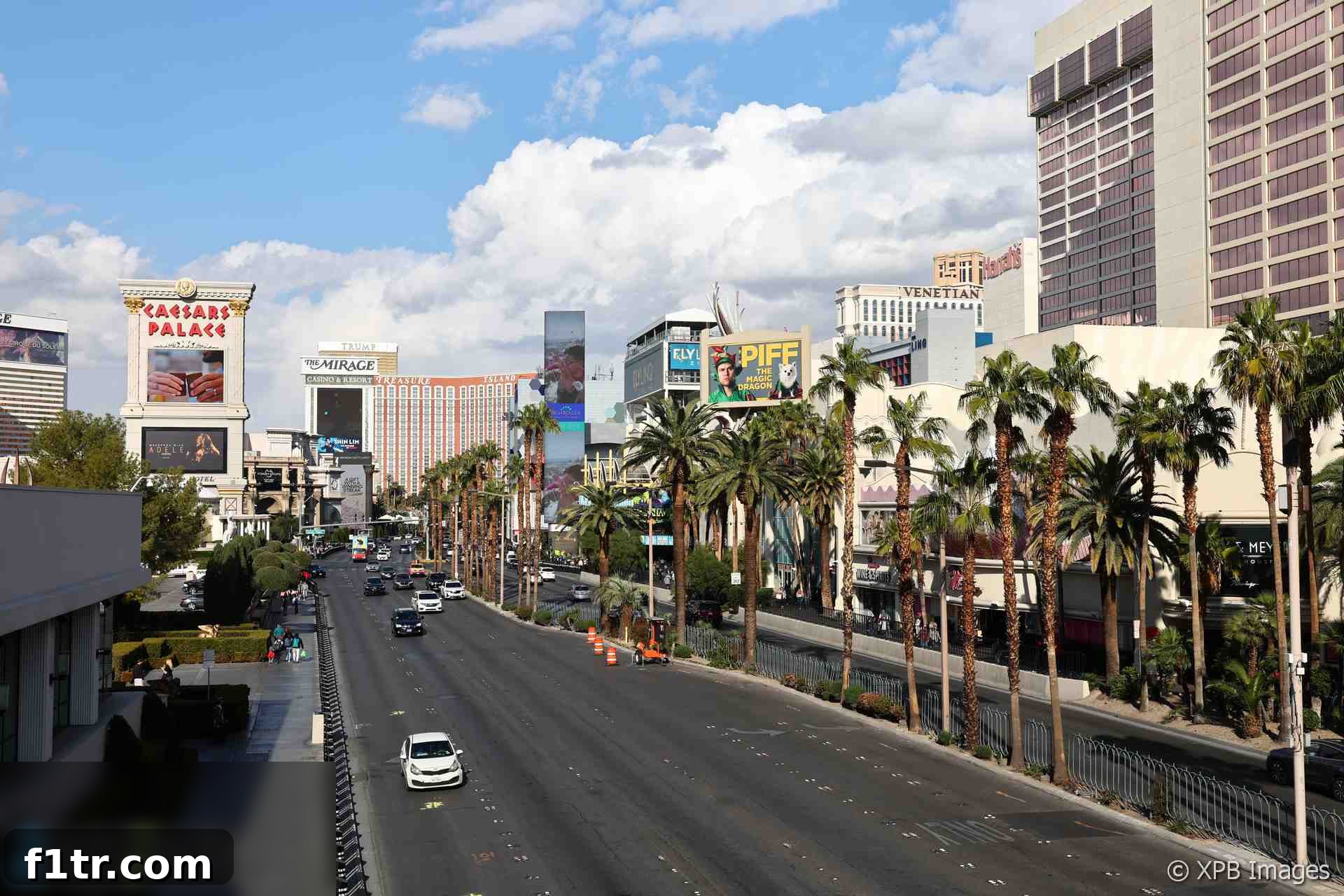
Formula 1’s return to Las Vegas after more than 40 years marks a significant moment, not only for the sport’s expansion into key markets but also for the sheer spectacle it promises. Racing down the iconic Las Vegas Strip, illuminated by neon lights, offers an incomparable backdrop. Yet, this dazzling setting conceals a significant hurdle. The unique timing of all on-track sessions, exclusively after sunset in a desert climate, means participants will confront profoundly cool conditions throughout the three-day event, demanding meticulous preparation and adaptable strategies.
A Chilling Debut: Why Las Vegas Will Be F1’s Coldest Race of 2023
Unlike many of Formula 1’s other glamorous night races, which often benefit from warm climates or milder evenings (such as Singapore or Bahrain), every single one of the five track sessions for the Las Vegas Grand Prix is scheduled to take place exclusively after the sun has set. Given Nevada’s desert climate in November, this timing translates into exceptionally cool conditions that will persist throughout the entire three-day event, impacting everything from driver comfort to critical vehicle performance. The typical warmth associated with F1 night races will be conspicuously absent, replaced by a bracing chill.
Anticipated Temperatures: A Detailed Look at the Forecast
Drivers will get their first taste of the unique Las Vegas Strip Circuit during Thursday evening’s opening practice session. Ambient temperatures during this crucial initial outing are expected to reach a maximum of just 15 degrees Celsius. As the weekend progresses, the mercury is set to drop even further. By the time cars hit the track for the second practice session at the stroke of midnight on Friday morning, conditions are anticipated to be even cooler, potentially dipping into single digits. McLaren driver Lando Norris light-heartedly suggested drivers might even need hand-warmers – a rare sentiment in the typically sweltering world of Formula 1, underscoring the unusual nature of this event.
While teams can generally expect dry running during the initial practice sessions, with a very low risk of rain predicted for Thursday, the forecast takes a turn for the dramatic later in the weekend. For Friday’s final practice session and the critical qualifying hour, scheduled for midnight on Saturday morning, meteorologists currently indicate a 40% risk of rain. This additional element of challenge promises to make what is already set to be one of the most difficult qualifying sessions of the season even more unpredictable. Rain on a cold, newly laid street circuit could lead to significantly reduced grip and an elevated risk of incidents, pushing drivers to their absolute limits.
The threat of precipitation will loom into Saturday evening for the grand prix itself. A “moderate” chance of showers could potentially dampen the pre-race festivities and add another layer of complexity to race strategy. However, current weather models suggest this risk will likely subside as the evening progresses, with predictions narrowing down to only a 20% chance of a wet start for the first-ever Las Vegas Grand Prix. Even if the track remains completely dry, the consistently low nighttime temperatures mean this event will comfortably claim the title of the season’s coolest grand prix, with a projected ambient temperature of just 12 degrees Celsius at its peak. This would make it significantly colder than both the Austrian and Dutch Grands Prix earlier in the season, which saw temperatures drop to a low of 16 degrees. This stark difference highlights the exceptional conditions anticipated.
Should the expected race start conditions materialize, Las Vegas will be the coldest grand prix held since the 2022 Emilia-Romagna Grand Prix at Imola, where the mercury also registered a mere 12 degrees Celsius as the race began in wet conditions. While F1 has certainly seen colder races in recent history, such as the Nürburgring or some early-season European rounds, the difference is often only a matter of a few degrees, underscoring the extreme nature of the conditions in Nevada. This level of cold adds an intriguing variable that will test every facet of an F1 team’s operation.
The Impact of Cold: Tires, Strategy, and Performance
The combination of low ambient temperatures and the hours of darkness mean track surface temperatures are expected to plummet even further than air temperatures. This presents a significant challenge for tire management, a cornerstone of modern Formula 1 strategy. Optimal tire performance is achieved within a very specific temperature “operating window.” If tires are too cold, they lack grip, leading to understeer or oversteer, increased wear, and a higher risk of graining. If they are too hot, they can degrade rapidly. In Las Vegas, the primary battle will be to generate and maintain sufficient heat in the tires, especially after a Safety Car period or during slow laps.
Pirelli’s Strategic Response to Extreme Cold
Pirelli, F1’s sole tire supplier, has responded to this unique scenario by prescribing unusually high minimum tire pressures, even by Formula 1’s already stringent standards. Front tires must be set at a minimum of 27psi, while rear tires require 24.5psi. These figures are noticeably higher than those typically seen at warmer venues, reflecting Pirelli’s proactive approach to safety and performance in the cold.
Mario Isola, Pirelli’s Head of Motorsport, explained the rationale behind these elevated pressures. “In cold conditions, the gap between cold tire pressures and normal running pressures is greatly reduced,” Isola stated. “So when the car is moving, tire pressure will increase a lot less than on other circuits due to the low asphalt temperatures.” This phenomenon means that despite the higher starting pressures, the tires’ operating window – the ideal temperature and pressure range for optimal grip and performance – will still be challenging to achieve and maintain. Isola further elaborated, “As a result, we think that running pressures will still be lower than on other circuits that are tough on tires, such as Baku for example.” This highlights the intricate balance Pirelli must strike to ensure both safety and performance in such an atypical environment, aiming to prevent structural integrity issues while allowing teams some flexibility for performance.
Beyond Tires: Other Performance Considerations in the Cold
The cold conditions will affect more than just tires. Drivers will face reduced overall grip, making braking points harder to judge and demanding lower cornering speeds, especially in the tight sections of the street circuit. Cold brakes can struggle to reach their optimal operating temperature, leading to inconsistent braking performance and longer stopping distances. Aerodynamics, while potentially benefiting from denser, colder air for increased downforce, might also see different characteristics as various components respond to the lower temperatures, possibly impacting balance. Engine cooling, typically a primary concern in hotter climates, will be less of an issue, but maintaining optimal engine and gearbox temperatures for peak performance and reliability might require specific setup adjustments, potentially including blanking off cooling inlets.
Furthermore, the drivers themselves must contend with the chill. While modern F1 cockpits offer some protection, prolonged exposure to low temperatures can affect concentration, dexterity, and physical comfort, making an already demanding race even tougher. Keeping muscles warm and maintaining focus will be an added challenge for all competitors.
The Las Vegas Strip Circuit: A New Frontier for F1
The Las Vegas Strip Circuit itself adds another layer of complexity. As a brand-new street circuit, there will be no historical data for teams to rely on, making free practice sessions exceptionally critical for data gathering and setup optimization. The track features exceptionally long straights, including the iconic run down the Strip, interspersed with tight, technical corners. This configuration demands a delicate balance between low-drag setups for maximizing speed on the straights and high-downforce setups for achieving optimal grip and stability through the slower, twisty sections.
The cold conditions will exacerbate the challenge of finding this balance, especially in the slower sections where tire temperatures will drop rapidly. Generating tire heat on long straights followed by slow corners will be a constant battle. The concrete barriers, typical of street circuits, leave no room for error, making the cold-induced reduced grip even more perilous. Any mistake could lead to significant damage and potentially a Safety Car or Virtual Safety Car period, which would further complicate tire strategies due to temperature drops. The newly laid asphalt will also present an evolving surface, likely offering very low grip initially before rubbering in.
The spectacle of Formula 1 racing under the neon glow of Las Vegas is undeniable, but it comes with significant sporting challenges. Teams and drivers will need to be exceptionally adaptable, making swift setup changes and intelligent strategic decisions throughout the weekend to master the unique demands of this cold, potentially wet, and brand-new street circuit. The inaugural Las Vegas Grand Prix promises not just a visual feast, but also a true test of engineering ingenuity, driver skill, and strategic prowess in conditions rarely encountered in the pinnacle of motorsport.
Further Insights and Race Weekend Updates
For continuous updates on the evolving track conditions, real-time session coverage, and in-depth analysis throughout the Las Vegas Grand Prix weekend, be sure to follow RaceFans Live and the RaceFans Twitter account.
Explore More from the 2023 Las Vegas Grand Prix
- Tost blames track inspection oversight for Sainz’s damage in Las Vegas
- Hard to repeat “rare” combination of factors behind Vegas shunt – Norris
- Las Vegas Grand Prix “got a lot more hate than it deserved” – Sargeant
- Williams’ “incredible” Vegas qualifying made us “poor” in race – Vowles
- Piastri is first rookie to take two fastest laps in a season since Hamilton
Browse all 2023 Las Vegas Grand Prix articles